
How to Fix My USB Flash Drive: Expert Guide
Imagine the sudden panic when you plug your thumb drive into a laptop, but nothing happens. Instead of your important files, you see a cryptic error message or a blank screen. This scenario happens to millions of users daily, leading many to wonder how to fix my USB flash drive without losing everything. Most people assume that a corrupted drive means the hardware is dead, but this is rarely the case.
In this comprehensive guide, I will share professional-grade methods to resolve these issues. Whether your device is showing a “RAW” file system or is simply not showing up, these steps will provide clarity. We will move from simple hardware checks to more advanced system repairs. Furthermore, I will introduce a reliable USB drive solution to safeguard your data before you attempt any destructive formatting.
Table of Contents
Primary Diagnosis: Determining the Failure Type
Before you start clicking buttons, you must understand why the drive is failing. Generally, USB issues fall into two specific categories: logical errors and physical damage. If the metal connector is bent or the casing is cracked, software solutions will likely fail. Conversely, if the drive looks perfect but Windows cannot read it, you are dealing with a logical corruption.
Initially, you should perform these basic troubleshooting steps:
- Test different ports: Occasionally, the USB port on your computer is the actual point of failure.
- Use another device: Plug the drive into a different PC or a Mac to see if it responds.
- Check Disk Management: Right-click the Start button and select “Disk Management”. If the drive appears here, it is usually fixable via software.
If the drive is visible in Disk Management but lacks a file system, you are in the right place to learn how to fix my USB flash drive.
Update Drivers to Fix My USB Flash Drive
Sometimes, the operating system simply forgets how to talk to your hardware. Outdated or corrupted drivers can cause the “Device Not Recognized” error. Consequently, refreshing these drivers is one of the quickest ways to restore functionality.
Steps to Reinstall USB Drivers:
- Open Device Manager: You can do this by right-clicking the Start menu.
- Locate Controllers: Expand the “Universal Serial Bus controllers” section at the bottom.
- Uninstall Device: Right-click your specific USB Mass Storage Device and select “Uninstall.”
- Refresh Hardware: Unplug the drive, wait ten seconds, and plug it back in.
Windows will automatically detect the drive and install a clean version of the driver. Consequently, this often resolves connection glitches immediately.
How to Fix My USB Flash Drive Using CHKDSK
The CHKDSK (Check Disk) command is a powerful built-in Windows utility. It scans the internal structure of your drive and repairs file system errors. If you are looking for how to fix my USB flash drive without formatting it, this is your best option.
How to Execute the Repair:
- Launch CMD: Press the Windows key, type “cmd,” and select “Run as Administrator.”
- Enter the Command: Type
chkdsk X: /fand press Enter. (Important: Replace “X” with your actual USB drive letter). - Wait for Completion: The system will verify files, indexes, and security descriptors.
Specifically, the /f parameter tells the tool to fix any errors it finds. This method is highly effective for “Unreadable” drives because it reconstructs the logical map of your data.
Assign a New Drive Letter to Resolve Conflicts
Many users struggle with how to fix my USB flash drive when the drive is working but hidden. This often happens due to a drive letter conflict. For example, if your USB wants to use the letter “E” but another drive is already using it, your USB may stay invisible.
How to Change the Letter:
- Access Disk Management: This is the hub for all storage tasks.
- Identify Your Drive: Look for the “Removable” disk that matches your USB size.
- Change Path: Right-click the partition and select “Change Drive Letter and Paths.”
- Assign New Identity: Select a letter like “M” or “Z” that is clearly not in use.
Once you click “OK,” the drive should instantly appear in your File Explorer. This simple fix solves a surprising number of “invisible drive” cases.
Use the Error Checking Tool for Manual Repairs
If you prefer a visual interface over command lines, Windows offers a built-in repair wizard. This is a user-friendly approach when searching for how to fix my USB flash drive quickly.
- Open File Explorer: Navigate to “This PC.”
- Open Properties: Right-click your USB drive and select “Properties.”
- Select Tools: Click on the “Tools” tab at the top of the window.
- Check for Errors: Click the “Check” button under the Error Checking section.
- Repair Drive: Even if Windows says no errors are found, you can choose to “Scan and repair drive.”
This process focuses on fixing directory issues and bad sectors. Moreover, it is a safe procedure that rarely affects the files stored on the device.
Professional Data Recovery: Amagicsoft Solution
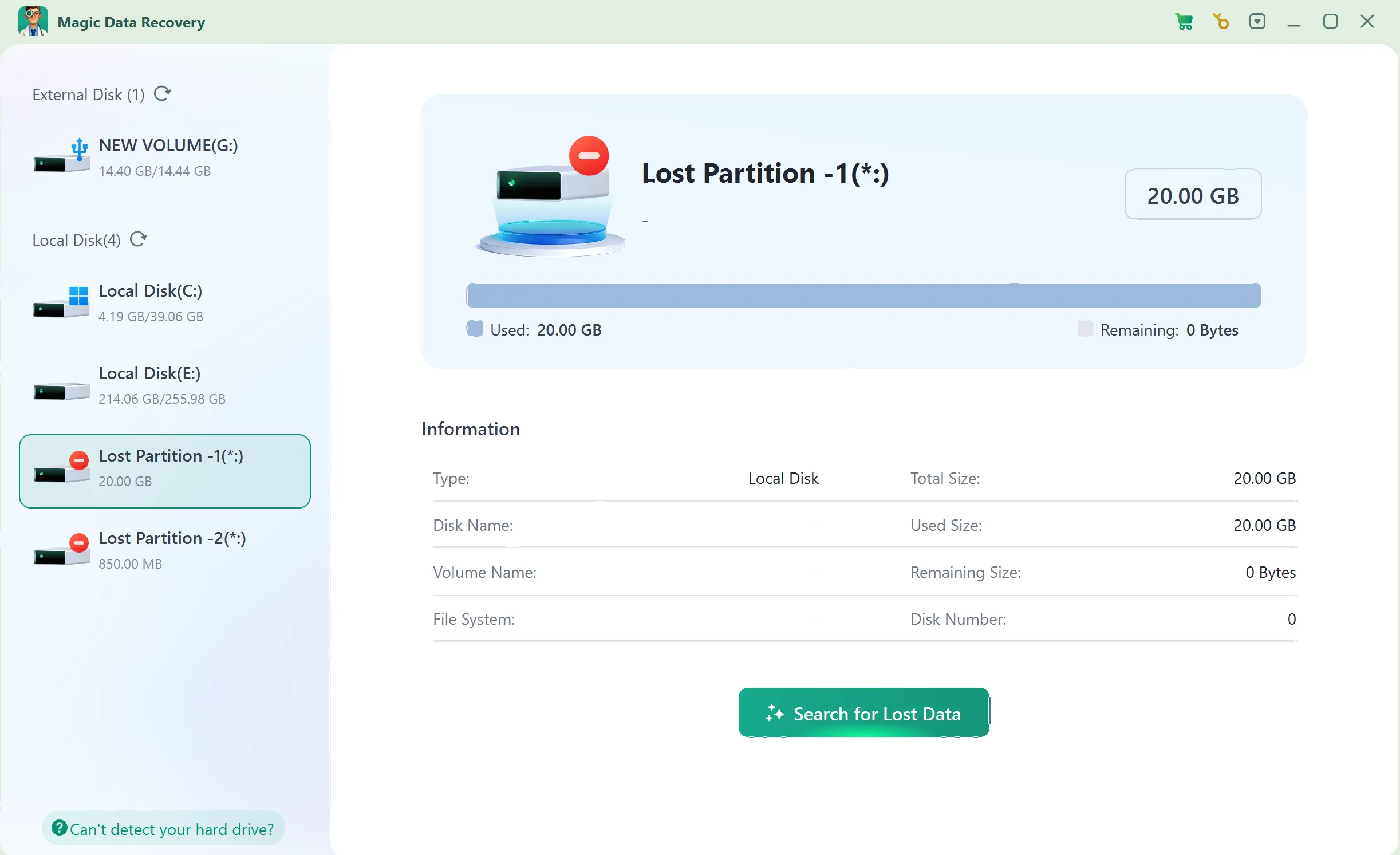
When manual fixes fail, you might face a “RAW” drive that demands formatting. However, formatting erases everything. Before you lose your files, you need a professional recovery strategy. This is where Magic Data Recovery becomes essential.
Why Amagicsoft is the Best Choice
If you are still wondering how to fix my USB flash drive while keeping your photos and documents, Magic Data Recovery offers a specialized solution. Specifically, this tool is designed to bypass file system errors and read data directly from the storage chips.
Core Benefits of Using Amagicsoft:
- Deep Partition Recovery: It finds files even on drives that Windows claims are “empty” or “unformatted.”
- Support for All Formats: Whether your drive was FAT32, NTFS, or exFAT, the software can reconstruct the data.
- High-Speed Scanning: Unlike free tools that take hours, Amagicsoft uses optimized algorithms to find files in minutes.
- Risk-Free Preview: You can see exactly what files are recoverable before you commit to the process.
Usage Scenario:Imagine your USB shows the error “You need to format the disk before you can use it.” Instead of clicking “Format,” you run Magic Data Recovery. It extracts your files to a safe location on your hard drive. Only after your data is safe do you proceed with the repair. For anyone looking for how to fix my USB flash drive effectively, this is the most reliable sequence.
Formatting the USB Drive: The Last Resort to Fix My USB Flash Drive
If every other repair attempt fails, you must wipe the drive to make it usable again. This is the final step in how to fix my USB flash drive. Formatting creates a brand-new file system, essentially giving the hardware a fresh start.
How to Format Safely:
- Disk Management: Right-click your USB partition.
- Select Format: Choose a name for your drive.
- Choose File System: Use FAT32 for maximum device compatibility or NTFS for large file support.
- Quick Format: Keep this box checked to save time.
After formatting, the drive should function perfectly. However, remember that all previous data is now gone, which is why the previous step with Magic Data Recovery is so critical.
Conclusion: Keep Your Data Safe
Learning how to fix my USB flash drive is a vital skill in our digital age. From updating drivers to using the CHKDSK command, most issues can be solved at home without spending money at a repair shop.
Furthermore, always remember that hardware is replaceable, but data is not. Whenever you encounter a corrupted drive, your first priority should be data preservation. Magic Data Recovery is your go-to solution for recovering USB files before attempting a format. Its professional-grade scanning ensures that you don’t lose what matters most.
Supports Windows 7/8/10/11 and Windows Server
FAQ – How to Fix My USB Flash Drive
Why does my USB drive say it is write-protected?
Can I fix a USB drive that shows 'No Media'?
Is it possible to fix a physically broken USB connector?
How can I prevent my USB drive from getting corrupted?
Why is my USB drive showing as RAW?
Does CHKDSK delete my files?
How to fix my USB flash drive if it is not showing in Disk Management?

Vasilii is a data recovery specialist with around 10 years of hands-on experience in the field. Throughout his career, he has successfully solved thousands of complex cases involving deleted files, formatted drives, lost partitions, and RAW file systems. His expertise covers both manual recovery methods using professional tools like hex editors and advanced automated solutions with recovery software. Vasilii's mission is to make reliable data recovery knowledge accessible to both IT professionals and everyday users, helping them safeguard their valuable digital assets.