
How to Fix a Broken USB Drive: The Ultimate Guide
Imagine the sudden frustration of plugging in your thumb drive to access critical work files, only to find a “Device not recognized” error. You are certainly not alone in this. Consequently, millions of users face this digital panic every year. Whether it is a corrupted file system or a driver glitch, learning how to fix a broken usb drive is an essential skill for any modern computer user.
Fortunately, a “broken” drive does not always mean a “dead” drive. Most issues are actually logical rather than physical. Therefore, you can often restore your USB drive and your data using built-in Windows tools or specialized software. In this comprehensive guide, we will walk you through professional troubleshooting steps to how to fix broken usb drive issues effectively. Furthermore, we will ensure you do not lose your valuable information during the repair process.
Table of Contents
Identifying Why You Need to Fix a Broken USB Drive
Before you attempt any repairs, you must determine if the damage is physical or logical. If the metal connector is bent, the circuit board is snapped, or there are no lights when plugged in, you are likely dealing with a physical hardware failure. In such cases, software solutions will unfortunately not work.
However, if your computer detects the drive but cannot open it, it is a logical failure. This is where knowing how to fix a broken usb drive becomes incredibly useful for saving your data. Logical errors usually stem from improper ejection or sudden power surges. Identifying this early saves you time; moreover, it prevents further damage to the NAND flash memory.
Initial Checklist to Fix Broken USB Drive Issues
Sometimes, the simplest solution is the most effective one. Before diving into complex command lines, you should perform these basic checks to see if you can how to fix broken usb drive connectivity issues instantly:
- Try a different USB port: Front-panel ports on PC cases often lose power. Instead, use the ports directly on the motherboard.
- Restart your computer: This clears the USB controller cache and can resolve temporary hardware conflicts.
- Check for physical debris: Use a can of compressed air to gently clean the USB connector.
- Test on another device: Plug the drive into a laptop. If it works there, the issue lies with your computer’s settings.
Update Drivers to Fix a Broken USB Drive
Outdated or corrupted drivers are a frequent culprit when a drive fails to show up in File Explorer. Because Windows relies on these small pieces of software to communicate with your hardware, any malfunction stops the connection. Consequently, you need to refresh them to how to fix a broken usb drive.
- First, right-click the Start button and select Device Manager.
- Next, expand the Universal Serial Bus controllers section.
- Look for any entries with a yellow exclamation mark.
- Right-click your USB Mass Storage Device and select Uninstall device.
- Finally, unplug the USB, restart your PC, and plug the drive back in.
Windows will automatically attempt to reinstall the correct driver. As a result, this method is a highly effective way to how to fix broken usb drive errors caused by software conflicts.
Use CHKDSK as a Way to Fix Broken USB Drive Errors
The Check Disk (CHKDSK) tool is a powerful utility built into Windows that can find and fix errors on your storage media. If your drive is “unreadable,” this is often the best way how to fix a broken usb drive without formatting the entire device.
To use CHKDSK, follow these specific steps:
- Type cmd in the Windows search bar.
- Right-click it and select Run as Administrator.
- Type the following command:
chkdsk X: /f(Replace X with the actual letter of your USB). - Press Enter and wait for the process to conclude.
The /f parameter tells Windows to fix any errors it finds. If the process completes successfully, your files should become accessible again. Therefore, this technique remains a cornerstone of professional data recovery.
Change the Drive Letter to Fix a Broken USB Drive
Sometimes a USB drive is perfectly healthy, yet Windows fails to display it because of a drive letter conflict. This often happens if you have multiple network drives attached. Assigning a new letter is a clever way to how to fix a broken usb drive that appears “invisible” in File Explorer.
Open the Disk Management tool by right-clicking the Start menu. Locate your USB drive in the list—it will likely show up as “Removable.” Right-click the partition and select Change Drive Letter and Paths. Choose a letter that isn’t currently in use, such as “M” or “Z”. Once you click OK, the drive should immediately pop up in your folder view.
Recovering Data with Magic Data Recovery
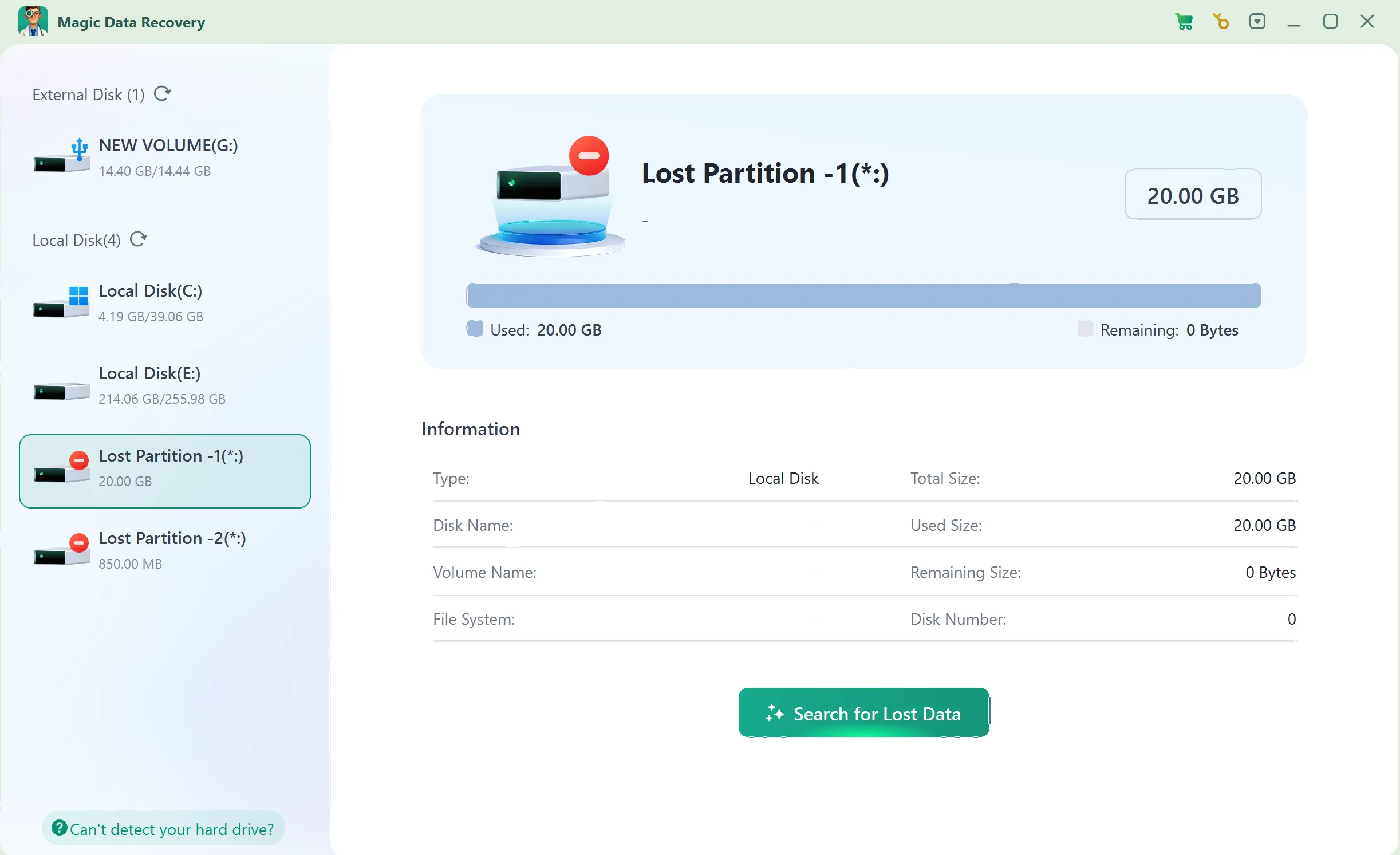
In many cases, the ultimate “fix” involves formatting the drive. However, this is a nightmare if your only copy of a business report is on that device. The safest way is to recover files first, and then repair the drive. Magic Data Recovery stands out in this scenario. Unlike basic utilities, this software is specifically designed to handle “broken” logical structures. It can bypass file system errors and scan the raw sectors of your USB drive to reconstruct lost files.
Key Benefits:
- High Success Rate: It recovers over 5000+ file types, including photos and documents.
- Deep Scan Technology: Even if your drive shows as RAW, Magic Data Recovery can find fragmented data.
- User-Friendly Interface: You do not need to be a tech expert; indeed, the process is very simple.
- Preview Feature: You can view your files before committing to the recovery.
If you are struggling with how to fix broken usb drive issues that threaten your data, using a dedicated tool like Magic Data Recovery is the safest path forward.
Use Diskpart to How to Fix Broken USB Drive RAW Errors
If your drive is labeled as “RAW“, the partition structure is likely destroyed. While this sounds terminal, you can use the Diskpart utility to how to fix a broken usb drive by wiping it and starting fresh.
Warning: This process will erase all data. Therefore, you must recover your files first.
- Open Command Prompt as an administrator.
- Type
diskpartand hit Enter. - Type
list diskto see all connected drives. - Type
select disk n(replace n with your USB’s number). - Type
cleanto remove all partition info. - Finally, type
create partition primaryand thenformat fs=fat32 quick.
Conclusion
In summary, learning how to fix a broken usb drive is a simple process of elimination. You should start with easy hardware checks, move to driver updates, and finally use command-line tools. While Windows offers great utilities, they often fall short when it comes to protecting your data.
This is Magic Data Recovery is recommended. It provides the safety net you need when your hardware fails. It bridges the gap between a “broken” device and a successful USB drive recovery. Consequently, even if the drive is beyond repair, your files are safe. Next time your drive acts up, follow these steps and use the right tools for the job.
Supports Windows 7/8/10/11 and Windows Server
FAQ
Can I fix a USB drive that was submerged in water?
Why does my USB drive say it is write-protected?
Does CHKDSK delete my files?
How do I fix a USB drive that is not showing up in Disk Management?
Can I fix a broken USB connector?
Is it safe to use "Quick Format" on a broken drive?
Why do USB drives break so easily?

Vasilii is a data recovery specialist with around 10 years of hands-on experience in the field. Throughout his career, he has successfully solved thousands of complex cases involving deleted files, formatted drives, lost partitions, and RAW file systems. His expertise covers both manual recovery methods using professional tools like hex editors and advanced automated solutions with recovery software. Vasilii's mission is to make reliable data recovery knowledge accessible to both IT professionals and everyday users, helping them safeguard their valuable digital assets.