
USB Flash Memory Repair Guide for Data Safety
USB flash memory repair is a common concern when a USB drive suddenly becomes unreadable, corrupted, or inaccessible. Many users panic at this point, fearing permanent data loss. Fortunately, most USB flash drive problems are logical rather than physical. That means your files are often still intact and recoverable with the right USB recovery solution.
This guide explains how USB flash memory works, why failures happen, and how to perform USB flash memory repair safely. You will also learn when professional data recovery tools are the most reliable option.
Table of Contents
What Is USB Flash Memory Repair?
USB flash memory repair refers to the process of diagnosing and fixing issues that prevent a USB flash drive from functioning normally. These issues may include file system corruption, RAW format errors, write protection, or incorrect device recognition by the operating system.
Unlike hardware repair, most USB flash memory repair tasks focus on restoring logical structures such as:
- File system tables (FAT32, exFAT, NTFS)
- Partition information
- Access permissions
The good news is that logical damage rarely destroys actual data blocks.
Common Causes of USB Flash Memory Failure
Understanding the cause of failure helps determine the correct USB flash memory repair method.
Improper Removal
Removing a USB drive without safe eject interrupts write operations and damages file system metadata.
File System Corruption
Sudden power loss, malware, or incompatible devices may corrupt the file system and trigger error messages.
Virus or Malware Attacks
Malicious software can hide, encrypt, or delete files while leaving the USB drive physically intact.
Bad Sectors
Over time, flash memory cells degrade, causing read or write failures in specific areas. These unreadable areas are bad sectors.
Unsupported or RAW Format
When the file system becomes unreadable, the USB drive may appear as RAW and request formatting.
Signs That USB Flash Memory Repair Is Needed
Typical symptoms include:
- USB drive not showing files
- Device recognized but inaccessible
- “You need to format the disk” error
- Write-protected USB drive
- Extremely slow read or write speed
These symptoms usually indicate logical issues rather than permanent damage.
Safe Methods for USB Flash Memory Repair
Before attempting advanced recovery, start with non-destructive solutions.
Method 1: Reconnect and Test on Another Port
Sometimes the issue is related to the USB port rather than the drive itself. Reconnect the device using a different port or computer.
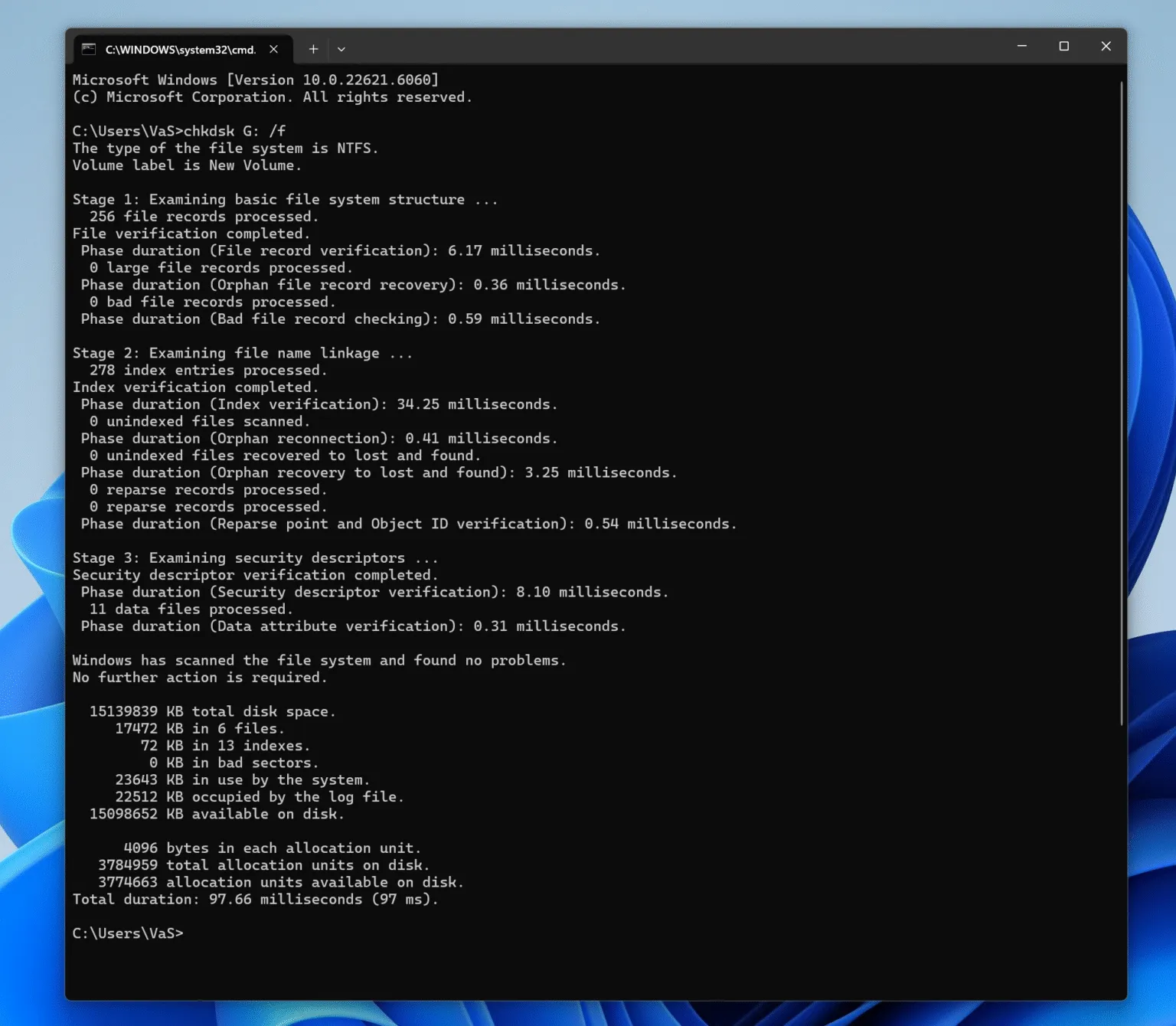
Method 2: Run CHKDSK for File System Errors
Windows provides a built-in utility for repairing logical errors.
Steps:
1. Connect the USB drive.
2. Open Command Prompt as administrator.
3. Enter:
chkdsk X: /f
Replace X with the USB drive letter.
This method works well for minor corruption but should be avoided if data is extremely important.
Method 3: Update or Reinstall USB Drivers
Outdated drivers can cause recognition issues. Updating drivers may restore access without further repair.
When Formatting Is Not the Right Solution
Formatting is often suggested by the system, but it should be your last option. Formatting erases file system structures and increases recovery difficulty.
Instead, prioritize data recovery before formatting if:
- Files are important
- The drive appears as RAW
- You receive frequent read errors
Professional Data Recovery Tool for USB Drive Failure
When manual solutions fail, professional software provides a safer approach. Magic Data Recovery is designed for advanced USB drive failure scenarios while keeping original data untouched.
Why Choose Magic Data Recovery?
- Read-only scanning prevents data overwriting
- Supports FAT32, exFAT, and NTFS USB drives
- Handles RAW and corrupted file systems
- Recovers photos, videos, documents, and archives
USB Flash Memory Repair vs Replacement
Situation | Repair Recommended | Replacement Recommended |
File system corruption | Yes | No |
Accidental deletion | Yes | No |
Physical connector damage | No | Yes |
Controller failure | Rare | Yes |
Logical issues are ideal candidates for USB flash memory repair.
Best Practices to Prevent Future USB Flash Memory Problems
- Always eject USB drives properly
- Avoid sudden power interruptions
- Use reputable antivirus software
- Keep backups of critical files
- Avoid excessive write cycles
Preventive care significantly reduces repair needs.
Conclusion
USB flash memory repair does not have to be risky or complicated. Most USB failures are logical and fully recoverable when handled correctly. Instead of formatting blindly or attempting unsafe fixes, using a professional solution ensures data integrity.
Magic Data Recovery stands out as a reliable and efficient tool because it focuses on safe, read-only recovery while supporting a wide range of USB flash memory issues. If your USB drive fails unexpectedly, this tool allows you to regain control and restore your files from USB drives with confidence.
Supports Windows 7/8/10/11 and Windows Server
FAQ
Can USB flash memory be repaired without formatting?
Why does my USB flash drive ask to be formatted?
How do I repair a RAW USB flash drive?
Is it safe to use CHKDSK to repair a USB drive?
What causes repeated USB flash memory corruption?
When should I replace a USB flash drive instead of repairing it?

Vasilii is a data recovery specialist with around 10 years of hands-on experience in the field. Throughout his career, he has successfully solved thousands of complex cases involving deleted files, formatted drives, lost partitions, and RAW file systems. His expertise covers both manual recovery methods using professional tools like hex editors and advanced automated solutions with recovery software. Vasilii's mission is to make reliable data recovery knowledge accessible to both IT professionals and everyday users, helping them safeguard their valuable digital assets.