
Buffalo Data Recovery: How to Recover Data from Buffalo Hard Drives

Supports Windows 7/8/10/11 and Windows Server
Wondering if your files can be recovered? Find out in seconds with our quick check below.
Data Recovery Assessment
Answer 3 quick questions to estimate your recovery chances
Table of Contents
When Do You Need a Buffalo Data Recovery Service?
Problems with Buffalo drives typically fall into two categories: physical damage and logical damage.
- Physical failures: hardware-level damage (unusual noises, not powering on, mechanical issues)
- Logical issues: accidental deletion, formatting, file system corruption, RAW partitions
Since the recovery approach depends on the type of failure, the first step is a proper diagnosis. If it is a physical issue, it would be best to contact Buffalo’s data recovery service.
Buffalo Data Recovery Service for Physical Failures
How to Detect Physical Damage
- The drive makes clicking, buzzing, or grinding noises
- The disk does not spin or is not recognized by the system
- The drive was dropped, exposed to water, or physically damaged
⚠️ In these cases, do not try to recover data yourself. Repeated attempts may cause further damage and make recovery impossible.
Why Choose Buffalo Data Recovery Service
For physical failures, the safest option is to rely on a Buffalo data recovery service.
- Official labs can safely open and repair the drive in a cleanroom environment
- Certified engineers maximize the chances of recovery
Buffalo Data Recovery Service and DIY Fixes for Logical Failures
How to Detect Logical Issues
- The drive is recognized, but Windows prompts “You need to format the disk”

- The file or directory is corrupted and unreadable

- The partition turns RAW

- Data loss due to accidental deletion or formatting
Unlike physical failures, logical issues can often be fixed with software tools. While Buffalo Data Recovery Service also works for logical issues, recovering the data yourself is more cost-effective.
Repair with CHKDSK (Microsoft Official Tool)
According to Microsoft Documentation, Windows provides the built-in CHKDSK utility to fix file system errors.
1. Press Windows button on the keyboard and type cmd.
2. Right-click Command Prompt and select Run as administrator.

3. In the Command Prompt window, type the following command and press Enter:
chkdsk X: /f /r
(Replace “X” with the actual drive letter.)

4. Wait for the scan and repair process to complete. Depending on the disk size, this may take some time.
⚠️ Important: Do not interrupt the process, as doing so could cause further file system issues.
Use Hex Editor Tools for Buffalo HDD recovery (Professional Users)
For complex logical failures such as partition table corruption or a damaged DBR (Disk Boot Record), advanced tools like WinHex can be used. This is a professional-level hex editor that allows direct access to disk sectors and file structures. Here are the steps to use Winhex:
1. Open the Problematic Disk. Select the Buffalo drive (make sure to pick the correct one to avoid overwriting the wrong disk).
2. Analyze the Partition Table.
Refer to Microsoft documentation to confirm that the partition table is properly configured for either an MBR or a GPT disk.

3. If the partition table is correct, analyze DBR (DOS Boot Sector). Take NTFS as an example:
- If DBR is damaged, according to Microsoft documentation, NTFS keeps a backup of the boot sector at the last sector of the volume.

- Navigate to the end of the partition using WinHex and verify the backup DBR integrity.

- If the primary DBR is corrupted, you can copy the backup DBR over the primary to restore partition access.

If there are no other issues, the NTFS partition should be accessible again.
4. Manually Repair Partition Parameters
- Edit damaged values (such as partition size, file system type, starting sector) to match the backup or known disk geometry.
- Save changes carefully — even a small mistake can render the partition inaccessible.
⚠️ Warning: WinHex is a professional tool. Manual editing at the sector level carries a high risk of permanent data loss if used incorrectly. Always make a sector-by-sector backup of the drive before attempting modifications.
Easy Method for Buffalo data recovery – Magic Data Recovery
For users facing logical issues who prefer a safe, user-friendly solution, Magic Data Recovery is highly recommended.
- Recovers files from deletion, formatting, or RAW partitions
- Supports 5000+ file types including photos, videos, and business documents
- Simple interface, no professional skills required
- Preview files before recovery
While Buffalo data recovery service is the go-to option for physical failures, Magic Data Recovery provides an affordable and effective DIY solution for logical data loss.
How to Use Magic Data Recovery
Magic Data Recovery is designed to make the recovery process simple, even for beginners. Here’s how you can use it to recover data from your Buffalo drive:
1. Download and Install Magic Data Recovery from the official website.
Supports Windows 7/8/10/11 and Windows Server
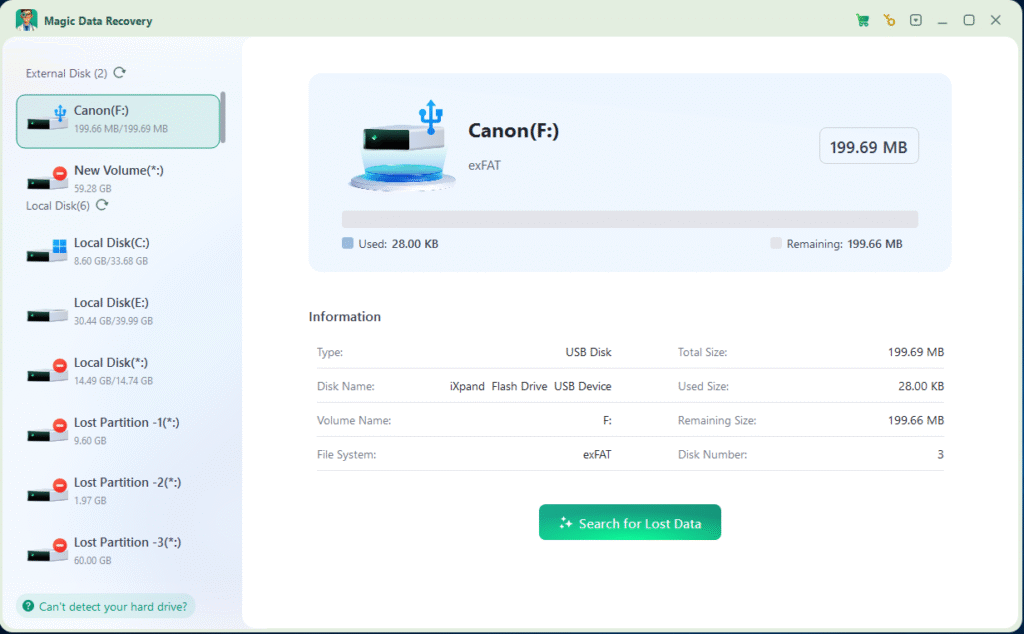
3. Wait till the scan completes. It will list all the files on the drive after the scan.
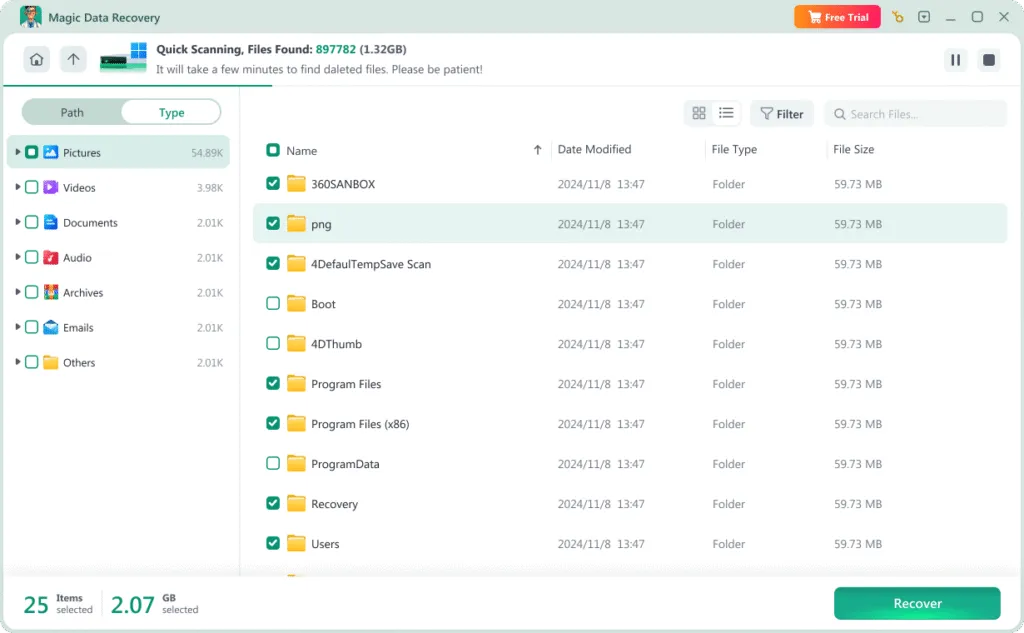
4. Preview Results. You can confirm what files are the ones you need.

5. Recover and Save Files. Select the data you need and save them to a safe storage location (never back to the same Buffalo drive to avoid overwriting).

✨ With just a few clicks, you can recover photos, videos, documents, and more — without needing advanced technical knowledge.
Here is the video tutorial for reference.
Conclusion
When dealing with Buffalo data recovery, the first and most important step is identifying whether the issue is physical or logical. For physical failures, relying on a Buffalo data recovery service is the safest option. For logical issues, solutions like CHKDSK or advanced tools such as WinHex can restore access to lost data — though they require technical expertise.
For most users who prefer a safe, straightforward, and reliable method, Magic Data Recovery provides an excellent balance. It handles deletion, formatting, and RAW partition problems with ease, requires no professional knowledge, and gives you full control over your recovery process.
By understanding your situation and choosing the right recovery approach, you can protect your valuable files and achieve the best possible recovery outcome.
Supports Windows 7/8/10/11 and Windows Server
FAQ
How much does Buffalo data recovery service cost?
Is it risky to try Buffalo data recovery on my own?
Can I recover Buffalo HDD myself?

Vasilii is a data recovery specialist with around 10 years of hands-on experience in the field. Throughout his career, he has successfully solved thousands of complex cases involving deleted files, formatted drives, lost partitions, and RAW file systems. His expertise covers both manual recovery methods using professional tools like hex editors and advanced automated solutions with recovery software. Vasilii's mission is to make reliable data recovery knowledge accessible to both IT professionals and everyday users, helping them safeguard their valuable digital assets.