
Recovery Data Windows 7: How to Recover Lost Files
Losing important files on an older system can feel overwhelming, especially when the device is still running Windows 7. Accidental deletion, disk formatting, system crashes, or hardware failure can all result in sudden data loss. Many users assume that once files disappear from Windows 7, recovery is no longer possible. In reality, data recovery on Windows 7 scenarios are often solvable—if the right steps are taken early.
Throughout the article, you will learn how data recovery works on Windows 7, which options are realistically available, and why a dedicated HDD recovery solution like Magic Data Recovery is often the safest choice.
Supports Windows 7/8/10/11 and Windows Server
Wondering if your files can be recovered? Find out in seconds with our quick check below.
Data Recovery Assessment
Answer 3 quick questions to estimate your recovery chances
Table of Contents
Understanding Common Windows 7 Data Loss Scenarios
Before choosing a recovery method, it is important to identify how the data was lost. Different situations require different approaches.
Accidental File Deletion
Files removed with Shift + Delete or emptied from the Recycle Bin are not immediately erased. Their storage space is marked as available, which means recovery is still possible until new data overwrites it.
Formatted or Repartitioned Drives
Formatting a drive in Windows 7 removes file system references, not the actual data. This makes data recovery on Windows 7 feasible with proper scanning tools.
System Crash or Blue Screen Errors
Unexpected shutdowns, corrupted system files, or boot failures may block access to user data while the files themselves remain intact.
Hard Drive Hardware Issues
A drive that spins but does not boot Windows may still contain readable data. However, powering it on repeatedly can worsen the damage.
Is Windows 7 Data Recovery Still Possible Today?
Although Windows 7 has reached end-of-support, data recovery remains technically possible. In practice, the operating system does not determine recoverability; instead, the physical and logical condition of the storage medium plays the decisive role.
In most cases, files remain recoverable when:
- The drive has not been overwritten
- The disk is detected by the system
- No secure wipe or encryption was applied
However, recovery becomes unlikely if:
- New data continuously replaces old sectors
- The drive has severe physical damage
- Files were wiped using data destruction tools
Understanding these limits helps set realistic expectations and prevents further loss.
Built-in Windows 7 Recovery Options and Their Limits
Windows 7 offers several native tools, but each has strict limitations.
Recycle Bin
This works only for recently deleted files that were not permanently removed. Once the bin is emptied, files no longer appear here.
Backup and Restore
If backups were enabled before the loss occurred, restoring files is straightforward. Unfortunately, many users never configured backups.
System Restore
System Restore focuses on system settings and registry changes. It does not reliably restore personal documents, photos, or videos.
These tools explain why many users eventually turn to professional recovery solutions.
Why Dedicated Software Is the Best Windows 7 Data Recovery Solution
Manual methods often fail because they cannot analyze the underlying file system in depth. By contrast, a professional recovery tool works differently:
- Scans disk sectors directly
- Rebuilds file structures
- Recovers data in read-only mode
This approach minimizes risk and increases success rates, especially for permanently deleted or formatted files.
How to Recover Data from Windows 7 Using Magic Data Recovery
Magic Data Recovery is designed for users who need reliable results without complex procedures. It supports common Windows 7 file systems and recovery scenarios.
Step-by-Step Recovery Process
1. Install Magic Data Recovery on a drive different from the affected one
Supports Windows 7/8/10/11 and Windows Server
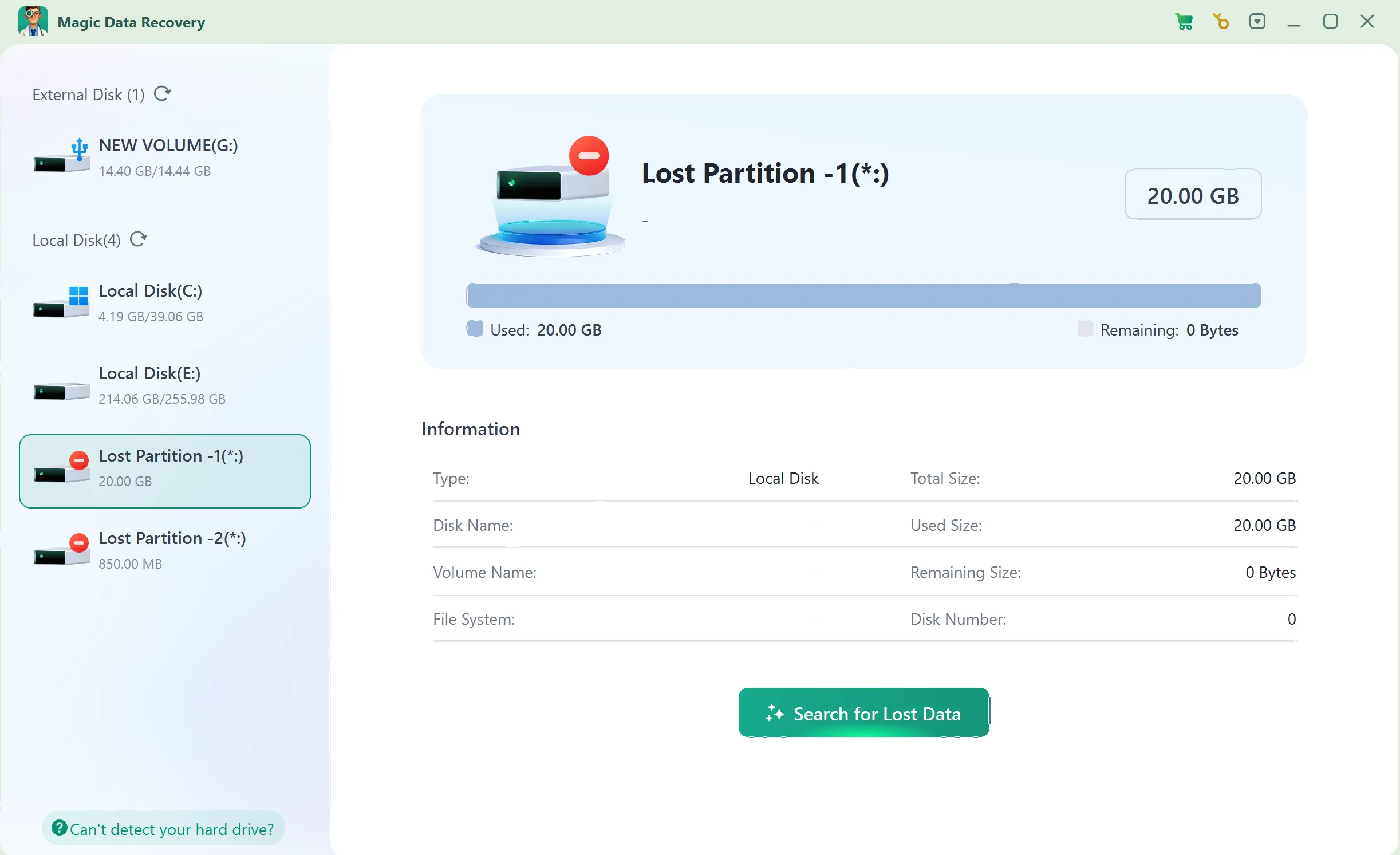
2. Select the partition or disk to scan. When you run the software, it lists all the drives connected to the computer. Select the drive where lost files located and start searching.
3. Wait till the scan completes. It performs an Advanced Scan automatically and lists all the files on the drive after the scan.
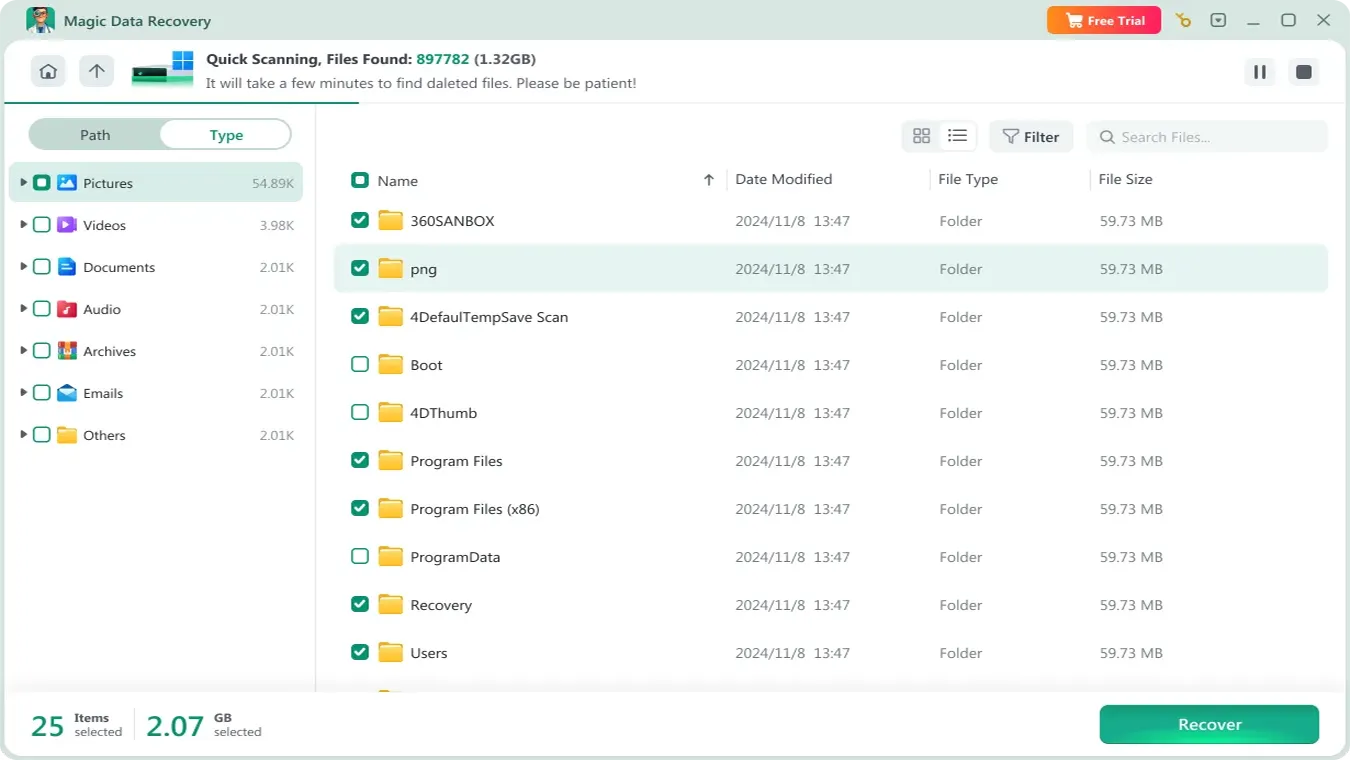
4. Preview recoverable files before restoring them. Preview feature can help users check the file contents before recovery.

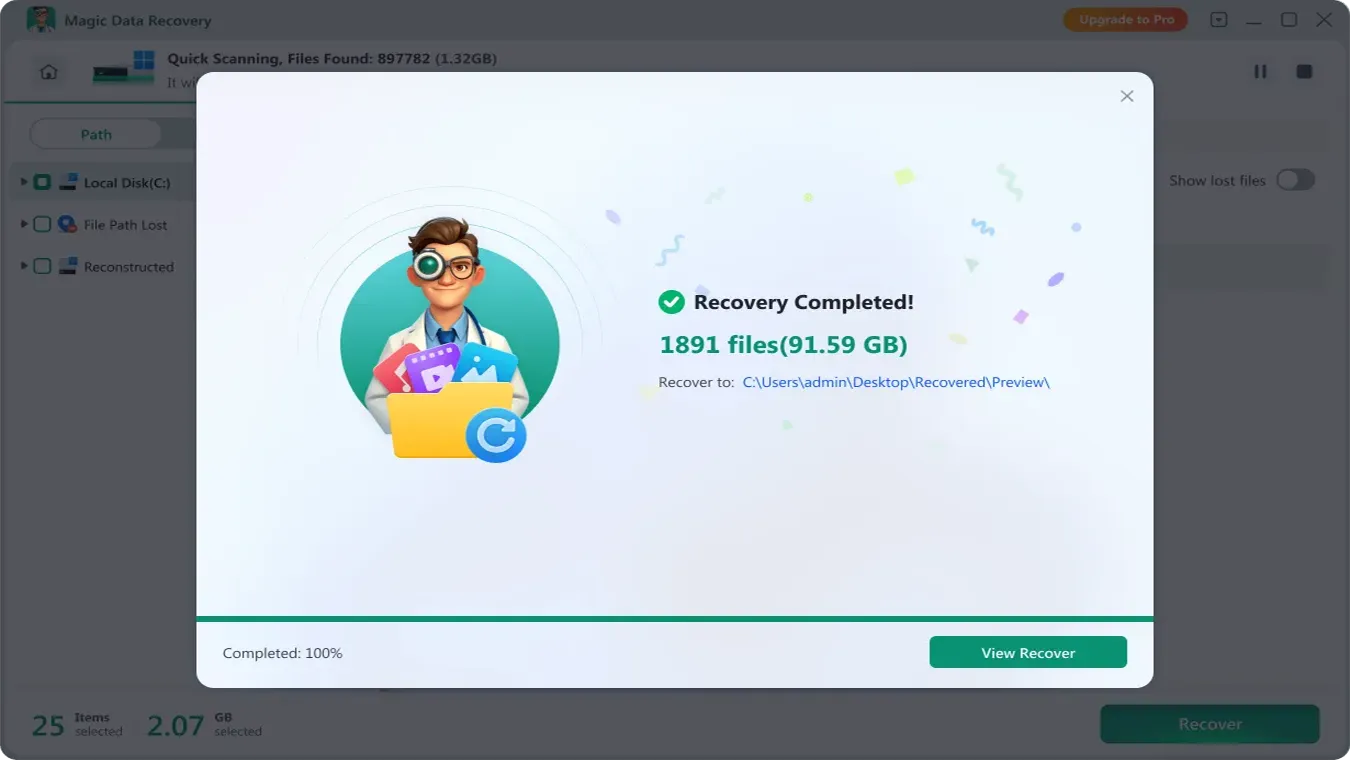
5. Save recovered data to an external or secondary drive. DO NOT save the files back to the original drive as it risks overwriting the lost data. As a result, this process helps keep the original data untouched during recovery.
Why Magic Data Recovery Is a Reliable Choice
Magic Data Recovery focuses on solving real recovery problems rather than promoting unnecessary features.
Key Advantages
- Compatible with Windows 7 systems
- Handles deleted, formatted, and crash-related data loss
- Allows file preview before recovery
- Simple interface suitable for non-technical users
Practical Use Cases
- Recovering documents after accidental deletion
- Restoring photos from formatted drives
- Extracting data from non-booting Windows 7 systems
Compared to manual methods or generic tools, Magic Data Recovery provides a more controlled and safer recovery experience.
Tips to Improve Windows 7 Data Recovery Success
To improve recovery outcomes, it is important to follow several proven best practices:
- Stop using the affected drive immediately
- Avoid reinstalling Windows before recovery
- Recover files to a different storage device
- Act quickly before data is overwritten
These steps apply regardless of which recovery tool you choose.
Conclusion
In summary, although Windows 7 is no longer officially supported, data recovery on Windows 7 scenarios remain common and solvable. The key lies in understanding how data loss occurs and choosing a HDD recovery method that minimizes further risk. Built-in tools have limited scope, while professional recovery software offers deeper analysis and better outcomes.
For users who need a practical and trustworthy solution, Magic Data Recovery stands out as a reliable option. It addresses real recovery challenges without unnecessary complexity, making it a sensible choice for Windows 7 data recovery needs.
Supports Windows 7/8/10/11 and Windows Server
FAQ: Recovery Data on Windows 7
How to recover data from Windows 7?
How to recover permanently deleted files in Windows 7?
What is the free recovery software for Windows 7?
How do I restore Windows 7 to an earlier date?
How to access Windows recovery environment in Windows 7?
How to get files off a hard drive that won't turn on?
Can I still recover permanently deleted files?
What's the best Windows file recovery software?

Vasilii is a data recovery specialist with around 10 years of hands-on experience in the field. Throughout his career, he has successfully solved thousands of complex cases involving deleted files, formatted drives, lost partitions, and RAW file systems. His expertise covers both manual recovery methods using professional tools like hex editors and advanced automated solutions with recovery software. Vasilii's mission is to make reliable data recovery knowledge accessible to both IT professionals and everyday users, helping them safeguard their valuable digital assets.