
System Recovery for Lost Data
When your computer crashes, refuses to boot, or shows serious errors, system recovery may look like the fastest way to bring it back to normal. However, many users discover a painful problem afterward: important documents, photos, videos, or work files are missing.
This is where system recovery becomes more than a system repair topic. It also becomes a data recovery problem.
In this guide, you will learn what system recovery does, why files may disappear after restoring or resetting a computer, and how to recover deleted, formatted, or inaccessible data safely. We will also explain when a dedicated tool like Magic Data Recovery can help, especially if your files were lost due to deletion, formatting, partition issues, or file system errors.
Microsoft’s Windows File Recovery page explains that lost files may be recoverable from local storage devices, but the tool is command-line based and does not support cloud storage or network file shares. In comparison, many users need a more guided recovery workflow after a system-level problem.
Supports Windows 7/8/10/11 and Windows Server
Table of Contents
What Does System Recovery Mean?
System recovery refers to the process of restoring a computer system to a usable state after a crash, boot failure, update issue, malware problem, corrupted system file, or software conflict.
Depending on the device and operating system, system recovery may include:
- Restoring Windows to an earlier restore point
- Resetting the PC while keeping or removing personal files
- Reinstalling the operating system
- Recovering from a recovery partition
- Using a backup image
- Repairing boot files or system files
- Restoring factory settings
Although these options can fix system problems, they do not always protect user data. For example, restore points mainly focus on system files, registry settings, drivers, and programs, not personal documents or media files. Lifewire’s explanation of restore points also notes that they are designed to revert system-related components rather than recover personal files like documents or music.
That distinction matters. If your goal is to recover lost files, system recovery alone may not be enough.
Why Files May Be Lost After System Recovery
File loss after system recovery can happen for several reasons. The exact cause affects the recovery method you should choose.
1. The Recovery Process Removed User Files
Some recovery options keep personal files, while others remove apps, settings, and user data. If you choose a reset or reinstall option that removes everything, files stored on the system partition may disappear.
This often happens when users want to fix Windows quickly and do not fully notice the difference between “Keep my files” and “Remove everything.”
2. The Drive Was Formatted During Recovery
A full factory reset or clean installation may format the system partition. Formatting does not always erase every file immediately, but it removes file system records that help the operating system locate files.
That is why formatted drive recovery is still possible in some cases, as long as new data has not overwritten the original file content.
3. The File System Became Corrupted
Sometimes the issue appears before system recovery begins. A corrupted NTFS, exFAT, FAT32, or other file system may make files inaccessible. Users may see errors such as:
- “The file or directory is corrupted and unreadable”
- “You need to format the disk before you can use it”
- Drive shows as RAW
- Partition is missing
- Folder opens but files are gone
4. Files Were Deleted Before the Recovery
In some cases, system recovery does not cause the loss directly. The files may have been deleted before the recovery attempt. After that, the recovery process may write new system files to the drive, which increases the risk of overwriting deleted data.
5. The Wrong Partition Was Recovered or Reinstalled
During Windows installation or recovery, users may select the wrong partition by mistake. This can lead to formatted partitions, missing volumes, or changed drive letters.
If this happens, stop using the computer immediately and recover data before installing more software on the affected drive.
What to Do First After System Recovery Data Loss
Before trying any recovery method, take a few protective steps. These actions can improve your chance of restoring files.
Stop Using the Affected Drive
The most important rule is simple: do not save new files to the affected drive.
Deleted or formatted files may still exist physically on the disk until new data overwrites them. Every new download, software installation, update, or copied file can reduce the chance of successful recovery.
Do Not Reinstall Windows Again
Repeated installation or reset attempts can write more data to the system partition. If the missing files were stored on Desktop, Documents, Downloads, Pictures, or Videos, another reinstall may make recovery harder.
Check Backups and Cloud Sync First
Before using recovery software, check:
- OneDrive
- Google Drive
- Dropbox
- External hard drives
- File History
- Backup and Restore
- Previous manually copied folders
- NAS or USB backup devices
This step is fast and safe. However, if backup is incomplete or unavailable, you need a recovery-focused solution.
Recover to Another Drive
Never restore recovered files back to the same partition you are scanning. Save them to another internal drive, external drive, or USB storage device.
This prevents overwriting files that are still recoverable.
How to Recover Lost Files After System Recovery
There is no single best method for every situation. The right approach depends on how the data was lost.
Method 1: Check Windows.old Folder
If you reinstalled Windows without formatting the partition, Windows may create a Windows.old folder. It can contain files from the previous installation.
Check these locations:
- C:\Windows.old\Users\YourName\Desktop
- C:\Windows.old\Users\YourName\Documents
- C:\Windows.old\Users\YourName\Downloads
- C:\Windows.old\Users\YourName\Pictures
If you find your files, copy them to a safe location immediately.
Method 2: Restore from File History or Backup
If File History was enabled before the issue, you may recover earlier versions of folders and files.
Try this:
- Open the folder where the file was stored.
- Right-click the folder.
- Choose “Restore previous versions.”
- Select a version from before the system recovery.
- Restore or copy the file to another location.
This method works only if Windows had previous versions or backup history available.
Method 3: Use Windows File Recovery
Windows File Recovery is Microsoft’s own recovery tool for deleted files on local drives. It can help when files are deleted and cannot be restored from the Recycle Bin.
However, it uses command-line operations. For non-technical users, this can be difficult. You need to understand drive letters, recovery modes, file extensions, and command syntax.
Therefore, it may not be the most practical choice if you need a simpler system recovery data loss solution.
Method 4: Use Magic Data Recovery
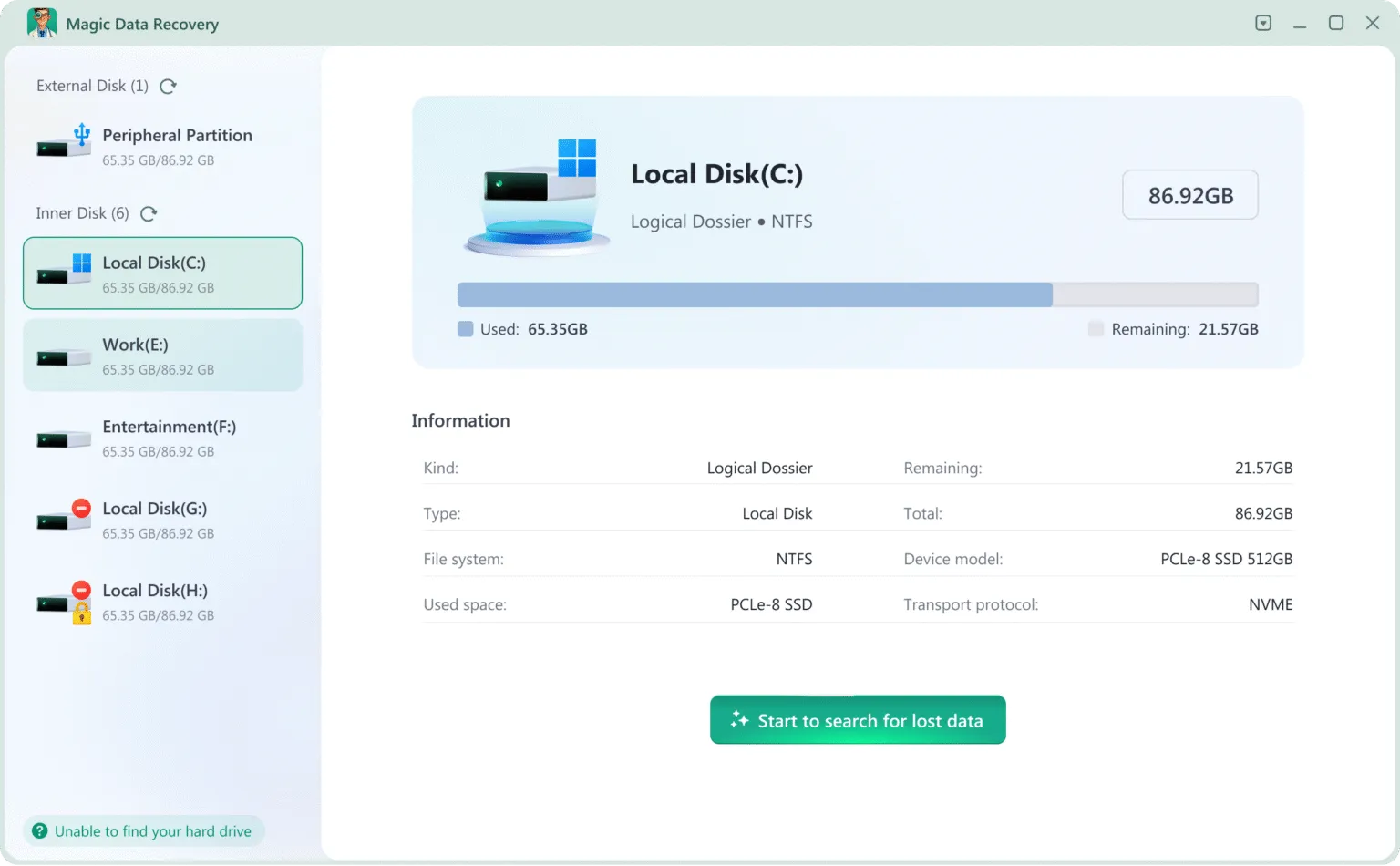
If your files were lost after deletion, formatting, file system corruption, partition errors, or a failed recovery process, Magic Data Recovery provides a more user-friendly way to scan the affected storage device and recover lost data.
Magic Data Recovery is useful when:
- Files disappeared after system recovery
- A partition was formatted
- The drive shows a file system error
- Deleted files are not in the Recycle Bin
- The folder structure is damaged
- Files became inaccessible after system repair
- An external drive, USB drive, or memory card has lost data
The key advantage is that it focuses on data recovery rather than system repair. In other words, it does not try to “fix Windows” first. It scans the storage device for recoverable files and helps you preview and restore them to a safe location.
If you are looking for a more efficient solution, you can try Magic Data Recovery before taking riskier actions like reinstalling the system again.
Supports Windows 7/8/10/11 and Windows Server
Why Magic Data Recovery Is Reliable for System Recovery Data Loss
A good recovery tool should solve the actual data problem, not just provide a generic scan button. Magic Data Recovery is suitable for system recovery scenarios because it covers several common causes of file loss.
It Supports Multiple Data Loss Scenarios
Data loss does not happen in only one way. After system recovery, users may deal with deleted files, formatted partitions, corrupted file systems, inaccessible folders, or missing partitions.
Magic Data Recovery is designed for these practical situations. It can scan storage devices and look for recoverable files even when the original file path is no longer easy to access.
It Helps Ordinary Users Recover Files More Easily
Command-line tools can work, but they are not ideal for everyone. A visual interface reduces the chance of typing the wrong command, scanning the wrong drive, or restoring files to the wrong place.
For most users, the recovery process should be clear:
- Select the affected drive.
- Scan for lost files.
- Preview recoverable results.
- Choose the files you need.
- Save them to another safe drive.
This workflow is easier to follow after a stressful system recovery problem.
It Works for Deleted, Formatted, and File System Error Cases
Some tools mainly focus on deleted file recovery. However, system recovery data loss often involves deeper problems, such as formatting or file system damage.
Magic Data Recovery is a stronger fit because it supports recovery from deletion, formatting, and file system errors. That makes it more flexible than a solution that only handles simple deleted files.
It Reduces Risk Compared with Repeated System Repair
When files are missing, many users try to reset, repair, or reinstall the computer again. This can make data recovery harder because new system files may overwrite lost data.
A recovery tool gives you a safer first step: scan the affected drive before making more changes.
System Recovery vs Data Recovery: What Is the Difference?
Many users confuse system recovery with data recovery. They sound similar, but they solve different problems.
Item | System Recovery | Data Recovery |
Main goal | Fix the operating system | Recover lost or inaccessible files |
Focus | Windows, apps, drivers, settings | Documents, photos, videos, archives, folders |
Risk | May overwrite old data | Should avoid writing to affected drive |
Best for | Boot errors, crashes, system corruption | Deleted, formatted, lost, or inaccessible files |
Example tool | System Restore, Reset this PC | Magic Data Recovery |
This difference is important. If your computer cannot boot, system recovery may help restore access. But if your files are missing, you need data recovery.
Best Practices Before Running System Recovery
To avoid future data loss, follow these best practices before using any recovery or reset option.
Back Up Important Files First
Copy important files to an external drive or cloud storage before running recovery. Include:
- Desktop files
- Documents
- Downloads
- Pictures
- Videos
- Project folders
- Browser exports
- Email archives
- License keys
- Work files
Even if the recovery option says it will keep personal files, a backup gives you an extra safety layer.
Read Every Recovery Option Carefully
Windows recovery options may look similar, but they can have very different effects. Take time to confirm whether the option will keep files, remove apps, format the drive, or reinstall Windows.
Avoid Formatting Unless Necessary
If Windows asks you to format a drive that contains important data, do not click Format immediately. That message may appear because the file system is damaged. A data recovery scan should come first.
Keep the Recovery Destination Separate
When recovering files, always use another drive as the destination. This is one of the most important industry best practices for avoiding accidental overwriting.
Common Mistakes to Avoid During System Recovery Data Loss
Small mistakes can turn a recoverable case into a difficult one. Avoid these actions:
Installing Recovery Software on the Affected Drive
If the lost files were on drive C, do not install software on drive C if possible. Use another computer or install the tool on a different drive.
Saving Recovered Files to the Same Partition
This can overwrite other lost files that have not been recovered yet. Always save recovered files elsewhere.
Running Disk Repair Too Early
Tools like CHKDSK can fix some file system errors, but they may also change directory records. If the data is very important, scan and recover files first.
Continuing to Use the Computer Normally
Browsing the web, downloading files, updating software, or creating new documents can write data to the disk. Stop using the affected device until recovery is complete.
When Should You Contact a Professional Recovery Service?
Software recovery is not always the right choice. Contact a professional data recovery service if:
- The drive makes clicking or grinding sounds
- The computer cannot detect the drive
- The SSD has serious hardware failure
- The drive was physically damaged
- The lost data is legally or financially critical
- Several recovery attempts have already failed
In these cases, DIY scanning may not be enough. Hardware-level issues require specialized equipment.
Conclusion: Use System Recovery Carefully, Then Recover Data Safely
System recovery can fix many computer problems, but it does not always restore lost personal files. In fact, reset, reinstall, format, or recovery partition operations may cause files to disappear if no backup exists.
The safest approach is to stop using the affected drive, check backups, avoid repeated reinstallations, and use a dedicated recovery tool when needed.
Magic Data Recovery is recommended because it focuses on the real problem behind many system recovery cases: lost, deleted, formatted, or inaccessible data. It supports common data loss scenarios, offers a clear recovery workflow, and helps ordinary users recover files without relying on complex command-line steps.
If you are dealing with missing files after system recovery, try a careful data recovery scan before making more changes to the drive.
Supports Windows 7/8/10/11 and Windows Server
FAQs
Does system recovery delete personal files?
System recovery may or may not delete personal files, depending on the option you choose. A restore point usually focuses on system files and settings, while a reset or factory recovery may remove user data. Always read the recovery option carefully and back up important files before starting.
Can I recover files after system recovery?
Yes, you may recover files after system recovery if the original data has not been overwritten. Stop using the affected drive immediately, check backup locations, and scan the drive with data recovery software. The sooner you act, the better your chance of finding recoverable files.
Why did my files disappear after system restore?
Files may disappear after system restore because the issue was caused by deletion, profile changes, folder redirection, or another recovery action. System Restore is mainly designed to reverse system changes, not recover personal files. Check user folders, Windows.old, backups, and recovery software results.
Is system recovery the same as data recovery?
No. System recovery repairs or restores the operating system, while data recovery focuses on retrieving lost, deleted, formatted, or inaccessible files. If Windows is broken, system recovery may help. If your files are missing, you need a dedicated data recovery method.
Can formatted data be recovered after system recovery?
Formatted data can often be recovered if new files have not overwritten the original data. A quick format usually removes file system records rather than immediately erasing every file. Use recovery software to scan the formatted partition and save recovered files to another storage device.
Should I use CHKDSK before data recovery?
Not always. CHKDSK can repair file system errors, but it may also modify file records. If the lost data is important, recover files first before running repair commands. After your data is safely restored, you can use disk repair tools to fix the storage device.
Why use Magic Data Recovery after system recovery?
Magic Data Recovery helps recover files lost due to deletion, formatting, file system errors, and other common data loss situations. It is useful after system recovery because it focuses on scanning the affected drive and restoring recoverable files instead of changing system settings again.
Where should I save recovered files?
Save recovered files to a different drive, such as an external hard drive, USB drive, or another internal partition. Do not save them back to the same partition you are scanning. This prevents overwriting other lost files that may still be recoverable.

Jason is a data recovery and technical support specialist with over 15 years of hands-on experience. He has worked extensively with frontline users, troubleshooting difficult data loss cases and providing practical recovery solutions for accidental deletion, formatted drives, damaged file systems, lost partitions, system failures, and other recovery emergencies. His expertise also includes backup and restoration, file repair, and disaster recovery, with a strong emphasis on safe, reliable, and technically accurate guidance.