
Best Data Recovery Software for SD Card in 2026
SD cards store some of the most valuable files people own—vacation photos, drone footage, wedding videos, and work documents. However, data loss can happen in seconds. One wrong click, a sudden power loss, or an unsafe ejection can make your files disappear. The good news is that most SD card data loss is not permanent. In many cases, the files still exist on the card until new data overwrites them.That is why choosing the right data recovery software for sd card is often the fastest and most cost-effective SD card solution.
In this guide, you will learn how SD card recovery works, what to look for in recovery tools, and how to restore your files safely. You will also see why Magic Data Recovery is a reliable option.
Supports Windows 7/8/10/11 and Windows Server
Table of Contents
Understanding SD Card Data Loss (Why Files Disappear)
Before using any data recovery software for sd card, it helps to understand what caused the loss. SD cards are compact and portable, but they are also sensitive to interruptions.
Here are the most common reasons SD card data becomes inaccessible:
- Accidental deletion of photos, videos, or folders
- Formatting the SD card by mistake
- File system corruption caused by unsafe ejection
- Power failure while recording or transferring files
- Bad sectors on an aging SD card
- Malware or virus infection
Why Recovery Is Still Possible
In most cases, deleting a file does not erase it instantly. Instead, the SD card marks the space as available. As a result, recovery software can still locate the data until it gets overwritten.
First Rule: Stop Using the SD Card
If you want a high recovery success rate, stop using the SD card immediately. Do not take new photos or copy files onto it.
This single action often makes the biggest difference.
Best Data Recovery Software for SD Card in 2026 (Top Tools)
If you search for data recovery software for sd card, you will quickly notice that many tools offer similar promises. However, the user experience, scan quality, and preview features can vary a lot.
Below are several popular SD card recovery tools worth considering. Each option has strengths, so the best choice depends on your situation.
Magic Data Recovery (Best for Balanced Recovery and Ease of Use)
Magic Data Recovery offers a simple workflow with advanced scanning support. It is a strong option for users who want to recover deleted photos, formatted videos, or missing folders without dealing with technical settings.
It also includes preview support, which makes it easier to verify recoverable files before restoring them.
Disk Drill (Best for User-Friendly Interface)
Disk Drill is well-known for its clean interface and smooth scanning process. It is often a good choice for beginners, especially when the SD card is still readable.
EaseUS Data Recovery Wizard (Best for Feature-Rich Recovery)
EaseUS provides a wide range of recovery features and supports many storage devices beyond SD cards. It is useful for users who want an all-in-one recovery toolkit.
That said, the software can feel heavier compared to simpler recovery tools.
Recuva (Best for Basic Free Recovery)
Recuva is a lightweight recovery tool that works well for simple deletion recovery on readable SD cards. It is popular because it is easy to download and use.
However, it may struggle with formatted cards or severe corruption.
PhotoRec (Best for Advanced Users)
PhotoRec is powerful and can recover many file types through signature scanning. It is often used when other tools fail.
On the other hand, it has a technical interface, which may be difficult for casual users.
In short, most tools can help in basic cases. However, for a combination of usability and recovery performance, many users prefer solutions like Magic Data Recovery.
Why Magic Data Recovery Is Recommended (Product Review)
If you want a dependable data recovery software for sd card, Magic Data Recovery is a practical solution because it focuses on the recovery steps that matter most.
Instead of pushing unnecessary features, it provides a clean process: scan, preview, and recover.
Core Problems It Solves
Magic Data Recovery can help recover:
- Deleted photos from SD cards
- Videos lost after formatting
- Missing folders after corruption
- Documents stored on microSD cards
As a result, it fits common real-life scenarios such as:
- DSLR and mirrorless camera SD cards
- Drone microSD cards
- Dash cam footage recovery
- Android phone microSD storage recovery
Key Advantages (Unique Selling Points)
Here is what makes Magic Data Recovery stand out:
- Simple guided interface that reduces user mistakes
- Advanced scan support for formatted and corrupted SD cards
- Preview feature to check file integrity before recovery
- Wide file type support for photos, videos, and documents
- Works with common SD card formats such as FAT32 and exFAT
Most importantly, it encourages safe recovery habits by helping you restore files to another drive instead of the same SD card.
How to Recover SD Card Files with Magic Data Recovery (Step-by-Step)
To get the best results, follow these steps carefully.
Step 1: Download and Install Magic Data Recovery
Download Magic Data Recovery and install it on your computer drive, not on the affected SD card.
Supports Windows 7/8/10/11 and Windows Server
Step 2: Select the SD Card to Scan
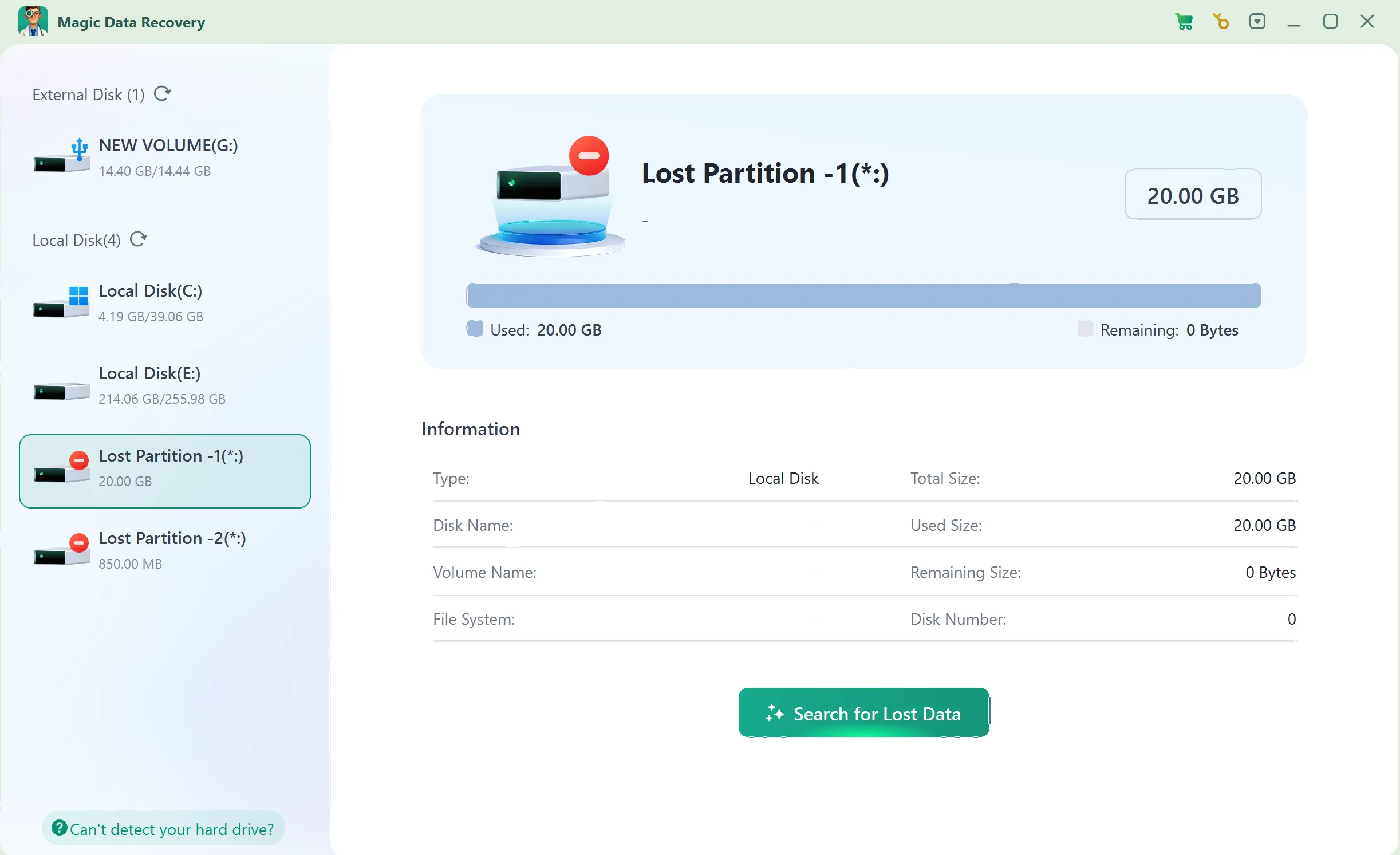
Insert the SD card into your computer using a stable card reader. Then open Magic Data Recovery. From the main interface, select the SD card (or the lost partition if the card is corrupted) and start scanning.
Step 3: Scan the SD Card for Lost Files
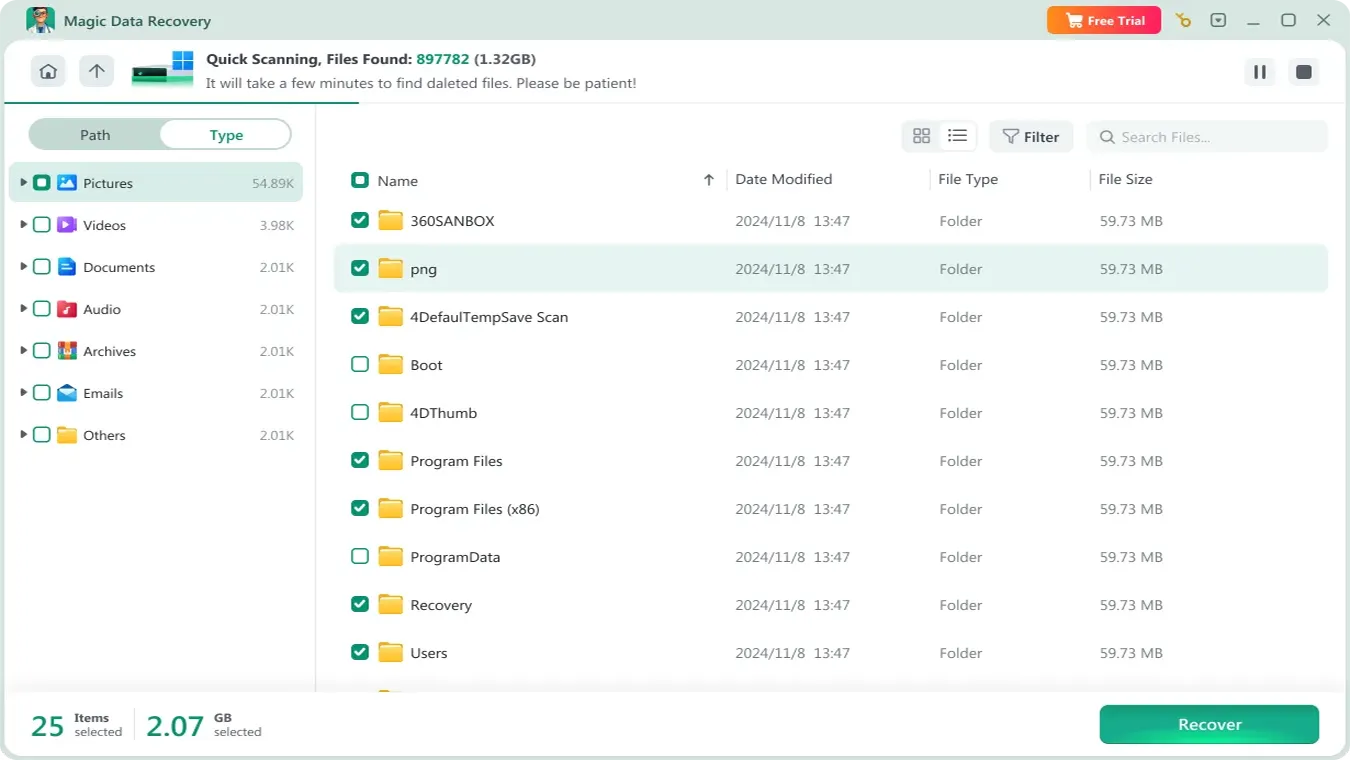
The software automatically performs an Advanced Scan. Meanwhile, recoverable files will appear as the scan progresses. If the SD card was formatted, allow the scan to finish completely.
Step 4: Preview Files Before Recovery
Next, use the preview function to confirm file content. This step helps ensure you recover only the files you actually need and check the file contents before recovery.

Step 5: Recover Files to a Safe Location
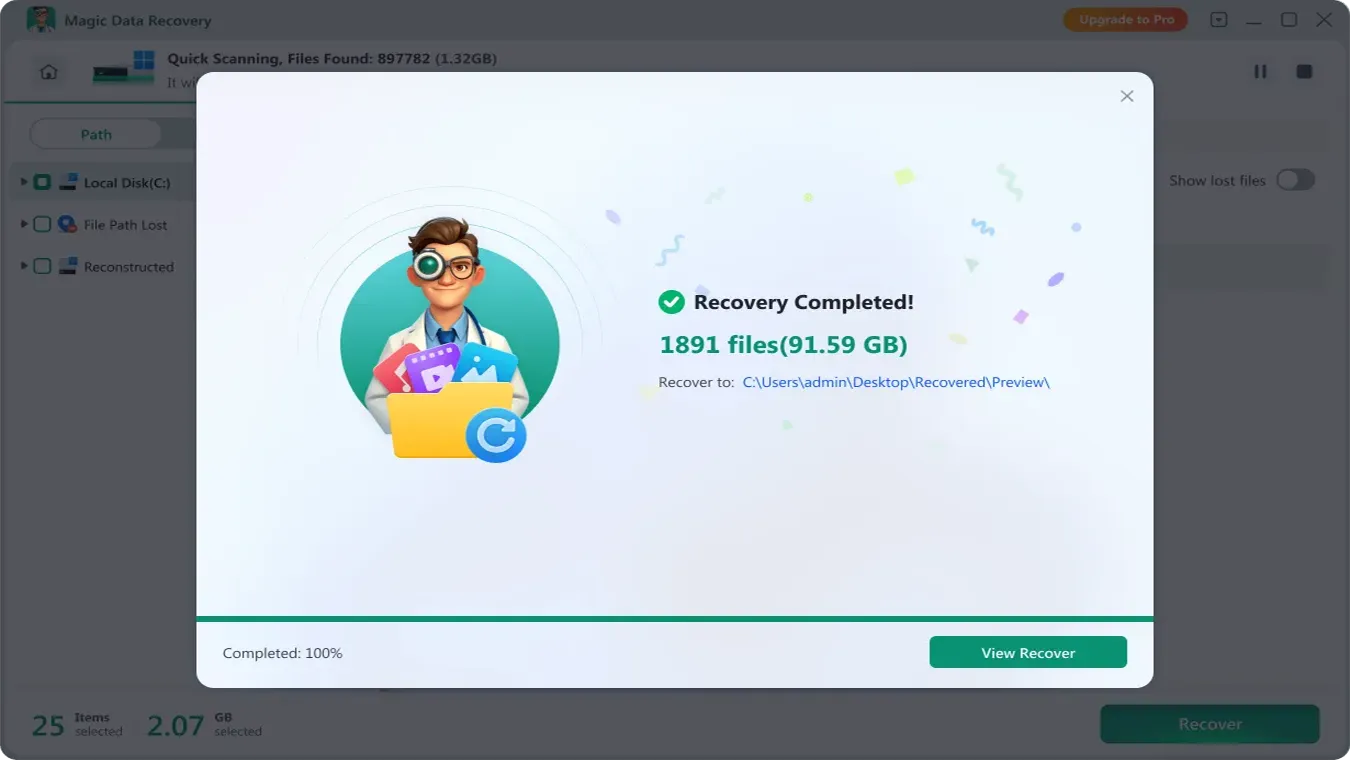
Finally, select the target files and recover them to your computer drive or another storage device. Never restore recovered data to the same SD card, because overwriting may cause permanent data loss.
Common Mistakes to Avoid During SD Card Recovery
Many recovery failures happen because users try quick fixes that make the situation worse.
Avoid these mistakes:
- Formatting the SD card again
- Running repair tools before recovery
- Installing recovery software on the SD card
- Saving recovered files back to the same SD card
- Using unknown recovery programs from suspicious websites
Instead, scan first, recover safely, and only then repair or format the card if needed.
Conclusion
When SD card files disappear, acting quickly matters. If you keep using the card, overwriting may happen and recovery becomes much harder. For most users, the best approach is simple: stop using the SD card, scan it with trusted data recovery software for sd card, preview the results, and recover files to another storage device.
That is why Magic Data Recovery is recommended. It provides an easy workflow, supports advanced scanning, and helps restore photos, videos, and documents without unnecessary complexity. If you need a reliable SD card recovery solution today, consider trying Magic Data Recovery.
Supports Windows 7/8/10/11 and Windows Server
FAQ: Data Recovery Software for SD Card
Can I recover files from a formatted SD card?
Can I recover deleted photos from a camera SD card?
Is SD card recovery software safe to use?
Why does my SD card show RAW?
How long does SD card recovery take?
Why are recovered files sometimes corrupted?
Should I format the SD card after recovery?

Vasilii is a data recovery specialist with around 10 years of hands-on experience in the field. Throughout his career, he has successfully solved thousands of complex cases involving deleted files, formatted drives, lost partitions, and RAW file systems. His expertise covers both manual recovery methods using professional tools like hex editors and advanced automated solutions with recovery software. Vasilii's mission is to make reliable data recovery knowledge accessible to both IT professionals and everyday users, helping them safeguard their valuable digital assets.