
A Practical Guide to Partition and Data Recovery

Losing a disk partition can be alarming. One moment your drive is accessible, and the next it appears as Unallocated, RAW, or completely missing. In many cases, users fear that all files are gone forever. However, in practice, partition and data recovery is often possible—provided the right partition recovery approach is taken early.
This guide focuses on partition and data recovery, explaining how lost partitions occur, whether you can still recover the data, and which solutions are genuinely effective. More importantly, it introduces a practical recovery path using reliable tools such as Magic Data Recovery, designed to handle both partition structure loss and file restoration in a safe and controlled manner.
Supports Windows 7/8/10/11 and Windows Server
Wondering if your files can be recovered? Find out in seconds with our quick check below.
Data Recovery Assessment
Answer 3 quick questions to estimate your recovery chances
Table of Contents
What Is Partition and Data Recovery?
It refers to the process of restoring lost or damaged disk partitions along with the files stored inside them. While these two concepts are closely related, they are not the same.
- Partition recovery focuses on rebuilding the disk structure, such as the partition table or volume metadata.
- Data recovery aims to extract individual files from a partition, even if the partition itself is inaccessible.
In real-world scenarios, effective recovery often requires both steps. Restoring a partition without recovering files may leave data inaccessible. Recovering files without addressing partition damage may limit success rates or result in incomplete data.
Understanding this distinction helps users choose the right lost partition data recovery strategy instead of relying on trial-and-error fixes.
Common Causes of Lost or Deleted Partitions
Partition loss rarely happens without reason. Based on practical recovery cases, the most common causes include:
- Accidental partition deletion during disk management operations
- Disk formatting, whether intentional or accidental
- Partition table corruption caused by improper shutdowns or system crashes
- Power failures during read/write operations
- Malware or virus activity affecting disk metadata
In many of these situations, the data itself remains intact. The system simply loses the information required to locate it. This is why timely partition and data recovery is often successful.
Can You Recover Data from a Lost Partition?
Yes—data can often be recovered from a lost partition, but success depends on several factors.
Recovery is usually possible when:
- The partition space has not been overwritten
- No new partitions were created on the affected disk
- The disk has not been reformatted multiple times
Recovery becomes more difficult if new data replaces the original sectors. This is why recovery specialists recommend stopping all write operations immediately and using read-only partition and data recovery software rather than system-level repair tools.
Manual Methods vs Partition and Data Recovery Software
Limitations of Built-in System Tools
Operating systems provide basic disk utilities, such as Disk Management or command-line repair tools like CHKDSK. While these tools can sometimes reassign drive letters or fix minor file system errors, they have clear limitations:
- They cannot rebuild deleted partition tables
- They do not scan for lost file signatures
- Repair attempts may overwrite recoverable data
As a result, manual methods are unsuitable when the goal is full partition and data recovery.
When Professional Software Is Necessary
Professional recovery software is designed to:
- Detect lost or deleted partitions
- Analyze disk sectors without modifying data
- Recover files even when the partition structure is damaged
This is where choosing the best partition and data recovery software becomes critical.
How to Choose the Best Partition and Data Recovery Software
Not all recovery tools deliver the same results. A reliable solution should meet the following criteria:
1. Lost partition detection
The software must identify partitions that no longer appear in the operating system.
2. File system reconstruction
Support for common file systems ensures accurate recovery.
3. Preview capability
File previews help confirm recoverability before restoration.
4. Read-only scanning
Prevents accidental overwriting of existing data.
5. User-friendly workflow
Clear steps reduce the risk of recovery mistakes.
Tools lacking these features often recover partial data or fail entirely.
Why Magic Data Recovery Is a Reliable Solution
Magic Data Recovery is designed specifically to address real-world partition loss scenarios without introducing unnecessary complexity. Instead of focusing solely on file scanning, it integrates partition recognition and data extraction into a single recovery workflow.
Core Problems It Solves
- Lost or deleted partitions that appear as unallocated space
- Formatted partitions where files are no longer visible
- RAW partitions caused by file system corruption
Key Advantages
- Advanced scanning algorithms detect both existing and lost partitions
- Read-only recovery ensures disk safety
- Preview functionality helps verify recoverable files
- Clear interface suitable for non-technical users
Practical Use Case
Consider a drive where a partition was accidentally deleted during disk resizing. The system no longer recognizes the volume, but the data sectors remain unchanged. Magic Data Recovery can scan the disk, identify the lost partition structure, and recover files without requiring manual reconstruction.
Compared to basic system tools or generic file recovery utilities, this approach significantly improves partition and data recovery accuracy.
If you are searching for a dependable solution rather than a risky workaround, Magic Data Recovery offers a balanced combination of safety and effectiveness.
How to Perform Partition and Data Recovery with Magic Data Recovery
The recovery process is intentionally straightforward:
1. Download and Install Magic Data Recovery
Supports Windows 7/8/10/11 and Windows Server
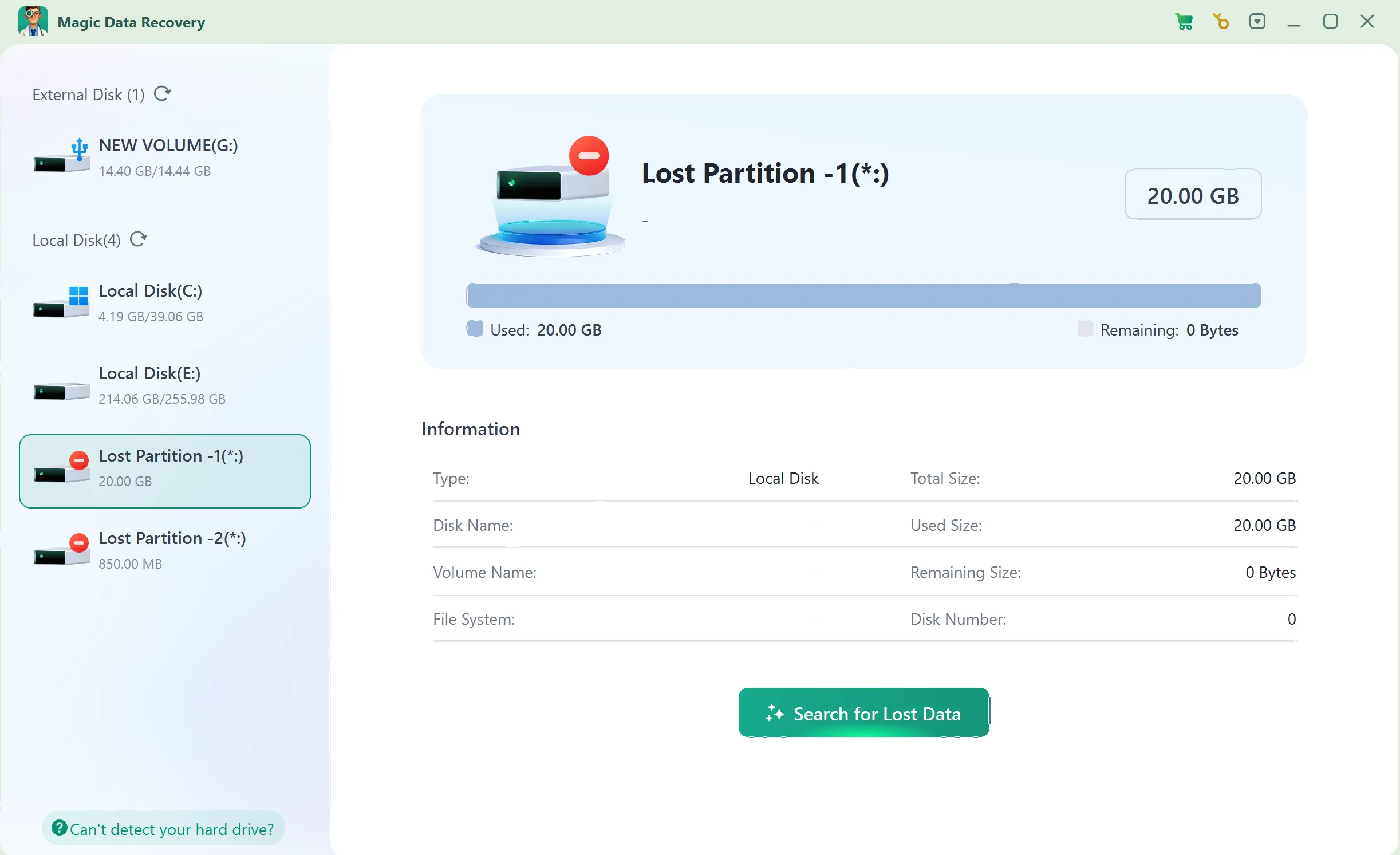
2. Select the affected disk
Choose the lost partition and start searching
3. Wait till the scan completes
The software analyzes disk sectors without modifying data. It runs Advanced Scan automatically and lists all the files after the scan.
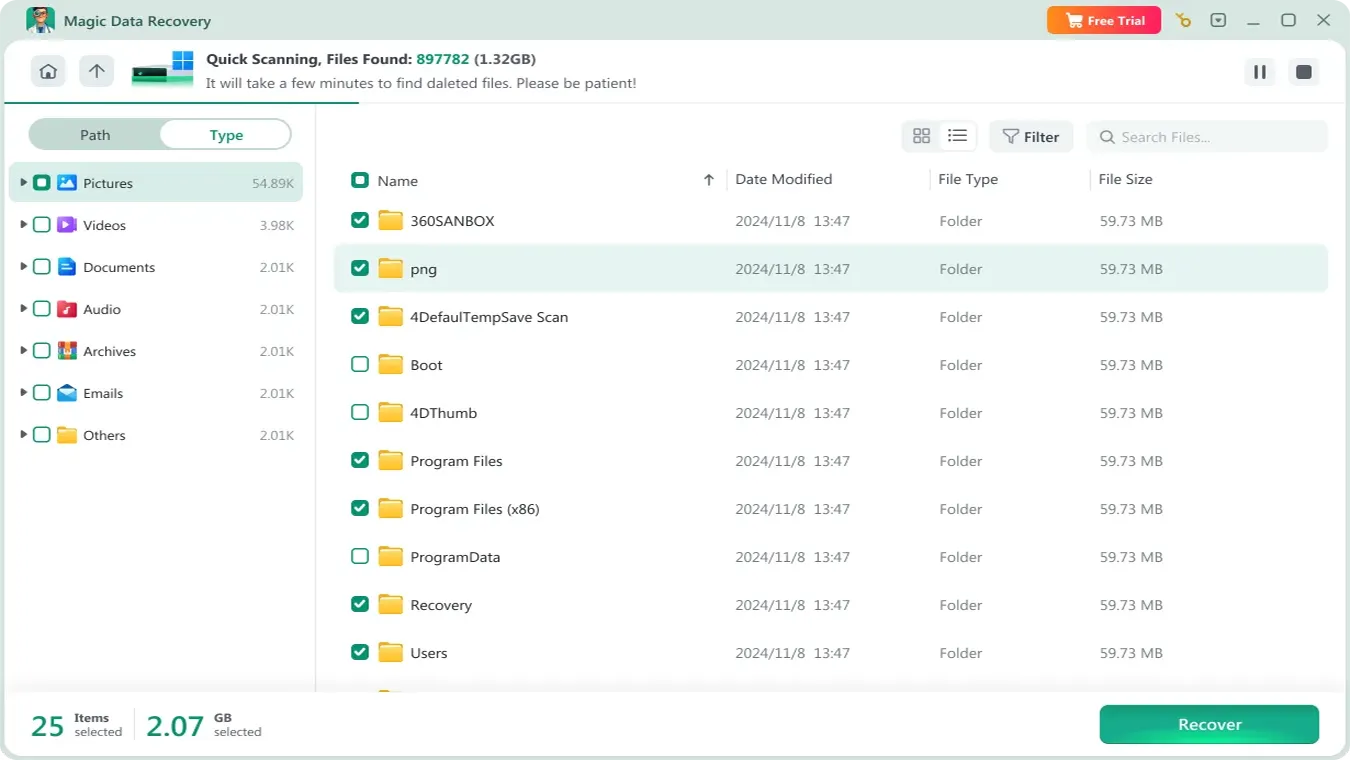
4. Preview recoverable files
Confirm file integrity before restoration.

5. Recover data to a safe location
Always restore files to a different disk to avoid overwriting.
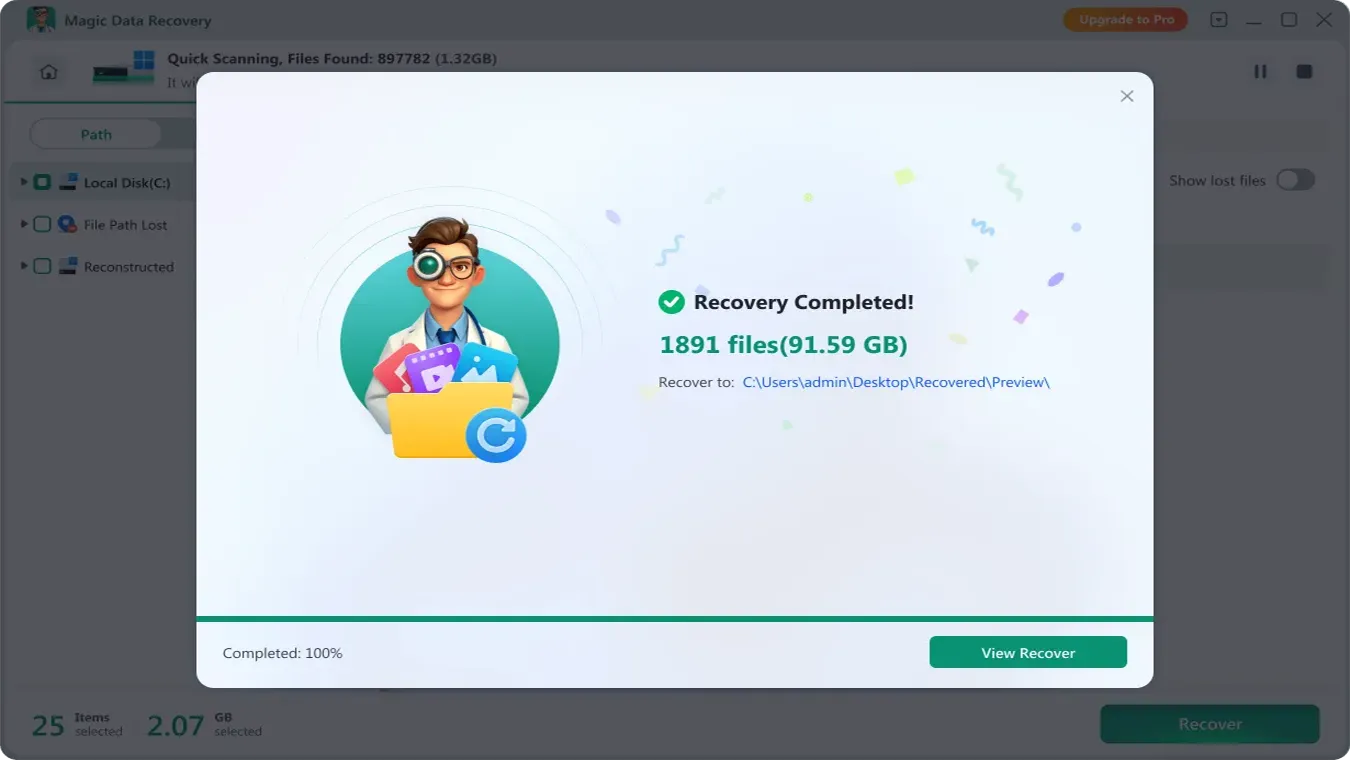
This structured workflow minimizes user error while maximizing recovery success.
Best Practices to Improve Recovery Success
Following proven recovery guidelines can significantly increase success rates:
- Stop using the affected disk immediately
- Avoid creating new partitions
- Do not reformat the drive
- Use professional partition and data recovery software instead of repair tools
These steps align with industry best practices and reduce the risk of permanent data loss.
Conclusion
Successful partition and data recovery depends on understanding both disk structure and file integrity. Many failures occur because users rely on repair tools that were never designed for true recovery. Magic Data Recovery stands out because it addresses both aspects in a controlled, user-friendly manner. It does not promise unrealistic results or rely on aggressive repair techniques. Instead, it provides a safe and logical recovery path based on proven recovery principles.
If you need a practical partition recovery solution to recover critical files from lost partitions, Magic Data Recovery is a reliable option worth considering.
Supports Windows 7/8/10/11 and Windows Server
FAQs About Partition and Data Recovery
Can a deleted partition be recovered?
Is partition recovery the same as data recovery?
How long does partition and data recovery take?
Can free recovery tools work?
What happens if a partition is overwritten?

Vasilii is a data recovery specialist with around 10 years of hands-on experience in the field. Throughout his career, he has successfully solved thousands of complex cases involving deleted files, formatted drives, lost partitions, and RAW file systems. His expertise covers both manual recovery methods using professional tools like hex editors and advanced automated solutions with recovery software. Vasilii's mission is to make reliable data recovery knowledge accessible to both IT professionals and everyday users, helping them safeguard their valuable digital assets.