
SanDisk Recovery Guide
Losing important photos, videos, documents, or work files from a SanDisk SD card, USB flash drive, memory card, or portable SSD can feel stressful. The good news is that SanDisk recovery is often possible if you stop using the device quickly and choose the right method.
SanDisk storage devices are widely used in cameras, phones, drones, dash cams, laptops, and external backup workflows. However, files can still disappear because of accidental deletion, formatting, file system errors, interrupted transfers, virus attacks, or device corruption.
This guide explains how SanDisk recovery works, what you should do first, which free methods you can try, and when professional recovery software such as Magic Data Recovery is a better choice. The goal is simple: help you recover files safely without making the problem worse.
Supports Windows 7/8/10/11 and Windows Server
Table of Contents
What does SanDisk Recovery mean?
SanDisk recovery means restoring lost, deleted, formatted, or inaccessible files from SanDisk storage devices. These devices may include:
- SanDisk SD cards
- SanDisk microSD cards
- SanDisk USB flash drives
- SanDisk CFexpress cards
- SanDisk external SSDs
- SanDisk memory cards used in cameras, phones, drones, and recorders
When a file disappears, the actual data may still remain on the storage device for a while. In many cases, the file system only marks the space as available. If you continue taking photos, recording videos, copying files, or formatting the device again, new data may overwrite the lost files.
That is why the first rule of SanDisk recovery is: stop using the device immediately.
Common SanDisk Data Loss Scenarios
Before choosing a recovery method, you need to understand what happened. Different causes require different solutions.
Accidental Deletion
This is one of the most common cases. You may delete photos from a camera, remove files from a USB drive, or empty a folder by mistake. If no new data has overwritten the deleted files, SanDisk recovery software can often scan the device and locate recoverable data.
Accidental Formatting
Many users format an SD card or USB drive because the device asks for it, or because they choose the wrong drive in Windows. A quick format usually removes file system records but may leave the original data area untouched. In this case, formatted SanDisk recovery may still work.
File System Errors
A SanDisk card or drive may show errors such as:
- “You need to format the disk before you can use it.”
- “The file or directory is corrupted and unreadable.”
- “SD card not recognized.”
- “USB drive shows 0 bytes.”
- “The volume does not contain a recognized file system.”
These errors often happen after unsafe removal, power failure, interrupted transfer, or file system damage. A reliable SanDisk recovery tool can scan the storage device directly instead of relying only on the damaged file system.
Photos or Videos Missing from Camera Cards
Photographers, vloggers, and drone users often notice that photos or videos disappear after a recording interruption, camera crash, or card error. In this case, avoid recording new footage. Large video files are easier to overwrite, so fast action matters.
SanDisk USB Drive Not Opening
A USB flash drive may appear in File Explorer but fail to open. Sometimes Windows asks you to format it. Do not format the drive immediately if the files are important. Try recovery first, then repair or format the device after saving the data.
What to Check Before Starting SanDisk Recovery
Before you run any SanDisk recovery process, take a few minutes to protect the device and avoid actions that may reduce the recovery success rate. Many users lose recoverable files not because the data is gone, but because they keep using the card or drive after the first problem appears.
Disconnect the SanDisk Device from Active Use
If the lost files are on a SanDisk SD card, microSD card, USB drive, or external SSD, stop using it right away. Do not take new photos, record videos, copy files, or download anything to the same device. New data may occupy the space where deleted or formatted files still exist.
For example, if your camera says the SanDisk card needs to be formatted, turn off the camera and remove the card. If your USB drive suddenly becomes empty, do not copy new files to test it. These actions may overwrite lost data.
Check Whether the Device Can Still Be Detected
Next, connect the SanDisk device to a computer and check whether it appears in File Explorer or Disk Management. This helps you understand the type of problem.
You may see one of these situations:
- The drive appears normally, but files are missing.
- The drive appears as RAW or unallocated.
- The device asks to be formatted.
- The drive letter is missing.
- The storage size looks incorrect.
- The device is not detected at all.
If the device can still be detected, software-based SanDisk recovery may be possible. If the device makes unusual sounds, overheats, disconnects repeatedly, or cannot be detected on multiple computers, it may have physical damage. In that case, avoid repeated connection attempts.
Use a Stable Reader or Connection
A poor card reader, damaged USB port, or unstable cable can make a SanDisk device look corrupted. Therefore, try a reliable card reader or another USB port before starting recovery. For SD cards and microSD cards, a high-quality reader is especially important because an unstable connection may interrupt the scan.
However, do not test the device too many times if it disconnects frequently. Repeated failed attempts may make the situation worse.
Avoid Repair Commands Before Recovery
It may be tempting to run CHKDSK, format the drive, or use a repair option immediately. However, these operations can modify the file system. In some cases, they may make deleted or lost files harder to recover.
A safer workflow is:
- Stop using the SanDisk device.
- Scan it with reliable recovery software.
- Save recovered files to another drive.
- Repair or format the SanDisk device only after important files are recovered.
This order gives you a better chance to recover files before the storage structure changes.
Prepare a Separate Drive for Recovered Files
Before scanning, make sure you have another storage location ready. This can be your computer’s internal drive, another external hard drive, or a different USB drive. Never save recovered files back to the same SanDisk device.
Saving recovered files to the original device may overwrite other lost files that have not been restored yet. This is one of the most common mistakes in SanDisk recovery.
Free Solutions to Try Before Using SanDisk Recovery Software
Not every data loss case requires recovery software immediately. In some situations, the files may be hidden, misplaced, blocked by a connection issue, or backed up somewhere else. Try the following free methods first if the SanDisk device is still readable.
Check the Original Device or App
If your SanDisk card was used in a camera, phone, drone, dash cam, or audio recorder, check the original device first. Some devices create special folders that may not be obvious on a computer.
For example, cameras may store photos in a DCIM folder, while dash cams may separate normal recordings, locked recordings, and emergency videos into different folders. Browse each folder carefully before assuming the files are deleted.
Search by File Type on Your Computer
If the SanDisk drive opens but you cannot find specific files, use the search function in File Explorer. Search by file extension instead of file name, especially if you do not remember the exact name.
Common searches include:
- .jpg or .jpeg for photos
- .mp4 or .mov for videos
- .docx for Word documents
- .xlsx for spreadsheets
- .pdf for PDF files
- .zip or .rar for compressed files
This method is useful when files were moved into another folder or when the folder structure looks confusing.
Show Hidden Files and Folders
Files may appear missing because they are hidden. This can happen after a system error, unsafe removal, or malware-related changes.
On Windows, open File Explorer, go to View, and enable hidden items. Then open the SanDisk device again and check whether your files or folders appear. You can also check whether suspicious shortcut files or unknown folders exist.
If the files appear after enabling hidden items, copy them to a safe location first. After that, you can scan the device for malware or repair the file attributes.
Try Another Computer, Port, or Card Reader
A connection problem can look like data loss. If your SanDisk device does not open correctly, test it on another computer or with another USB port. For SD and microSD cards, try another card reader.
This step is especially useful when:
- The device appears and disappears.
- File transfer stops suddenly.
- Windows asks you to insert a disk.
- The drive letter appears but the device will not open.
- The card works in a camera but not on a computer.
If the files appear normally on another device, copy them out immediately.
Check Cloud Sync and Local Backups
Many users forget that files may have been copied or synced before the data loss happened. Check your computer folders, external backups, cloud storage, and photo apps.
Useful places to check include:
- OneDrive
- Google Drive
- Dropbox
- iCloud Photos
- Google Photos
- Windows File History
- Previous manual backup folders
- Camera import folders
This method is safer than recovery because it does not require scanning the damaged or formatted SanDisk device.
Use Previous Versions If Available
If you previously copied SanDisk files to a Windows folder, you may be able to restore an earlier version of that folder. Right-click the folder, choose Properties, and check the Previous Versions tab.
This feature only works if File History, restore points, or backup settings were enabled before the files were lost. Still, it is worth checking before moving to deeper SanDisk recovery methods.
Move to Recovery Software If Free Methods Fail
If the files are not hidden, not backed up, and not found through search, then the data may have been deleted, formatted, or affected by file system damage. At that point, dedicated SanDisk recovery software is the safer next step.
Magic Data Recovery can help scan SanDisk SD cards, microSD cards, USB drives, and other storage devices for lost files caused by deletion, formatting, file system errors, and inaccessible storage. Instead of trying risky repairs first, you can scan the device, preview recoverable files, and save them to another safe drive.
When You Need SanDisk Data Recovery Software
Free methods help in simple cases, but they often fail when files were deleted, the device was formatted, or the file system is damaged. In these situations, dedicated SanDisk recovery software is usually the better option.
You may need recovery software if:
- Files were permanently deleted.
- The SanDisk device was formatted.
- The SD card asks to be formatted.
- The USB drive opens but shows empty.
- The file system is RAW.
- Photos or videos disappeared from a camera card.
- The device has file system errors.
- You cannot find files through normal search.
A good SanDisk data recovery software should scan deeply, preview recoverable files, support different file types, and work with common SanDisk storage devices.
Recommended Tool: Magic Data Recovery for SanDisk Recovery
Magic Data Recovery is a practical solution for users who need a clearer and more efficient way to recover lost files from SanDisk storage devices. It supports many data loss scenarios, including deletion, formatting, file system errors, partition issues, and other common storage problems.
For SanDisk recovery, Magic Data Recovery works well with SanDisk SD cards, microSD cards, USB flash drives, memory cards, and external storage devices. It helps users scan the device, locate lost files, preview recoverable data, and save files to a safe location.
Core Problems Magic Data Recovery Solves
Magic Data Recovery helps when normal access fails. For example, you may face a SanDisk card that asks for formatting, a USB drive that suddenly becomes empty, or a memory card that lost photos after a camera error. Instead of guessing where the files went, you can scan the storage device and check what can still be recovered.
Key Advantages
Magic Data Recovery offers several practical benefits:
- Supports deleted file recovery
- Supports formatted SanDisk recovery
- Works with file system error scenarios
- Supports SanDisk cards, USB drives, and other storage devices
- Helps locate lost files more precisely
- Offers a clear workflow for non-technical users
- Allows users to recover files to another safe drive
These advantages matter because many users do not need complicated forensic tools. They need a reliable recovery path that they can follow without advanced technical knowledge.
Example Use Cases
Magic Data Recovery is useful in many real-world situations:
- A photographer accidentally formats a SanDisk SD card before backing up photos.
- A student deletes project files from a SanDisk USB drive.
- A drone user loses video files after a recording interruption.
- A Windows user sees a SanDisk drive become RAW.
- A camera card shows folders but no photos.
- A portable SanDisk drive has file system errors after unsafe removal.
In these cases, Magic Data Recovery provides a focused SanDisk recovery workflow instead of forcing users to try random fixes.
Why It Can Be More Reliable Than Basic Fixes
Basic methods only work when the file is hidden, backed up, or still accessible through the file system. However, deleted, formatted, or corrupted storage often needs deeper scanning. Magic Data Recovery can scan beyond normal file browsing, which makes it more useful when the device structure has changed or file records are missing.
If you are looking for a more efficient solution, try Magic Data Recovery before writing new data to the SanDisk device.
Supports Windows 7/8/10/11 and Windows Server
How to Recover Files from a SanDisk Device with Magic Data Recovery
Follow these steps to perform SanDisk recovery safely.
Step 1: Connect the SanDisk Device
Connect your SanDisk SD card, microSD card, USB drive, or external storage device to your computer. Use a stable card reader or direct USB connection. If the device disconnects often, try another port or reader.
Step 2: Launch Magic Data Recovery
Open Magic Data Recovery on your computer. Make sure you do not install the software on the affected SanDisk device. Install it on your system drive or another safe location.
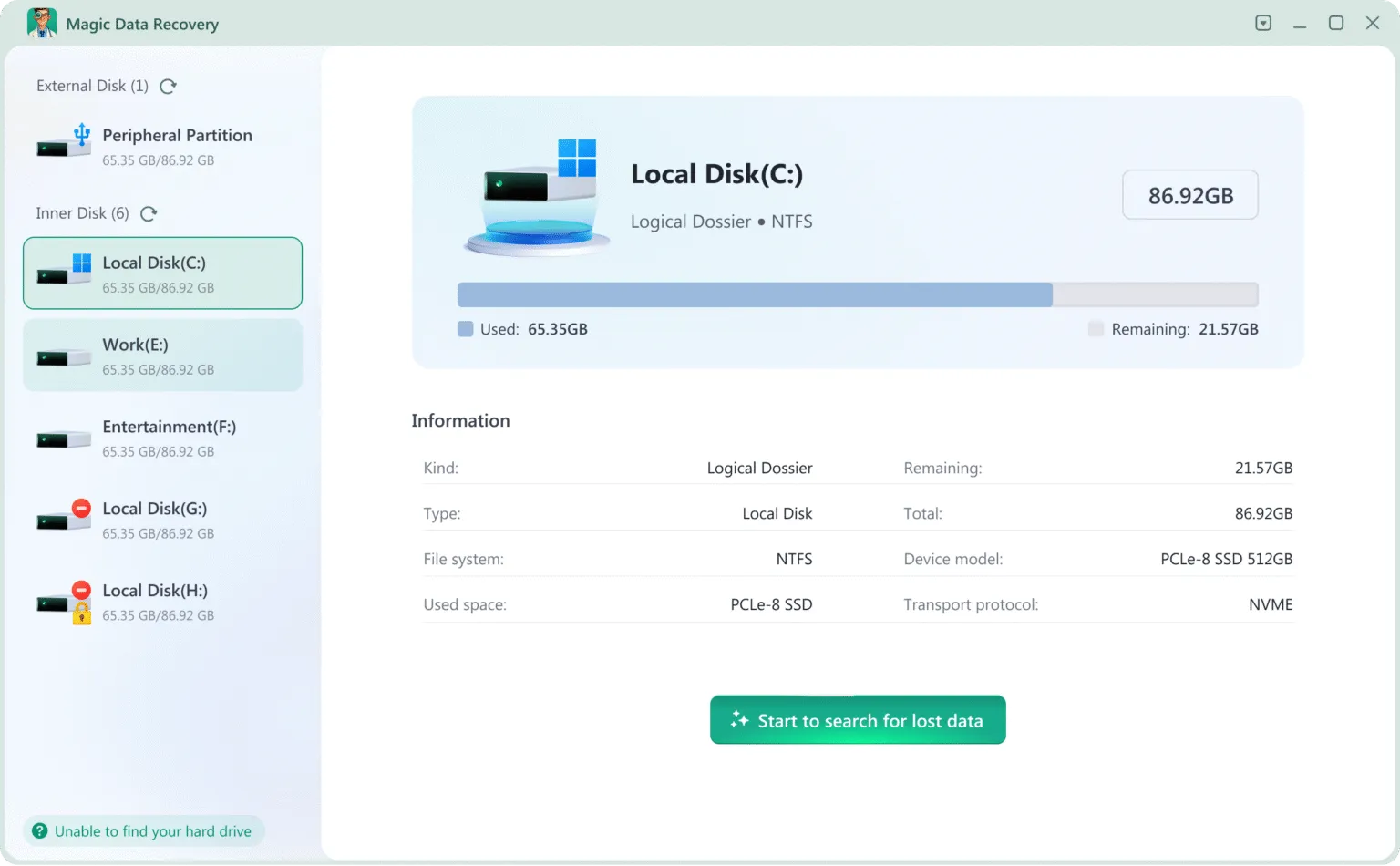
Step 3: Select the SanDisk Device
Choose the SanDisk storage device from the drive list. Check the drive size and name carefully, especially if several external drives are connected.
Step 4: Start the Scan
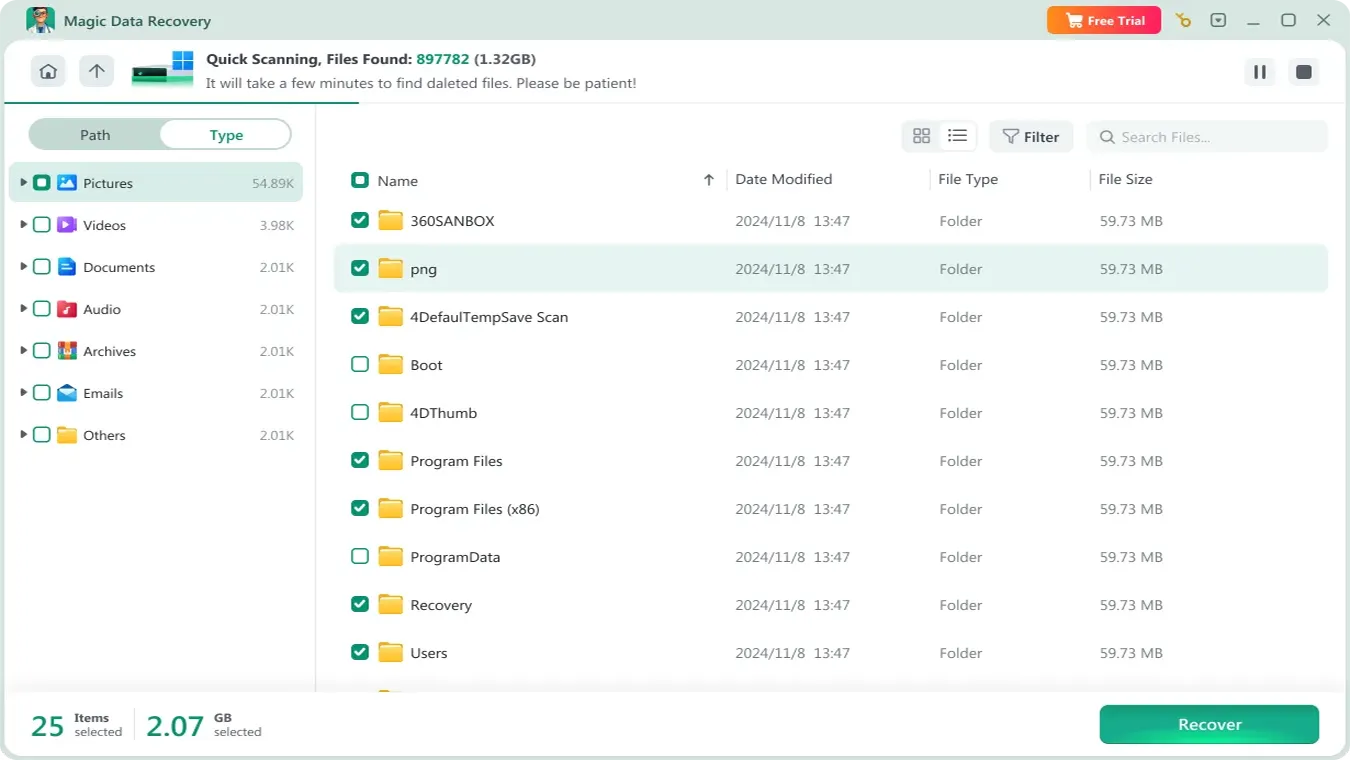
Run a scan to search for deleted, formatted, or lost files. The software will analyze the device and display recoverable items. For serious data loss, a deeper scan may take longer, but it can find more results.
Step 5: Preview Recoverable Files
Preview photos, documents, videos, or other files when possible. This helps you confirm whether the files are valid before recovery.

Step 6: Recover Files to Another Drive
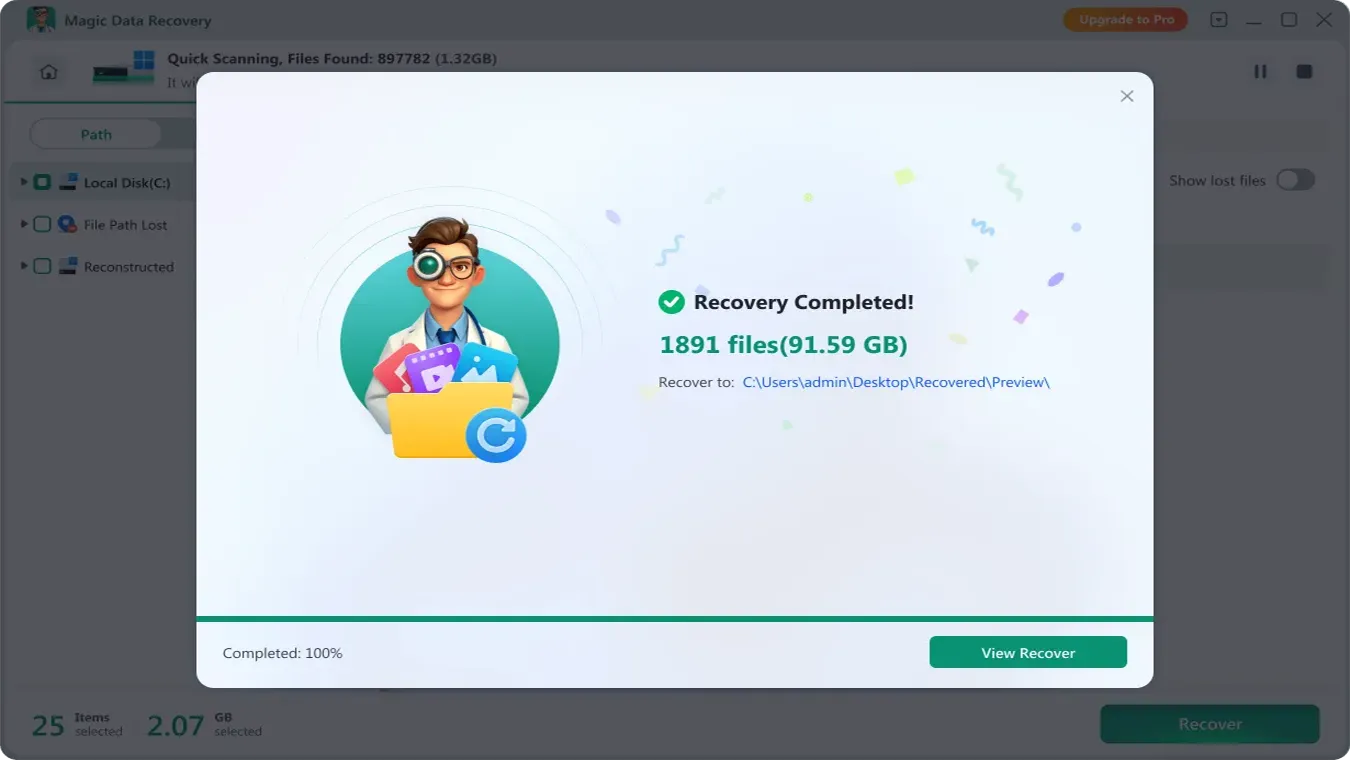
Select the files you need and save them to a different location. Do not save them back to the same SanDisk card or USB drive.
SanDisk Recovery vs SanDisk RescuePRO: What Should You Choose?
Some SanDisk products may come with RescuePRO or RescuePRO Deluxe offers. RescuePRO is designed to recover files from flash memory devices such as memory cards and USB drives. It can be useful for photos, videos, music, and documents.
However, users may still prefer another recovery tool in some cases. For example, you may not have a valid RescuePRO license, your device may not be covered by the bundled offer, or you may want a more flexible tool for different storage devices and broader data loss scenarios.
Magic Data Recovery is a good choice when you need a general-purpose recovery solution for deletion, formatting, file system errors, and multiple storage devices. It is especially useful if you want one tool for SanDisk cards, USB drives, external drives, and other Windows-based recovery needs.
The best choice depends on your case:
- Use simple free methods if files are hidden or backed up.
- Use RescuePRO if you already have access and it fits your device and file types.
- Use Magic Data Recovery if you need broader recovery coverage and a clear workflow for common data loss scenarios.
Tips to Improve SanDisk Recovery Success Rate
Although no tool can guarantee recovery in every case, the following tips can improve your chances.
Act Quickly
The sooner you stop using the device, the better. New photos, videos, downloads, and transfers can overwrite lost data.
Avoid Reformatting Multiple Times
One format may still leave recoverable data. Repeated formatting and reuse can make SanDisk recovery harder.
Use a Reliable Connection
A poor card reader or unstable USB hub may interrupt scanning. Use a good reader and keep the device connected during the scan.
Recover Important Files First
If the device seems unstable, recover the most important files first. Large videos and unique documents should take priority.
Create Backups After Recovery
After you recover your files, create at least one backup. For important work, use the 3-2-1 backup rule: three copies, two storage types, and one offsite or cloud copy.
Common Mistakes to Avoid
Many users reduce their recovery chances by trying the wrong fix first. Avoid these mistakes:
- Do not keep using the SanDisk device after data loss.
- Do not save recovered files to the same device.
- Do not format the device before recovery.
- Do not run repair tools before scanning for lost files.
- Do not assume a card is empty just because File Explorer shows nothing.
- Do not use unreliable recovery tools from unknown sources.
A careful workflow matters more than speed. Start with safe checks, then use trusted SanDisk recovery software if the files are not found.
Conclusion: The Best Way to Handle SanDisk Recovery
SanDisk recovery is possible in many cases, especially when files were deleted, the device was quick formatted, or the file system became corrupted. The most important step is to stop using the SanDisk device immediately and avoid actions that may overwrite data.
Start with free checks such as Recycle Bin, hidden files, another card reader, another computer, and backups. If those methods do not work, use dedicated recovery software.
Magic Data Recovery is recommended because it supports deleted, formatted, and file system error recovery scenarios. It also works well with SanDisk storage devices, including SD cards, microSD cards, USB drives, and other storage media. For users who want a clear, practical, and efficient recovery path, Magic Data Recovery offers a reliable solution without unnecessary complexity.
If your SanDisk card or drive contains important files, stop using it now and scan it with Magic Data Recovery before trying risky repairs.
Supports Windows 7/8/10/11 and Windows Server
FAQs About SanDisk Recovery
Can I recover deleted files from a SanDisk SD card?
Yes, you can often recover deleted files from a SanDisk SD card if the lost data has not been overwritten. Stop using the card immediately, connect it to a computer with a stable card reader, and scan it with reliable SanDisk recovery software. Save recovered files to another drive, not the same card.
Is formatted SanDisk recovery possible?
Formatted SanDisk recovery is possible in many cases, especially after a quick format. A quick format usually removes file system records rather than wiping every data block. However, recovery becomes harder if you continue using the device. Use recovery software as soon as possible and avoid saving new files to the formatted card or drive.
Why does my SanDisk USB drive show empty?
A SanDisk USB drive may show empty because files were deleted, hidden, corrupted, or affected by file system errors. It may also happen after unsafe removal or malware activity. First, check hidden files and test another USB port. If files are still missing, scan the drive with data recovery software.
Should I format my SanDisk card when Windows asks me to?
Do not format the SanDisk card if it contains important files. Formatting may reduce your recovery chances, especially if you continue using the card afterward. Instead, cancel the prompt, connect the card through a stable reader, and run a SanDisk recovery scan before repairing or formatting the device.
Can Magic Data Recovery recover files from SanDisk USB drives?
Yes. Magic Data Recovery can help recover deleted, formatted, or inaccessible files from SanDisk USB drives and other storage devices. It is useful when the USB drive becomes empty, RAW, unreadable, or affected by file system errors. Always recover files to another safe location to avoid overwriting lost data.
Is SanDisk RescuePRO the only recovery option?
No. RescuePRO is one available SanDisk recovery option, especially for users who received a license with selected SanDisk products. However, it is not the only choice. Tools like Magic Data Recovery can provide broader recovery support for deleted files, formatted devices, file system errors, and different storage media.
Why are some recovered SanDisk files corrupted?
Recovered files may be corrupted if parts of the original data were overwritten, damaged, or fragmented. This is common with large videos, interrupted recordings, and heavily reused memory cards. To improve results, stop using the device immediately and run recovery before attempting repair, formatting, or additional file transfers.
How can I prevent SanDisk data loss in the future?
Back up important files regularly, safely eject USB drives, avoid removing memory cards during recording, and replace aging or unstable cards. For cameras and drones, format cards in the device after backing up data. Also, keep at least one extra copy of important files on another drive or cloud storage.

Jason is a data recovery and technical support specialist with over 15 years of hands-on experience. He has worked extensively with frontline users, troubleshooting difficult data loss cases and providing practical recovery solutions for accidental deletion, formatted drives, damaged file systems, lost partitions, system failures, and other recovery emergencies. His expertise also includes backup and restoration, file repair, and disaster recovery, with a strong emphasis on safe, reliable, and technically accurate guidance.