
Repair File Allocation Table: Fix FAT Errors
If you need to repair file allocation table errors, you are likely dealing with a drive that suddenly became unreadable, a partition that now shows as RAW, or files that disappeared after a file system problem. In many real cases, FAT or FAT32 corruption does not start with total drive failure. Instead, it begins with warning signs such as “You need to format the disk before you can use it,” strange file names, missing folders, or denied access. These symptoms often point to logical damage in the file system rather than immediate physical failure. FAT32 remains widely used on USB drives, SD cards, cameras, and removable media, but it lacks journaling and is therefore more vulnerable to corruption after unsafe ejection or interrupted writes.
The good news is that you can often repair file allocation table issues safely. However, the right order matters. If the partition contains important files, recovery should come before repair. Some repair tools can modify the FAT structure, relink lost clusters, or move damaged entries, which may reduce the chances of a clean recovery. Microsoft’s own CHKDSK documentation notes that fixing FAT errors can change the file allocation table and may lead to lost allocation units being converted into files.
Table of Contents
What Does Repair File Allocation Table Mean?
To repair file allocation table means correcting the logical structures that tell the operating system where files begin, where they continue, and which clusters belong to which files. In a FAT-based file system, the file allocation table works like a map. It links clusters together so the system can read a file in the correct order. When that map becomes corrupted, the data may still exist on the drive, but Windows or another OS can no longer interpret it correctly. Recovery specialists rely on surviving FAT records, directory entries, and cluster chains because fragmented files become much harder to restore accurately once those references are gone.
That is why repair file allocation table is not just about “making the drive open again.” It is about deciding whether to protect the remaining metadata first, recover valuable files, and only then attempt structural repair.
Common Signs That You Need to Repair File Allocation Table
Before you repair file allocation table errors, you should first confirm whether the drive is showing typical FAT corruption symptoms. Inaccessible partitions, missing folders, RAW file systems, and format prompts are all common warning signs. Identifying these issues early helps you choose the safest solution and avoid actions that may cause further data loss.
The partition is inaccessible
A drive may appear in File Explorer, but opening it triggers an error such as “The file or directory is corrupted and unreadable” or “You need to format the disk before you can use it.” These are classic symptoms of FAT damage.
Files or folders suddenly disappear
You may notice that folders are empty, file names become unreadable, or the drive shows 0 bytes used even though data was stored on it before. This often suggests broken directory entries or damaged FAT chains.
The drive turns RAW
When the operating system can no longer identify the FAT structure, the partition may show up as RAW. At that point, normal access fails, and direct repair attempts become riskier.
CHKDSK does not help
CHKDSK can fix many logical errors, but it is not a cure-all. If the file system is too damaged to be recognized, CHKDSK may refuse to run or fail to restore access. Microsoft states that /f is required to correct logical disk errors, and severe corruption can still prevent a full fix.
Why FAT and FAT32 Errors Happen
Users often search repair file allocation table after a removable device fails with no warning. In practice, the causes are usually familiar:
- Unsafe removal of a USB drive or SD card
- Sudden power loss during file transfer
- Malware or interrupted write operations
- Bad sectors or aging flash storage
- Boot sector mismatch or corruption
- Accidental formatting or deletion after error prompts
These causes are repeatedly noted in practical repair and recovery guides. FAT32’s simplicity makes it highly compatible, but that same simplicity also leaves it more exposed to corruption than journaling file systems.
Before You Repair File Allocation Table, Recover Data First
This is the step many articles mention but do not explain deeply enough. If the drive contains important documents, photos, videos, or work files, do not jump straight into repair. A repair tool may rebuild metadata, relink clusters, or mark damaged areas differently. That can make the partition usable again, but it can also overwrite the exact evidence a recovery utility needs.
A safer workflow looks like this:
- Stop using the affected drive immediately.
- Do not format it, even if Windows suggests it.
- Scan the partition with a recovery tool first.
- Save recovered files to another healthy drive.
- Attempt repair only after the important data is secured.
This approach aligns with both recovery-focused guides and official caution around file system correction tools on FAT volumes.
Best Solution When FAT Problems Cause Data Loss: Magic Data Recovery
When users search how to repair file allocation table, they are often trying to solve two problems at once: restore access to the partition and get lost files back. That is where Magic Data Recovery fits naturally.
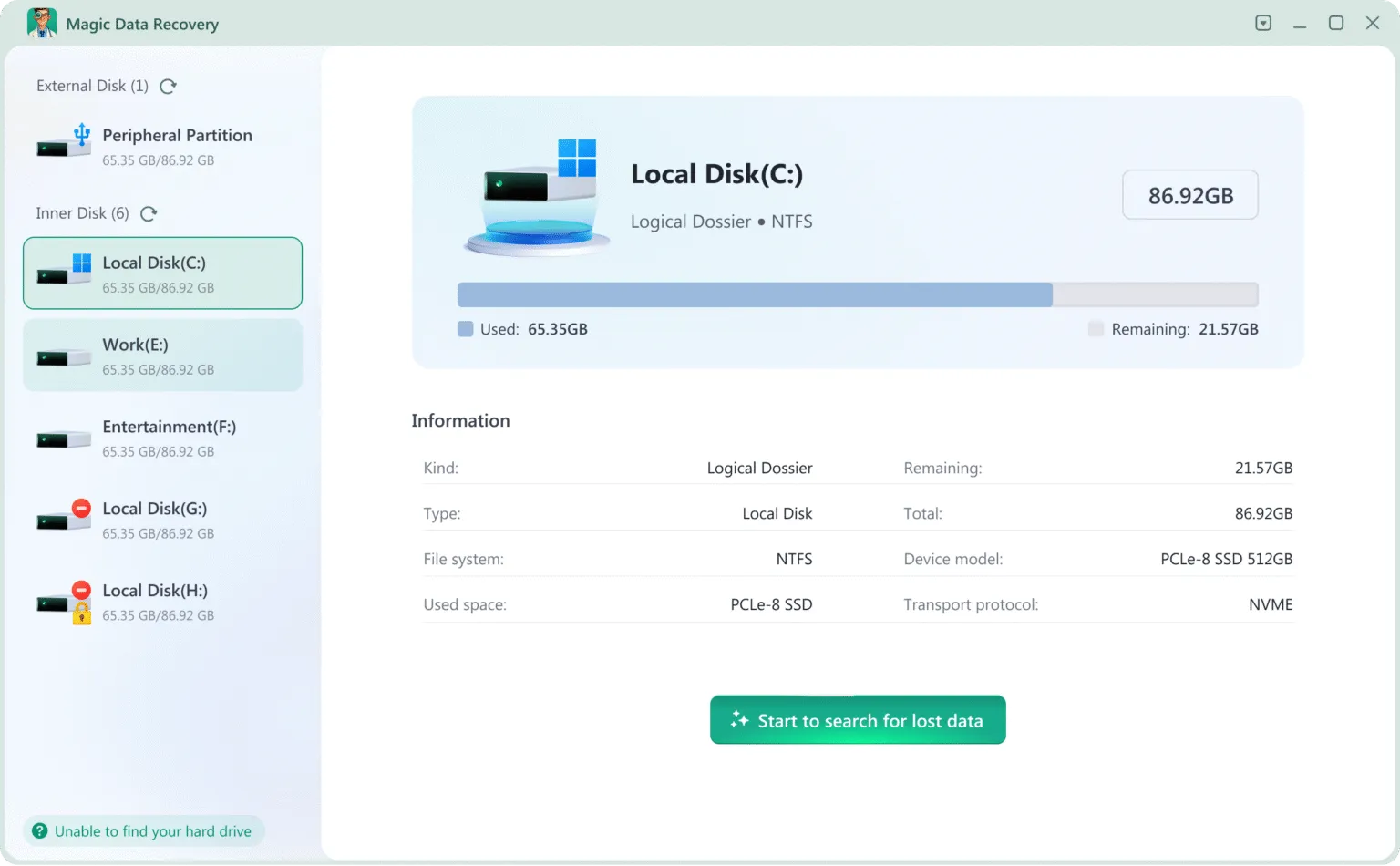
Instead of forcing you to gamble on immediate repair, Magic Data Recovery helps recover data first in scenarios such as:
- deleted files
- formatted partitions
- file system errors
- inaccessible FAT or FAT32 volumes
- partitions that no longer open normally
This matters because the core pain point is rarely the file system itself. The real pain point is losing access to irreplaceable data.
Why Magic Data Recovery is a practical choice
Magic Data Recovery is a strong fit for this situation because it focuses on data retrieval before risky structural changes. That makes it useful for ordinary users who need a safer path when a FAT partition becomes unreadable.
Key advantages include:
- Supports recovery after deletion, formatting, and file system errors
- Helps extract files from inaccessible or corrupted partitions
- Easier for non-technical users than manual sector-level repair
- Better aligned with real-world troubleshooting, where preserving files comes first
Example use cases
A photographer plugs in an SD card and gets a format prompt.
A USB flash drive suddenly shows as RAW after unsafe ejection.
An external drive opens, but folders are missing after a power interruption.
A user runs into FAT-related corruption after deleting files or reformatting the wrong partition.
In these cases, Magic Data Recovery addresses the immediate goal: recover the files before any deeper repair attempt. That is also why it can be more reliable than jumping directly into tools that rewrite metadata. If you are looking for a faster and safer workflow, it is worth trying Magic Data Recovery first.
Supports Windows 7/8/10/11 and Windows Server
How to Repair File Allocation Table Safely After Recovery
Once your important files are secured, you can move on to repair.
1. Use Windows Error Checking
Windows includes a basic error-checking tool that can fix minor logical inconsistencies on FAT volumes. This method is suitable when the drive is still recognized and the damage appears limited.
2. Run CHKDSK
CHKDSK remains one of the standard ways to repair file allocation table issues on Windows.
Use:
chkdsk X: /f
If needed, you can also try /r to check for bad sectors, although that takes longer. Microsoft documents that /f corrects logical disk errors, and Windows may ask to schedule the check on restart if the drive is in use. On heavily corrupted FAT volumes, however, CHKDSK may not be enough.
3. Use FAT-aware repair tools
If Windows tools fail, FAT-aware utilities such as TestDisk can help with boot sector repair or backup boot sector restoration. CGSecurity documents that when the FAT boot sector is damaged, data may become inaccessible, and TestDisk can compare the main and backup boot sectors or rebuild a valid one.
4. Repair in Linux with fsck.vfat
On Linux, FAT32 repair should use dosfsck or fsck.vfat, not the generic approach used for native Linux file systems. That distinction matters because FAT needs tools that understand its specific metadata structure.
5. Reformat only as a last resort
If recovery is complete and repair does not work, you can format the drive and rebuild the file system. This should be the final step, not the first. Also remember that FAT32 still has a 4 GB maximum file size per file, so exFAT may be a better option for large modern media files. Microsoft documentation and recent Windows coverage continue to reflect FAT32’s long-standing limitations.
Common Mistakes to Avoid
When trying to repair file allocation table errors, users often make the same avoidable mistakes:
- Clicking “Format disk” before scanning for recoverable data
- Running multiple repair tools one after another without a plan
- Saving recovered files back to the same damaged drive
- Ignoring signs of physical failure such as disconnections or unusual sounds
- Continuing to use the device after corruption appears
A simple rule helps: recover first, repair second, reformat last.
Repair File Allocation Table vs Recover Data: Which Comes First?
For low-value files on a non-critical USB drive, direct repair may be acceptable. For anything important, recovery should come first. This is especially true when the partition is inaccessible, the volume appears RAW, or files were lost after formatting, deletion, or file system errors.
So, if your real goal is to get files back, not just make the drive mount again, recovery-first is the safer strategy.
Conclusion
If you need to repair file allocation table errors, do not treat every FAT problem as a simple repair task. In many cases, an inaccessible partition is also a data-loss event in progress. The smartest path is to protect recoverable files first, then repair the structure only after the important data is safe.
That is why Magic Data Recovery is the recommended tool in this workflow. It addresses the actual user problem, not just the file system symptom. It can help recover data lost due to deletion, formatting, and file system errors, and it is especially useful when a FAT or FAT32 partition becomes inaccessible. If you want a more efficient and reliable solution, Magic Data Recovery is a practical place to start.
Supports Windows 7/8/10/11 and Windows Server
FAQs
What does repair file allocation table actually fix?
Repair file allocation table usually refers to fixing logical errors in FAT or FAT32 metadata, including broken cluster chains, damaged directory entries, and boot sector inconsistencies. It may restore access to a partition, but it does not always recover missing files. If your data matters, recover it first before running aggressive repair utilities.
Can I use CHKDSK to repair file allocation table errors?
Yes, CHKDSK can correct many logical FAT errors, especially when the partition is still recognized by Windows. However, it is not always the safest first step. Microsoft notes that CHKDSK can modify file allocation structures on FAT volumes, so it may convert damaged chains into lost files instead of preserving original organization.
Why did my FAT partition suddenly become inaccessible?
A FAT partition often becomes inaccessible after unsafe ejection, sudden power loss, malware, bad sectors, or interrupted writes. In some cases, the boot sector and backup boot sector no longer match, and the operating system can no longer mount the volume properly. That is why the drive may ask to be formatted even when the data is still present.
Should I repair the drive before recovering my files?
In most important-data scenarios, no. Recovery should come first. If you repair the file system before scanning for recoverable files, you may reduce recovery quality because the repair process can rewrite metadata, relink clusters, or change directory information. A safer workflow is scan, recover, save elsewhere, and only then attempt file system repair.
Can Magic Data Recovery recover files from a formatted FAT drive?
Yes. If the formatting was quick and the data area has not been heavily overwritten, Magic Data Recovery can be a practical option for recovering files from a formatted FAT or FAT32 partition. It is also relevant for deleted-file recovery and file system error scenarios, which makes it useful when users are unsure what exactly caused the loss.
What is the difference between FAT repair and partition recovery?
FAT repair focuses on fixing the file system structure so the operating system can read the drive again. Partition recovery is broader. It may involve restoring access to a lost, deleted, formatted, or RAW partition and recovering files from it. In many real-world cases, users need both, but recovering the data should still come first.
Is FAT32 still worth using today?
FAT32 still makes sense for USB drives, SD cards, cameras, and older devices because compatibility remains excellent across platforms. However, it has limitations, including a 4 GB maximum file size and weaker protection against corruption compared with newer file systems. For larger files and modern storage needs, exFAT is often the better long-term choice.
What should I do if the drive asks me to format it?
Do not format it immediately. That message often appears when the file system is damaged, not necessarily when the data is gone. First, stop using the drive, connect it to a stable system, and scan it with a recovery tool such as Magic Data Recovery. After securing the files, you can decide whether repair or reformatting is the best next step.

Jason is a data recovery and technical support specialist with over 15 years of hands-on experience. He has worked extensively with frontline users, troubleshooting difficult data loss cases and providing practical recovery solutions for accidental deletion, formatted drives, damaged file systems, lost partitions, system failures, and other recovery emergencies. His expertise also includes backup and restoration, file repair, and disaster recovery, with a strong emphasis on safe, reliable, and technically accurate guidance.