
Excel Recovery File Location: Where to Find Lost Files
Losing an Excel file is frustrating. However, the real issue is not the loss itself—it is the uncertainty about where to look. When users search for the excel recovery file location, they often encounter incomplete or misleading information. As a result, many recovery attempts fail.
Fortunately, Excel stores recovery data in several hidden locations. Therefore, once you understand the full excel recovery file location system, you can recover Excel files much faster. Moreover, when built-in methods do not work, you can still rely on advanced recovery solutions—Magic Data Recovery. In this guide, you will learn where Excel stores files, how to access them, and what to do next.
Supports Windows 7/8/10/11 and Windows Server
Table of Contents
What Is Excel Recovery File Location and Why It Matters
The Excel recovery file location refers to the folders where Excel temporarily stores data for unsaved or crashed workbooks. These locations are critical because they allow you to restore files even when you forget to save or when the program closes unexpectedly.
However, modern Excel versions no longer rely on a single file type. Instead, Excel may store recovery files in different formats or access them directly through built-in features like the recovery pane. Therefore, understanding where Excel stores these files helps you act quickly and avoid permanent data loss.
Excel Recovery File Location on Windows (Complete Paths)
To fully use the recovery file location, you need to check all key directories. Additionally, each path serves a different purpose.
Default Excel Recovery File Location (AutoRecover)
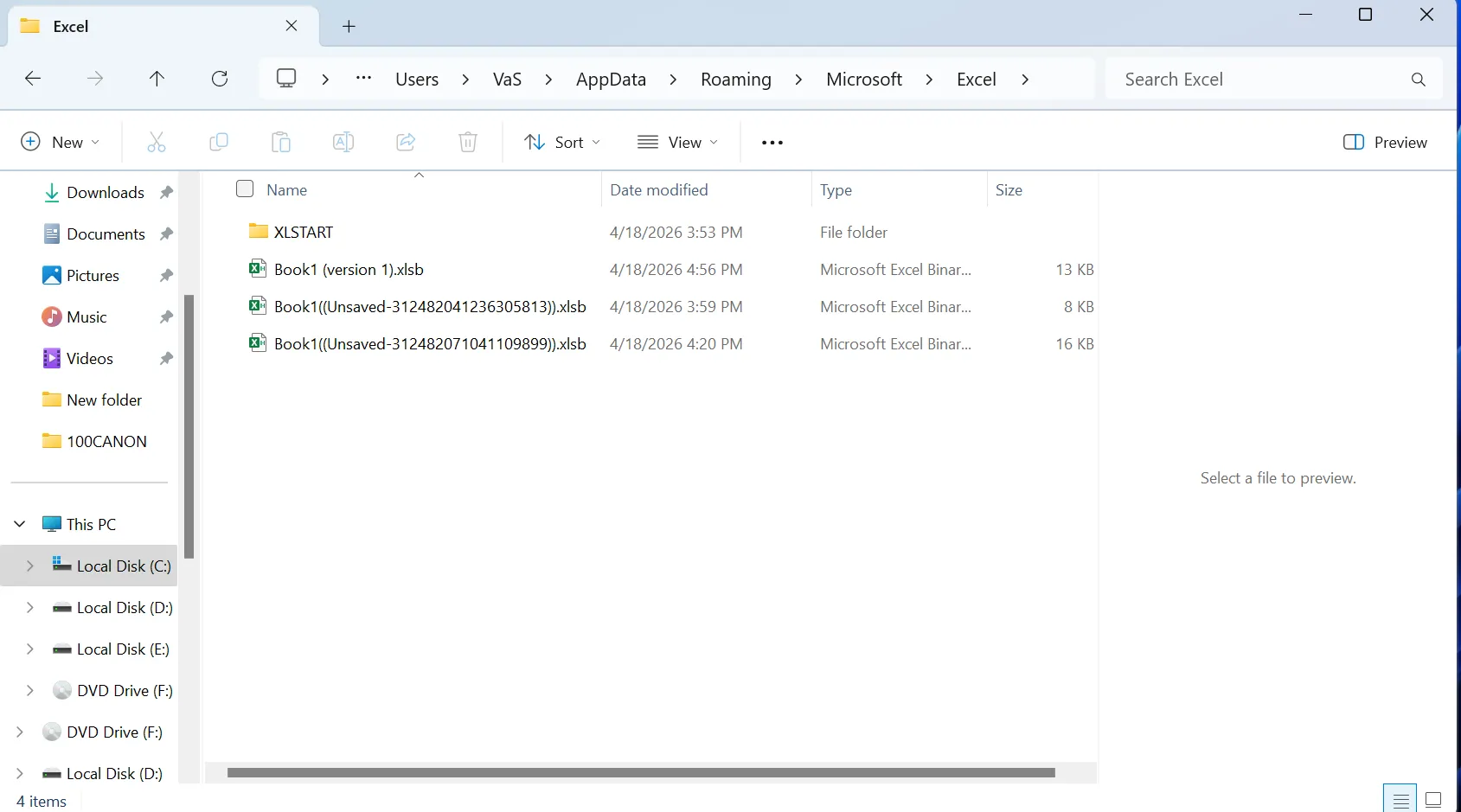
Excel stores AutoRecover files here:
C:\Users\YourUsername\AppData\Roaming\Microsoft\Excel\
Or use:
%appdata%\Microsoft\Excel\
These .xlsb files contain recent versions. Therefore, this path is the main excel file recovery location for crash recovery.
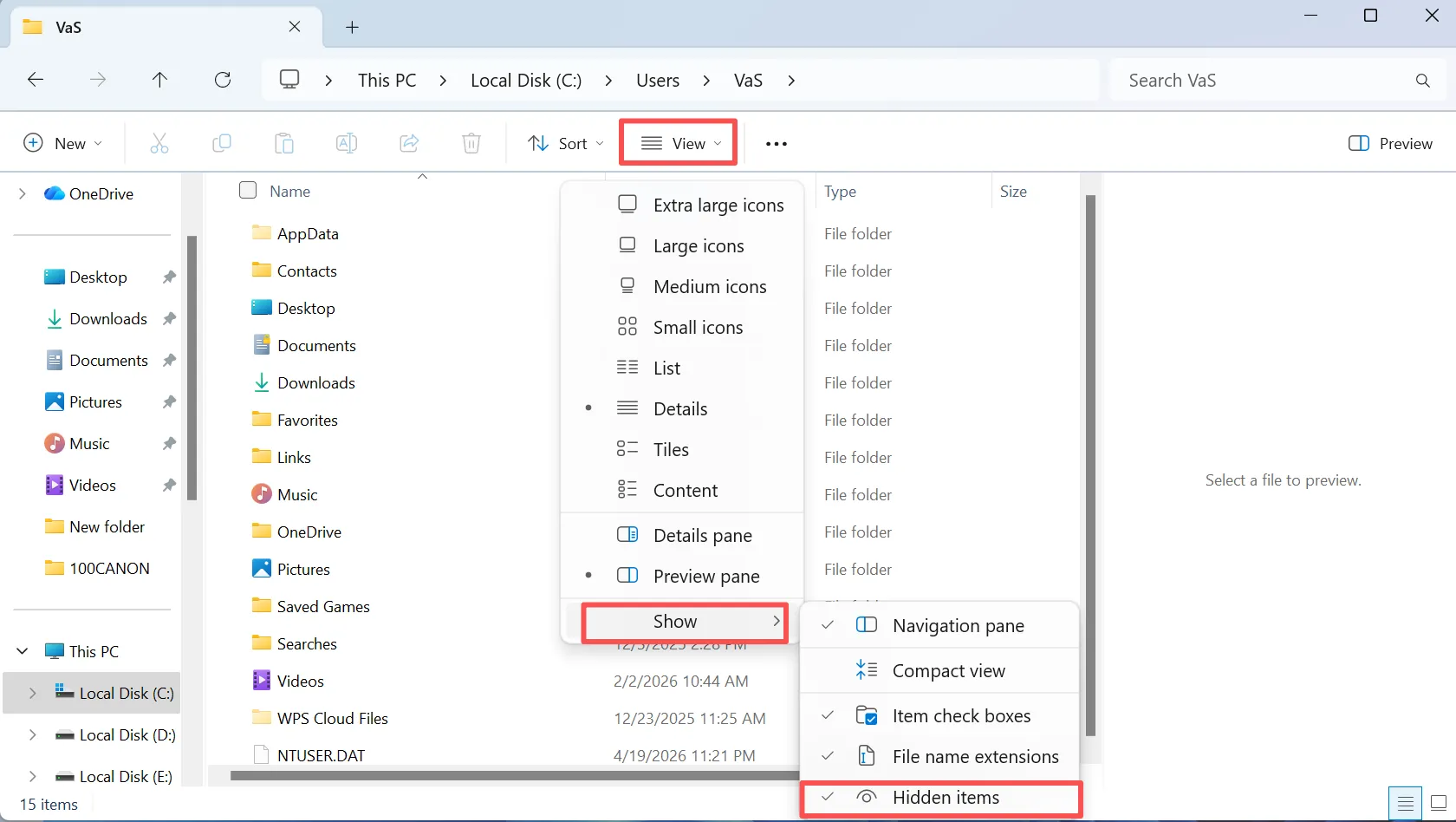
Keep in mind that these folders are hidden by default. Therefore, you must enable “Show hidden files” in File Explorer before accessing them.
Temporary Excel File Location
Excel also creates temporary files:
C:\Users\YourUsername\AppData\Local\Temp\
Look for:
- Files starting with
~ - And the ones ending with
.tmp
Although this location is less reliable, it can still help. Therefore, you should not ignore it.
Excel Recovery File Location by File Type Explained
Different recovery scenarios lead to different file types in the Excel recovery file location. Understanding these differences helps you choose the right recovery method.
- Unsaved Workbooks
Stored in the UnsavedFiles folder, these are temporary versions of files that were never saved manually.
- AutoSave Files (.xlsb)
AutoSave creates these files when enabled. They represent continuously saved versions rather than crash recovery data.
- Temporary or Cached Files
In some cases, Excel stores recovery data internally or in cache folders. You may not see these files directly but can still be accessed through the recovery interface.
As a result, users often see .xlsb files instead of traditional recovery files. This is normal behavior in newer Excel versions.
How to Access Excel Recovery File Location Step by Step
Instead of manually searching for files, Excel provides built-in ways to access the Excel recovery file location more efficiently.
Recover Unsaved Workbooks
- Open Excel
- Go to File > Info
- Click Manage Workbook
- Select Recover Unsaved Workbooks
- Open the file and save it immediately

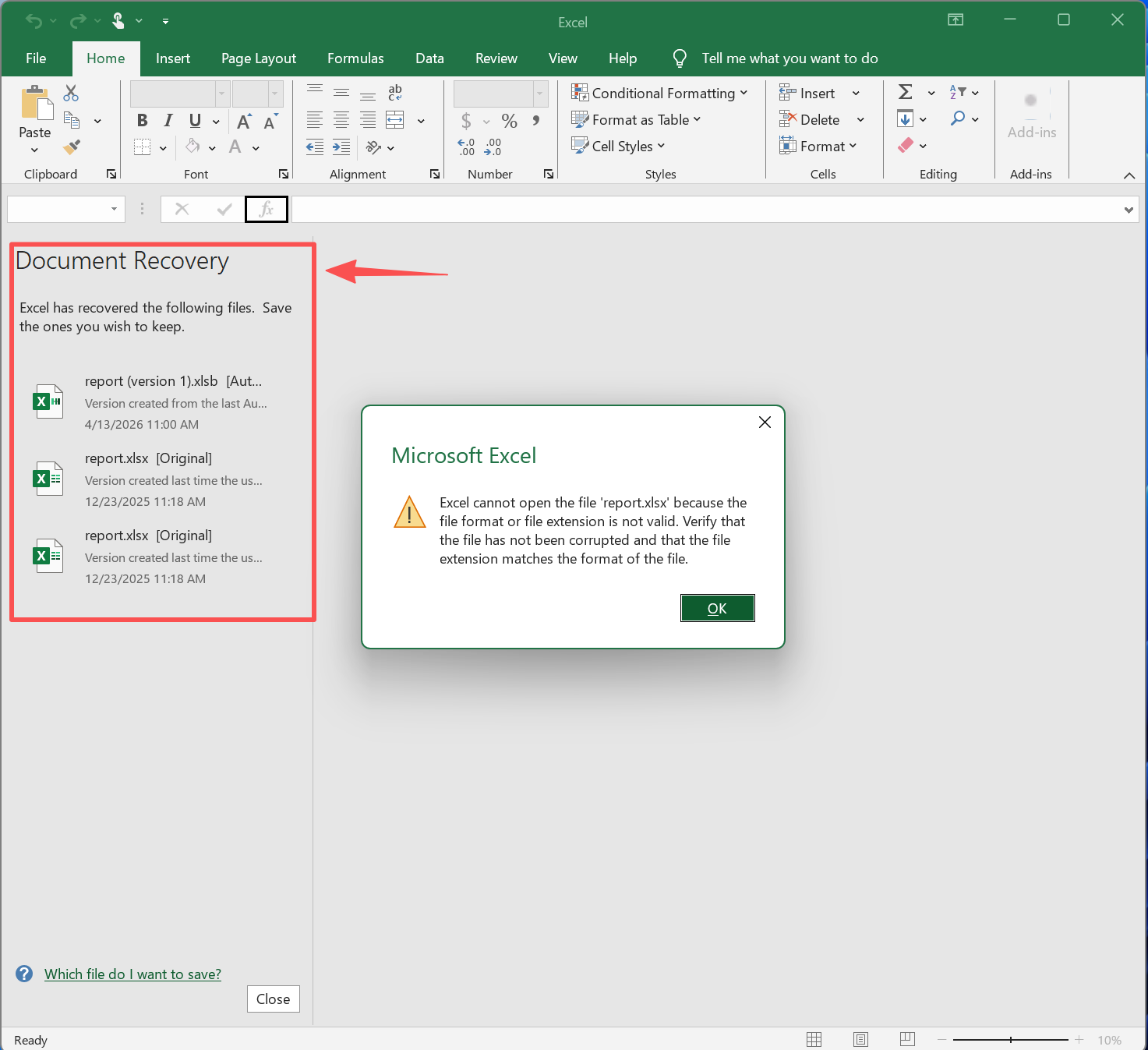
Use the Document Recovery Pane
- Reopen Excel after a crash
- Locate the Document Recovery pane on the left
- Choose the most recent version
- Open and save the file
Access Recovery Folders Manually
- Press
Win + R - Enter:
%localappdata%\Microsoft\Office\UnsavedFiles\or%appdata%\Microsoft\Excel\ - Browse available files
- Open and save the needed workbook

Why Excel Recovery File Location Sometimes Fails
Although the recovery file location is helpful, it does not work in every situation. Therefore, understanding its limits is essential.
Common reasons for failure
- Files were permanently deleted
- Disk became corrupted
- Temporary files were cleared
- Files were overwritten
- System errors removed recovery data
As a result, the excel recovery files location may appear empty. However, this does not mean the data is gone. Instead, it may still exist on the disk.
Recover Data Beyond Excel Recovery File Location
When the recovery files are missing, you need a deeper solution. In this case, Magic Data Recovery becomes highly useful.
Why built-in Excel recovery is limited
Excel only stores temporary copies. Therefore, once files disappear, those locations cannot help. In contrast, professional tools scan the entire disk.
How Magic Data Recovery improves recovery success
Magic Data Recovery improves recovery success by going beyond the limitations of any excel file recovery location. Instead of relying on temporary folders or AutoRecover paths, it scans raw disk sectors directly. As a result, it can detect deleted Excel files even when they no longer appear in standard recovery locations.
In addition, the software works effectively on damaged or RAW drives, which means it can recover data even when the file system is corrupted. Therefore, users are not limited by Excel’s built-in recovery system.
More importantly, it can locate files that exist outside the recovery file location, including data that has been removed from system directories. Because of this deeper scanning approach, it solves many scenarios where Excel itself cannot provide a solution.
Real-world example
For example, if you delete a file and empty the Recycle Bin, the recovery files location shows nothing. However, the file still exists internally. Therefore, with Magic Data Recovery, you can restore it before it gets overwritten.
How to Use Magic Data Recovery for Excel File Recovery
Step 1: Download and Install Magic Data Recovery
Download Magic Data Recovery and install it on a different drive to avoid overwriting.
Supports Windows 7/8/10/11 and Windows Server
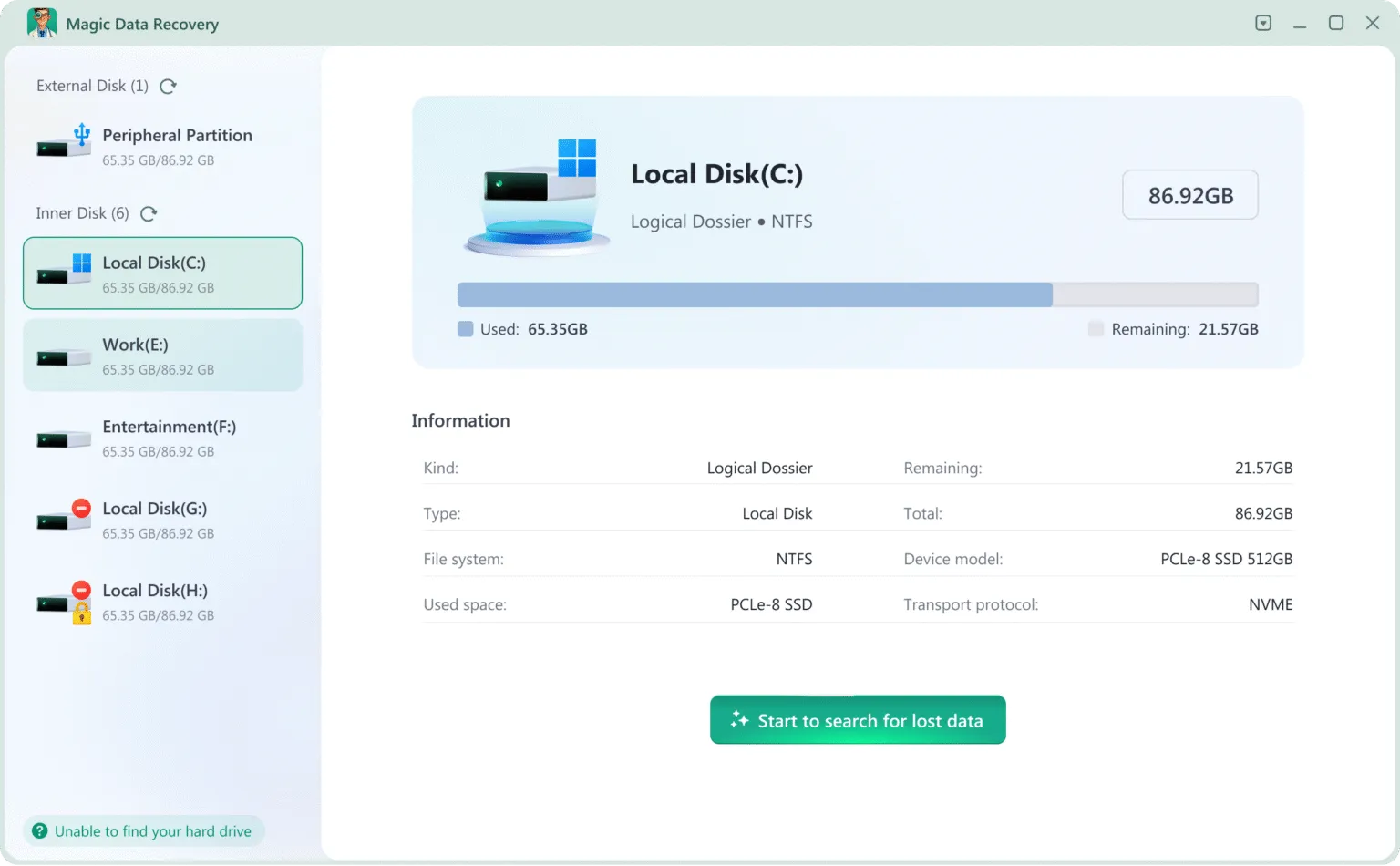
Step 2: Select the Drive
Launch the program and choose the drive where the Excel file was lost.
Step 3: Scan for Files
The software performs an Advanced Scan and lists recoverable files.
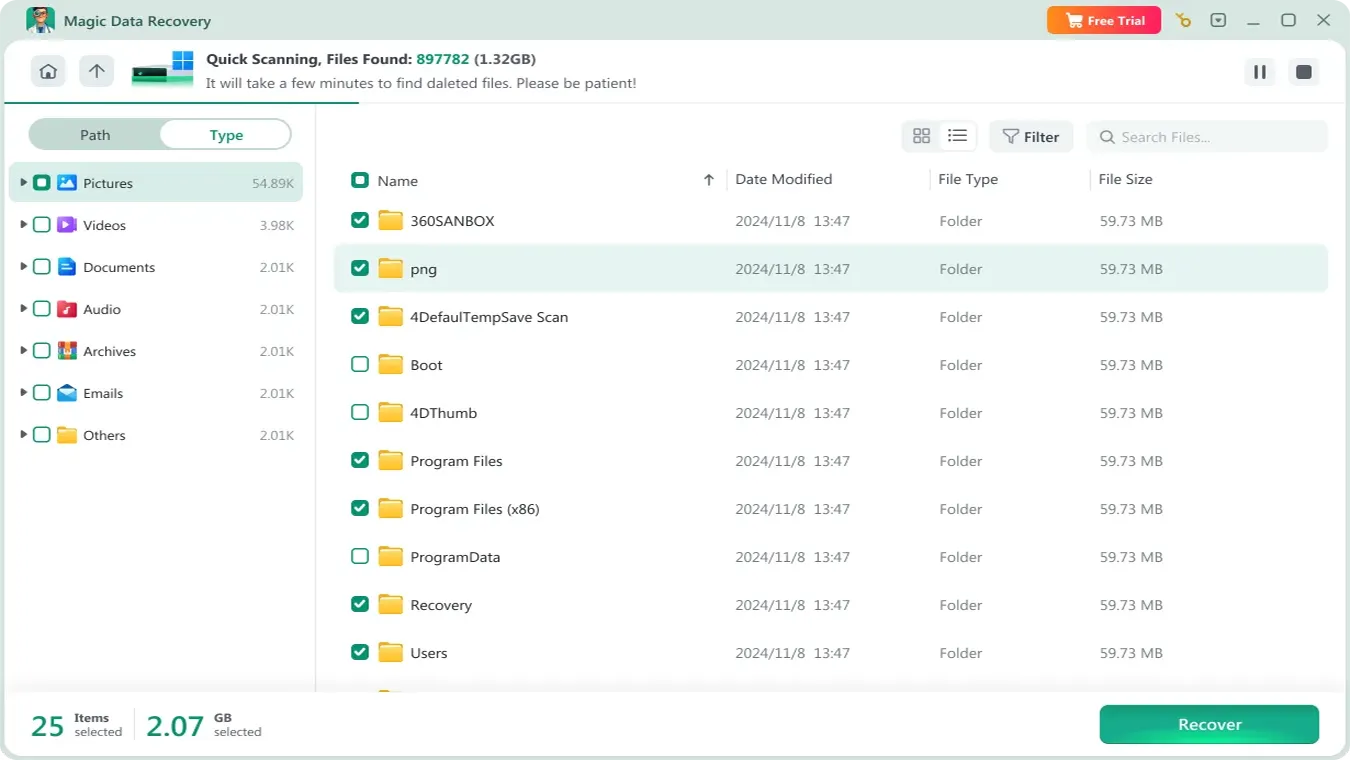
Step 4: Preview and Recover
Preview files and recover the correct version to a safe location.

Tips to Use Excel Recovery File Location More Effectively
To reduce data loss, follow these tips:
- Enable AutoRecover
- Save files frequently
- Avoid unstable storage devices
- Keep backups
- Recover data before repair
Therefore, combining prevention with the excel recovery file gives the best results.
Conclusion
The excel recovery file location is the first place you should check when files go missing. It includes AutoRecover folders, UnsavedFiles directories, and temporary storage paths. In many cases, these locations provide quick recovery.
However, they do not work in every situation. Therefore, when files are deleted or storage is damaged, you need a more powerful method.
In such cases, Magic Data Recovery offers a reliable Excel recovery solution. It scans beyond standard paths and recovers files that Excel cannot detect. If you want a complete recovery strategy, combining both approaches is the best choice.
Supports Windows 7/8/10/11 and Windows Server
FAQs
Where is the excel recovery file location in Windows?
The recovery file location is typically found in %appdata%\Microsoft\Excel for AutoRecover files. Additionally, Excel stores unsaved files in the UnsavedFiles folder. Therefore, you should check both paths to maximize recovery chances.
Why is the excel recovery files location empty?
If the excel recovery files location is empty, the file may have been deleted, overwritten, or removed by system cleanup. However, the data may still exist on the disk. Therefore, using a recovery tool becomes necessary.
Can I recover permanently deleted Excel files?
Yes, you can recover permanently deleted files. However, the excel auto recovery file will not help in this case. Instead, you need a recovery tool that scans the disk directly.
How long does Excel keep recovery files?
Excel keeps recovery files for a limited time. In addition, system restarts or cleanup processes may remove them. Therefore, you should act quickly after data loss to use the excel recovery files location effectively.
Does Excel always save recovery files automatically?
Excel saves recovery files only when AutoRecover is enabled. Otherwise, the excel file recovery location may not contain useful data. Therefore, you should always enable this feature in advance.
What should I do if all recovery locations fail?
If recovery files are missing, you should use a professional recovery tool. This method scans the disk and retrieves files that Excel cannot access. Therefore, it provides the most reliable recovery solution.

Vasilii is a data recovery specialist with around 10 years of hands-on experience in the field. Throughout his career, he has successfully solved thousands of complex cases involving deleted files, formatted drives, lost partitions, and RAW file systems. His expertise covers both manual recovery methods using professional tools like hex editors and advanced automated solutions with recovery software. Vasilii's mission is to make reliable data recovery knowledge accessible to both IT professionals and everyday users, helping them safeguard their valuable digital assets.