
Recover Information from Hard Drive: Easy Recovery Guide
Losing access to important files stored on a hard drive can be stressful, especially when the drive contains work documents, photos, videos, school files, business records, or old backups. The good news is that it is often possible to recover information from hard drive devices if the lost data has not been overwritten.
Whether your files were deleted, the hard drive was formatted, the system crashed, or the drive became inaccessible because of file system errors, the first step is to stop using the affected drive immediately. This guide explains how hard drive recovery works, what to check before recovery, and how hard drive data recovery works, and when software solutions like Magic Data Recovery are the most practical and reliable option.
Supports Windows 7/8/10/11 and Windows Server
Table of Contents
Quick Answer: Can You Recover Information from a Hard Drive?
Yes, you can often recover information from a hard drive if the files were deleted, the drive was formatted, the partition became inaccessible, or the file system was corrupted. In most logical data loss cases, the original data may still exist on the disk until new data overwrites it.
For the best chance of recovery, stop using the affected hard drive, do not install software on it, and save recovered files to another storage device. If the hard drive makes clicking noises, is not detected, or has physical damage, professional data recovery service may be safer than DIY software recovery.
What Does It Mean to Recover Information from a Hard Drive?
To recover information from a hard drive means restoring files that are no longer visible, accessible, or usable through normal operating system functions. These files may include documents, photos, videos, archives, project files, emails, or other important data stored on an internal hard drive, external hard drive, or old HDD.
This situation commonly happens when files are accidentally deleted, a hard drive is formatted, a partition becomes RAW or inaccessible, the file system is corrupted, or a computer can no longer boot properly.
In many logical data loss cases, the missing files are not immediately erased from the disk. Instead, the system removes the file references and marks the storage space as available. As long as new data has not overwritten that space, hard drive recovery software may still be able to scan the disk and recover the lost information.
What to Do Before Trying Hard Drive Recovery
Before you try to recover information from a hard drive, take a few precautions. These steps can directly affect whether your files remain recoverable.
Stop Using the Affected Hard Drive
Do not copy, move, delete, download, or install anything on the affected drive. New data may overwrite the lost information and reduce the chance of successful recovery.
Do Not Format the Drive
If Windows asks you to format the drive before using it, do not click Format. Formatting may change the file system structure and make recovery more difficult.
Do Not Install Recovery Software on the Same Drive
Install Magic Data Recovery on a different drive, such as your system drive or another healthy storage device. Installing software on the affected drive may overwrite the information you want to recover.
Save Recovered Files to Another Location
Recovered files should be saved to another hard drive, external disk, or USB storage device. Do not save recovered files back to the same drive you are scanning.
Stop DIY Recovery If the Drive Has Physical Symptoms
If the hard drive clicks, grinds, overheats, disconnects repeatedly, or is not detected at all, stop using it. These symptoms may indicate physical damage, and repeated DIY attempts may make recovery harder.
Common Scenarios Where Hard Drive Data Can Be Recovered
Understanding why the information was lost helps you choose the safest recovery method. Different hard drive problems require different actions.
Accidental Deletion
When files are deleted from a hard drive, they are usually marked as free space rather than immediately erased. If you have not saved new data to the same drive, deleted documents, photos, videos, and folders may still be recoverable with hard drive recovery software.
Formatted Hard Drive
A quick format usually removes file indexes but does not immediately wipe all data sectors. This means you may still be able to recover information from a formatted hard drive. However, if the drive was fully formatted or used heavily after formatting, the recovery success rate may be lower.
RAW or Inaccessible Partition
A partition may become RAW, unreadable, or inaccessible because of file system corruption, partition table errors, or improper shutdown. In this case, the files may still exist on the hard drive, but Windows cannot read the file system normally.
File System Errors
Errors such as corrupted directories, missing file records, or “drive is not accessible” messages can prevent users from opening files. Recovery software can often bypass the damaged file system and scan the hard drive directly for recoverable information.
Operating System Failure
If the computer cannot boot but the hard drive is still physically healthy, you may be able to remove the drive and connect it to another working computer with a SATA-to-USB adapter or external enclosure. Then you can copy accessible files or scan the drive for lost data.
Old Hard Drive Data Recovery
Many users also need to recover information from an old hard drive removed from a desktop or laptop. If the drive is still detected, you can connect it externally and scan it with Magic Data Recovery to recover documents, photos, videos, and other important files.
How Hard Drive Recovery Software Finds Lost Information
To recover information from a hard drive, recovery software scans the disk directly instead of relying only on the file records shown by Windows. This is useful when files are deleted, folders disappear, partitions become RAW, or the operating system can no longer access the drive normally.
Modern hard drive recovery software usually uses several methods:
Sector-by-sector scanning
File signature recognition
Directory structure reconstruction
Deep scanning for formatted or damaged volumes
Previewing recoverable files before saving
For unstable hard drives, creating a disk image first is often safer because it reduces repeated reads on the original drive. If the drive shows physical failure symptoms, stop scanning and consider a professional lab.
How to Recover Information from Hard Drive with Magic Data Recovery
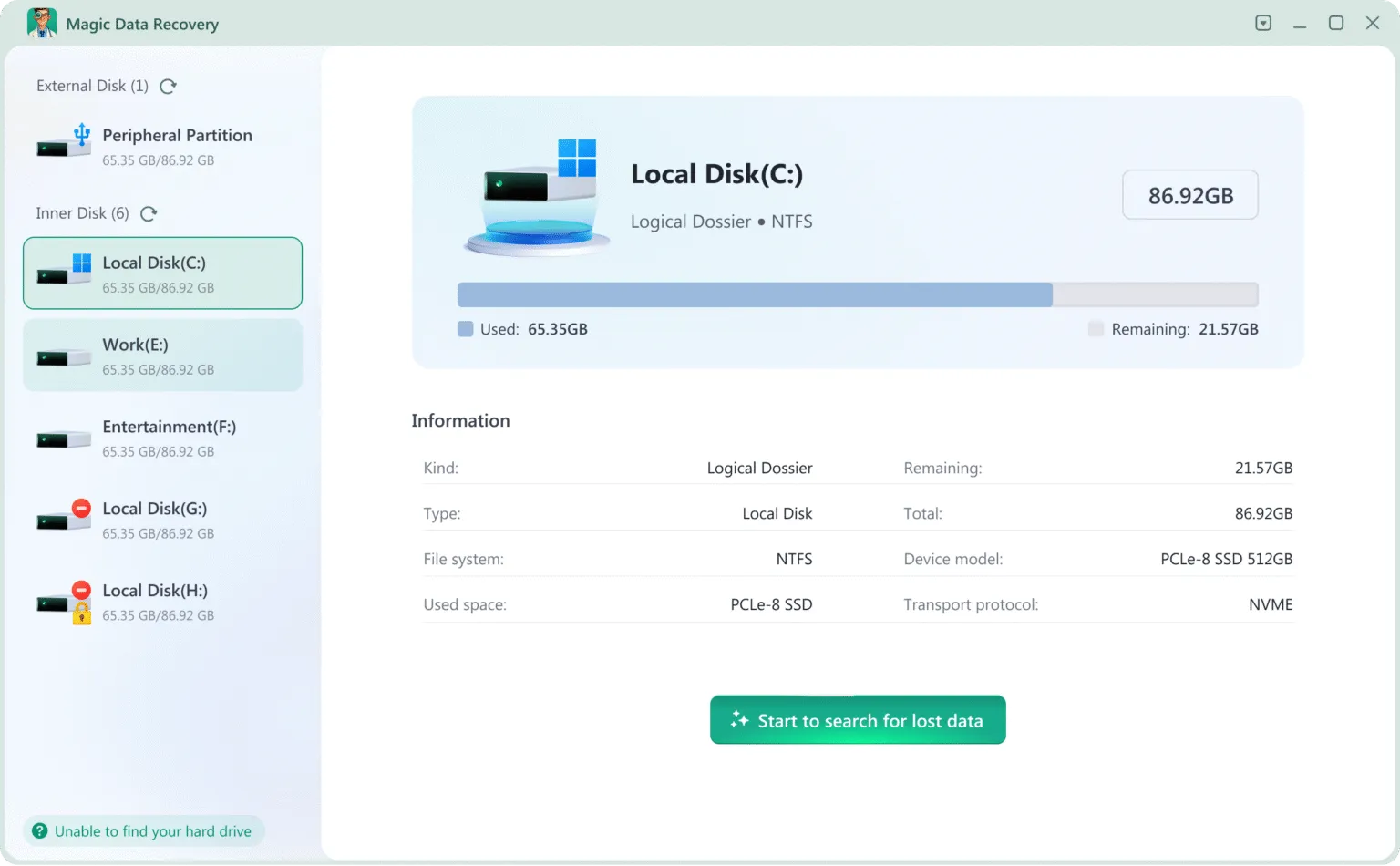
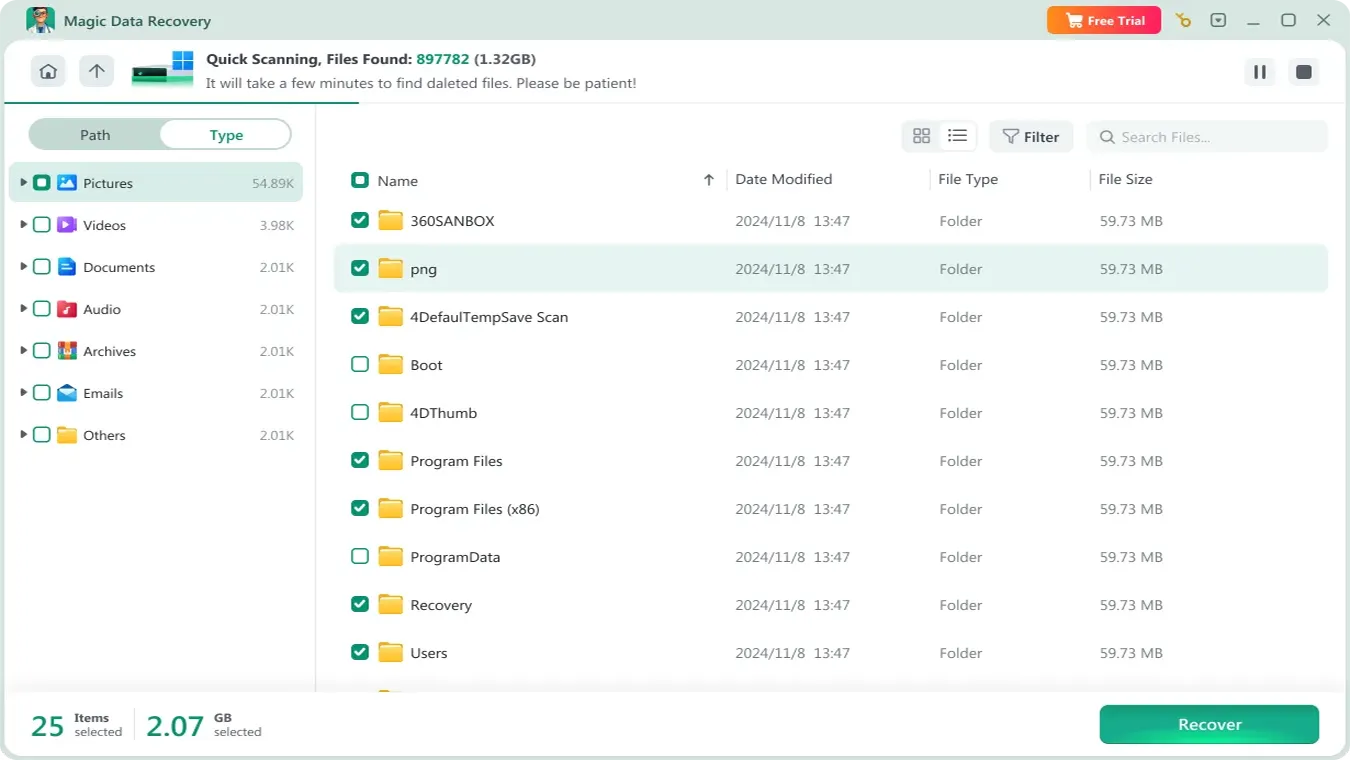
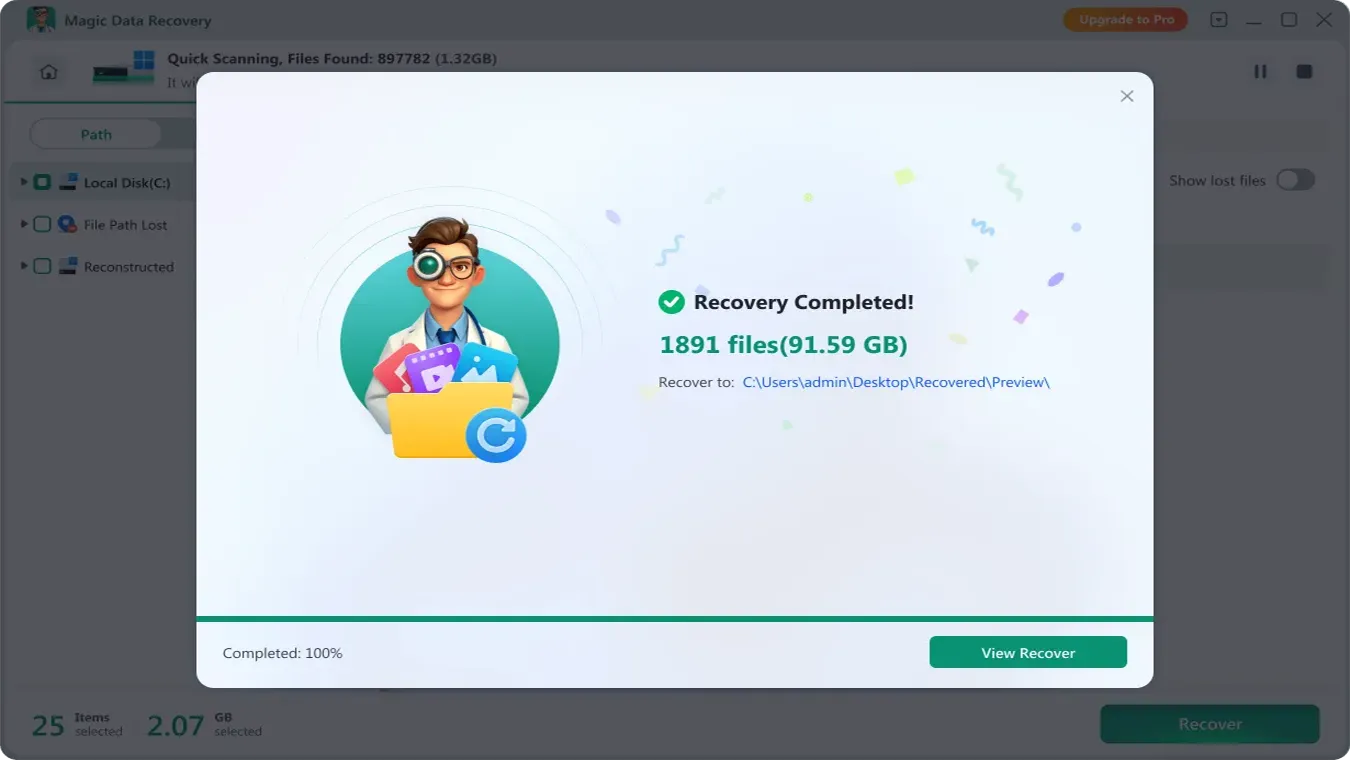
If your hard drive is still detected by Windows, Magic Data Recovery can help you scan the drive and recover lost information caused by deletion, formatting, file system errors, RAW partitions, virus damage, or other logical data loss scenarios.
1. Download and Install: Get Magic Data Recovery from the official website and install it on your computer.
Supports Windows 7/8/10/11 and Windows Server

Why Magic Data Recovery Is a Practical Solution
When you need to recover information from a hard drive that is still detected by Windows, software recovery is often the most practical first step. Magic Data Recovery is designed for common HDD recovery scenarios, including accidental deletion, formatting, RAW partitions, inaccessible drives, and file system errors.
Core Problems It Solves
- Recovering deleted files
- Restoring formatted hard drives
- Fixing inaccessible or RAW partitions
- Extracting data from drives affected by file system errors
Key Advantages
- Read-only scanning to protect original data
- Content-aware deep scan technology
- File preview before recovery
- Support for HDDs, SSDs, USB drives, and memory cards
- Simple wizard-based workflow suitable for non-technical users
Real Usage Scenarios
- Recovering documents after accidental formatting
- Restoring photos from an old external hard drive
- Extracting files from a system that no longer boots
For users who want to recover information from hard drive devices without complex manual operations, Magic Data Recovery provides a safer and more guided workflow. It scans the drive in read-only mode, lets users preview recoverable files, and helps avoid saving recovered data back to the original drive.
This makes it especially useful for users who are not sure whether their deleted, formatted, or inaccessible hard drive files can still be recovered.
Choose the Right Recovery Method by Drive Condition
The right way to recover information from a hard drive depends on the drive’s current condition.
The Hard Drive Is Detected and Opens Normally
If the hard drive is detected and opens normally, but files were deleted or lost, use Magic Data Recovery to scan the drive and recover missing information.
The Hard Drive Is Formatted or Shows RAW
If the hard drive was formatted or shows as RAW, do not format it again. Scan the drive with recovery software and save recoverable files to another location.
The Computer Cannot Boot
If the computer cannot boot but the hard drive is still healthy, remove the drive and connect it to another working computer using a SATA-to-USB adapter or external enclosure. Then scan the drive or copy accessible files.
The Hard Drive Is Not Detected
If the hard drive is not detected in File Explorer, Disk Management, or BIOS, software may not be able to scan it. In this case, professional data recovery service may be required.
The Hard Drive Makes Clicking or Grinding Noises
Clicking, grinding, or repeated spin-up sounds may indicate physical failure. Stop using the drive immediately and avoid repeated scanning, because it may worsen the damage.
Best Practices to Improve Recovery Success
ollow these practices before and during hard drive recovery:
Do not install recovery software on the affected hard drive.
Do not save recovered files back to the same drive.
Avoid formatting, repartitioning, or running repair tools before recovery.
Use another storage device to save recovered files.
Create a disk image first if the drive is unstable but still readable.
Stop recovery attempts if the drive shows physical damage symptoms.
The most common reason recovery fails is continued use of the affected drive. The less you write to the drive after data loss, the better your chance of recovering the original information.
When Software Is Not Enough
Software recovery works best for logical data loss, such as deletion, formatting, RAW partitions, inaccessible folders, and file system errors. However, professional data recovery service may be required if the hard drive has physical problems.
You should stop DIY recovery if:
The drive makes clicking, grinding, or beeping noises.
The drive is not detected in BIOS or Disk Management.
The drive disconnects repeatedly during scanning.
The drive has visible physical damage.
The drive was dropped, burned, or exposed to water.
The drive has severe bad sectors and becomes extremely slow.
In these cases, repeated scanning may reduce the chance of successful recovery. If the information is extremely important, contact a professional recovery lab before trying more DIY methods.
Conclusion
Data loss does not always mean permanent loss. In many common situations, you can still recover information from a hard drive if the lost files have not been overwritten and the drive is still physically readable.
Start by stopping all use of the affected drive. Do not format it, do not install software on it, and do not save new files to it. If the case involves deletion, formatting, RAW partitions, inaccessible folders, or file system errors, Magic Data Recovery can scan the hard drive, preview recoverable files, and restore them to a safe location.
If the hard drive is not detected, makes abnormal noises, or shows physical damage, professional recovery service may be the safer option.
Supports Windows 7/8/10/11 and Windows Server
FAQs
Can I recover information from a hard drive?
How do I recover information from a formatted hard drive?
Can I recover files from a hard drive that won’t boot?
Can I recover information from an old hard drive?
Is deleted information still stored on a hard drive?
Should I repair the hard drive before recovering files?
Why should I not save recovered files to the same hard drive?
When is hard drive information recovery impossible?

Erin Smith is recognized as one of the most professional writers at Amagicsoft. She has continually honed her writing skills over the past 10 years and helped millions of readers solve their tech problems.