
Disk Drill Data Recovery for Windows: Practical Guide & Alternative
In fact, data loss on Windows systems happens more often than most users expect. Accidental deletion, formatted drives, corrupted partitions, or sudden power failures can make important files disappear within seconds. As a result, when this happens, many users immediately search for disk drill data recovery for windows, hoping to find a quick and effective solution. Since many of these incidents involve internal or external hard drives, users can also refer to this detailed Hard Drive data recovery guide for a broader understanding of common HDD data loss scenarios and possible recovery approaches.
Disk Drill is a well-known data recovery tool for Windows. However, it is not the only option, and it may not always be the most suitable choice for every situation. This guide explains how Disk Drill works on Windows, what it can and cannot do, and why many users consider Magic Data Recovery a more practical and reliable alternative in real-world scenarios.
Supports Windows 7/8/10/11 and Windows Server
Wondering if your files can be recovered? Find out in seconds with our quick check below.
Data Recovery Assessment
Answer 3 quick questions to estimate your recovery chances
Table of Contents
What Is Disk Drill Data Recovery for Windows?
Disk Drill data recovery for windows refers to the Windows version of Disk Drill, a software tool designed to recover deleted or lost files from hard drives, SSDs, USB drives, memory cards, and other storage devices.
The software works by scanning storage sectors for file records that still exist but are no longer visible to the operating system. As long as the data has not been overwritten, recovery may still be possible.
Disk Drill supports common Windows file systems, including:
It also provides features such as file preview, quick scans, and deep scans, which are common among modern recovery tools.
How Data Recovery Works on Windows Systems
Before choosing any recovery software, it is important to understand how Windows handles deleted files. In general, when a file is deleted:
- The file is not immediately erased
- Windows simply marks the space as available
- The data remains until overwritten by new files
This is why timing matters. Continuing to use the affected drive can permanently overwrite recoverable data. Industry best practice recommends:
- Stop using the affected drive immediately
- Install recovery software on a different disk
- Recover files to a separate storage location
These principles apply whether you use disk drill data recovery windows or any other recovery solution.
Key Features of Disk Drill for Windows
Disk Drill includes several features that make it suitable for basic to intermediate recovery tasks:
Supported Recovery Scenarios
- Deleted files
- Formatted partitions
- Lost or RAW drives
- External storage devices
Scanning Modes
- Quick Scan for recently deleted files
- Deep Scan for formatted or damaged partitions
Additional Capabilities
- File preview before recovery
- Filtering by file type
- Recovery from external devices
While these features are useful, many users report that the free version has strict recovery limits, which leads them to look for alternatives.
Pros and Cons of Disk Drill Data Recovery on Windows
Advantages
- Clean and modern interface
- Supports many file types
- Preview available before recovery
Limitations
- Free version has limited recovery allowance
- Scan results can be overwhelming for non-technical users
- Performance varies depending on disk condition
These limitations do not make Disk Drill ineffective, but that’s where comparing alternatives stands out.
Disk Drill vs Magic Data Recovery: A Practical Comparison
When comparing disk drill data recovery for windows with other recovery tools, understanding real-world usability matters more than feature lists alone. While Disk Drill is often considered a starting point, many users also want to know how it performs compared to practical alternatives in everyday recovery scenarios.
For this reason, the following comparison focuses on how Disk Drill and Magic Data Recovery differ in terms of workflow clarity, recovery safety, and ease of use, helping Windows users decide which solution better fits their specific data loss situation.
Feature | Disk Drill | Magic Data Recovery |
File Preview | Yes | Yes |
Scan Transparency | Moderate | Clear and structured |
Ease of Use | Beginner-friendly | Beginner-friendly |
Recovery Verification | Limited | Strong preview-based confirmation |
Magic Data Recovery focuses on clarity, predictable workflow, and safer recovery decisions, which reduces user error during recovery.
How to Recover Data on Windows with Magic Data Recovery
The data recovery workflow is similar across most Windows recovery tools. Below is a practical example using Magic Data Recovery, which follows the same safe recovery principles.
Step 1: Download and Install Magic Data Recovery
Install the software on a drive different from the affected hard drive. This prevents overwriting deleted data and improves recovery success.
Supports Windows 7/8/10/11 and Windows Server
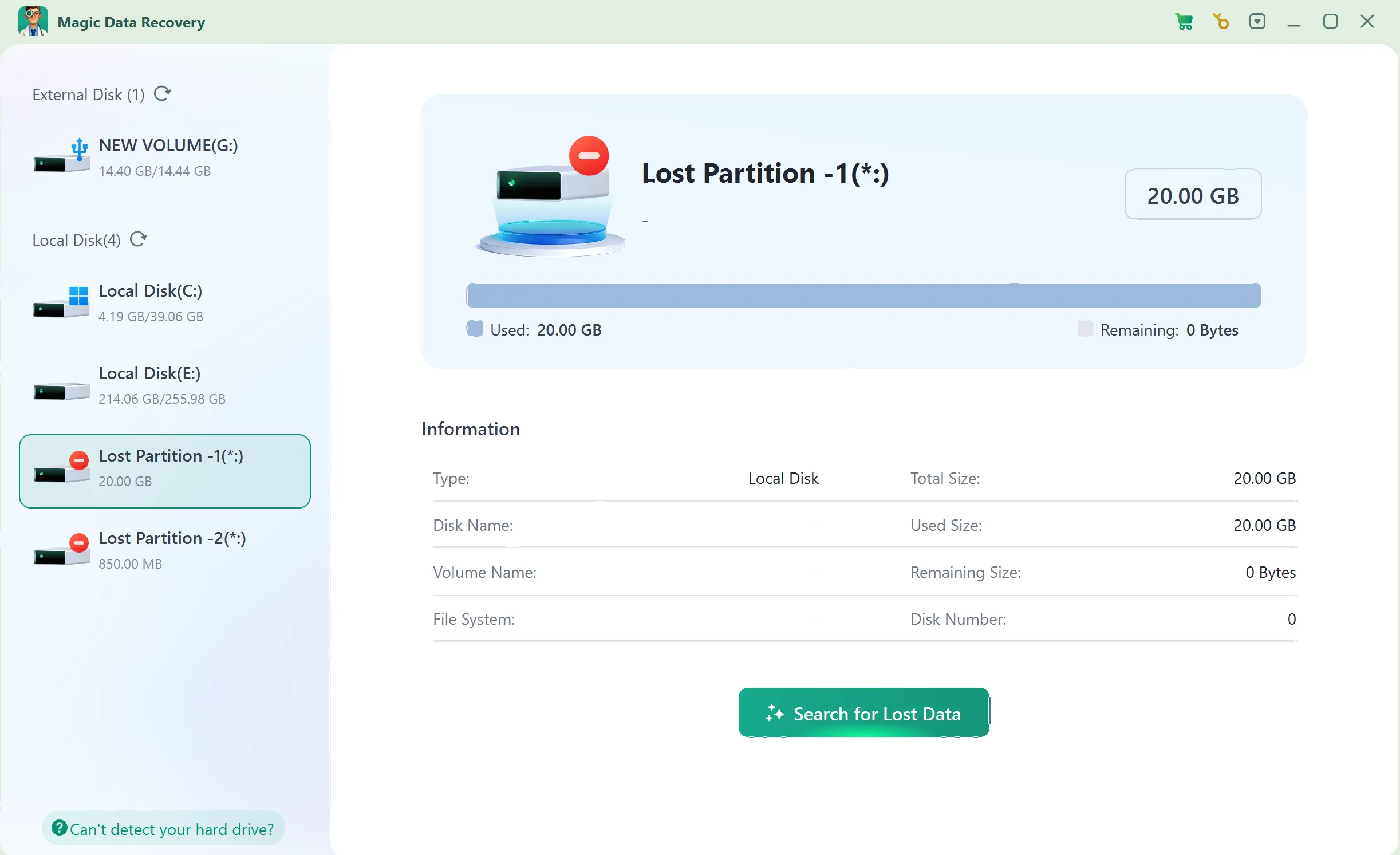
Step 2: Select the Hard Drive to Scan
Launch the program and select the hard drive or partition where lost files located, and then start searching.
Step 3: Scan the Drive for Lost Files
The software performs an advanced scan automatically. Meanwhile, it displays recoverable files as the scan progresses.
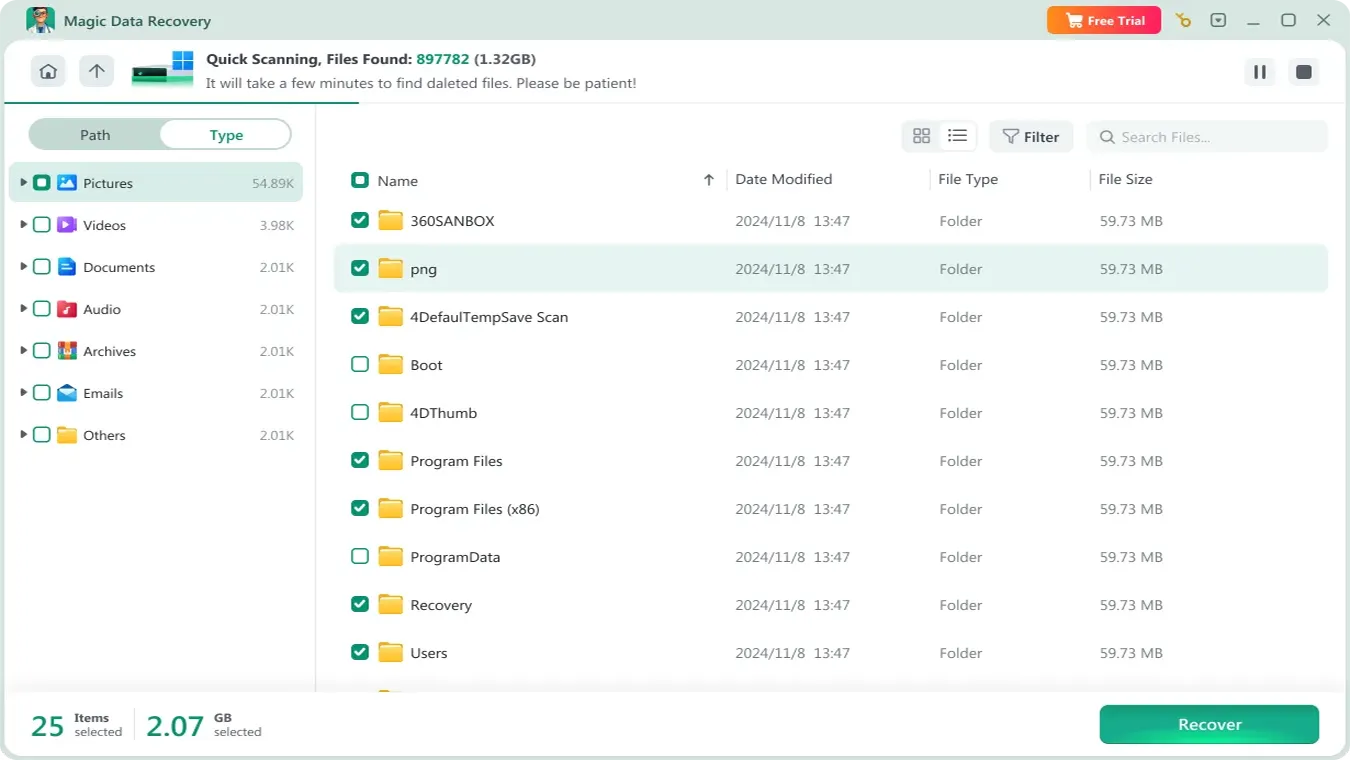
Step 4: Preview Files Before Recovery
Use the preview feature to confirm file content and quality before restoring.

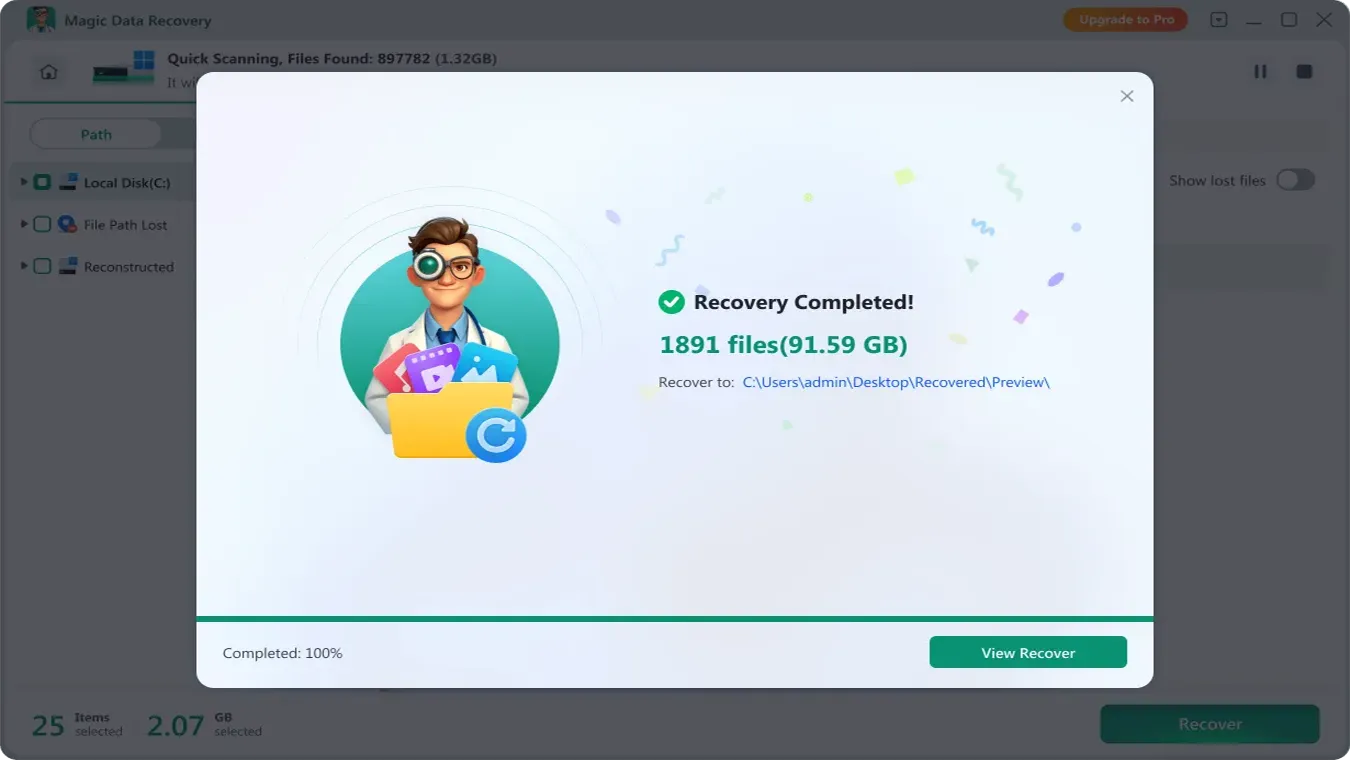
Step 5: Recover Files to a Safe Location
Save recovered files to a different drive or storage device to avoid data corruption.
Why Many Users Choose Magic Data Recovery
Core Problems It Solves
- Unclear scan results
- Risk of overwriting files
- Confusing recovery steps
Unique Advantages
- Clear file structure during scans
- Strong preview support before recovery
- Designed to minimize common recovery mistakes
Real-World Use Cases
- Recovering photos after accidental deletion
- Restoring documents from external drives
- Handling formatted USB drives safely
Unlike some solutions, Magic Data Recovery emphasizes verification before recovery, which improves trust and confidence.
Conclusion
Data loss on Windows can be stressful, especially when important files disappear without warning. This is why many users turn to disk drill data recovery for windows as a starting point when searching for a recovery solution.
However, Disk Drill can handle common recovery scenarios and offers useful features such as file preview and multiple scan modes. However, its limitations and learning curve mean it may not be the best fit for every user or every data loss situation.
Overall, for users who value clarity, safer recovery workflows, and predictable results, Magic Data Recovery stands out as a practical alternative. It focuses on helping users verify recoverable files before restoring them, reducing common mistakes and improving confidence during the recovery process. If you are looking for a reliable and easy-to-use HDD recovery solution for Windows data recovery, Magic Data Recovery is well worth considering.
Supports Windows 7/8/10/11 and Windows Server
FAQ – Disk Drill Data Recovery for Windows
Is Disk Drill data recovery free?
Is Disk Drill really effective at data recovery?
Is Disk Drill available for Windows?
Does Windows 10 have a data recovery tool?
Is Disk Drill a safe site?
Is there a totally free data recovery software?
How much does Best Buy Geek Squad charge for data recovery?
Is Disk Drill a Chinese company?

Vasilii is a data recovery specialist with around 10 years of hands-on experience in the field. Throughout his career, he has successfully solved thousands of complex cases involving deleted files, formatted drives, lost partitions, and RAW file systems. His expertise covers both manual recovery methods using professional tools like hex editors and advanced automated solutions with recovery software. Vasilii's mission is to make reliable data recovery knowledge accessible to both IT professionals and everyday users, helping them safeguard their valuable digital assets.