
Master File Table Recovery: Fix Corrupted MFT
When your drive suddenly becomes inaccessible or displays errors like “file system structure is corrupted” or it shows as RAW file system, the issue often points to a damaged NTFS structure—especially the Master File Table (MFT). At first glance, many users attempt quick master file table recovery fixes. However, those actions often reduce recovery success.
Therefore, this guide explains how master file table recovery works, when recovery is possible, and how to handle corrupt master file table recovery safely. More importantly, it introduces a structured workflow that protects your data before any repair begins.
Table of Contents
What Is the Master File Table
Why the MFT Matters
The Master File Table acts as the core index of NTFS. Specifically, it records where every file exists on the disk. Without it, the system cannot locate files correctly.
In other words:
- The MFT maps file locations
- It stores metadata for every file
- It ensures consistent file system access
As a result, once it becomes damaged, file access fails immediately.
What Happens When the MFT Is Corrupted
When corruption occurs, the system loses track of file entries. Consequently:
- Files disappear from directories
- The drive may appear as RAW
- Errors occur during access
However, in most cases, the actual data remains intact. Therefore, recovery still works if you act quickly.
Can You Perform Master File Table Recovery Safely
When Master File Table Recovery Works
You can perform recovery successfully if:
- The issue is logical rather than physical
- Disk sectors still contain original data
- No overwrite has occurred
For example, sudden power loss often damages metadata only. As a result, recovery remains highly possible.
When Corrupt Master File Table Recovery Fails
On the other hand, recovery becomes difficult when:
- Physical disk damage exists
- Critical sectors become unreadable
- New data overwrites old data
Therefore, you should stop using the drive immediately to preserve recovery chances.
Common Errors Related to Corrupt Master File Table Recovery
During recovery, users often encounter these errors:
- “MFT is corrupted”
- “File system structure is corrupted and unreadable”
- “Correcting errors in the master file table”
- “CHKDSK found errors in the MFT mirror”
Although these errors seem serious, they usually indicate metadata damage rather than complete data loss.
What Causes Master File Table Corruption
Understanding the causes improves your recovery success rate.
Common causes include:
- Sudden power interruption
- Improper shutdown
- Disk bad sectors
- Malware activity
- Unsafe device removal
For instance, unplugging a USB drive without ejecting it properly often leads to MFT corruption. Therefore, safe usage habits matter.
Master File Table Recovery Methods and Solutions
Recover Data First for Safe Master File Table Recovery
Before attempting any repair, you should recover your data first. This approach significantly improves the recovery success rate because repair tools may overwrite recoverable information.
Therefore, using a reliable recovery solution becomes essential, especially in cases involving corrupt master file table recovery.
Recommended Tool for Master File Table Recovery
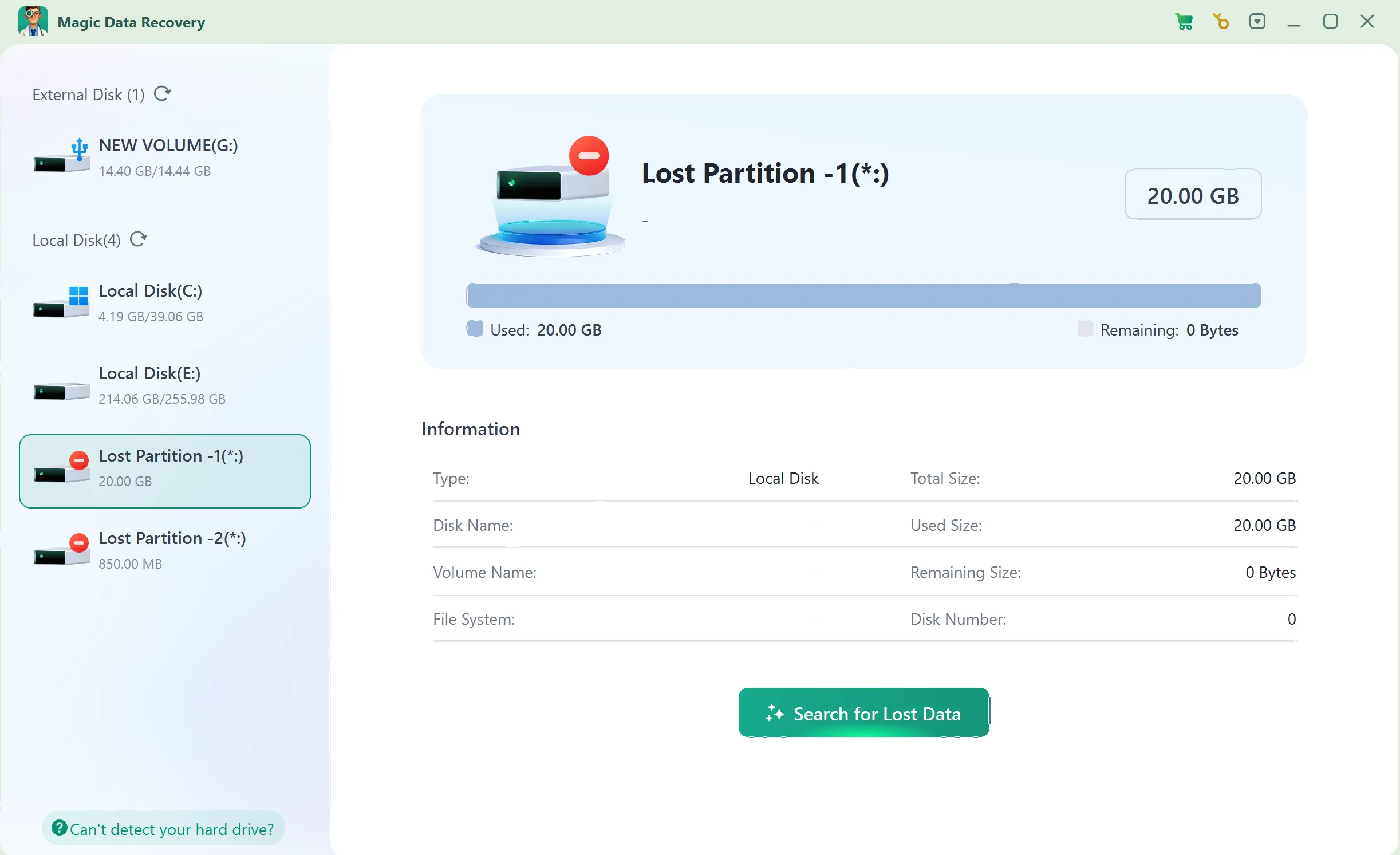
When dealing with MFT corruption, Magic Data Recovery provides a practical and safer solution. Instead of relying on a fully intact file system, it scans disk sectors directly and reconstructs lost file structures.
As a result, it works effectively even when the NTFS structure becomes unreadable or the drive appears as RAW.
Why Magic Data Recovery Fits This Scenario
Unlike traditional repair tools, Magic Data Recovery focuses on data extraction rather than structural correction. Consequently, it reduces the risk of permanent data loss.
It is especially useful when:
- The drive becomes inaccessible or RAW
- File system errors prevent normal access
- Important files disappear unexpectedly
- Standard tools fail to detect data
Key Advantages for Corrupt Master File Table Recovery
Magic Data Recovery offers several practical benefits:
- It bypasses damaged MFT structures and reads raw data
- It supports recovery from corrupted and unmounted partitions
- It allows file preview before recovery, which improves accuracy
- It minimizes the chance of overwriting existing data
In addition, it adapts well to real-world failure scenarios, which makes it suitable for both beginners and experienced users.
Real-World Use Case
For example, after a sudden power loss, a drive may show as RAW and become inaccessible. However, the actual files often remain on disk. In this situation, Magic Data Recovery can locate and restore files before any repair tool modifies the structure.
Therefore, it becomes a safer first step in MFT recovery workflows.
Repair Disk After Recovery
After recovery, you can repair the file system using CHKDSK.
chkdsk X: /f /r
However, you should note:
- CHKDSK may remove damaged entries
- It may overwrite recoverable data
- It should never be your first step
Therefore, always complete recovery before running repair commands.

Rebuild Structure in Advanced Cases
If the partition becomes inaccessible, rebuilding the structure may help. However, this method works best after data recovery is complete.
How to Prevent Master File Table Recovery Issues
To reduce future risks, follow these steps:
- Back up important data regularly
- Use stable power sources
- Avoid forced shutdowns
- Safely eject external drives
- Monitor disk health frequently
As a result, you can significantly reduce the need for recovery.
Conclusion
Master file table recovery remains possible in many real-world situations because file data often stays intact. However, incorrect actions can quickly reduce recovery success.
Therefore, a safer strategy always follows this sequence: recover data first, then repair the system. Magic Data Recovery stands out because it bypasses damaged MFT structures and scans disk sectors directly. Consequently, it delivers a more reliable solution for corrupt master file table recovery, especially when standard tools fail.
Supports Windows 7/8/10/11 and Windows Server
FAQ
Can master file table recovery restore all files?
In many cases, it restores most files if the data remains intact. However, results depend on overwrite status and disk condition. Therefore, if sectors remain unchanged, recovery tools can locate and rebuild file structures successfully, although full recovery cannot always be guaranteed.
Is corrupt master file table recovery always possible?
No, the recovery depends on the level of damage. Logical corruption allows recovery, while physical damage reduces success significantly. Therefore, early action and proper tools improve the outcome.
Should I run CHKDSK before recovery?
No, you should avoid running CHKDSK first. It may modify file structures and overwrite recoverable data. Instead, you should complete data recovery before using repair tools to protect your data.
Why does a drive become RAW after MFT corruption?
A drive becomes RAW because the system cannot read the NTFS structure. Since the MFT controls file access, its corruption prevents normal recognition. However, the underlying data often remains recoverable with proper tools.
How long does it take to recover master file table?
Recovery time varies depending on disk size and scan depth. Smaller drives may take minutes, while larger drives require several hours. Therefore, deep scans take longer but usually produce better results.
Can I recover data after formatting?
Yes, recovery remains possible if data has not been overwritten. Recovery tools can scan raw sectors and rebuild file structures. Therefore, recovery may still succeed after accidental formatting.
What is the safest way to perform recovery?
The safest method involves stopping disk usage immediately, using recovery software first, and avoiding repair tools initially. This approach protects data and increases the recovery success rate.

Vasilii is a data recovery specialist with around 10 years of hands-on experience in the field. Throughout his career, he has successfully solved thousands of complex cases involving deleted files, formatted drives, lost partitions, and RAW file systems. His expertise covers both manual recovery methods using professional tools like hex editors and advanced automated solutions with recovery software. Vasilii's mission is to make reliable data recovery knowledge accessible to both IT professionals and everyday users, helping them safeguard their valuable digital assets.