
Undeleter Recover Files and Data Review
Accidentally deleting photos, videos, documents, or work files can be stressful, especially when the files are no longer in the Recycle Bin, phone gallery trash, or cloud backup. Many users search for Undeleter Recover Files and Data because they want a quick way to get lost files back without complicated steps. However, the best recovery method depends on where the files were deleted, whether the device has been used afterward, and whether the data has already been overwritten.
This guide explains what Undeleter Recover Files and Data does, when it may help, where it may fall short, and why a dedicated deleted file recovery solution such as Magic Data Recovery can be a better choice for Windows users, external drives, USB drives, SD cards, formatted storage, and file system error cases.
Supports Windows 7/8/10/11 and Windows Server
Table of Contents
What Is Undeleter Recover Files and Data?
Undeleter Recover Files and Data is usually searched as an Android file recovery app or mobile recovery utility. It focuses on helping users scan a phone or storage location for deleted files, preview found items, and restore recoverable data. For ordinary Android users, the appeal is clear: install an app, scan the device, and try to bring back deleted photos, videos, or other media files.
The search term Undeleter Recover Files & Data also appears in app listings, APK pages, and review-style articles. In most cases, the user intent is not only to learn what the app is, but also to know whether it is safe, effective, and worth using compared with other recovery tools.
That is why this review does not stop at a basic app description. Instead, it explains the real recovery logic behind deleted files and shows when a broader desktop recovery tool may give users a clearer path.
Undeleter Recover Files and Data Review: What It Does Well
For simple mobile recovery needs, Undeleter Recover Files and Data can be useful in several common situations.
It Gives Users a Simple Recovery Workflow
Many users do not understand file systems, deleted file records, or scan modes. A mobile app with scan, preview, and restore options makes the process easier. If someone deleted a photo recently and has not used the device heavily afterward, a tool like Undeleter Recover Files and Data may be worth trying before moving to more advanced methods.
It Can Help with Common Media Files
Most users who search for undeleter recover files & data want to recover photos, videos, audio files, or downloads. These are common data loss cases on Android phones, memory cards, and internal storage. A recovery app that lets users search by file type can save time, especially when the lost files are mixed with many existing files.
It Is Convenient for Android-First Users
If the deleted data was stored on an Android phone and the user wants a fast mobile-side check, Undeleter Recover Files and Data is convenient. It does not require connecting the device to a Windows computer for the first attempt. This is useful when the lost file is small, recently deleted, and stored in an easy-to-access location.
Where Undeleter Recover Files & Data May Fall Short
Although Undeleter Recover Files & Data may help in simple cases, it is not the best answer for every data loss situation. Recovery apps face technical limits, especially on modern Android systems and heavily used storage devices.
Recovery May Be Limited Without Deeper Access
Deleted files often remain in storage only until new data overwrites them. On some devices, a mobile app cannot access all deleted file records or low-level storage areas. As a result, it may only find cached images, thumbnails, or partial files rather than the original full-quality data.
It Is Not Designed for Windows Drives
A major limitation is platform scope. Undeleter Recover Files and Data is mainly associated with Android recovery. If you deleted files from a Windows PC, external hard drive, USB flash drive, SD card, or formatted partition, a Windows data recovery tool is usually more suitable.
For example, if you need to recover hard drive deleted files, using a desktop recovery tool gives you better control over the disk, scan depth, file preview, and recovery destination.
It May Not Handle Complex Data Loss Well
Simple deletion is only one type of data loss. Many users also face formatted drives, RAW file systems, inaccessible partitions, corrupted folders, virus-deleted files, or external devices that suddenly stop showing files. In these cases, undeleter recover files & data apps may not provide enough scanning depth or device coverage.
This is where Magic Data Recovery becomes more relevant.
Before You Use Any Undeleter: Safe Recovery Rules
Before using Undeleter Recover Files and Data, Magic Data Recovery, Windows File Recovery, or any other tool, follow these rules first.
1. Stop using the affected device immediately.
New photos, downloads, app updates, or system files may overwrite deleted data.
2. Do not install recovery software on the same drive.
If files were deleted from a Windows drive, install recovery software on another drive when possible.
3. Do not save recovered files back to the same location.
Always recover files to another healthy disk, USB drive, or external storage device.
4. Avoid formatting the device again.
Repeated formatting may reduce recovery chances.
5. Preview files before recovery.
Preview helps confirm whether the file content is usable before you restore it.
These practices matter more than the tool name. Even the best recovery software cannot restore data that has already been overwritten.
Best Methods to Recover Deleted Files and Data
Different recovery methods fit different situations. Before relying only on Undeleter Recover Files and Data, check the safest options in order.
Method 1: Check Trash, Recycle Bin, and Cloud Backups
Start with the easiest recovery locations. On Windows, open the Recycle Bin and restore the deleted files if they are still there. On Android, check the gallery trash, Google Photos trash, file manager trash, or app-specific trash folders. For synced files, check OneDrive, Google Drive, Dropbox, or other cloud storage trash.
This method works best when the file was deleted recently and the trash retention period has not expired.
Method 2: Try Windows File Recovery for Local Storage
Windows File Recovery can help users recover deleted files from local storage devices when the files are not in the Recycle Bin. However, it uses a command-line workflow, so it may feel difficult for beginners. You need to choose the correct source drive, destination drive, scan mode, and command switches.
If you are comfortable with commands, it can be useful. If you prefer a visual workflow, Magic Data Recovery is usually easier.
Method 3: Use Magic Data Recovery for Broader Recovery Cases
When built-in options fail, Magic Data Recovery offers a more practical solution for Windows users. It is designed to recover deleted, formatted, or lost files from common storage devices, including internal drives, external hard drives, USB drives, SD cards, and other removable media.
Unlike a simple Android-focused Undeleter Recover Files and Data app, Magic Data Recovery is useful when the data loss reason is unclear. For example, you may not know whether files disappeared because of deletion, quick formatting, file system errors, drive corruption, or an accidental operation. In that situation, a deeper scan and preview-based workflow can help you make a safer decision.
You can also read this guide on how to recover accidentally deleted files if you want a step-by-step explanation for Windows deletion cases.
Undeleter Recover Files and Data vs Magic Data Recovery
Comparison Point | Undeleter Recover Files and Data | Magic Data Recovery |
Best For | Simple Android file recovery attempts | Windows, external drives, USB drives, SD cards, formatted drives, and file system errors |
Typical Workflow | Scan phone, preview files, restore | Select device, scan deeply, preview files, recover to a safe location |
Device Coverage | Mainly Android-related use cases | HDDs, SSDs, USB drives, SD cards, external drives, and more |
File Loss Scenarios | Recently deleted mobile files | Deleted, formatted, corrupted, inaccessible, RAW, or missing files |
Ease of Use | Simple for mobile users | Clear visual workflow for Windows users |
Recovery Control | Limited by mobile system access | More control over scan location, file type, preview, and recovery destination |
Best Alternative Use | Quick first check on Android | Safer option when the storage device can connect to a Windows computer |
Main Limitation | May not access all deleted data | Cannot fix physical hardware damage |
This comparison does not mean Undeleter Recover Files & Data is useless. It means the right tool depends on the device and data loss scenario. For a recently deleted photo on Android, an undeleter app may be enough. For a formatted USB drive, missing Windows folder, external hard drive issue, or SD card recovery case, Magic Data Recovery is usually the more reliable choice.
How to Recover Files with Magic Data Recovery
Magic Data Recovery follows a scan-preview-recover workflow. This helps users avoid guesswork and reduces the chance of making the data loss worse.
Step 1: Install Magic Data Recovery on a Safe Drive
Download and install Magic Data Recovery on your Windows computer. If the lost files were on drive D, do not install the program on drive D. Use another partition or another computer when possible.
Supports Windows 7/8/10/11 and Windows Server
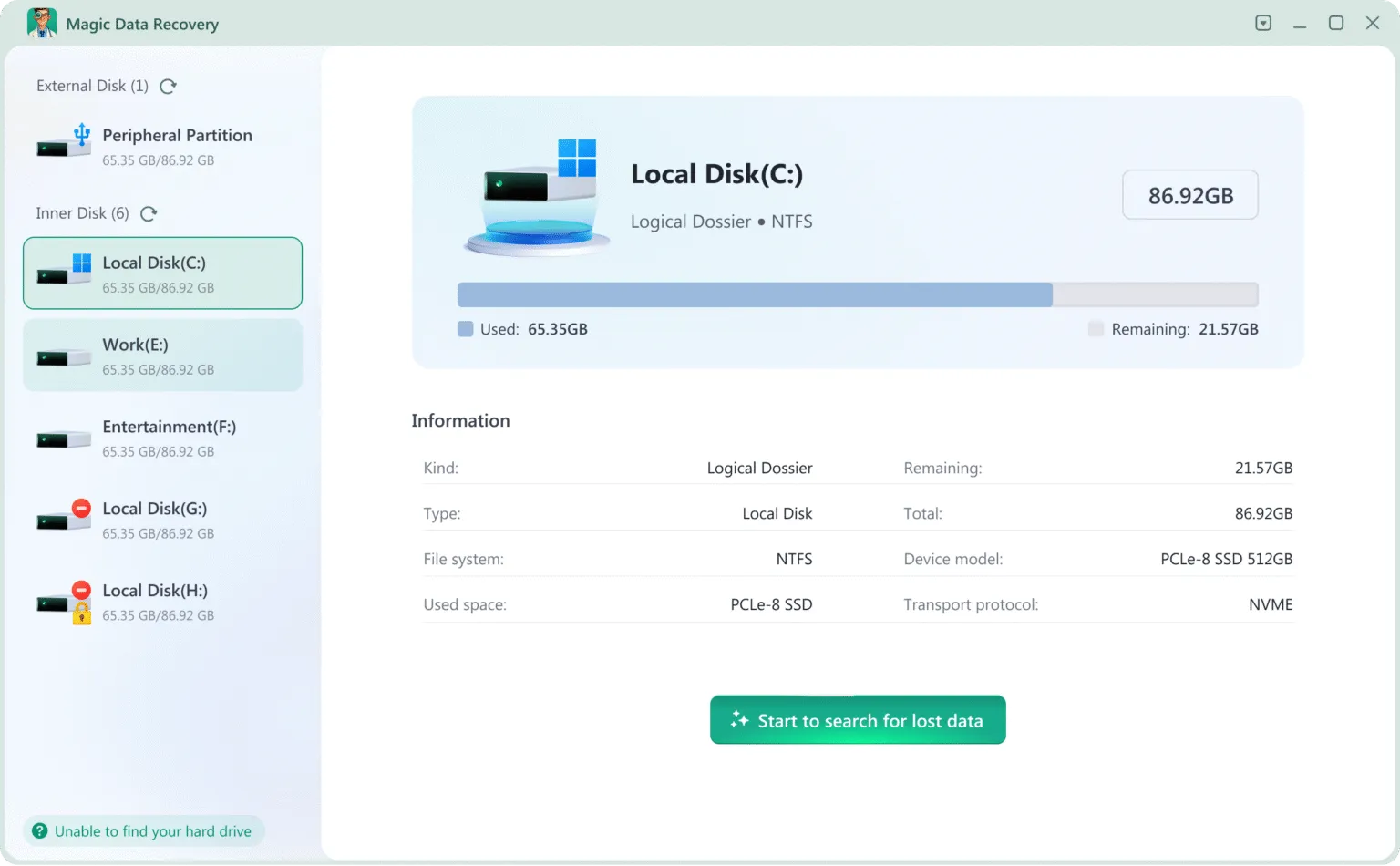
Step 2: Select the Device or Location
Launch the software and choose the disk, partition, USB drive, SD card, or external drive where the files were lost. If you deleted files from a USB drive, connect it to the computer before scanning.
For removable media cases, this guide on how to recover deleted files from a thumb drive may also help.
Step 3: Scan for Lost Files
Start the scan and let the software search for deleted or lost data. In many cases, the program can locate files through file system records and file signatures. This is useful when the original folder path no longer appears in Windows.
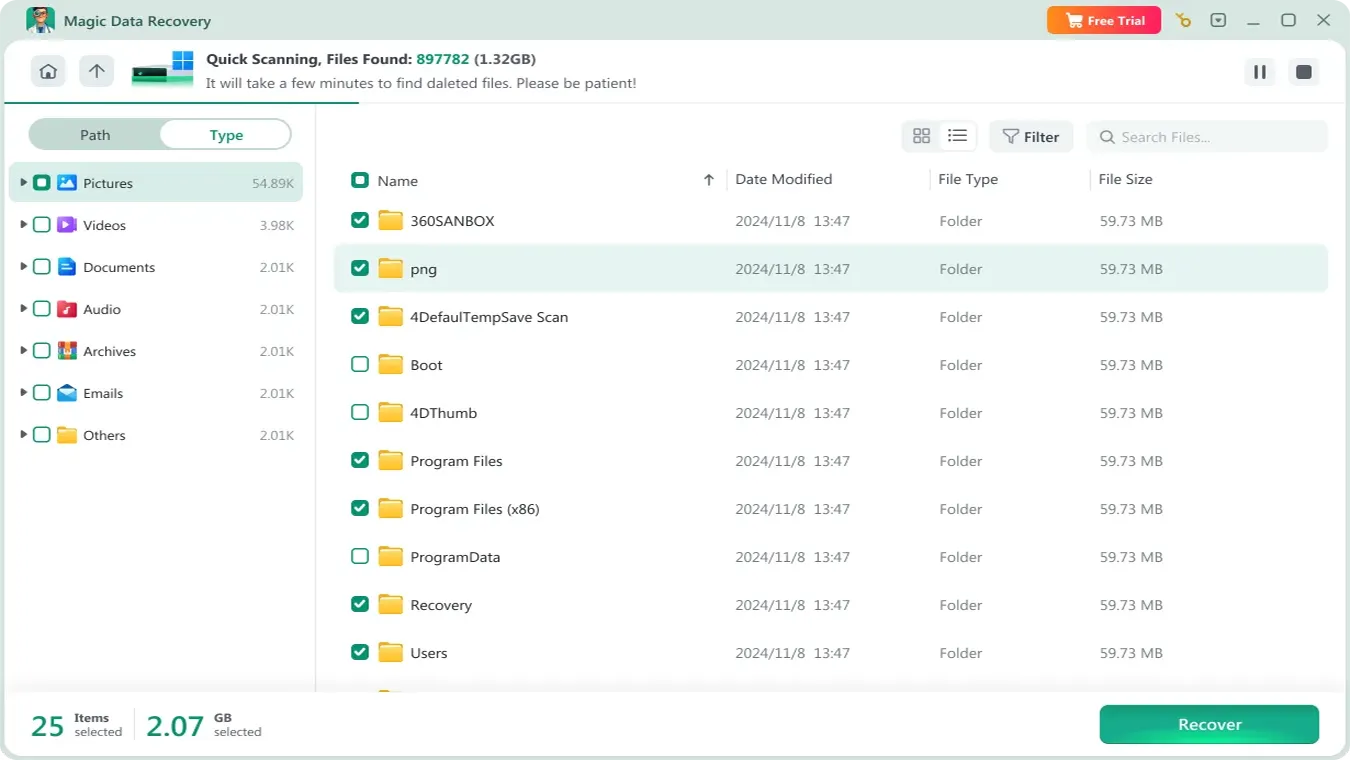
Step 4: Preview Recoverable Files
Preview found files before restoring them. This step is important because it helps confirm whether the files are still usable. For documents, photos, and videos, preview can save time and prevent unnecessary recovery attempts.

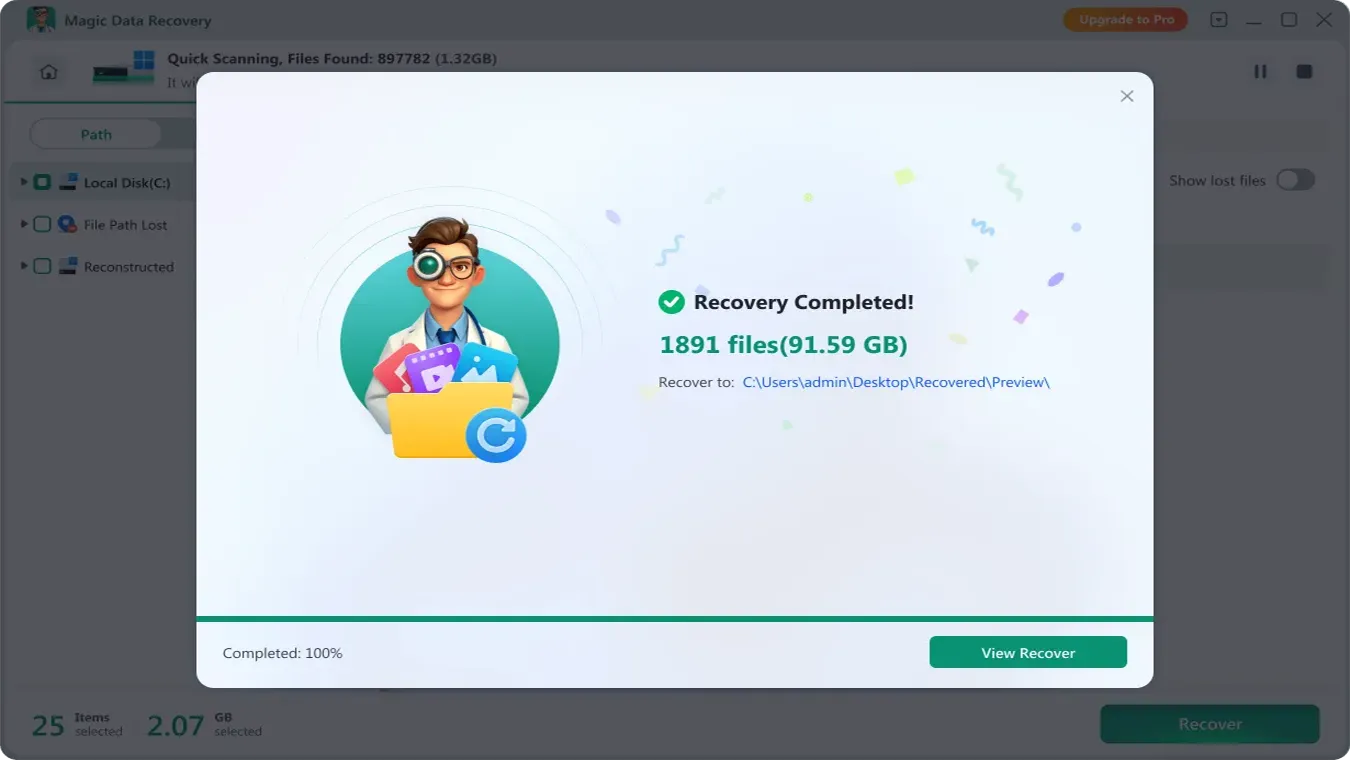
Step 5: Recover Files to Another Drive
Select the files you want and save them to a different healthy drive. Never save recovered files back to the same device that lost data. This rule applies to Magic Data Recovery, Undeleter Recover Files and Data, and other recovery tools.
Who Should Use Magic Data Recovery Instead of an Android Undeleter?
Magic Data Recovery is a better fit when the lost files are not limited to a simple Android deletion case. Use it when:
- Files were deleted from a Windows computer.
- The Recycle Bin was emptied.
- Files were removed with Shift + Delete.
- A USB drive or SD card lost files.
- A drive was formatted by mistake.
- A disk became RAW or inaccessible.
- A folder disappeared after a file system error.
- You need to preview recoverable files before saving them.
For users looking for data recovery freeware compared with undelete tools, the key difference is not only price. The real difference is whether the tool can handle the actual data loss scenario safely and clearly.
Common Mistakes to Avoid After File Deletion
Many failed recovery cases happen because users take risky actions too soon. Avoid these mistakes after deleting important files.
First, do not keep using the device as usual. Every new file can reduce recovery chances. Second, do not run cleanup apps, disk optimization tools, or factory reset operations. Third, do not format the storage device again just because Windows asks you to. Finally, do not save recovered files to the same drive.
If you are dealing with Windows 11 deletion cases, this guide on how to recover recently deleted files in Windows 11 can help you compare built-in recovery methods before using software.
Is Undeleter Recover Files and Data Safe to Use?
Undeleter Recover Files and Data may be safe when downloaded from a trusted source and used carefully. However, users should avoid random APK files from unknown websites because modified installers can create security risks. Also, recovery tools often require storage access, so you should only use software from sources you trust.
For Windows recovery, Magic Data Recovery gives users a desktop-based workflow and avoids cloud uploading. This is helpful for private documents, work files, family photos, or business data. Since recovery happens on your local computer, you can scan, preview, and restore files without sending them to a remote server.
Conclusion: Should You Use Undeleter Recover Files and Data?
Undeleter Recover Files and Data can be a convenient first attempt for simple Android file recovery, especially when you recently deleted photos or videos and want a quick mobile-side scan. However, it is not the best solution for every data loss case.
If you deleted files from a Windows computer, emptied the Recycle Bin, formatted a drive, lost data from a USB drive or SD card, or encountered file system errors, Magic Data Recovery is the stronger recommendation. It offers a clearer scan-preview-recover workflow, supports broader logical data loss scenarios, and helps users restore files to a safe location without complicated commands.
If you are looking for a more complete deleted file recovery solution, try Magic Data Recovery before writing new data to the affected device.
Supports Windows 7/8/10/11 and Windows Server
FAQs
What is Undeleter Recover Files and Data used for?
Undeleter Recover Files and Data is mainly used to scan an Android device or storage location for deleted files, especially photos, videos, and other media. It may help when files were deleted recently and have not been overwritten. However, recovery results depend on device access, storage activity, and whether the original file data still exists.
Is Undeleter Recover Files & Data enough for Windows file recovery?
Undeleter Recover Files & Data is not the best choice for Windows file recovery because it is mainly associated with Android recovery. For deleted files on Windows computers, external drives, USB drives, or SD cards, a desktop recovery tool such as Magic Data Recovery usually offers better scan control, file preview, and recovery destination options.
Can deleted files always be recovered?
No, deleted files cannot always be recovered. Recovery depends on whether the file data has been overwritten. If you continue using the device, install apps, download files, or save new data, the deleted file space may be reused. To improve your chances, stop using the affected device and scan it as soon as possible.
Why does recovery software sometimes find only thumbnails?
Recovery software may find thumbnails when the original full-size file has been overwritten, moved, encrypted, or blocked by system access limits. This often happens on mobile devices where apps cannot always access low-level storage. Thumbnails can prove that a file once existed, but they do not always mean the original file remains recoverable.
Is Magic Data Recovery better than Undeleter Recover Files and Data?
Magic Data Recovery is better for Windows users and broader data loss scenarios, including deleted files, formatted drives, file system errors, USB drives, SD cards, and external storage. Undeleter Recover Files and Data may be convenient for simple Android checks, but Magic Data Recovery offers deeper scanning, preview, and safer recovery to another drive.
What should I do immediately after deleting important files?
Stop using the affected device immediately. Do not take new photos, install apps, download files, format the drive, or run cleanup tools. Check the Recycle Bin, trash folder, or cloud backup first. If the files are not there, scan the original storage device with reliable recovery software and save recovered files elsewhere.
Can Magic Data Recovery recover formatted files?
Yes, Magic Data Recovery can help recover files from many formatted drives, especially when the format was quick and the original data has not been overwritten. It scans the storage device for file records and file signatures, then lets you preview recoverable files. However, no software can guarantee recovery after heavy overwriting.
When should I contact a professional recovery lab?
Contact a professional recovery lab if the drive has physical damage, clicking noises, burning smells, severe overheating, or repeated connection failures. Software recovery is best for logical data loss, not damaged hardware. If the data is extremely valuable, stop using the device and avoid repeated DIY attempts that may worsen the damage.

Jason is a data recovery and technical support specialist with over 15 years of hands-on experience. He has worked extensively with frontline users, troubleshooting difficult data loss cases and providing practical recovery solutions for accidental deletion, formatted drives, damaged file systems, lost partitions, system failures, and other recovery emergencies. His expertise also includes backup and restoration, file repair, and disaster recovery, with a strong emphasis on safe, reliable, and technically accurate guidance.