
Undelete Files Windows 10 Guide: Undelete 360 vs a Better Recovery Solution
When you need to undelete files Windows 10, the first few actions matter more than most users realize. If you keep downloading files, installing software, or saving new documents to the same drive, Windows may overwrite the deleted data before recovery starts.
This guide explains how deleted file recovery works, when free methods are enough, how Undelete 360 compares with modern recovery tools, and why Magic Data Recovery can be a more reliable choice when the case is more complex. For a broader recovery workflow, you can also start from this deleted file recovery guide.
Supports Windows 7/8/10/11 and Windows Server
Table of Contents
What Happens When You Delete a File in Windows 10?
When you delete a file in Windows 10, the file usually does not disappear from the drive immediately. Instead, Windows removes the file reference from the file system and marks that space as available. The original data may still exist until new data overwrites it.
That is why recovery is often possible. However, the chance of success depends on several factors:
- Whether the file was deleted normally or with Shift + Delete.
- Whether the Recycle Bin was emptied.
- Whether the file was stored on an HDD, SSD, USB drive, or SD card.
- Whether new data has been written after deletion.
- Whether TRIM is active on the SSD.
For recently deleted files, you should first stop using the affected drive. Then check simple recovery options before trying advanced tools. You can also read this detailed guide on how to recover recently deleted files Windows 10 .
First Steps Before You Try to Undelete Files Windows 10
Before using any recovery method, follow these safety rules:
- Stop saving new files to the affected drive.
- Do not install recovery software on the same partition where files were lost.
- Do not format the drive, even if Windows asks you to.
- Do not run disk repair commands unless you understand the risk.
- Save recovered files to another healthy drive.
These steps reduce the risk of overwriting deleted data. They also make recovery tools more effective.
Method 1: Restore Deleted Files from Recycle Bin
The Recycle Bin is the fastest way to undelete files Windows 10 if the files were deleted normally.
Steps
- Open Recycle Bin from the desktop.
- Search for the deleted file or folder.
- Right-click the item.
- Choose Restore.
- Check the original folder location.
This method works only if the Recycle Bin still contains the file. If you used Shift + Delete, emptied the Recycle Bin, deleted files from a USB drive, or removed files from some external storage devices, the file may not appear there.
Method 2: Recover Shift Deleted Files
Shift + Delete bypasses the Recycle Bin. Therefore, Windows will not provide a simple “Restore” option. However, the file data may still remain on the drive until overwritten.
In this situation, avoid writing anything new to the same drive. Then use backup tools or recovery software. For a dedicated walkthrough, see this guide on how to recover shift deleted files .
Method 3: Use File History or Previous Versions
Windows File History can help if it was enabled before the file was deleted.
Steps
- Open the folder where the file was stored.
- Right-click inside the folder.
- Choose Properties.
- Open the Previous Versions tab.
- Select a version that contains the missing file.
- Restore it to a safe location.
This method is safe and free. However, it only works when File History, restore points, or another backup system already existed before deletion.
Method 4: Try Windows File Recovery
Windows File Recovery is Microsoft’s command-line recovery tool. It can recover deleted files from local storage devices such as internal drives, external drives, and USB devices.
The main advantage is that it comes from Microsoft. However, many normal users find it less convenient because it requires command-line syntax. You must also understand source drives, destination drives, file modes, and path filters.
It may be useful if you are comfortable with commands. For beginners, a visual recovery tool is usually easier because you can scan, filter, preview, and select files through a graphical interface.
Undelete 360 Review: What It Does Well and Where It Falls Short
Undelete 360 is a free file recovery program designed to restore accidentally deleted files from computers and storage devices. It can help in simple deletion cases, especially when users need a lightweight undelete tool.
What Undelete 360 Does Well
Undelete 360 may be useful when:
- You deleted files recently.
- The files were not overwritten.
- You need a simple free tool.
- You want to scan common file types.
- The recovery case does not involve formatting or serious corruption.
Because of this, it can be a reasonable first attempt for basic deleted file recovery.
Limitations of Undelete 360
However, Undelete 360 is not always the best choice for modern Windows 10 recovery. In real scenarios, users often face more than simple deletion. For example, they may have emptied the Recycle Bin, formatted a drive, lost files from an external device, or encountered a file system error.
In these cases, a basic undelete tool may not scan deeply enough or may not organize found files clearly. It may also lack stronger preview, filtering, and complex recovery features.
If you are comparing free tools, this data recovery freeware vs Undelete article can help you understand where freeware tools are useful and where they become limited.
Undelete 360 vs Magic Data Recovery
Comparison Point | Undelete 360 | Magic Data Recovery |
Best for | Simple deleted file recovery | Deleted, formatted, corrupted, and complex data loss |
Windows 10 usability | Basic interface | Beginner-friendly recovery workflow |
File preview | Limited compared with modern tools | Preview before recovery |
Scan depth | Suitable for simple cases | Advanced scan for more difficult cases |
Supported scenarios | Mainly accidental deletion | Deletion, formatting, file system errors, virus damage, lost data |
Recovery safety | Depends on usage | Read-only scanning process |
External device recovery | Basic support | Supports internal drives, external drives, USB drives, memory cards, and more |
Best user type | Users testing a free undelete tool | Users who need a more reliable recovery solution |
Why Magic Data Recovery Is a Better Choice for Windows 10 Users
If basic methods fail, Magic Data Recovery offers a more complete way to undelete files Windows 10. It is designed for users who need to recover files after deletion, formatting, file system errors, virus damage, and other common data loss situations.
You can use Magic Data Recovery when:
- Recycle Bin is empty.
- Files were deleted with Shift + Delete.
- Files disappeared from a USB drive or memory card.
- A drive was formatted by mistake.
- A partition shows a file system error.
- A virus deleted or damaged files.
- Windows no longer displays the missing data.
Core Pain Points It Solves
Many users do not know whether their files are still recoverable. Magic Data Recovery addresses this by scanning the selected drive and listing recoverable items. The preview feature also helps users confirm whether important files are usable before saving them.
This matters because recovery is not only about finding file names. A good recovery process should help users identify the right files, check their condition, and save them safely to another drive.
Unique Selling Points
Magic Data Recovery is more reliable than basic undelete tools in several practical ways:
- It supports deleted, formatted, and inaccessible files.
- It works with many common storage devices.
- It provides a clear scan and preview workflow.
- It helps users avoid saving recovered files back to the damaged location.
- It fits both normal users and more complex recovery cases.
The tool does not need to make unrealistic promises. Instead, it gives users a structured way to check what can still be recovered.
How to Undelete Files Windows 10 with Magic Data Recovery
Follow these steps carefully.
Step 1: Install the Software on a Safe Drive
Download and install Magic Data Recovery. If your deleted files were on the C drive, avoid installing the program there. Use another partition or another computer when possible.
Supports Windows 7/8/10/11 and Windows Server
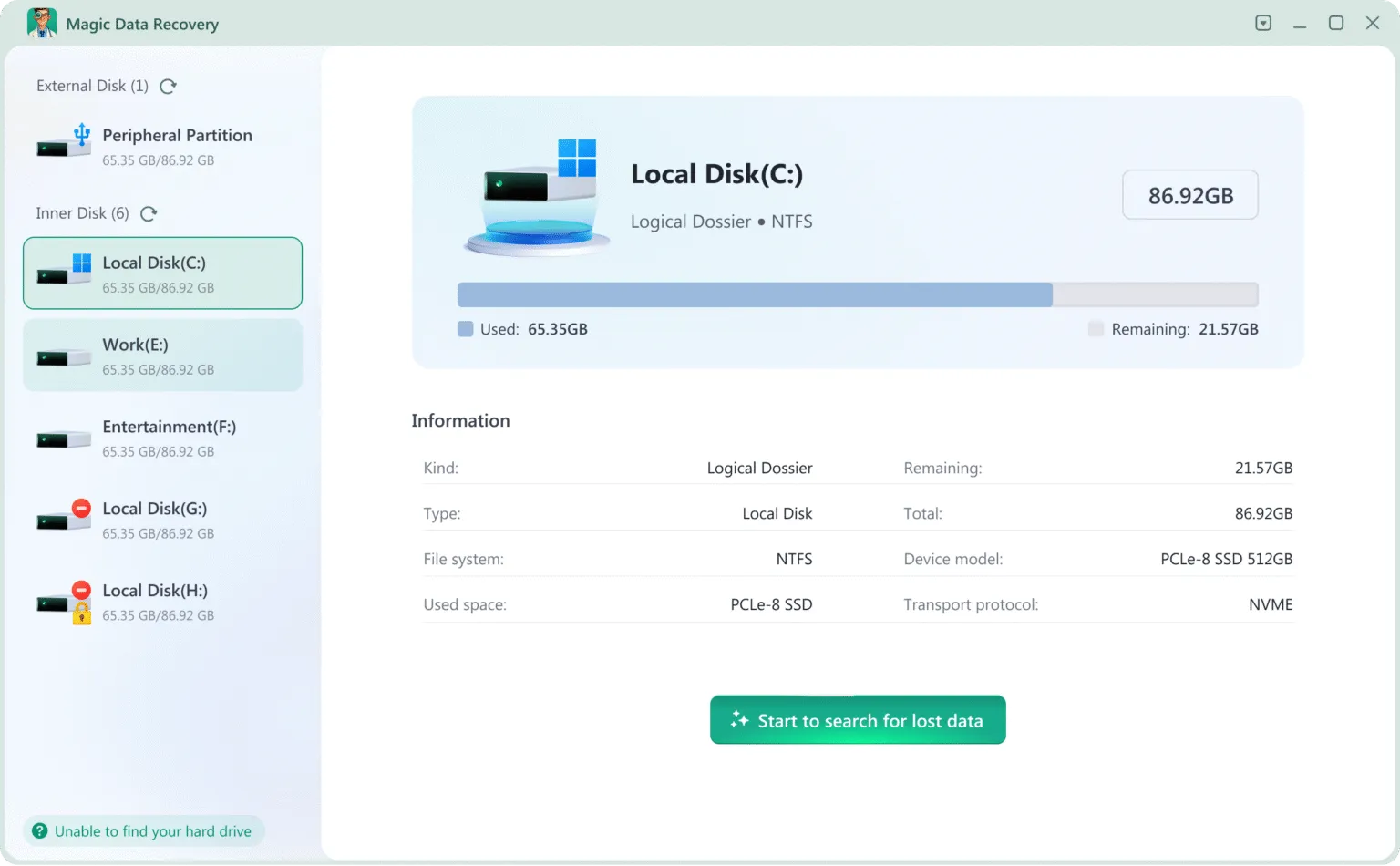
Step 2: Select the Original Location
Open the software and choose the drive, partition, USB drive, SD card, or external disk where the deleted files were stored.
Step 3: Start the Scan
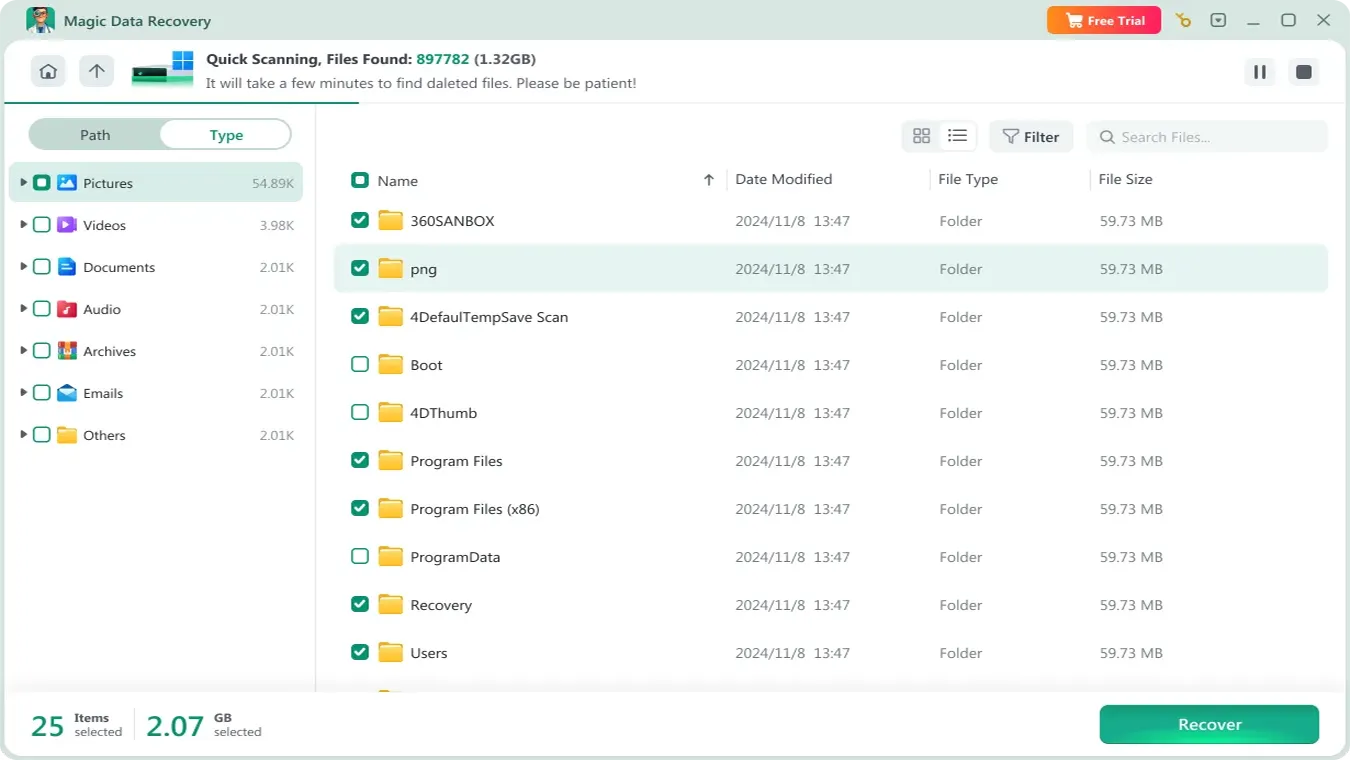
Run the scan and wait for the program to search for deleted and lost files. For larger drives, the process may take longer, but deeper scanning can find more data.
Step 4: Preview Recoverable Files
Preview documents, photos, videos, and other files when available. This step helps you confirm that the files are not only found but also usable.

Step 5: Recover to Another Drive
Select the files you need and save them to a different healthy drive. Never save recovered files back to the same location, because that may overwrite other recoverable data.
Recover Deleted Files from External Drives
Many users search for undelete files Windows 10 after deleting files from a USB drive or external hard drive. This situation is different from deleting files from an internal drive. In many cases, external-drive deletion may not send files to the Recycle Bin.
Therefore, you should scan the external drive directly. You can follow this dedicated guide to recover deleted files from external hard drive if your lost data came from portable storage.
Common Mistakes That Reduce Recovery Success
Avoid these mistakes:
- Installing recovery software on the same drive.
- Downloading large files after deletion.
- Saving recovered files to the original drive.
- Formatting the disk before recovery.
- Running repeated repair commands.
- Assuming all free tools can handle complex recovery.
In data recovery, careful action is often more important than speed alone. The sooner you stop using the drive, the better your chance of recovery.
Best Practices to Prevent Future File Loss
After you recover your files, improve your backup routine:
- Turn on File History.
- Use cloud sync for work documents.
- Keep an external backup for important files.
- Avoid Shift + Delete for valuable data.
- Check Recycle Bin settings.
- Back up USB drives and SD cards regularly.
These habits reduce the need for emergency recovery later.
Conclusion: Should You Use Undelete 360 or Magic Data Recovery?
Undelete 360 can be useful for simple deleted file recovery, especially if you want to test a free and lightweight tool. However, it may not be enough when you need to recover files after emptying Recycle Bin, formatting a drive, losing data from external devices, or dealing with file system errors.
For users who need a more complete undelete files Windows 10 solution, Magic Data Recovery is a better recommendation. It supports more recovery scenarios, offers a clearer scan-and-preview workflow, and helps users recover files from deleted, formatted, corrupted, and virus-affected storage devices.
If you want a safer and more efficient recovery path, try Magic Data Recovery as your practical deleted file recovery solution before the lost data gets overwritten.
Supports Windows 7/8/10/11 and Windows Server
FAQs
Can I undelete files Windows 10 after emptying Recycle Bin?
Yes, recovery may still be possible after emptying Recycle Bin, but you should stop using the affected drive immediately. Windows usually marks deleted file space as available instead of erasing the data at once. A recovery tool like Magic Data Recovery can scan the drive and restore files if they have not been overwritten.
Is Undelete 360 good for Windows 10?
Undelete 360 can help with simple deleted file recovery cases, especially when files were deleted recently and the drive has not been heavily used. However, it may feel limited for formatted drives, corrupted file systems, or more complex recovery needs. For these situations, Magic Data Recovery provides a more complete workflow.
What is the safest way to undelete files Windows 10?
The safest way is to stop using the affected drive, check Recycle Bin and backups first, and then scan the original location with recovery software. Do not install software or save recovered files on the same drive. This prevents overwriting and gives the missing files a better chance of recovery.
Can I recover Shift deleted files in Windows 10?
Yes, Shift deleted files may still be recoverable if new data has not overwritten them. Since Shift + Delete bypasses Recycle Bin, you need backups or recovery software. Magic Data Recovery can scan the original drive, preview found files, and save recoverable data to another safe location.
Does Windows 10 have a built-in undelete tool?
Windows 10 provides Recycle Bin, File History, Previous Versions, and Windows File Recovery. Recycle Bin is easiest, while File History requires earlier setup. Windows File Recovery can help but uses command-line operations. If these options fail, a graphical recovery tool is often easier for normal users.
Can Magic Data Recovery recover files after formatting?
Yes, Magic Data Recovery can help recover files after accidental formatting if the original data has not been overwritten. Formatting often removes file system references rather than instantly destroying all file content. For best results, stop using the formatted drive and recover files to a different storage device.
Why are deleted files not in Recycle Bin?
Deleted files may not appear in Recycle Bin if you used Shift + Delete, emptied the bin, deleted files from a USB drive, removed very large files, or changed Recycle Bin settings. In these cases, Windows may treat them as permanently deleted, so recovery software may be required.
Where should I save recovered files?
Always save recovered files to another healthy drive, not the original location. Saving data back to the same drive can overwrite other deleted files that are still recoverable. For example, recover files from the C drive to an external drive or another partition whenever possible.

Jason is a data recovery and technical support specialist with over 15 years of hands-on experience. He has worked extensively with frontline users, troubleshooting difficult data loss cases and providing practical recovery solutions for accidental deletion, formatted drives, damaged file systems, lost partitions, system failures, and other recovery emergencies. His expertise also includes backup and restoration, file repair, and disaster recovery, with a strong emphasis on safe, reliable, and technically accurate guidance.