
How to Recover Data from a Formatted Hard Drive
Accidentally formatting a hard drive can make years of documents, photos, videos, and project files disappear in seconds. However, the files may not be permanently erased. In many cases, how to recover data from a formatted hard drive depends on the format type, the condition of the disk, and whether new data has overwritten the original sectors.
Start by reviewing this formatted drive recovery guide, stop using the affected disk, and choose the safest recovery method for your situation.
This guide explains how to recover formatted data from hard disk storage through backups, dedicated recovery software (Magic Data Recovery), Windows File Recovery, or a professional service. You will also learn which actions reduce recovery chances and when a do-it-yourself scan becomes unsafe.
Supports Windows 7/8/10/11 and Windows Server
Table of Contents
Quick Answer: What Should You Do First?
Take these actions immediately:
- Stop saving, downloading, installing, or copying files to the formatted drive.
- Do not format the disk again, initialize it, or create a new partition.
- Avoid CHKDSK and other repair tools until important files are recovered.
- Prepare a separate healthy drive with enough space for the recovered data.
- If the disk clicks, disconnects repeatedly, or does not spin normally, power it off and contact a recovery specialist.
The first rule is simple: protect the remaining data before trying to recover a formatted hard drive. Microsoft also recommends minimizing computer use because new files can overwrite storage space that still contains recoverable data.
Can You Recover Data from a Formatted Hard Drive?
Yes, you can often recover data from a formatted hard drive, especially after a quick format. A quick format creates a new file system structure and marks the old storage space as available. It usually does not immediately overwrite every file sector.
Recovery software can therefore search for previous file-system records and recognizable file signatures before new data replaces them. However, recovery remains conditional rather than guaranteed.
A full format creates a much harder case. On modern Windows systems, a full format writes across the volume while checking it, so software recovery may find little or no usable data. Recovery also becomes less likely after Windows reinstallation, repeated formatting, partition changes, or continued daily use.
The storage type matters as well. Traditional HDDs often retain old sector data until overwriting occurs. SSDs may process TRIM and garbage collection, which can remove formatted data internally even when the user has not intentionally saved many new files.
Situation | Recovery outlook | Recommended action |
Quick-formatted HDD with no reuse | Often favorable | Scan promptly from another drive |
Quick-formatted HDD that was reused | Uncertain | Scan once and assess file previews |
Full-formatted modern Windows drive | Low | Check backups or consult a specialist |
Formatted SSD with TRIM enabled | Limited and time-sensitive | Stop using the SSD and evaluate quickly |
Drive clicking or disconnecting | Unsafe for DIY scanning | Use a professional recovery service |
Valid backup available | Excellent | Restore from the backup first |
No tool can promise that every formatted file remains recoverable. File condition depends on overwriting, fragmentation, the formatting method, storage technology, and hardware health.
Before You Try to Recover a Formatted Hard Drive
Careful preparation improves safety and prevents avoidable damage.
Stop All Writes to the Source Drive
Every new file can occupy sectors that previously held lost data. Therefore, do not continue browsing, editing documents, installing programs, or downloading updates on the affected disk.
If you formatted an external hard drive, disconnect it until you are ready to scan.
When the formatted disk contains Windows, shut down the computer. Connect the drive to another Windows PC as a secondary disk when practical. This approach prevents background processes from writing temporary files, logs, updates, and caches to the source.
Do Not Install Recovery Software on the Formatted Disk
Install the recovery program on another internal drive, a separate computer drive, or a healthy external device. Saving the installer to the formatted volume may overwrite the exact files you want to restore.
Likewise, prepare a different destination drive. The source and recovery destination should never be the same physical device.
Avoid Repair Commands Before Recovery
CHKDSK, file-system repair tools, formatting, and partition rebuilding modify disk structures. Although these utilities can sometimes make a drive accessible again, they may also change information that recovery software could use.
Recover important files first. Repair or reformat the disk only after you verify the recovered copies. This recover-first approach is also recommended for drives that suddenly appear as RAW.
Check for Physical Failure
Software can address logical data loss, but it cannot repair damaged read/write heads, motors, platters, or controller boards.
Stop a DIY attempt when the disk:
- makes clicking, grinding, beeping, or repeated spin-up sounds;
- disappears during use;
- becomes unusually slow and freezes the computer;
- shows the wrong storage capacity;
- is not detected in BIOS, Disk Management, or another computer.
For an unreadable but physically stable disk, review this guide to recovering data from an unrecognized hard drive.
If the symptoms suggest mechanical damage, repeated scans can worsen the condition. A sector-level image or professional laboratory assessment is safer for unstable hardware.
How to Recover Formatted Data: 4 Safe Methods
The best method depends on whether a backup exists, whether Windows still detects the drive, and whether the hardware remains stable.
Method 1: Restore Formatted Data from a Backup
A backup is the safest way to restore files because it does not require scanning the formatted disk. Check every backup location before using recovery software.
Restore with Windows File History
File History works only when you enabled it before formatting and included the missing folders in the backup.
- Connect the drive that contains your File History backup.
- Open Control Panel and search for File History.
- Select Restore personal files.
- Browse to a date before the hard drive was formatted.
- Select the required files or folders.
- Choose Restore to and save them to a healthy location.
Do not restore files to the formatted source until you finish all recovery attempts. Microsoft confirms that File History can restore previous versions of files and folders when a valid backup already exists.
Check Cloud Storage and Synced Folders
Sign in to OneDrive, Google Drive, Dropbox, or another service that previously synced the missing files. Review:
- the cloud recycle bin or trash;
- version history;
- shared folders;
- online-only files;
- another computer that still has a local copy.
OneDrive, for example, lets users review and restore earlier versions of supported files. However, cloud synchronization is not the same as a complete backup. If deletion or formatting changes synced across devices, recycle-bin retention or version history may still provide a usable copy.
Check Other Backup Sources
Look for system images, Windows Backup archives, NAS snapshots, manual copies, email attachments, exported projects, camera cards, and old computers.
Restoring an intact copy is usually faster and safer than attempting to recover a formatted hard drive sector by sector.
Method 2: Recover a Formatted Hard Drive with Magic Data Recovery
When no usable backup exists and the drive remains physically healthy, Magic Data Recovery provides a practical way to scan formatted storage without repairing or reformatting it first.
The software targets common logical data-loss scenarios, including:
- accidental formatting;
- deleted files;
- inaccessible partitions;
- RAW file systems;
- system reinstallation;
- corrupted file systems;
- virus-related data loss.
Magic Data Recovery supports more than 5,000 file types, including documents, photos, videos, audio, archives, emails, databases, and professional file formats. It works with internal HDDs, external hard drives, SSDs, USB drives, and memory cards that Windows can detect.
Why Magic Data Recovery Fits Formatted Hard Drive Recovery
Several features address the main problems users face after formatting:
- Advanced scanning: The program checks the disk beyond the new, empty file-system view.
- File-system and signature analysis: It can locate files through available metadata and recognizable file patterns.
- Real-time results: Found items appear while the scan continues.
- Preview and filtering: Users can verify important files and narrow results by type, name, path, size, or date.
- Simple workflow: The interface avoids the command syntax required by some free tools.
- Controlled destination: Users select a separate healthy drive for restored files.
For example, imagine that a user selects the wrong 2 TB external HDD while preparing a Windows installation disk. The drive still appears normally, but every folder has disappeared.
Instead of running repair commands, the user can connect the disk as a secondary device, scan it, preview several critical documents and photos, and restore selected data to another disk. This workflow addresses the actual problem without modifying the formatted source first.
Step 1: Install Magic Data Recovery on a Healthy Drive
Download and install the program on the Windows system drive or another healthy disk. Never install it on the formatted hard drive.
Supports Windows 7/8/10/11 and Windows Server
For a formatted system disk, remove it from normal use when possible. Connect it to another Windows computer through SATA, a drive enclosure, or a stable USB adapter.
Step 2: Select the Formatted Hard Drive
Launch Magic Data Recovery and locate the affected physical disk or formatted partition.
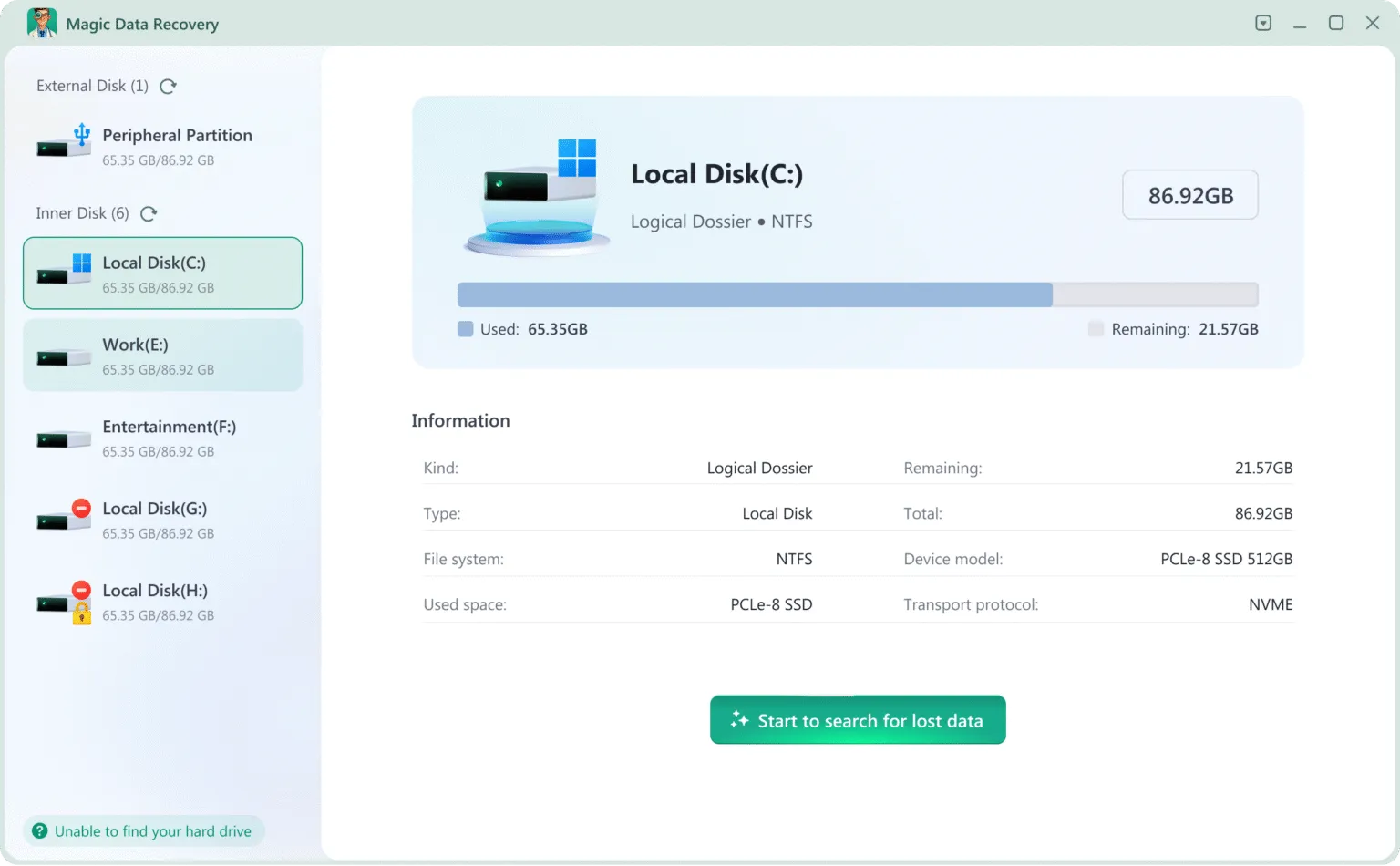
Verify the capacity and device name carefully so that you do not scan the wrong drive. If the original partition no longer appears, select the physical disk or any lost-partition result detected by the software.
Step 3: Run the Scan
Start scanning and allow the program to examine the formatted storage. Large disks and drives with file-system damage may require more time.
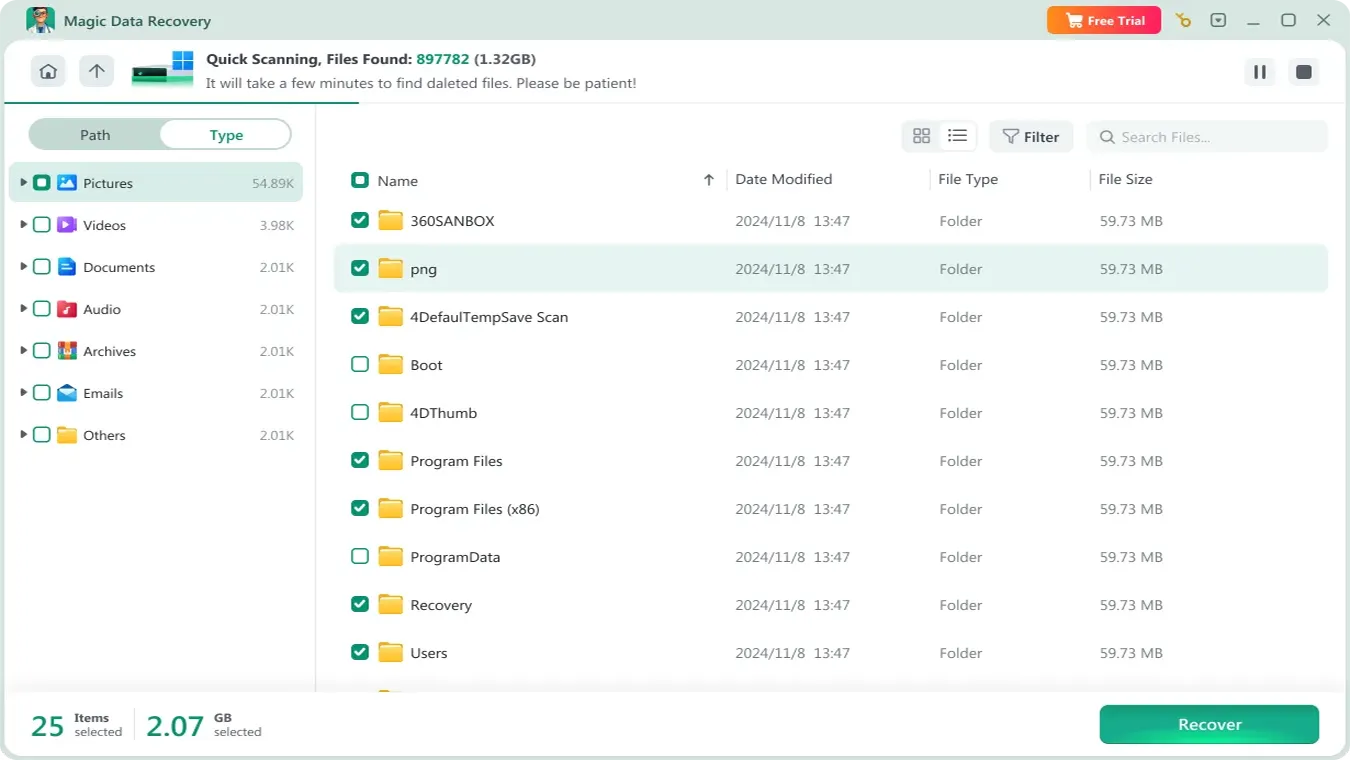
Avoid using the source disk during the scan. In addition, do not disconnect an external drive or allow the computer to enter sleep mode.
Step 4: Filter and Preview the Results
Use file type, name, path, size, and date filters where available. Then preview important documents, images, videos, or other supported files.
A successful preview offers stronger evidence that a file can be restored correctly. However, some formats do not support preview, so the lack of a preview does not always mean that the file is unusable.

Step 5: Recover Files to Another Drive
Select the files you need and save them to a separate healthy disk. Never write recovered data back to the formatted drive during the same recovery session.
Afterward, open a sample of documents, photos, videos, archives, and project files from the destination. Confirm that the files are usable before repairing, repartitioning, or reformatting the original disk.
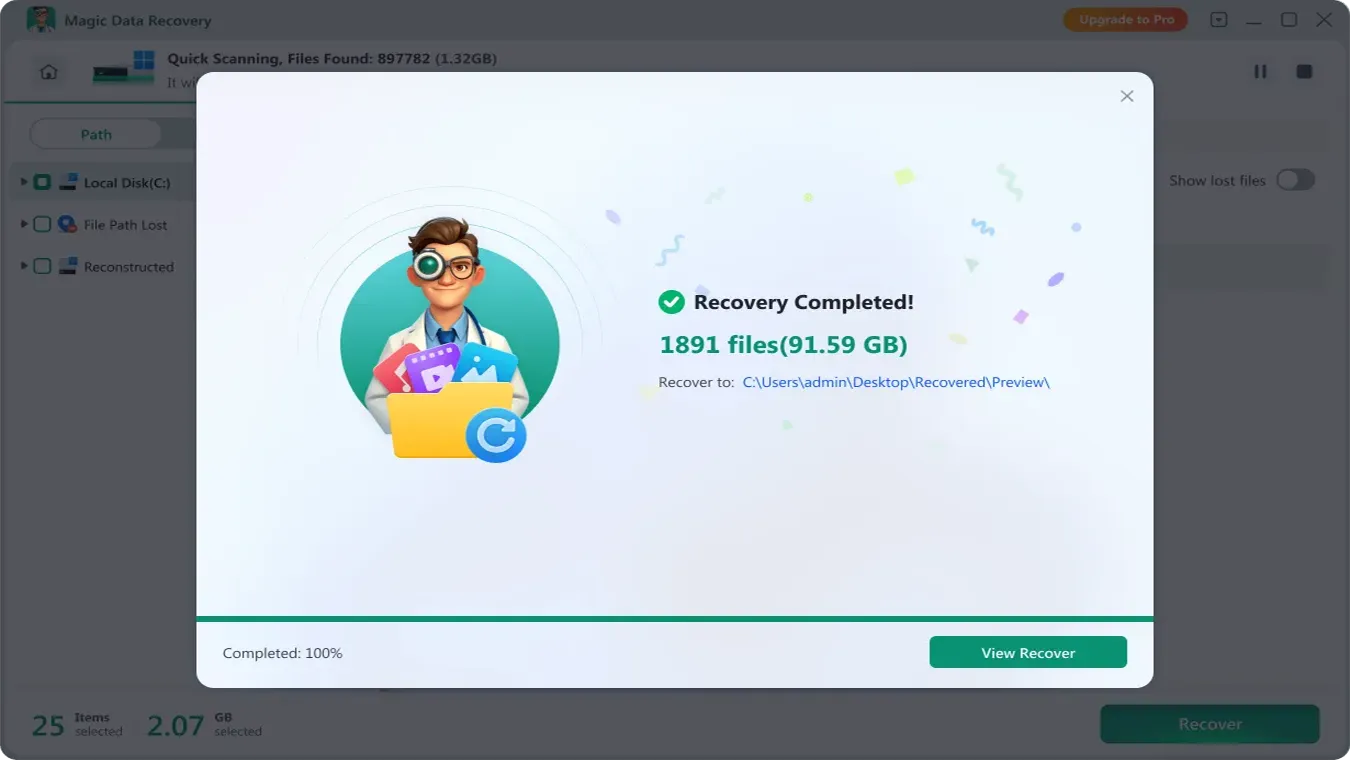
When you need a more accessible solution for how to recover formatted data, Magic Data Recovery lets you inspect the scan results before deciding which files to restore.
Method 3: Use Windows File Recovery
Windows File Recovery is a Microsoft command-line application for Windows 10 and Windows 11. It can search local internal drives, external drives, and USB devices.
Microsoft requires the source and destination drives to be different. The tool provides Regular and Extensive recovery modes.
This option suits users who are comfortable with Command Prompt and understand drive letters and file filters. It offers less visual guidance than Magic Data Recovery and does not provide the same beginner-friendly browsing and preview workflow.
A basic command uses this structure:
winfr source-drive: destination-drive: /extensive /n <filter>
For example, to search drive D: for JPG and DOCX files and save the results to drive E:, you could use:
winfr D: E: /extensive /n *.jpg /n *.docx
Before running a command:
- Confirm the source and destination drive letters in Disk Management.
- Make sure the destination has sufficient free space.
- Use Extensive mode for a formatted or damaged file system.
- Add filters when you only need specific file types or folders.
- Review Microsoft’s current syntax before beginning.
Windows File Recovery can help in some cases, but it requires careful input. A wrong drive letter or destination choice may create unnecessary writes or recover the wrong data set.
Method 4: Use a Professional Data Recovery Service
Choose a professional service when the hard drive has physical symptoms, contains irreplaceable business data, or cannot remain connected long enough for a stable scan.
A qualified laboratory may create a sector-level image, stabilize failing hardware, replace damaged components in a controlled environment, and recover data from the image rather than repeatedly stressing the original disk.
Stop DIY recovery and seek professional help when:
- the HDD clicks, grinds, beeps, or repeatedly spins down;
- the drive suffered impact, fire, liquid, or electrical damage;
- BIOS does not detect the device correctly;
- the disk reports many read errors or disconnects during scanning;
- the data has legal, medical, financial, or business-critical value;
- an earlier recovery attempt made the drive less stable.
Software remains the appropriate first choice for a healthy drive affected by logical formatting. A laboratory becomes the safer choice when hardware reliability is in doubt.
Which Recovery Method Should You Choose?
Your situation | Best method | Why |
You have a current backup | File History, cloud, or another backup | Lowest risk and fastest restoration |
Quick-formatted healthy HDD | Magic Data Recovery | Visual scanning, filtering, preview, and simple recovery |
You prefer a command-line tool | Windows File Recovery | Microsoft tool, but requires accurate commands |
Drive is RAW but stable | Recovery software before repair | Retrieves files before file-system changes |
Drive has physical symptoms | Professional service | Avoids further mechanical stress |
Full format or heavy overwriting | Backup or professional assessment | Software may find little remaining data |
In most home and office cases, the key question is not simply how to recover formatted data from hard disk storage. You must first determine whether the problem is logical or physical.
That decision prevents users from applying a safe software method to an unsafe hardware failure.
Common Mistakes That Make Formatted Data Unrecoverable
Continuing to Use the Drive
Normal computer activity creates browser caches, updates, temporary files, logs, and application data. These writes may overwrite formatted files even when you do not intentionally save anything.
Reinstalling Windows on the Same Disk
A Windows installation writes operating-system files across the drive. Although some personal data may survive, folder structures and large files can become partially overwritten.
Formatting the Drive Again
A second format does not restore the first file system. Instead, it changes disk metadata again and may make file reconstruction more difficult.
Running CHKDSK Before Recovering Files
CHKDSK aims to make a file system consistent, not to preserve every lost file. Its repairs can modify file records and allocation information.
If the disk shows as RAW, use a RAW hard drive recovery workflow before attempting repairs. Recover the files first, verify them, and only then repair or format the source.
Saving Recovered Files to the Source
Writing restored data to the same formatted disk may overwrite files that have not yet been recovered.
Always use another physical drive whenever possible.
Repeatedly Scanning a Failing HDD
A stable HDD can tolerate a normal scan. A failing disk may deteriorate during long reading operations.
When read errors increase or the drive disconnects, stop the scan and consider disk imaging or professional recovery.
How to Improve Recovery Results
Use these practical tips when you need to recover a formatted hard drive:
- Begin recovery as soon as possible.
- Keep the formatted disk offline until scanning begins.
- Use a stable SATA connection or high-quality USB enclosure.
- Disable sleep temporarily during a long scan.
- Scan the physical disk when the expected partition is missing.
- Search by file type when original names or folders are unavailable.
- Preview representative files before recovering a large data set.
- Recover the most valuable files first if the drive shows instability.
- Save all results to a separate physical device.
- Verify recovered files before reusing the original drive.
After recovery, check the disk’s health. A drive that formatted unexpectedly may have file-system corruption, bad sectors, cabling problems, power issues, or failing hardware.
Do not trust a questionable disk with the only copy of important data.
How to Prevent Another Formatted Hard Drive Data Loss
A reliable backup plan makes future recovery much easier.
Follow the 3-2-1 Backup Principle
Keep three copies of important data, store them on two different types of media, and maintain one copy away from the main computer.
For example, keep the working copy on your computer, a local backup on an external drive or NAS, and an off-site copy in secure cloud storage. CISA identifies the 3-2-1 model as a practical way to improve the chances of recovering lost or corrupted data.
Label Drives Clearly
Give external disks descriptive volume names such as “Client Backup,” “Photo Archive,” or “Windows Installer.”
Disconnect unrelated drives before formatting a disk or creating bootable media.
Verify the Disk Before Formatting
Check the drive letter, capacity, model, partition layout, and existing folders. When possible, unplug other removable drives so that the wrong target cannot be selected.
Enable File History or Another Automatic Backup
Automatic backups protect recent versions without relying on memory.
Test the restoration process occasionally. A backup that has never been verified may fail when you need it most. NIST also recommends creating backups regularly and testing them through recovery exercises.
Conclusion
Learning how to recover data from a formatted hard drive starts with one critical action: stop using the disk.
Next, restore from a verified backup when one is available. If no backup exists and the drive remains physically healthy, Magic Data Recovery offers a clear recovery workflow with advanced scanning, file filtering, previews, and support for more than 5,000 file types.
The software is especially useful after accidental formatting, file-system errors, RAW partitions, or Windows reinstallation because it lets ordinary users inspect recoverable data without repairing the source first. For a complete overview of related scenarios and safety steps, return to the formatted drive recovery.
No recovery method can reverse overwritten sectors or repair mechanical damage through software. Still, acting quickly, using a different destination, and choosing the correct method gives you the best practical chance to recover a formatted hard drive safely.
Supports Windows 7/8/10/11 and Windows Server
FAQs
Can I recover all files from a formatted hard drive?
You may recover many files after a quick format if the disk remains healthy and no new data has overwritten the old sectors. However, complete recovery is never certain. Full formatting, Windows reinstallation, file fragmentation, SSD TRIM, repeated scans, and continued disk use can reduce results. Preview important files and restore them to another drive.
How do I recover formatted data without software?
First, check File History, Windows Backup, OneDrive, Google Drive, Dropbox, NAS snapshots, system images, and manual copies. These methods work only when a backup or synchronized copy existed before formatting. Without such a copy, Windows cannot simply undo the format. You will generally need recovery software or a professional service to search the source disk.
Can Windows File Recovery recover a formatted hard drive?
Windows File Recovery can search supported local storage through Command Prompt, and its Extensive mode may help when the file system has changed or become damaged. The source and destination must be different drives. Results depend on overwriting and disk condition. Because the tool lacks a visual preview workflow, beginners may find graphical recovery software easier to control.
Is data recoverable after a full format?
Recovery after a modern full format is usually unlikely because the process writes across the volume and replaces previous data. Outcomes depend on the operating system, formatting method, whether the operation completed, and the storage device. Check backups first. If the data is highly valuable, avoid repeated DIY scans and ask a professional laboratory to assess the drive.
Can I recover data from a formatted external hard drive?
Yes, an external HDD can often be scanned after a quick format when Windows detects it correctly and it has no physical symptoms. Connect it through a stable cable or enclosure, install recovery software on another drive, and save restored files elsewhere. Stop immediately if it clicks, disconnects repeatedly, reports the wrong capacity, or becomes unusually slow.
Can formatted SSD data be recovered?
Sometimes, but SSD recovery is less predictable than HDD recovery. TRIM and garbage collection may clear blocks after formatting, reducing what software can find. Stop using the SSD immediately and avoid booting from it. If the data is critical, power down the device and seek an assessment before background maintenance or further writes reduce the remaining recovery opportunity.
Should I run CHKDSK on a formatted or RAW hard drive?
Do not run CHKDSK before recovering important data. CHKDSK repairs file-system consistency and may modify directory entries, file records, and allocation information. Those changes can make some lost files harder to reconstruct. First scan or image the disk and save recoverable files to another device. After verifying the recovery, you can repair or reformat the original drive.
Where should I save files recovered from a formatted drive?
Save every recovered file to a different physical disk, not another folder or partition on the source device. A separate external HDD, SSD, or healthy internal drive prevents the recovery operation from overwriting unrecovered sectors. Make sure the destination has enough free space, then verify important documents, photos, videos, and archives before reusing the formatted drive.

Jason has over 15 years of hands-on experience in the computer data security industry. He specializes in data recovery, backup and restoration, and file repair technologies, and has helped millions of users worldwide resolve complex data loss and security issues.