
How to Recover Photos from a Formatted SD Card
Formatting an SD card can turn a normal camera or phone screen into an instant panic moment. The folders disappear, the card looks empty, and years of family pictures, client shoots, travel photos, or drone footage seem to be gone. Still, an empty-looking card does not always mean the image data has been destroyed.
The most important part of learning how to recover photos from a formatted SD card is knowing what not to do next. Stop using the card, do not take another picture, and do not format it again. If you need a broader explanation of recovery after formatting, start with Amagicsoft’s formatted drive recovery guide.
This formatted SD card photo recovery guide explains when recovery is realistic, which method fits each situation, and how Magic Data Recovery can scan a formatted SD or microSD card without requiring advanced technical skills. It also covers free alternatives, common mistakes, damaged photos, and the point at which professional help becomes the safer choice.
Supports Windows 7/8/10/11 and Windows Server
Quick answer: You can often recover photos from a formatted SD card after a quick format, provided the card is still readable and no new data has overwritten the old pictures. Recovery becomes less likely after an overwrite format, continued camera use, severe corruption, or physical damage.
Table of Contents
Can You Recover Photos from a Formatted SD Card?
In many cases, yes. The answer to can I recover photos from a formatted SD card depends mainly on overwriting. Formatting usually rebuilds or resets the file system information that tells a camera or computer where files are stored. The pictures may no longer appear in folders, but parts of their data can remain in the card’s storage area until new files replace them.
The SD Association makes an important distinction: a quick format removes file and directory entries without deleting the data stored in the files, while an overwrite format erases the user data area. That is why formatted SD card photo recovery is usually more promising after a quick format.
Hdoes not mean guaranteed. The result depends on four practical factors:
- Formatting method: A quick format generally leaves more recoverable data than an overwrite or secure format.
- Card use after formatting: Every new photo or video may overwrite part of an older file.
- Card condition: Logical problems can often be scanned; cracked, burnt, or electrically damaged cards need different handling.
- Photo format and fragmentation: Standard JPEG files may be easier to rebuild than large, fragmented RAW files or burst sequences.
A camera-formatted card can still be recoverable. Cameras often create a fresh file system and folder structure, making the card appear blank even though older data remains underneath. The safest response is to power off the camera, remove the card, and start recovery from a computer.
Quick Format vs. Overwrite Format
Format situation | What usually happens | Recovery outlook | Best next step |
Quick format, no reuse | File system records are reset; old data may remain | Often favorable | Stop using the card and scan it |
Camera format, no new shots | New folders may be created; old files may remain | Often possible | Remove the card and use a reader |
Card reused for a few photos | Some old sectors may be overwritten | Mixed | Scan immediately and recover what remains |
Overwrite or secure format | User data area is actively overwritten | Poor | Check backups or imported copies |
Card is RAW or asks to be formatted | File system may be damaged rather than intentionally formatted | Often possible if detected | Recover first; repair later |
Card is not detected anywhere | Possible reader, controller, or physical failure | DIY recovery may not work | Test one reader, then seek professional help |
What to Do Immediately After Formatting the SD Card
Before recovering photos from a formatted SD card, protect the source. The first few actions matter more than the brand of recovery software you choose. In real recovery cases, users often reduce their chances by continuing to shoot “just a few more photos,” running a repair command, or saving recovered files back to the same card.
Follow this sequence:
- Stop using the camera, phone, drone, or action camera. Power it off instead of browsing the empty card repeatedly.
- Remove the SD or microSD card. This prevents the device from creating thumbnails, databases, or new folders.
- Do not format the card again. A second format does not restore the first file system.
- Do not run CHKDSK or error repair yet. Repair tools focus on making the file system usable, not preserving every lost photo.
- Connect the card through a reliable reader. A direct card reader usually gives recovery software more stable access than connecting the camera with a USB cable.
- Save recovered photos somewhere else. Use the computer’s internal drive or another external disk, never the source card.
These precautions apply whether you use commercial software, a free tool, or a professional service. PhotoRec’s official guidance also warns users not to write new files to the affected memory device or save recovered data back to the same partition.
Recovery Method:
There is no single method that fits every formatted card. Before scanning, match your situation to the most sensible recovery path.
Your situation | Recommended method | Why |
Photos were previously imported or synced | Check backups and import folders | Fastest and least risky |
Card is readable in Windows but appears empty | Use Magic Data Recovery | Simple scan, preview, filtering, and recovery |
Card is formatted or shows RAW | Use a deep recovery scan before repair | File system records may be missing or damaged |
You need a fully free technical option | Use PhotoRec | Free and designed to scan storage at the file-signature level |
Card disconnects or reports repeated read errors | Create an image or seek help | Repeated scanning may stress unstable media |
Card is cracked, burnt, bent, or undetected everywhere | Professional recovery service | Software cannot fix physical controller or NAND damage |
Method 1: Check Backups and Previously Imported Photos
Before trying photo recovery from a formatted SD card, look for copies that may already exist. This takes only a few minutes and avoids unnecessary recovery work.
Check these locations:
- The Pictures, Photos, Downloads, Desktop, or camera-import folders on your computer
- Lightroom, Capture One, Photoshop, Photos, or other catalog libraries
- Google Photos, iCloud Photos, OneDrive, Dropbox, or another cloud account
- A NAS, external backup drive, or automatic backup folder
- The phone or tablet that previously read the microSD card
- Messaging apps, shared albums, social media uploads, and emailed attachments
Do not assume that a missing photo must be restored from the card. Photographers often import RAW files to one folder, export JPEG copies elsewhere, and then forget that both versions exist. Even a lower-resolution cloud copy may be valuable when the original has been overwritten.
If you find a complete backup, copy it to a safe drive before reusing the SD card. If only some photos are available, continue with SD card photo recovery for the missing items.
Method 2: Recover Photos with Magic Data Recovery
For many Windows users, the easiest way to recover photos from a formatted SD card is to scan the removable media directly. When the card is detected by Windows but the pictures are missing after formatting, Magic Data Recovery offers a practical workflow: select the card, scan it, preview the results, and save the files to another drive.
The software supports recovery after deletion, formatting, file system errors, and other logical data-loss scenarios. Its official product and user-guide pages list support for SD and microSD cards, FAT/exFAT file systems, common image formats and RAW photos, and more than 5,000 file formats overall. It runs on Windows and lets users filter or preview results before recovery.
A formatted card creates several practical problems at once. Folder names may disappear, the original DCIM structure may no longer exist, and the camera may show the card as empty. A useful recovery tool therefore needs to do more than search the Recycle Bin.
Magic Data Recovery helps address these pain points by:
- Scanning the SD card beyond the visible folder structure
- Handling formatted, deleted, RAW, and file-system-error scenarios
- Grouping recoverable files by type
- Letting you search by file name fragments or extensions
- Previewing supported photos before saving
- Recovering selected files to a different storage device
- Providing a graphical workflow that does not require command-line knowledge
This makes it especially useful for a photographer who formatted a camera card, a parent who erased a phone’s microSD card, or a drone user who lost both JPEG and RAW images. Compared with repair commands, recovery software focuses on locating lost data rather than modifying the card’s file system.
Step 1: Connect the Formatted SD Card
Remove the card from the original device. Insert it into a stable USB card reader, then connect the reader to the Windows computer.
Open File Explorer or Disk Management only to confirm that Windows detects the card. Do not initialize, format, or repair it when prompted. If Windows asks, “You need to format the disk before you can use it,” choose Cancel.
Step 2: Install Magic Data Recovery on Another Drive
Download and install Magic Data Recovery on the computer’s internal system drive, not on the formatted SD card. Installing anything on the source card could overwrite photos you are trying to restore.
Supports Windows 7/8/10/11 and Windows Server
For interface details and scan options, refer to the Magic Data Recovery user guide.
Step 3: Select the SD Card and Start Scanning
Launch the program and identify the SD card by its capacity, drive letter, or device name. Double-check the size before starting; selecting the wrong drive wastes time but does not help recover pictures from a formatted SD card.
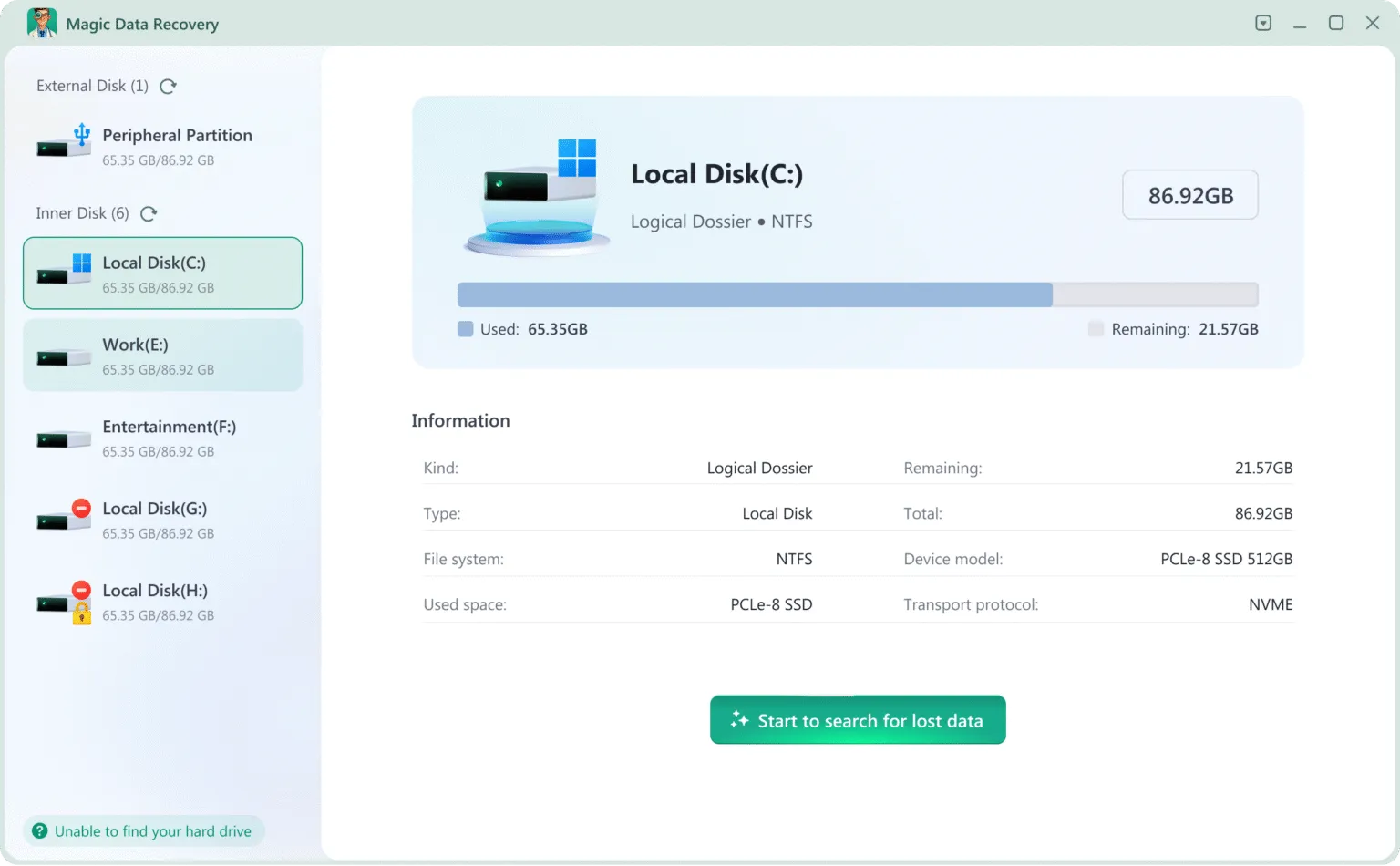
Start the formatted SD card photo recovery scan and let it run without disconnecting the reader. Larger cards and cards with many file types may take longer to examine.
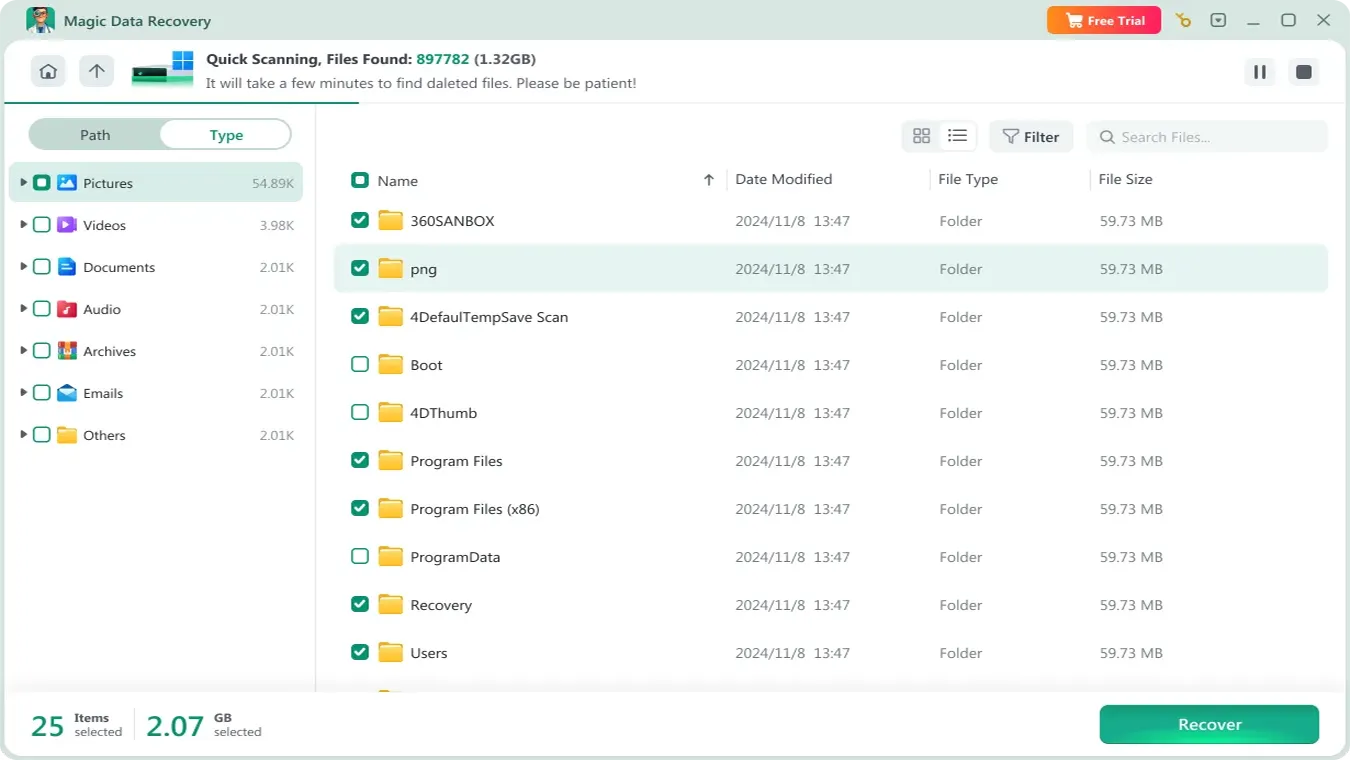
Step 4: Filter and Preview the Photos
After files begin appearing, narrow the results by image type, extension, size, or date. Look for formats such as JPG, JPEG, PNG, TIFF, HEIC, and the RAW extension used by your camera.
Previewing matters. A file name alone does not prove that the picture is intact, especially after partial overwriting. Open the preview when available and prioritize irreplaceable photos first.

Useful search ideas include:
- .jpg or .jpeg for standard camera pictures
- Your camera’s RAW extension, such as .cr2, .cr3, .nef, .arw, or .dng
- Approximate capture dates
- Large file sizes for full-resolution images
- Folder or path groups that resemble the old DCIM structure
Step 5: Recover the Photos to a Different Drive
Select the photos you need and choose a folder on the computer or another external drive. Never restore them to the formatted card during the recovery session.
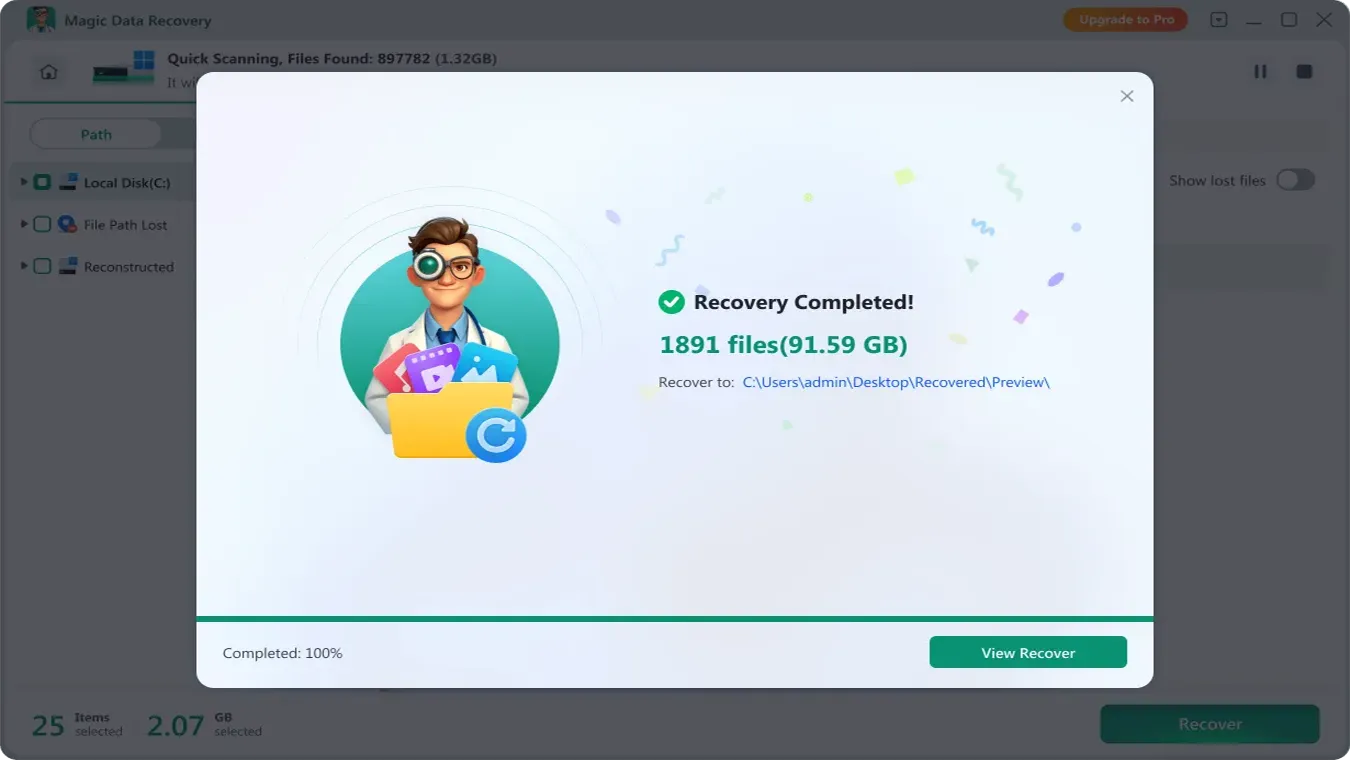
After saving, open a sample from each file type. Check image dimensions, visual quality, and whether the complete picture loads. Then back up the recovered files before attempting to repair or reformat the original card.
If you are looking for a more efficient way to recover photos after formatting an SD card, Magic Data Recovery is a sensible first scan because it combines formatted-card support, preview tools, and a beginner-friendly workflow without promising impossible results.
Method 3: Recover Formatted SD Card Photos with PhotoRec
PhotoRec is a free, open-source option for users who need to recover photos from formatted memory cards and are comfortable with a more technical interface. It can work with SD cards and other memory devices, and it uses read-only access while scanning the source.
That PhotoRec can search for known file signatures even when the original file system is badly damaged or reformatted. The trade-off is organization. Recovered files may receive generated names, and the original folders may not survive. Some metadata can help rename certain files, but you should still expect manual sorting.
A simplified workflow looks like this:
- Download PhotoRec from the official CGSecurity website.
- Insert the SD card through a card reader.
- Run PhotoRec with administrator access.
- Select the physical SD card carefully.
- Choose the relevant partition or whole-card scan.
- Limit the file types to the photo formats you need.
- Choose a destination folder on another drive.
- Start the search and review the recovered folders afterward.
PhotoRec is valuable when budget matters more than convenience. However, users who need previews, familiar navigation, simpler filtering, or less manual sorting may find a graphical tool more practical.
Why CMD, CHKDSK, and “Unformat” Tricks Often Fail
Search results often suggest Command Prompt commands as a universal formatted SD card photo recovery solution. They are not.
The ATTRIB Command Does Not Undo Formatting
A command such as attrib -h -r -s /s /d *.* can reveal files whose hidden, read-only, or system attributes changed. It does not recreate photos removed from the file system by formatting. Use it only when files are hidden, not when the card was genuinely formatted.
CHKDSK Repairs Structures; It Does Not Prioritize Lost Photos
CHKDSK can correct certain file system errors, but it may also change directory records or convert fragments into files. That can make later recovery harder to interpret. For an important formatted card, scan or image the card before attempting repair.
Reformatting Does Not Bring the Photos Back
Some users format the card again with a different file system because they hope Windows or the camera will recognize the old files. That only creates another new file system and may reduce the information available to recovery software.
Saving Recovered Files to the Same Card Can Overwrite More Data
This is one of the most damaging mistakes. The first restored photo may occupy sectors that belong to another lost photo. Always use a separate destination drive.
For more detail on avoiding format-related mistakes, see Accidentally Formatted SD Card? Fix It.
What If the Recovered Photos Will Not Open?
During photo recovery from a formatted SD card, finding a file is not the same as recovering a complete image. A scan may locate a JPEG header or RAW signature even when part of the photo has already been overwritten.
Common reasons include:
- Partial overwriting: A new image or video replaced part of the old file.
- Fragmentation: Large RAW files and videos may be stored in multiple non-contiguous areas.
- Existing corruption: The card may have damaged the picture before it was formatted.
- Thumbnail-only recovery: A small embedded preview survives while the full-resolution image does not.
- Incorrect file extension: A recovered file may need identification by its real format.
- Interrupted writing: The camera lost power or the card was removed before the file finished saving.
Try previewing several versions of the same photo and compare their file sizes. A 50 KB JPEG is more likely to be a thumbnail than a full-resolution camera image. Keep the original recovered files unchanged and work on copies if you plan to use an image-repair tool.
Photo repair and photo recovery are separate tasks. Recovery retrieves available file data from the card; repair attempts to rebuild the internal structure of a damaged image. Repair cannot recreate pixels that have already been overwritten.
What If the SD Card Is RAW, Corrupted, or Not Recognized?
A card that asks to be formatted may not have been intentionally erased. Its file system could be damaged, causing Windows to label it RAW or refuse access.
If the card appears in Disk Management with the correct capacity, recovery software may still scan it. Recover the photos before running CHKDSK, creating a new partition, or formatting the card. The corrupted SD card recovery guide explains additional checks.
Stop DIY recovery when the card:
- Does not appear in Disk Management with any reader
- Connects and disconnects repeatedly
- Reports the wrong capacity
- Becomes unusually hot
- Is cracked, bent, burnt, or water-damaged
- Causes the computer or reader to freeze consistently
Try one known-good reader and one computer to rule out a simple connection problem. Repeatedly powering a physically failing card can worsen the damage, so important professional work, wedding photos, or one-time event images may justify a data recovery lab.
How to Improve Your Recovery Chances
Successful SD card format photo recovery depends on what remains readable. No software can reverse overwritten data, but careful handling can preserve what remains.
- Start the scan before using the card again.
- Use a stable reader and avoid loose adapters.
- Keep the laptop connected to power during long scans.
- Recover the most valuable photos first.
- Filter by photo format to reduce review time.
- Save to a drive with enough free space.
- Keep the source card unchanged until you verify the recovered files.
- Make a second backup as soon as recovery ends.
If the card is unstable but still readable, advanced users should consider creating a sector-by-sector image and scanning the image rather than repeatedly accessing the original card. This approach reduces repeated reads on failing media.
How to Prevent Another Formatted SD Card Photo Loss
After you recover pictures from a formatted SD card, reformat the card only after checking its health and confirming that your backups open correctly.
A practical routine is:
- Import photos to the computer after each important shoot.
- Back up the import folder to a second drive or cloud service.
- Verify several images before erasing the card.
- Format the card in the device that will use it.
- Rotate between multiple cards instead of relying on one.
- Replace cards that show read errors, slow writing, or repeated corruption.
- Label cards as blank, active, or backed up.
- Avoid removing a card while the camera’s activity light is on.
Conclusion
The SD Association recommends using its dedicated formatter for SD, SDHC, and SDXC cards rather than generic operating-system formatting tools when preparing a card for reuse.
how to recover photos from a formatted SD card starts with restraint: stop using the card, avoid repair commands, and never save recovered pictures back to the source. Check existing backups first. If the photos are not available elsewhere, scan the card before any repair or reformatting.
Magic Data Recovery is recommended here because it directly addresses the main problem: finding photos after formatting, deletion, or file system failure while giving ordinary Windows users a clear select-scan-preview-recover workflow. It supports SD and microSD cards, common photo and RAW formats, and recovery to a separate location. It is not a guarantee against overwriting or physical damage, but it is a practical option when the card remains detectable.
For more related methods and format-specific guidance, return to the formatted drive recovery hub.
Supports Windows 7/8/10/11 and Windows Server
FAQs
Can photos be recovered after an SD card is formatted?
Yes, photos can often be recovered after a quick format because the card may reset its file records without immediately erasing every image sector. Stop using the card and scan it as soon as possible. Recovery becomes less likely after new photos, videos, an overwrite format, secure erasure, or physical damage.
How long do I have to recover photos from a formatted SD card?
There is no fixed time limit. The critical factor is whether new data has been written, not how many hours or days have passed. An unused card stored for months may remain recoverable, while a card reused for a few minutes of high-resolution video may overwrite many old photos quickly.
Can I recover photos from a camera-formatted SD card?
Often, yes. A camera format commonly creates a new file system and DCIM structure, while older photo data may remain until overwritten. Turn off the camera, remove the card, and connect it to a computer through a card reader. Do not take test shots or format the card again before scanning.
Can I recover formatted SD card photos for free?
You can first check cloud backups, computer import folders, and external backup drives at no cost. PhotoRec is also a free, open-source recovery tool, although it can require more technical setup and may not preserve original names or folders. A graphical recovery tool may be easier when previewing and sorting many pictures.
Why are my recovered photos missing their original names and folders?
Formatting can remove the directory records that stored file names, dates, and folder paths. Signature-based recovery may still locate image content, but it often assigns generated names because the original references no longer exist. Embedded metadata may preserve capture dates or camera information, which can help you organize the recovered photos afterward.
Can I recover RAW photos from a formatted SD card?
RAW recovery is possible when the relevant data has not been overwritten and the recovery tool recognizes your camera’s format. Large RAW files may be more vulnerable to fragmentation than smaller JPEGs, so some may be incomplete. Filter by extensions such as CR2, CR3, NEF, ARW, DNG, or your camera’s native format.
Can photos be recovered from a formatted microSD card used in a phone?
Yes, if the microSD card functioned as removable storage and remains readable. Remove it from the phone, place it in a reliable adapter or reader, and scan it from a computer. Recovery can be more difficult when the card was encrypted or configured as device-bound internal storage because another system may not interpret its data.
What should I do if the formatted SD card is not recognized?
Test one known-good card reader, USB port, and computer. If the card appears in Disk Management with the correct capacity, recovery software may still scan it. If it remains absent, disconnects repeatedly, reports the wrong size, overheats, or has visible damage, stop repeated attempts and consult a professional recovery service.

Jason is a data recovery and technical support specialist with over 15 years of hands-on experience. He has worked extensively with frontline users, troubleshooting difficult data loss cases and providing practical recovery solutions for accidental deletion, formatted drives, damaged file systems, lost partitions, system failures, and other recovery emergencies. His expertise also includes backup and restoration, file repair, and disaster recovery, with a strong emphasis on safe, reliable, and technically accurate guidance.