
Files Disappeared from SSD? Recovery Guide
If files disappeared from SSD, do not assume the data has vanished permanently. Hidden files, accidental deletion, Windows profile changes, cloud sync, file system corruption, partition problems, and SSD failure can all make files seem missing.
However, SSD data loss needs extra caution because TRIM and garbage collection can affect deleted blocks. Therefore, avoid formatting, repair commands, and new writes until you identify the cause.
This guide explains why SSD files suddenly disappeared, how to diagnose the problem, and how to recover missing files from SSD safely. If normal Windows checks cannot locate your files, a recovery tool such as Magic Data Recovery can scan the affected SSD and help you recover accessible data before you attempt repairs.
Supports Windows 7/8/10/11 and Windows Server
Table of Contents
Are Files Disappeared from SSD Really Gone?
When files disappeared from SSD, diagnosis comes first. Missing does not always mean deleted.
What You See | Likely Cause | Best Next Step |
Used space looks unchanged | Hidden or moved files | Search and show hidden items |
Free space suddenly increased | Possible deletion | Stop using the SSD |
Files vanished after an update | Profile or OneDrive change | Check user folders and cloud storage |
SSD shows as RAW | File system corruption | Recover before repair |
Partition appears unallocated | Lost partition | Scan before repartitioning |
Filenames appear but files will not open | Damaged content | Preview before recovery |
Recovered files contain zeros | TRIM or inaccessible blocks | Limit SSD activity |
SSD is missing from BIOS | Hardware issue | Consider professional recovery |
For example, unchanged used space may point to hidden or moved files. In contrast, a RAW partition calls for a recovery-first approach.
Why Files Disappeared from SSD: Common Causes
Accidental Deletion or Moving
A drag-and-drop mistake can move a folder, while accidental deletion can remove it. First, search by filename or extension, then check the Recycle Bin.
Hidden Files or Folders
Windows may hide files because of settings, attribute changes, or malware. Open File Explorer and select View > Show > Hidden items. If they reappear, copy them to a safe location.
Windows Update, User Profile, or Cloud Sync
If files disappeared from SSD after a Windows update, check other user profiles and OneDrive. Look in Desktop, Documents, Pictures, Downloads, and Windows.old when available. In addition, check the OneDrive Recycle Bin and other Microsoft accounts you use.
File System or Partition Corruption
Windows may still detect an SSD while losing normal access to its file system. Disk Management can show the drive as RAW, unallocated, or without a drive letter. In this case, recover important data before formatting, initializing, or rebuilding the partition.
SSD TRIM and Garbage Collection
TRIM makes SSD recovery different from traditional hard drive recovery. After deletion, Windows can tell the SSD that certain blocks are no longer needed. The SSD may later clear and reuse them.
Still, TRIM does not make every deleted file unrecoverable immediately. Results depend on the SSD, controller, operating system, storage activity, and block state. Therefore, if files disappeared from SSD after deletion, stop unnecessary writes quickly.
SSD Hardware or Controller Problems
Repeated disconnections, slow reads, wrong capacity, I/O errors, or an SSD missing from BIOS can indicate hardware trouble. If valuable data remains, stop repeated scans and consider professional recovery.
What to Do First When Files Disappeared from SSD
Your next actions can affect recovery. Therefore:
- Stop downloads, installations, and file copies to the affected SSD.
- Search for moved or hidden files.
- Check the Recycle Bin, OneDrive, and other user profiles.
- Confirm that Windows detects the correct SSD capacity.
- Save recovered files to another drive.
Meanwhile, avoid formatting, initializing, or repartitioning the SSD. Also, do not treat CHKDSK as a recovery tool because it modifies file system structures. If files disappeared from SSD, recover first and repair later.
How to Recover Files Disappeared from SSD
Start with the least invasive method and move to recovery software only when normal checks fail.
Method 1: Search for Missing Files
Use Windows Search or File Explorer to search by filename, extension, date, or partial name. Also, inspect common user folders.
Method 2: Show Hidden Files
Choose View > Show > Hidden items in File Explorer. If the files appear, copy them to a safe location before changing more settings.

Method 3: Check Recycle Bin, OneDrive, and User Profiles
If files disappeared from SSD after an update or account change, check the Recycle Bin, OneDrive, relevant Windows profiles, and Windows.old when available.
Method 4: Recover Missing SSD Files with Magic Data Recovery
If normal checks cannot locate your files, scan the SSD before formatting or repairing it. Magic Data Recovery can search for accessible lost files, preview results, and save selected data elsewhere. This workflow suits cases where files disappeared from SSD while Windows still detects the drive.
Step 1: Download and Install Magic Data Recovery
Download Magic Data Recovery and install it on a different drive from the affected SSD. This choice reduces unnecessary writes and helps protect recoverable data.
Supports Windows 7/8/10/11 and Windows Server
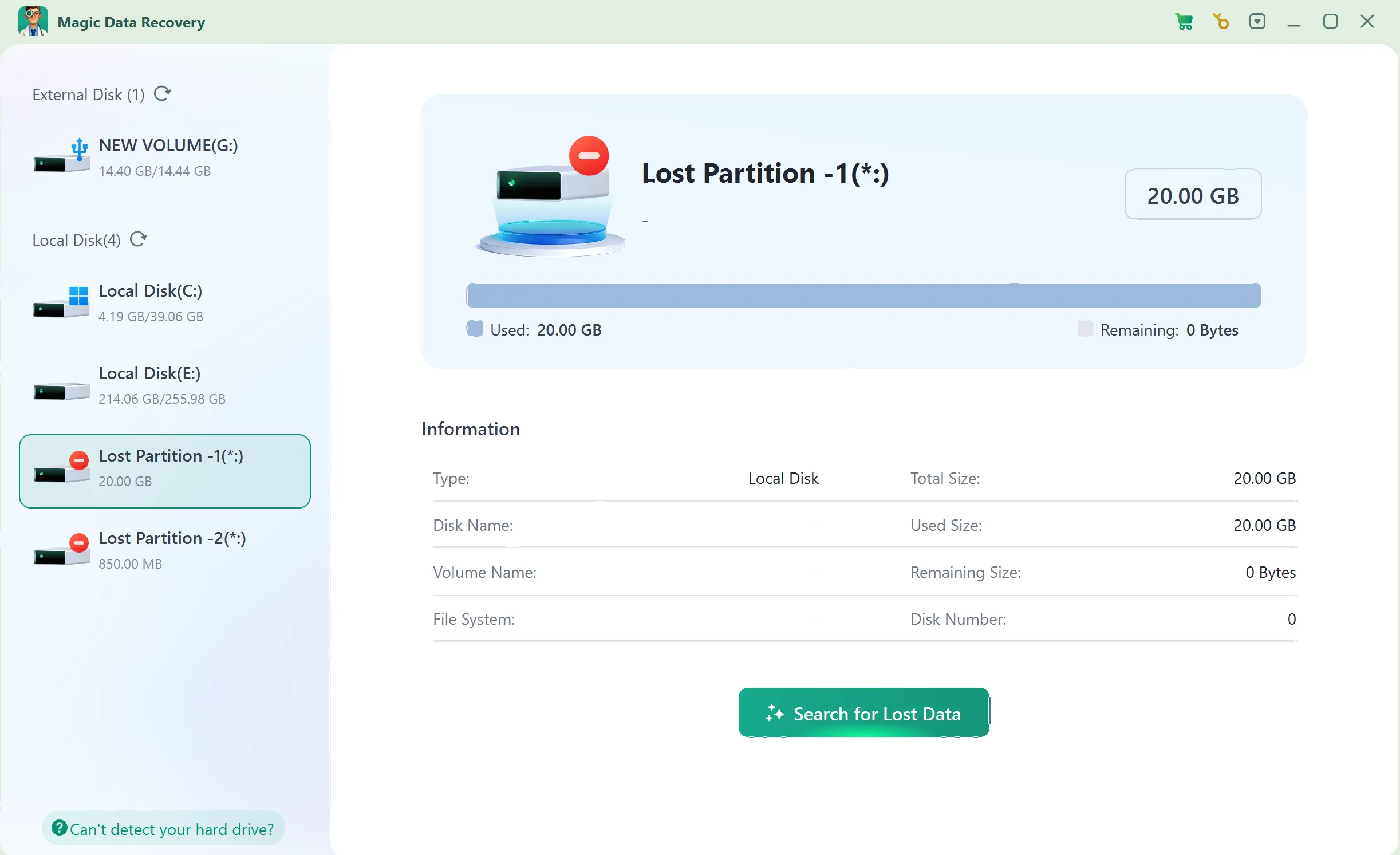
Step 2: Select the SSD Where Files Disappeared
Launch the program and identify the affected SSD or partition. Check the drive capacity and partition details carefully. Then, select the correct location and start the scan.
Step 3: Scan the SSD for Missing Files
Magic Data Recovery performs an Advanced Scan and lists recoverable files as the scan progresses. Meanwhile, avoid heavy activity on the affected SSD.
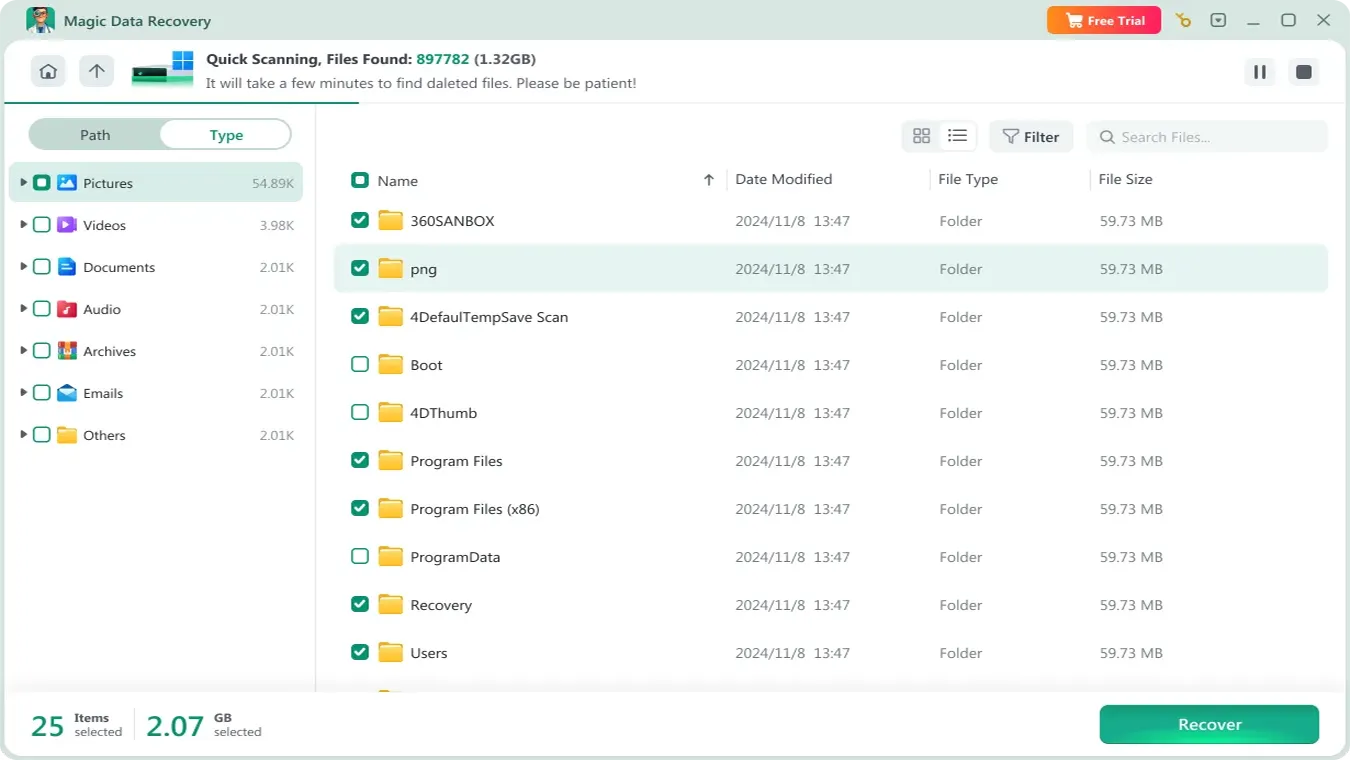
Step 4: Preview Files Before Recovery
Next, preview detected documents, photos, videos, and other files. Finding a filename does not always mean the original content remains intact. Therefore, previewing helps you focus on files that still appear usable.

Step 5: Recover Files to Another Drive
Finally, select the files you need and save them to another healthy drive or storage device. Do not restore them to the affected SSD because new writes may overwrite other recoverable data.
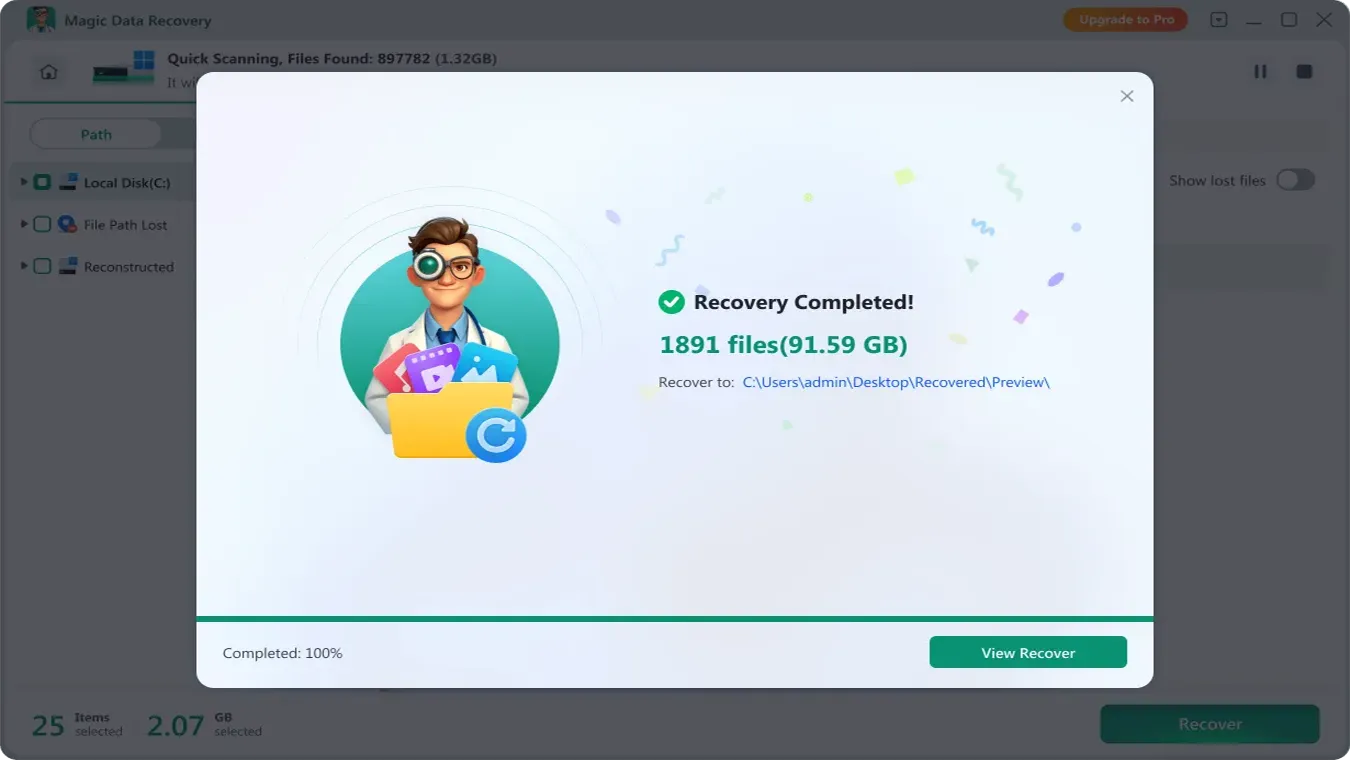
After you secure the files, you can repair the SSD. This recovery-first workflow makes more sense than jumping directly to formatting or CHKDSK when files disappeared from SSD.
Files Disappeared from SSD but Recovered Files Are Corrupted
Sometimes recovery software finds filenames, yet recovered files will not open. Metadata can remain even when the original content is unreadable. Zero-filled files may involve TRIM, garbage collection, overwriting, corruption, or unavailable blocks.
Therefore, preview files first and recover working copies immediately. If valuable data still fails, consider professional recovery before more repairs.
How to Fix an SSD After Recovering Missing Files
Once you secure important data, focus on repair. First, confirm that BIOS or UEFI detects the SSD. Next, open Windows + X > Disk Management and check for missing drive letters, RAW partitions, or unallocated space.
Then, use CHKDSK only after backup. Finally, format only when recovery is complete.
Can Files Disappeared from SSD Always Be Recovered?
No. Recovery depends on the cause and what happened afterward. Chances are generally better when files are hidden, moved, stored in another profile, affected by a logical partition issue, or available through backup.
However, overwriting, TRIM, garbage collection, controller failure, NAND problems, and severe hardware damage can reduce recovery options. Therefore, when files disappeared from SSD, limiting new writes remains one of the safest early steps.
Tips to Prevent Missing SSD Files
A reliable backup remains the best protection. Therefore:
- Keep an external, network, or cloud backup.
- Review cloud-sync settings before deleting files.
- Watch for SSD errors and disconnects.
- Replace unstable SSDs early.
- Verify backups regularly.
For critical data, follow the 3-2-1 principle: three copies, two storage types, and one separate copy.
Conclusion: Recover Files Disappeared from SSD Before Repair
When files disappeared from SSD, first check whether they are hidden, moved, stored under another profile, or available in cloud storage. If basic checks fail, reduce SSD activity and recover important data before formatting, repartitioning, or running repair commands.
Magic Data Recovery fits this recovery-first workflow because it lets users scan the affected SSD, preview accessible files, and save selected data to another drive before repair. Therefore, if you need a practical way to investigate files disappeared from SSD, consider Magic Data Recovery and save lost files from the SSD to a healthy storage device.
Supports Windows 7/8/10/11 and Windows Server
FAQs About Files Disappeared from SSD
Why did my files suddenly disappear from my SSD?
If files disappeared from SSD, common causes include accidental deletion, hidden attributes, profile changes, cloud sync, file system corruption, partition problems, or SSD failure. First, search the drive and show hidden items. Then, check the Recycle Bin and OneDrive. If those checks fail, scan the SSD before you repair or format it.
Can SSD files disappear without being deleted?
Yes. Missing SSD files do not always mean permanent deletion. Windows may hide files, move them to another user profile, redirect them through OneDrive, or lose normal access because of file system damage. Therefore, check used space, search by filename, and inspect hidden items before you start deleted-file recovery.
Why are files missing from my SSD but still taking up space?
When files remain counted in used space, the data may still exist. Hidden attributes, moved folders, damaged directory information, or another Windows profile can stop File Explorer from showing it normally. Therefore, search the entire SSD first. If the partition also shows errors, recover important data before running repair tools.
Can I recover deleted files from an SSD after TRIM?
Sometimes, but TRIM can make SSD recovery harder. After deletion, the operating system may mark blocks as no longer needed, and the SSD can later clear them through garbage collection. Therefore, if files disappeared from SSD, stop unnecessary writes and scan promptly to check whether accessible data still remains.
Why does recovery software find my files but they will not open?
Recovery software may find metadata such as filenames, paths, or sizes even when some original file content is unreadable. As a result, a file can appear in scan results but fail to open. Therefore, use preview first and prioritize files that still display their content correctly before recovering large amounts of data.
Should I run CHKDSK when files disappear from an SSD?
Not as the first step when valuable files are missing. CHKDSK repairs file system structures and may change the drive while it works. Instead, search for hidden or moved files and recover important data first. After you save the files elsewhere, use CHKDSK only when you need to address suitable file system errors.
Can Magic Data Recovery recover missing SSD files?
Magic Data Recovery can scan supported SSDs for accessible deleted or lost files, preview detected content, and save selected files to another storage device. It suits cases where files disappeared from SSD but Windows still detects the drive. However, recovery depends on the original data, so no software can guarantee every missing file.

Vasilii is a data recovery specialist with around 10 years of hands-on experience in the field. Throughout his career, he has successfully solved thousands of complex cases involving deleted files, formatted drives, lost partitions, and RAW file systems. His expertise covers both manual recovery methods using professional tools like hex editors and advanced automated solutions with recovery software. Vasilii's mission is to make reliable data recovery knowledge accessible to both IT professionals and everyday users, helping them safeguard their valuable digital assets.