
Recover Recently Deleted Files Windows 10
Accidentally deleting an important file can feel stressful, especially when you need it for work, school, photos, projects, or personal records. The good news is that you still have several ways to recover recently deleted files Windows 10 before the data becomes harder to restore.
In many cases, deleted files first go to the Recycle Bin. However, files may disappear completely if you used Shift + Delete, emptied the Recycle Bin, formatted a drive, reinstalled Windows, or lost data after a virus attack. Therefore, the right deleted files recovery method depends on how the files were deleted and whether new data has overwritten the original storage space.
This guide explains how to recover recently deleted files, what to try first, when built-in Windows tools work, and when professional recovery software such as Magic Data Recovery becomes a better solution.
Supports Windows 7/8/10/11 and Windows Server
Table of Contents
Can You Recover Recently Deleted Files Windows 10?
Yes, you can often recover recently deleted files Windows 10, but recovery success depends on one key factor: whether the deleted data has been overwritten.
When Windows deletes a file, it usually removes the file reference from the file system instead of instantly erasing every part of the data. As a result, the file may still exist on the drive for a period of time. However, once Windows saves new data in the same storage area, the deleted file may become damaged or unrecoverable.
That is why you should stop using the affected drive as soon as possible. Avoid downloading new files, installing software on the same drive, or copying large folders to it. These actions may reduce your chance to recover recently deleted documents, photos, videos, or other files.
What to Do Before You Recover Recently Deleted Files
Before trying any recovery method, take a few careful steps. These actions protect the deleted data and improve your recovery result.
First, stop writing new data to the drive where the files were lost. If the files were deleted from the C drive, avoid installing new programs or saving downloads there. If the files were lost from a USB drive, SD card, or external hard drive, disconnect it safely and do not use it again until recovery.
Next, check whether the file was synced to cloud storage, copied to another folder, attached to an email, or saved in a backup. Many users overlook simple sources such as OneDrive, Google Drive, external backup drives, or email attachments.
Finally, choose the recovery method based on your situation. If the file is still in the Recycle Bin, restore it directly. If the Recycle Bin is empty, try File History, Previous Versions, or a recovery tool.
Method 1: Recover Recently Deleted Files from Recycle Bin
The Recycle Bin is the easiest place to start when you need to recover recently deleted files Windows 10. Most files deleted from an internal drive go there first unless you used Shift + Delete or deleted them from certain removable devices.
Steps to Restore Files from Recycle Bin
- Double-click the Recycle Bin icon on the desktop.
- Search for the deleted file by name, date, or file type.
- Right-click the file you want to restore.
- Select Restore.
- Check the original folder to confirm the file has returned.
This method works best for normal deletion. However, it will not help if you already emptied the Recycle Bin, deleted files permanently, or lost files after formatting.
Method 2: Recover Recently Deleted Files with File History
File History is a Windows backup feature that can restore older versions of files if you enabled it before the files were deleted. It usually protects files in common folders such as Documents, Pictures, Music, Videos, and Desktop.
Steps to Use File History
- Open the folder where the deleted file was previously stored.
- Right-click inside the folder and choose Restore previous versions.
- Select an available version from the list.
- Click Open to preview it if possible.
- Click Restore to recover the file.
File History is useful because it restores files from a backup rather than scanning deleted data. However, it only works if you had already turned it on before the deletion happened.
Method 3: Check OneDrive or Other Cloud Backups
Many Windows 10 users sync Desktop, Documents, and Pictures with OneDrive. Therefore, even if local files disappear, cloud copies may still exist.
To check OneDrive, open the OneDrive website or app, sign in with your Microsoft account, and review both the original folder and the Recycle Bin section. If you find the deleted file, restore it from there.
This method can also apply to Google Drive, Dropbox, iCloud Drive, or other cloud storage services. It is especially helpful if you deleted files recently and cloud sync captured an earlier copy.
Method 4: Recover Recently Deleted Files from Backup and Restore
Windows 10 still includes the older Backup and Restore feature. If you created a system backup or file backup earlier, you may use it to restore deleted data.
Steps to Check Backup and Restore
- Open Control Panel.
- Go to System and Security.
- Click Backup and Restore (Windows 7).
- Choose Restore my files.
- Browse or search for the deleted files.
- Restore them to a safe location.
This method is reliable when a backup exists. However, many users do not set it up in advance. If no backup is available, you need another way to recover recently deleted files.
Method 5: Use Magic Data Recovery for More Complex Data Loss
Built-in Windows tools are helpful, but they have limits. They cannot always recover files after the Recycle Bin has been emptied, a drive has been formatted, a file system error occurs, Windows is reinstalled, or a virus deletes important data.
In these cases, Magic Data Recovery can provide a more practical solution. It is designed to recover deleted files, formatted data, lost partitions, files affected by file system errors, data lost after system reinstallation, and files removed by virus attacks.
Supports Windows 7/8/10/11 and Windows Server
Why Magic Data Recovery Is Worth Trying
Magic Data Recovery focuses on real recovery scenarios rather than only basic undelete tasks. It can scan internal hard drives, external hard drives, USB drives, memory cards, and other common storage devices. This makes it useful when you need to recover recently deleted files Windows 10 but the file is no longer visible in Recycle Bin or backups.
The software also helps users preview recoverable files before saving them. This matters because previewing reduces guesswork and helps you confirm whether the file is still usable.
When Magic Data Recovery Is a Better Choice
You may consider Magic Data Recovery if:
- You emptied the Recycle Bin.
- You used Shift + Delete.
- You deleted files from a USB drive or SD card.
- You formatted a partition by mistake.
- Your drive shows a file system error.
- Files disappeared after reinstalling Windows.
- A virus deleted or damaged your files.
- Windows backup tools cannot find the missing data.
Compared with manual methods, recovery software can scan the storage device directly and look for remaining file data. Therefore, it is often more useful when Windows no longer shows the deleted files through normal folders.
If you are looking for a more efficient solution, try Magic Data Recovery before saving new data to the affected drive.
How to Recover Recently Deleted Files Windows 10 with Magic Data Recovery
Follow these steps carefully to avoid overwriting deleted data.
Step 1: Install Magic Data Recovery on a Safe Drive
Download and install Magic Data Recovery. If your deleted files were on the C drive, install the software on another drive if possible. This helps reduce the risk of overwriting the lost data.
Supports Windows 7/8/10/11 and Windows Server
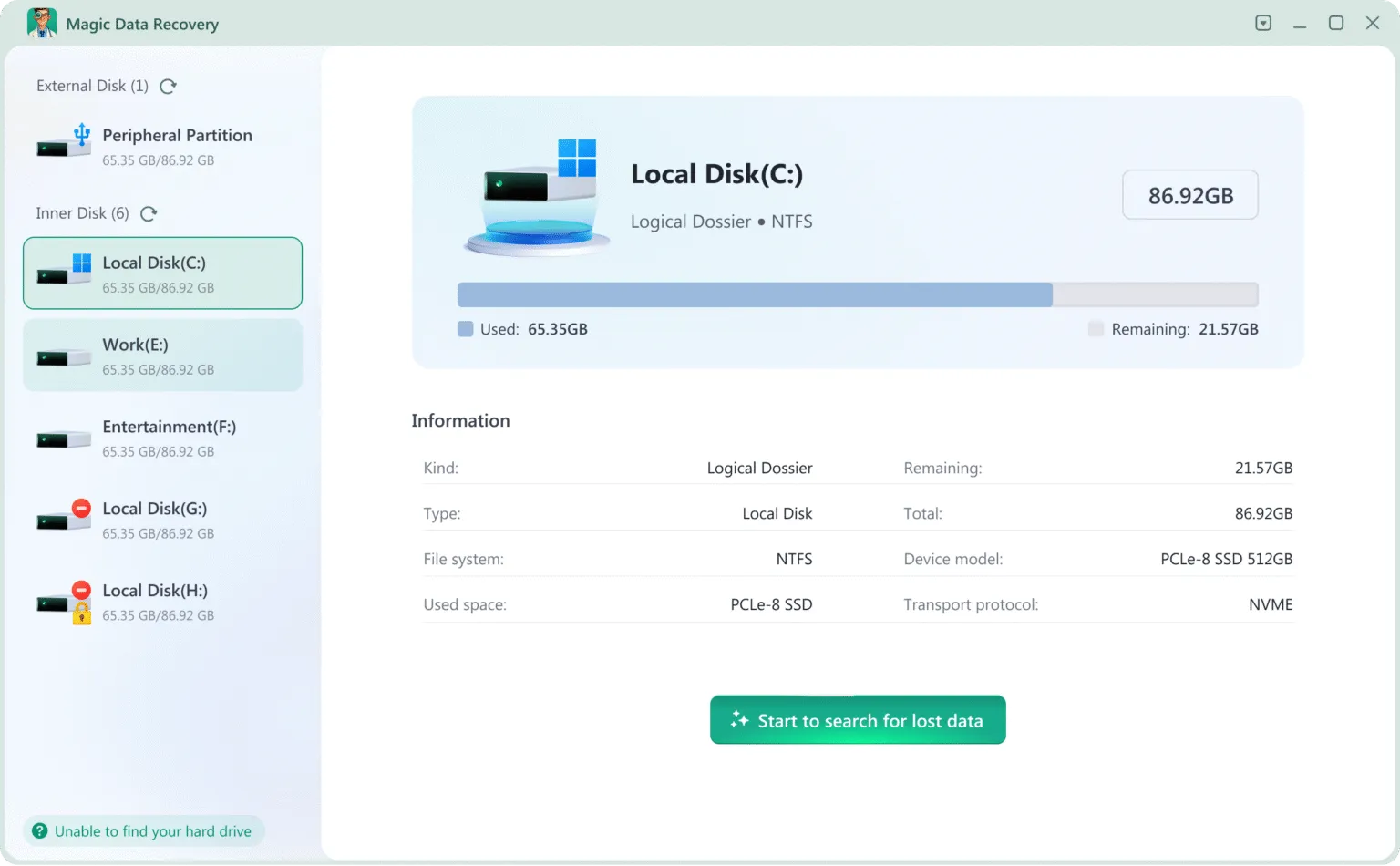
Step 2: Select the Drive or Partition
Open the software and choose the drive where the files were deleted. For example, select the original hard drive, USB drive, SD card, or external disk.
Step 3: Start the Scan
Run a scan to search for deleted and lost files. The software will analyze the selected storage area and list recoverable data.
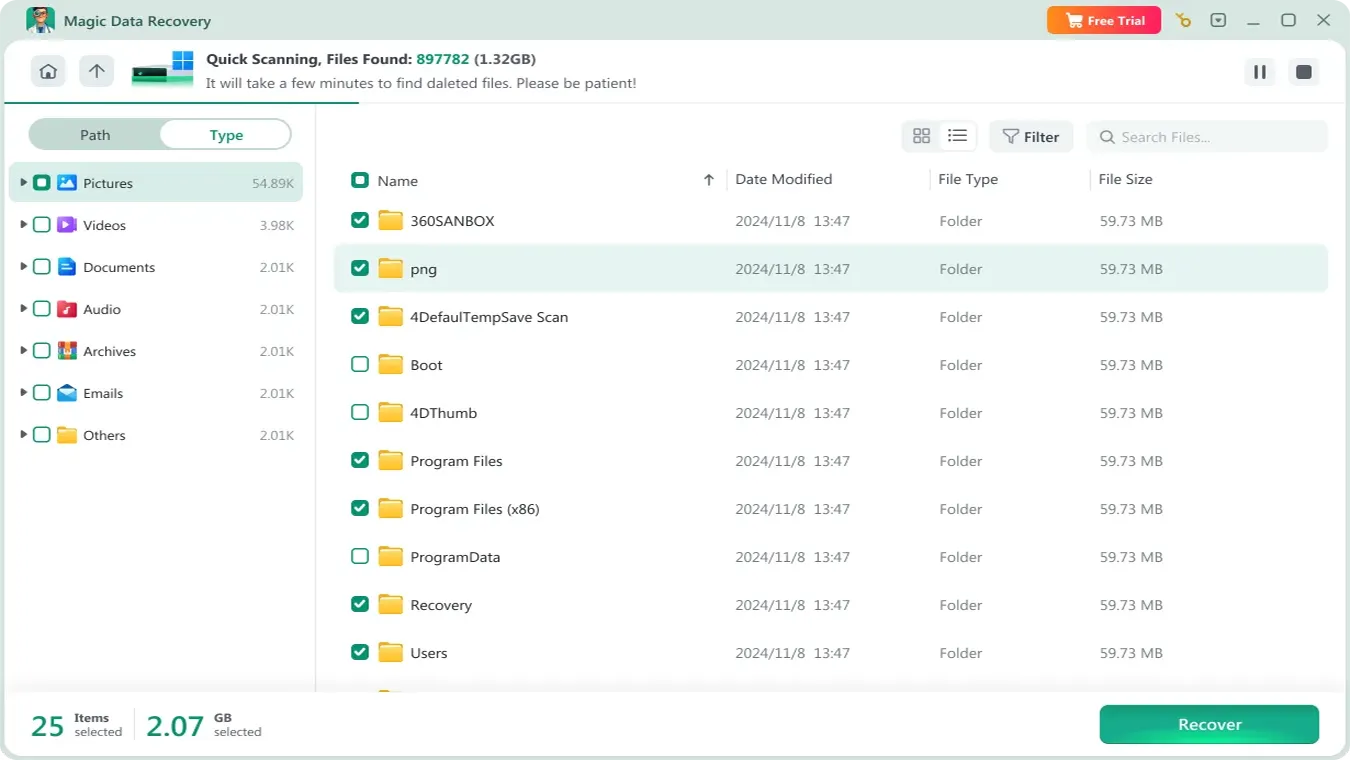
Step 4: Preview the Found Files
Use the preview function to check documents, photos, videos, or other file types when supported. This helps you identify the correct files before recovery.

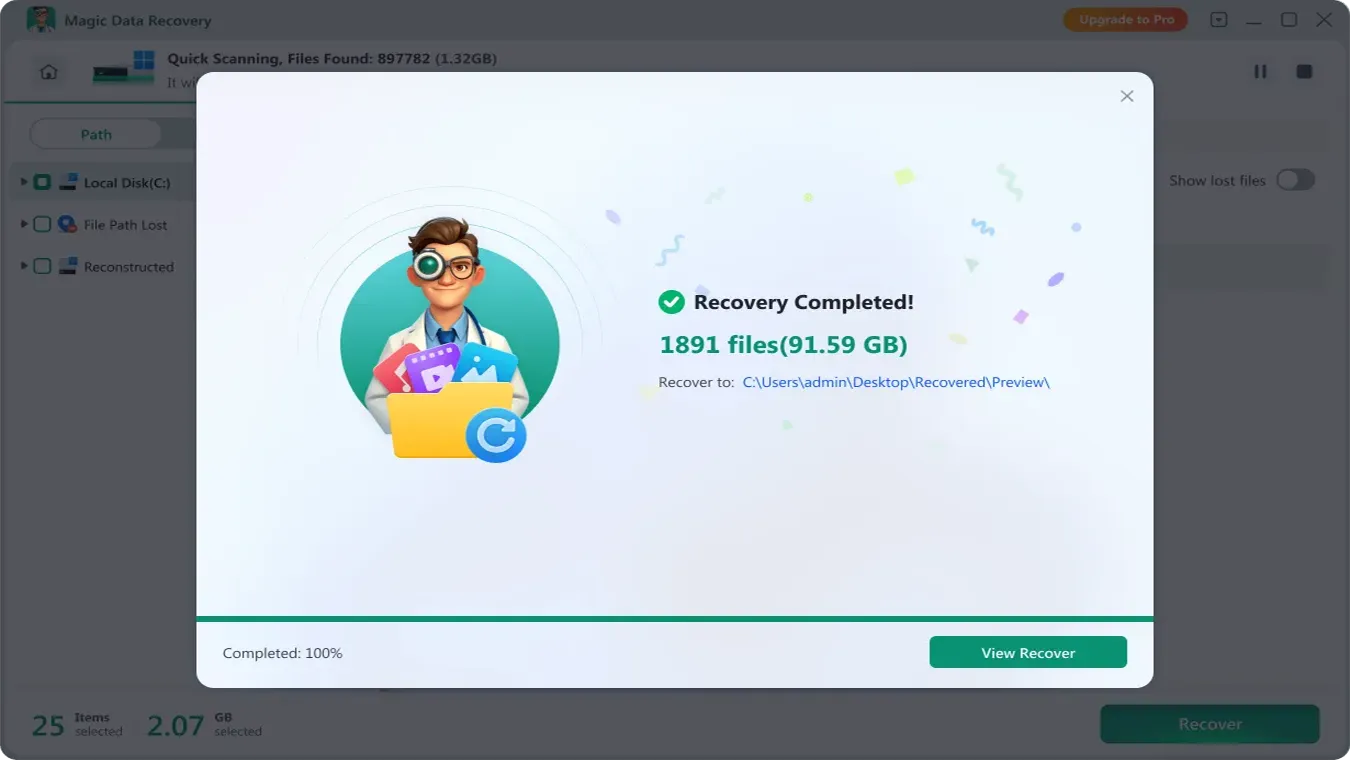
Step 5: Save Recovered Files to Another Location
Do not save recovered files back to the same drive where they were lost. Instead, choose another disk, external drive, or safe partition.
Recycle Bin vs File History vs Recovery Software
Different recovery methods fit different situations. Here is a simple comparison.
Method | Best For | Limitation |
Recycle Bin | Normal recent deletion | Does not work after permanent deletion |
File History | Files backed up before deletion | Must be enabled before data loss |
OneDrive Restore | Synced cloud files | Only works for synced files |
Backup and Restore | Existing system/file backups | Requires previous backup |
Magic Data Recovery | Deleted, formatted, system error, virus deletion, reinstall data loss | Should be used before overwritten data occurs |
This comparison shows why you should start with free built-in options, then use recovery software when those options fail.
Common Mistakes That Reduce Recovery Success
Many users make recovery harder without realizing it. Avoid these mistakes when you need to recover recently deleted files.
Do not continue using the same drive heavily. New downloads, updates, and installations may overwrite deleted data.
Do not restore recovered files to the original location. Saving files back to the same drive can damage other recoverable files.
Do not format the drive again. Formatting may make the file structure harder to analyze.
Do not run random repair commands without understanding the risk. Some repair tools may modify the file system and reduce recovery chances.
Do not wait too long. The sooner you act, the better your recovery result may be.
Best Practices to Prevent Future File Loss
After you recover recently deleted files, take preventive steps so the same problem does not happen again.
Turn on File History or another automatic backup solution. Use OneDrive or another cloud service for important work files. Keep a second copy of critical documents on an external drive. Also, avoid using Shift + Delete unless you are sure you no longer need the file.
For business files, photos, design projects, videos, and financial documents, use the 3-2-1 backup rule when possible: keep three copies of data, store them on two different types of media, and keep one copy offsite or in the cloud.
Conclusion
You can often recover recently deleted files Windows 10 with simple methods such as Recycle Bin, File History, OneDrive, or Backup and Restore. These options should always be checked first because they are free and safe.
However, built-in tools do not solve every data loss situation. If the Recycle Bin is empty, the files were permanently deleted, the drive was formatted, Windows was reinstalled, or a virus removed files, Magic Data Recovery offers a more complete solution. It supports deleted file recovery, formatted drive recovery, file system error recovery, system reinstallation data recovery, and virus-deleted file recovery.
If you need a reliable way to recover recently deleted files after basic methods fail, Magic Data Recovery is worth trying before the lost data gets overwritten.
Supports Windows 7/8/10/11 and Windows Server
FAQs
How do I recover recently deleted files Windows 10 from Recycle Bin?
Open Recycle Bin from the desktop, find the deleted files, right-click them, and choose Restore. Windows will return them to their original location. This method works when files were deleted normally and the Recycle Bin has not been emptied. If the files are missing there, try File History, cloud backup, or recovery software.
Can I recover recently deleted files after emptying Recycle Bin?
Yes, recovery may still be possible after emptying Recycle Bin, but you should stop using the affected drive immediately. Deleted files may remain on the disk until new data overwrites them. If no backup exists, use recovery software such as Magic Data Recovery to scan the drive and save found files to another location.
What is the best way to recover recently deleted files without software?
Start with Recycle Bin, then check File History, Previous Versions, OneDrive, and any external backups. These methods do not require third-party software and are safe to try first. However, they only work if the file still exists in Recycle Bin, was synced, or had been backed up before deletion.
Can Windows 10 recover recently deleted files with File History?
Yes, Windows 10 can recover recently deleted files with File History if the feature was enabled before deletion. Open the original folder, right-click it, choose Restore previous versions, and select an available backup version. If File History was not turned on earlier, this option may not show the files you need.
Why are my recently deleted files not in Recycle Bin?
Files may skip Recycle Bin if you used Shift + Delete, deleted them from a USB drive, removed very large files, emptied Recycle Bin, or changed Recycle Bin settings. In these cases, Windows may treat them as permanently deleted. You can still try backups or scan the drive with Magic Data Recovery.
Can Magic Data Recovery recover files deleted by a virus?
Magic Data Recovery can help recover files lost in several scenarios, including virus deletion, accidental deletion, formatting, file system errors, and system reinstallation. However, recovery depends on whether the lost data has been overwritten. For best results, disconnect the affected drive or stop using it before scanning.
Where should I save recovered files after recovery?
Save recovered files to a different drive, external disk, or safe partition. Do not save them back to the same drive where they were deleted. Saving recovered data to the original location may overwrite other lost files and reduce the chance of recovering additional documents, photos, videos, or folders.
Is it safe to use recovery software on Windows 10?
Recovery software is generally safe when downloaded from a trusted source and used correctly. To protect deleted data, install the software on a different drive if possible and avoid saving recovered files to the original location. Magic Data Recovery provides a practical option when Windows built-in recovery methods cannot find your deleted files.

Jason has over 15 years of hands-on experience in the computer data security industry. He specializes in data recovery, backup and restoration, and file repair technologies, and has helped millions of users worldwide resolve complex data loss and security issues.