
Windows Undelete: How to Recover Deleted Files on Windows

Accidentally deleting important files on Windows is a common and stressful experience. Files may be removed from the Recycle Bin, deleted with Shift + Delete, or lost after formatting a drive. As a result, many users immediately search for windows undelete solutions, hoping there is a reliable way to get their data back.
The good news is that file deletion on Windows is not always permanent. However, recovery success depends heavily on how and when you act. This guide explains what windows undelete actually means, how undelete exe tools work, and when recovery is realistically possible. It also introduces a practical, Windows-focused solution like Magic Data Recovery designed to help users recover deleted files safely without risking further data loss.
Supports Windows 7/8/10/11 and Windows Server
Wondering if your files can be recovered? Find out in seconds with our quick check below.
Data Recovery Assessment
Answer 3 quick questions to estimate your recovery chances
Table of Contents
What Is Windows Undelete?
Windows undelete refers to the process of restoring files that were deleted from a Windows system but not yet overwritten by new data. Contrary to common belief, deleting a file does not immediately erase its contents.
On Windows systems:
- The file entry is removed from the file system index.
- The storage space is marked as available.
- The actual file data often remains intact until overwritten.
Because of this behavior, windows undelete is possible in many real-world scenarios—especially when users stop using the affected drive immediately.
It is important to distinguish undelete from related concepts:
- Restore usually refers to backups or system restore points.
- Recover is a broader term covering undelete, backup restoration, and advanced reconstruction.
- Undelete focuses specifically on retrieving deleted files directly from storage.
How Does Windows Undelete Work?
To understand why windows undelete works, you need a basic understanding of how Windows file systems operate, particularly NTFS.
When a file is deleted:
- The system removes its reference from the file table.
- The data clusters remain untouched.
- New data may overwrite those clusters at any time.
Undelete software scans the drive at a low level to locate:
- Residual file records
- Unallocated clusters
- Recognizable file signatures
The sooner you run an undelete process, the higher the chance of recovery. Continued use of the drive significantly reduces success rates.
When Windows Undelete May Not Work
While windows undelete is powerful, it has limitations.
Recovery may fail when:
- Files were overwritten by new data
- Secure erase methods were used
- SSD TRIM has permanently cleared blocks
Understanding these limitations builds realistic expectations and prevents unsafe recovery attempts.
Common Situations Where Windows Undelete Is Possible
Windows undelete can be effective in many everyday scenarios, including:
- Files deleted from the Recycle Bin
- Shift + Delete removals
- Accidental formatting of drives
- File system corruption
- External hard drives and USB devices
In these cases, undelete exe tools like Magic Data Recovery can often locate recoverable files before they are overwritten.
How to Use Magic Data Recovery
Magic Data Recovery is a Windows-based undelete exe designed to help users recover deleted files safely and efficiently. Below is a practical recovery workflow.
Step 1: Download and Install Magic Data Recovery
Download Magic Data Recovery and install it on a drive different from the affected drive. This prevents accidental overwriting and protects lost data.
Supports Windows 7/8/10/11 and Windows Server
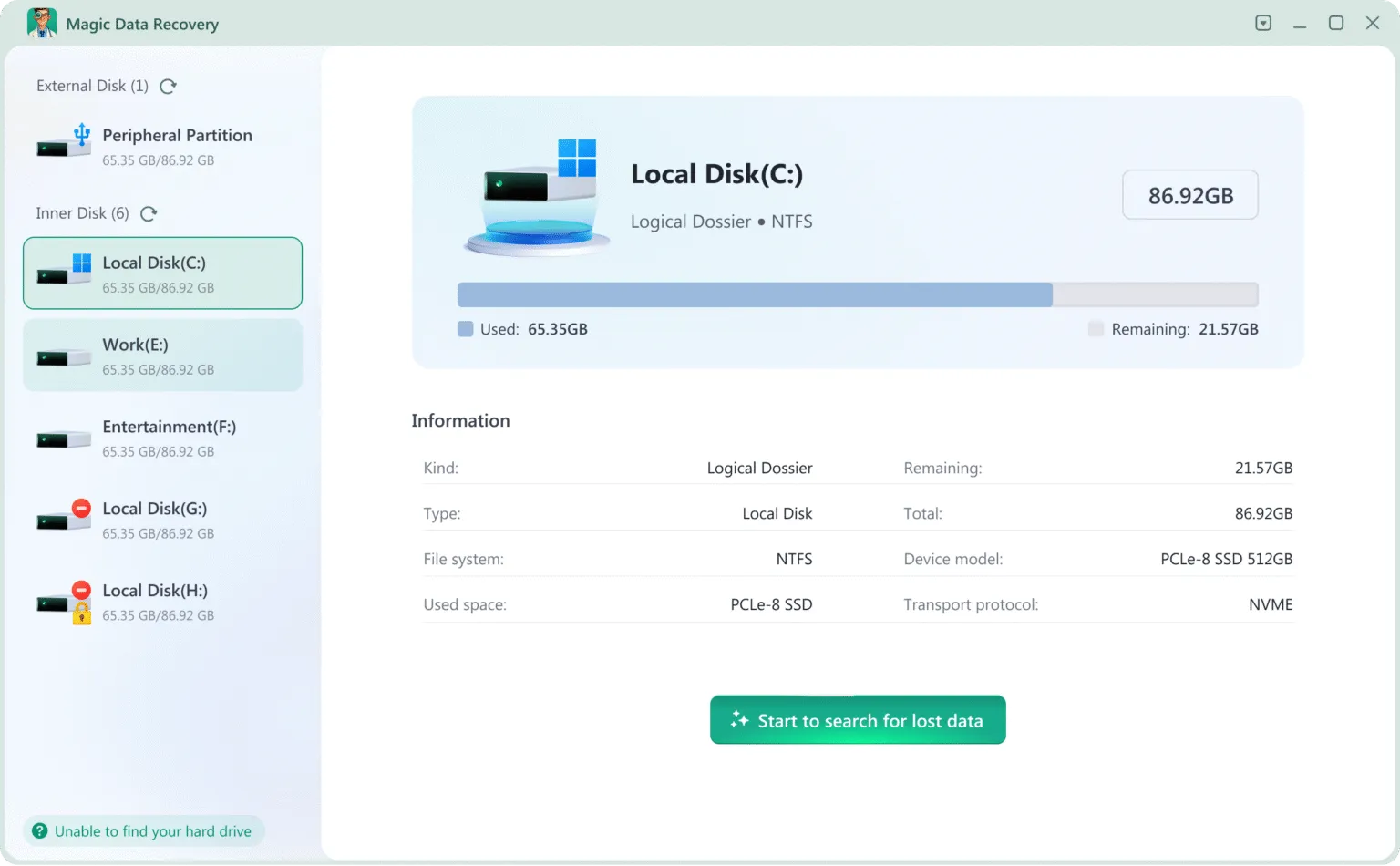
Step 2: Select the Drive to Scan
Launch the program. From the main interface, select the hard drive where the files were deleted, then start the scan.
Step 3: Wait Till the Scan Completes
The software automatically performs an Advanced Scan. As the scan progresses, recoverable files appear in real time, allowing you to assess results early.
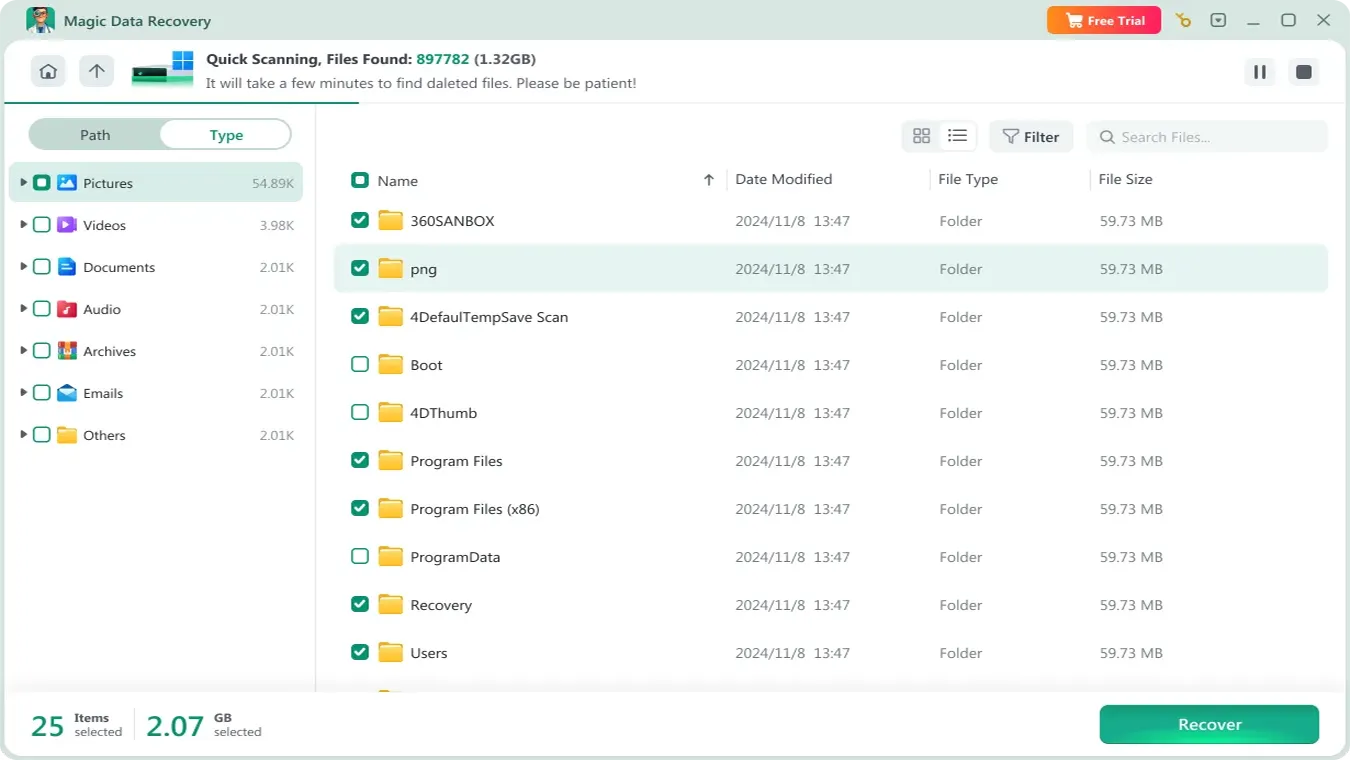
Step 4: Preview Deleted Files Before Recovery
Use the built-in preview feature to verify file integrity. Previewing helps ensure that you recover only files that are complete and relevant.

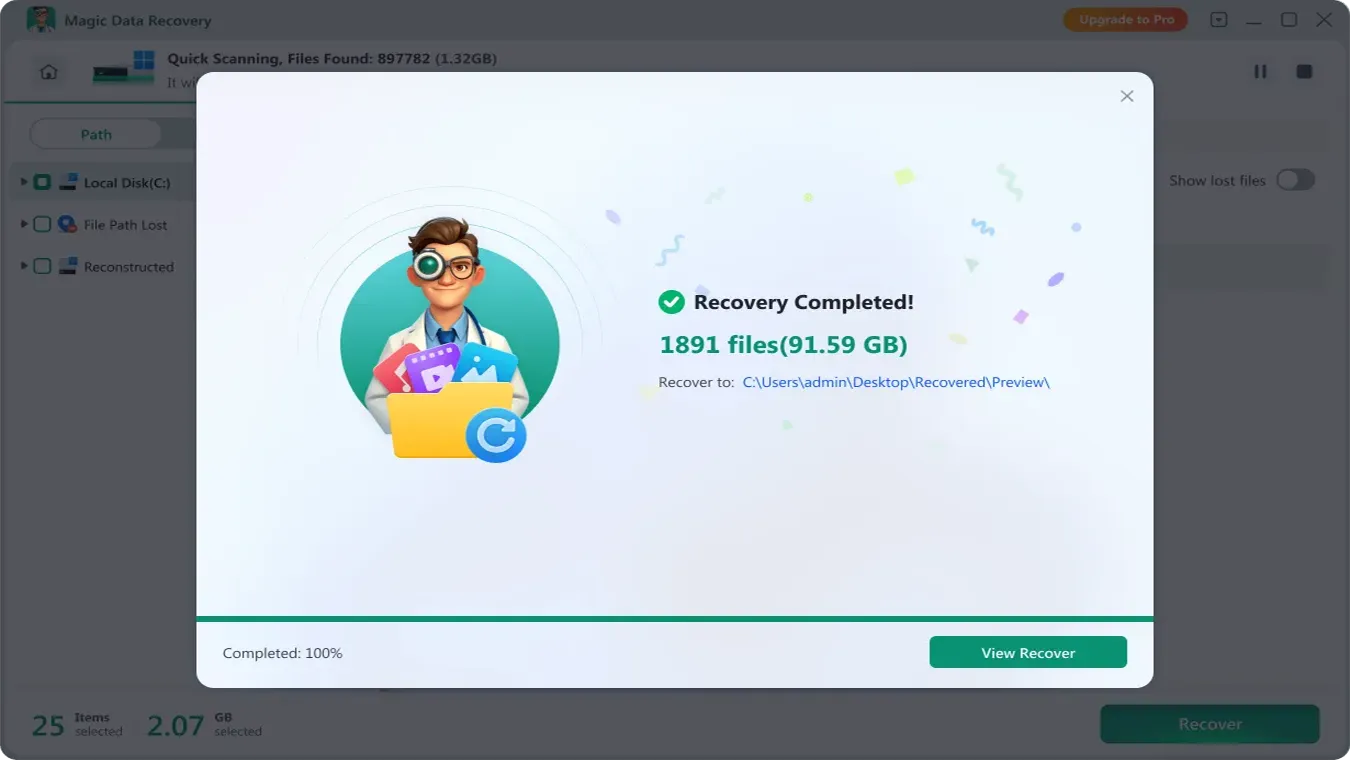
Step 5: Recover Files to a Safe Location
Select the files you need and recover them to a different drive or storage device. Avoid restoring data to the same drive, as this risks data corruption.
Why Choose Magic Data Recovery for Windows Undelete?
Magic Data Recovery addresses common recovery pain points:
- Supports deleted, formatted, and corrupted drives
- User-friendly undelete exe interface
- Preview before recovery reduces mistakes
- Optimized for Windows file systems
Compared with command-line tools, it offers a safer and more reliable recovery experience for everyday users.
If you are looking for a practical windows undelete solution without unnecessary complexity, Magic Data Recovery provides a balanced and trustworthy option.
Conclusion
Recovering deleted files on Windows requires speed, caution, and the right tools. Windows undelete is possible in many scenarios, but success depends on minimizing further disk activity and using reliable recovery solution. Magic Data Recovery stands out as a Windows-focused undelete exe that combines ease of use with professional-grade scanning. It allows users to recover files safely without the risks associated with command-line recovery or manual trial-and-error methods. For users who value both data safety and usability, Magic Data Recovery is a sensible choice.
Supports Windows 7/8/10/11 and Windows Server
FAQs About Windows Undelete
How do you undelete on Windows?
Can you undelete deleted files?
When recovering a deleted file on Windows, what should you check first?
Will Windows Recovery restore deleted files?
How to restore from recently deleted?
Are permanently deleted files actually deleted?
How do I undelete a file in Windows 10?
Can you recover permanently deleted files on PC?

Vasilii is a data recovery specialist with around 10 years of hands-on experience in the field. Throughout his career, he has successfully solved thousands of complex cases involving deleted files, formatted drives, lost partitions, and RAW file systems. His expertise covers both manual recovery methods using professional tools like hex editors and advanced automated solutions with recovery software. Vasilii's mission is to make reliable data recovery knowledge accessible to both IT professionals and everyday users, helping them safeguard their valuable digital assets.