
Dell Not Recognizing Hard Drive? Complete Fix & Recovery Guide
Have you encountered the frustrating dell not recognizing hard drive error during startup? This issue often prevents you from accessing your operating system or critical files. Fortunately, you can resolve this problem by following a few technical troubleshooting steps. Initially, we should check the BIOS settings, as an incorrect SATA mode often causes the system to ignore the disk. Furthermore, we will explore driver updates and physical connections to fix the dell not recognizing hard drive situation permanently.
Before trying any repair, there is one important rule: if your data matters, recover it first. Tools like Magic Data Recovery can help retrieve files at this stage, especially when the system cannot access the drive normally. Otherwise, certain fixes may reduce the chance of successful recovery. If you’re dealing with data loss on a traditional disk, you can also explore HDD recovery options before making any changes.
Supports Windows 7/8/10/11 and Windows Server
Table of Contents
What Dell Not Recognizing Hard Drive Actually Means
When users search for Dell Not Recognizing Hard Drive, they often describe slightly different problems.
Sometimes, the laptop refuses to boot and displays “dell no boot device found.” In other cases, users notice that the Dell hard drive is not showing up in Windows, even though it was working before. There are also situations where a Dell external hard drive is not recognized after being connected.
Although these symptoms appear different, they all indicate that the system cannot correctly read the drive’s structure. This may be caused by BIOS misconfiguration, file system damage, or hardware instability.
Why Dell Laptop Not Recognizing Hard Drive
Understanding the root cause is crucial before attempting a fix. Dell not recognizing hard drive issues typically stem from hardware, BIOS, software, or file system problems.
1. Physical & BIOS Detection Issues
- Loose or damaged SATA/PCIe connections can prevent proper detection.
- Incorrect BIOS settings, such as disabled storage devices or mismatched SATA mode (AHCI vs RAID), may block recognition.
- A failing BIOS version or outdated firmware could also cause hardware detection failures.
2. Operating System Level Errors
- Corrupted boot loaders or partition tables (MBR/GPT) may prevent Windows from detecting the drive.
- File system errors (NTFS/FAT32 corruption) or accidental formatting can make partitions invisible.
- Missing partitions due to software glitches or improper disk management also trigger detection issues.
3. Software & Driver Conflicts
- Outdated or corrupted storage drivers may hinder detection.
- Recent Windows updates sometimes conflict with storage controllers.
- Third-party security or backup software can occasionally lock the drive, causing access issues.
4. Hardware Failure Scenarios
- SSD/HDD degradation or bad sectors can prevent BIOS from reading the drive.
- SMART errors may indicate an impending drive failure, requiring immediate backup or replacement.
How to Diagnose the Issue
Start Here: Check Whether BIOS Detects the Drive
The fastest way to diagnose a Dell Not Recognizing Hard Drive issue is to check BIOS. This simple step helps you determine whether the problem is hardware-related.
Restart your device and enter BIOS by pressing F2. Once inside, locate the storage section and check whether the drive appears. If your Dell BIOS is not detecting the hard drive, the issue is likely related to configuration, connection, or hardware failure.
On the other hand, if the drive is visible in BIOS, the situation is usually less severe. It means the system can still communicate with the device, and the problem is more likely related to Windows or the file system.
If BIOS Sees the Drive but Windows Does Not
This is one of the most common cases behind the Dell Not Recognizing Hard Drive issue.
When the drive appears in BIOS but not in Windows, users often report that the Dell hard drive is not showing up in Windows 10 or that the disk cannot be accessed normally. In most cases, this points to file system corruption or a damaged partition.
You can confirm this by opening Disk Management. If the drive shows as RAW or unallocated, the data is still physically present, but Windows cannot interpret it correctly.
At this point, many users try to fix Dell hard drive not detected problems using system tools. However, jumping directly to repair can overwrite important data. Therefore, recovery should always come first.
How to Fix Dell Not Recognizing Hard Drive
Once you understand the situation, it becomes much easier to fix Dell hard drive not detected issues effectively.
If BIOS cannot detect the drive, resetting BIOS settings often helps. In particular, switching SATA mode to AHCI or enabling NVMe support can restore detection for SSDs. This is especially important when dealing with cases where a Dell laptop is not detecting an SSD.
If the issue happens inside Windows, updating disk drivers can sometimes resolve the problem. In addition, reconnecting the drive or checking ports may fix unstable detection.
There are also cases where users try to fix Dell no boot device found errors using CHKDSK. While this can repair logical issues, it may also remove corrupted file entries. Because of that, it should only be used after data recovery.
The key is not to rely on a single method. Instead, match the fix to the exact scenario.
Recover Data Before You Fix Anything
This is the step most users overlook. When facing a Dell Not Recognizing Hard Drive issue, the instinct is to repair the disk immediately. However, that approach can reduce the chances of successful recovery.
A safer approach is to extract the data first, especially if the drive shows as RAW or is partially accessible. Magic Data Recovery is particularly useful in situations where a Dell hard drive is not detected properly or where Windows cannot read the file system.
Unlike built-in tools, it scans raw disk sectors directly. As a result, it can recover files even when partitions are missing or when a Dell external hard drive is not recognized by the system.
How the Recovery Process Works in Practice
In practice, the recovery process is straightforward. After installing the software on a different drive, you select the affected disk and start scanning.
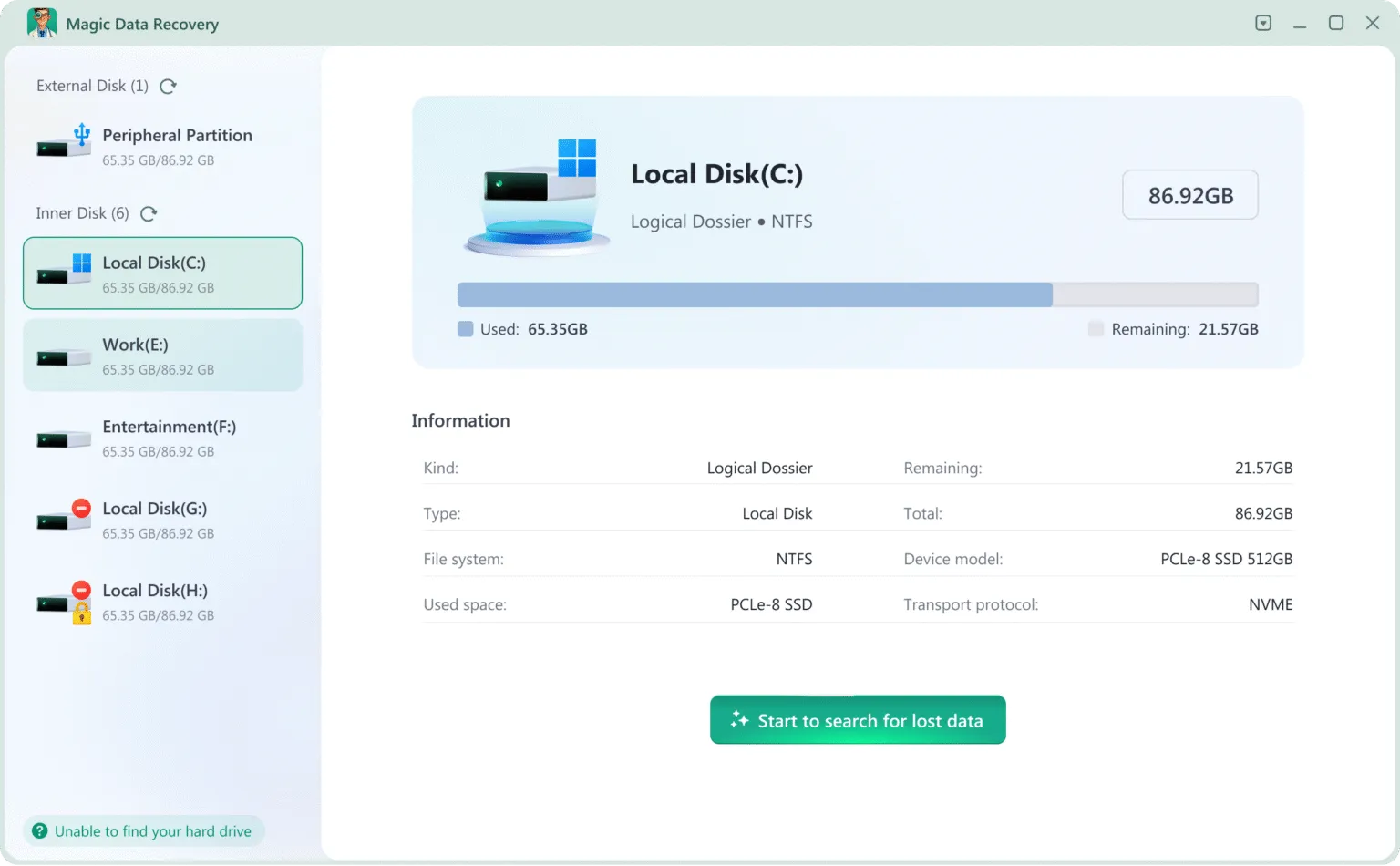
It runs Advanced Scan autoamatically. As the scan continues, recoverable files appear gradually.
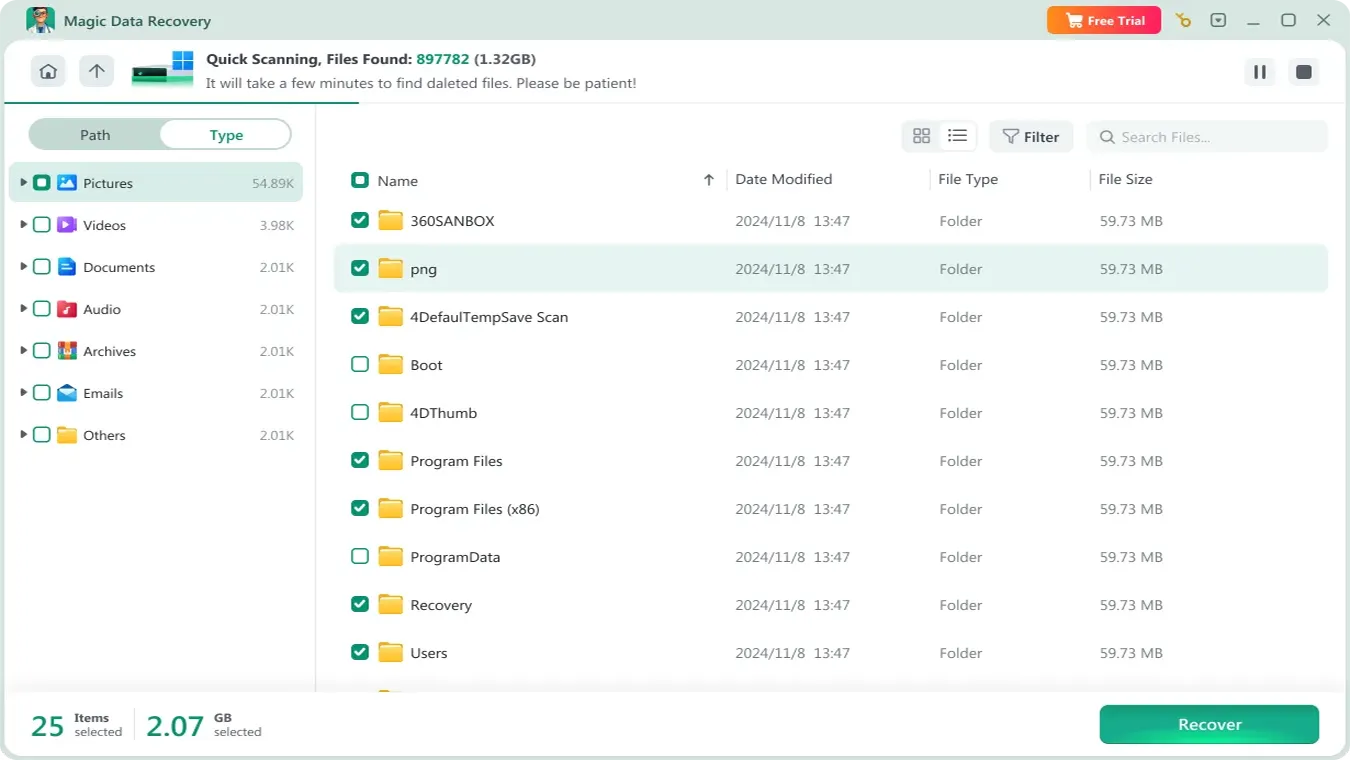
Next, use the preview function to confirm file content. This step ensures you recover only the files you actually need.

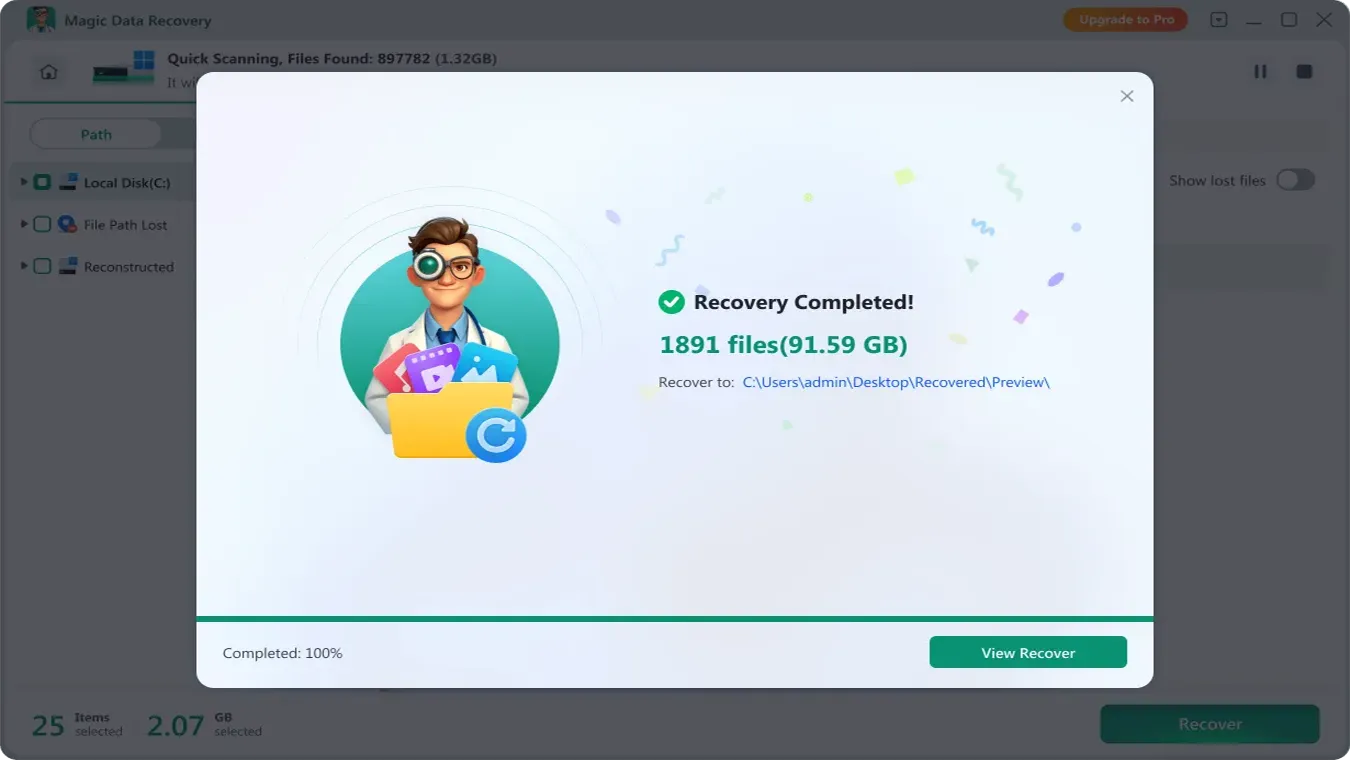
Finally, select the target files and save them to a different drive or storage device. Never restore data to the same external hard drive, because doing so risks data corruption.
SSD vs HDD Detection Issues: Why It Matters
Not all detection issues behave the same way. For example, when a Dell laptop is not detecting an SSD, the problem is often related to BIOS configuration, firmware compatibility, or NVMe settings.
In contrast, traditional hard drives are more likely to fail due to physical wear, bad sectors, or connection problems. This is why some users can fix Dell hard drive not detected issues by simply reconnecting cables, while others need to adjust BIOS settings.
Understanding this difference helps avoid unnecessary troubleshooting steps.
Preventing Future Issues
To minimize the risk of Dell not recognizing hard drive errors in the future:
- Maintain regular backups using cloud storage or external drives.
- Monitor SSD/HDD health with SMART tools.
- Keep BIOS and storage drivers updated.
- Avoid sudden power cuts and improper system shutdowns.
Conclusion
The Dell Not Recognizing Hard Drive issue can appear in different forms, from BIOS detection failure to Windows-level errors. However, most cases can be resolved once you identify the correct scenario.
More importantly, always recover your data from the hard drive before attempting any fix. In many situations, using Magic Data Recovery early can significantly improve recovery success, especially when the drive is not accessible in Windows. By combining the right diagnosis with the correct tools, you can not only fix the issue but also avoid permanent data loss.
Supports Windows 7/8/10/11 and Windows Server
FAQs
What should I do if the BIOS shows "Fixed HDD: None" on a Dell PC?
Why is my Dell laptop not recognizing an external hard drive?
Can the TRIM command affect Dell SSD recognition?
How do I update drivers when Dell doesn't detect my hard drive?
Is it possible to recover data from a non-recognized Dell drive?
What does "No Bootable Device Found" mean on Dell systems?
Does formatting always fix the dell not recognizing hard drive issue?

Jason is a data recovery and technical support specialist with over 15 years of hands-on experience. He has worked extensively with frontline users, troubleshooting difficult data loss cases and providing practical recovery solutions for accidental deletion, formatted drives, damaged file systems, lost partitions, system failures, and other recovery emergencies. His expertise also includes backup and restoration, file repair, and disaster recovery, with a strong emphasis on safe, reliable, and technically accurate guidance.