
After Formatting Can I Recover Files?
After formatting can i recover files? This is one of the first questions people ask after accidentally formatting a hard drive, USB flash drive, SD card, or external disk. The good news is that formatting does not always mean your files are gone forever. However, your recovery chance depends on what type of format happened, whether new data has overwritten the old files, and how quickly you act.
If you need a complete formatted-drive solution, start with this guide to formatted drive recovery. It explains why formatted files may still exist at the storage level and why the right recovery workflow matters.
This article explains when after formatting can i recover files has a positive answer, what you should avoid immediately, which recovery methods are safe, and why Magic Data Recovery is a practical tool for recovering deleted, formatted, and file-system-error data loss scenarios.
Supports Windows 7/8/10/11 and Windows Server
Table of Contents
After Formatting Can I Recover Files? The Direct Answer
Yes, in many cases, you can recover files after formatting, especially after a quick format. A quick format usually removes file system records and makes files invisible to the operating system. It does not always wipe every sector immediately. Therefore, the original file content may remain on the drive until new data replaces it.
However, after formatting can i recover files does not always mean every file will return perfectly. Recovery may become difficult or impossible if:
- You continued using the formatted drive.
- You installed software on the same formatted disk.
- You copied new files to the formatted device.
- The drive is an SSD with TRIM enabled.
- You performed a full erase or secure wipe.
- The device has physical damage.
- The files were already overwritten.
So, the safest answer is this: after formatting can i recover files? Often yes, but only if you stop using the device immediately and scan it with a reliable formatted drive recovery tool before writing anything new.
What Happens When You Format a Drive?
Formatting prepares a storage device for use by creating or rebuilding a file system. A file system is the structure that helps your computer know where files begin, where they end, and how folders are organized.
When you format a drive, the system may remove old file records, rebuild allocation tables, and mark disk space as available. As a result, your files disappear from File Explorer even though the raw data may still exist on the disk.
This is why users ask after formatting can i recover files. The files may not be visible, but recovery software can scan the disk directly and search for file signatures, old directory structures, and recoverable fragments.
Quick Format vs Full Format
A quick format is usually more recoverable because it mainly resets file system records. In many accidental cases, quick format recovery can find documents, photos, videos, archives, and folders if the drive has not been reused.
A full format is riskier. Depending on the operating system and device, a full format may check disk sectors and overwrite more data. Recovery can still be worth trying, but expectations should be more cautious.
HDD vs SSD Recovery After Formatting
On traditional hard drives, formatted data often stays in place until overwritten. Therefore, recover formatted hard drive attempts may work well when users act quickly.
On SSDs, recovery may be less predictable because TRIM can tell the SSD to clear unused blocks after deletion or formatting. If TRIM has already processed the data, recovery may fail even with advanced software. Still, you should stop using the SSD immediately and scan it before giving up.
What to Do Immediately After Formatting
Your first actions after formatting can decide whether recovery succeeds. If your question is after formatting can i recover files, follow these steps before trying any repair.
Stop Using the Formatted Device
Do not save, download, install, copy, move, or edit files on the formatted drive. Every new write operation may overwrite recoverable data. This is the most important rule in file recovery after format situations.
Do Not Format the Drive Again
Some users try another format because the disk looks empty, RAW, or inaccessible. This usually makes recovery harder. If Windows asks you to format the disk before use, cancel the prompt and recover the data first.
Do Not Run Repair Commands First
Commands like CHKDSK can be useful for file system repair, but they may modify disk structures. If important files are missing, recover them before running repair tools. A safe order is always: recover data first, then repair the drive.
Use Another Disk for Installation and Recovery
Install recovery software on a different drive. Also, save recovered files to a separate healthy disk. Never recover files back to the formatted device, because that can overwrite more data.
Best Method: Use Magic Data Recovery to Recover Files After Formatting
If you do not have a recent backup, the most practical method is to use dedicated recovery software. Magic Data Recovery is designed for common logical data loss cases, including accidental deletion, formatted drives, RAW or inaccessible drives, file system errors, and lost files after system problems.
For users asking after formatting can i recover files, Magic Data Recovery gives a clear workflow: select the formatted drive, scan it, preview found files, and recover the needed data to another location. This approach is easier for ordinary users than command-line tools and safer than random repair attempts.
You can learn more about the software on the Magic Data Recovery product page.
Why Magic Data Recovery Is a Practical Solution
Magic Data Recovery solves the main problem after formatting: your files are invisible, but you need a safe way to locate them without damaging the remaining recoverable data.
Its practical advantages include:
- It supports formatted drive, deleted file, and file system error recovery.
- It works with common storage devices such as internal drives, external drives, USB drives, memory cards, and mounted disk images.
- It supports major file systems such as NTFS, FAT, exFAT, ReFS, and EXT2/3/4.
- It can recover common documents, photos, videos, audio files, archives, emails, and database files.
- It lets users preview recoverable files before restoration.
- It uses a guided workflow that does not require advanced technical skills.
For example, imagine you formatted an external hard drive during a Windows reinstall and later realized it contained work reports and family photos. In that case, Magic Data Recovery can scan the formatted disk, list recoverable files, and help you save them to another safe drive.
How to Recover Files After Formatting with Magic Data Recovery
Follow this safe workflow if you need to recover data after format.
Step 1: Install Magic Data Recovery on Another Drive
Download and install Magic Data Recovery on a healthy disk, not on the formatted drive. This reduces the risk of overwriting data that may still be recoverable.
Supports Windows 7/8/10/11 and Windows Server
If the formatted drive was your system drive, consider connecting it to another Windows computer as a secondary disk. This gives you a safer recovery environment.
For detailed setup steps, you can also read the Magic Data Recovery user guide.
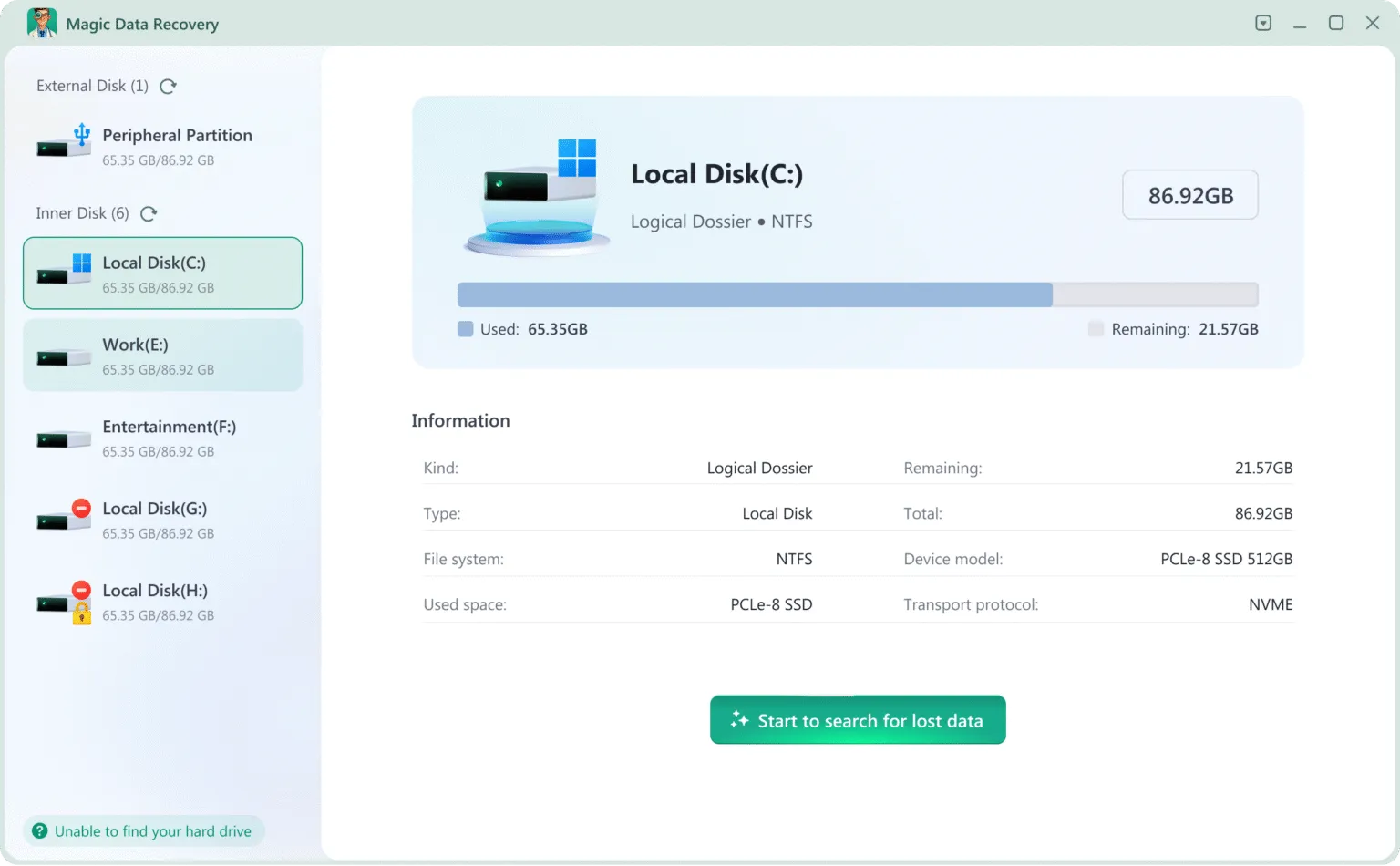
Step 2: Select the Formatted Drive
Launch the software and choose the formatted drive, partition, SD card, USB flash drive, or external disk. Make sure you select the correct device. If the partition name has changed or the drive appears as RAW, scan the whole device instead of guessing.
Step 3: Scan for Lost Files
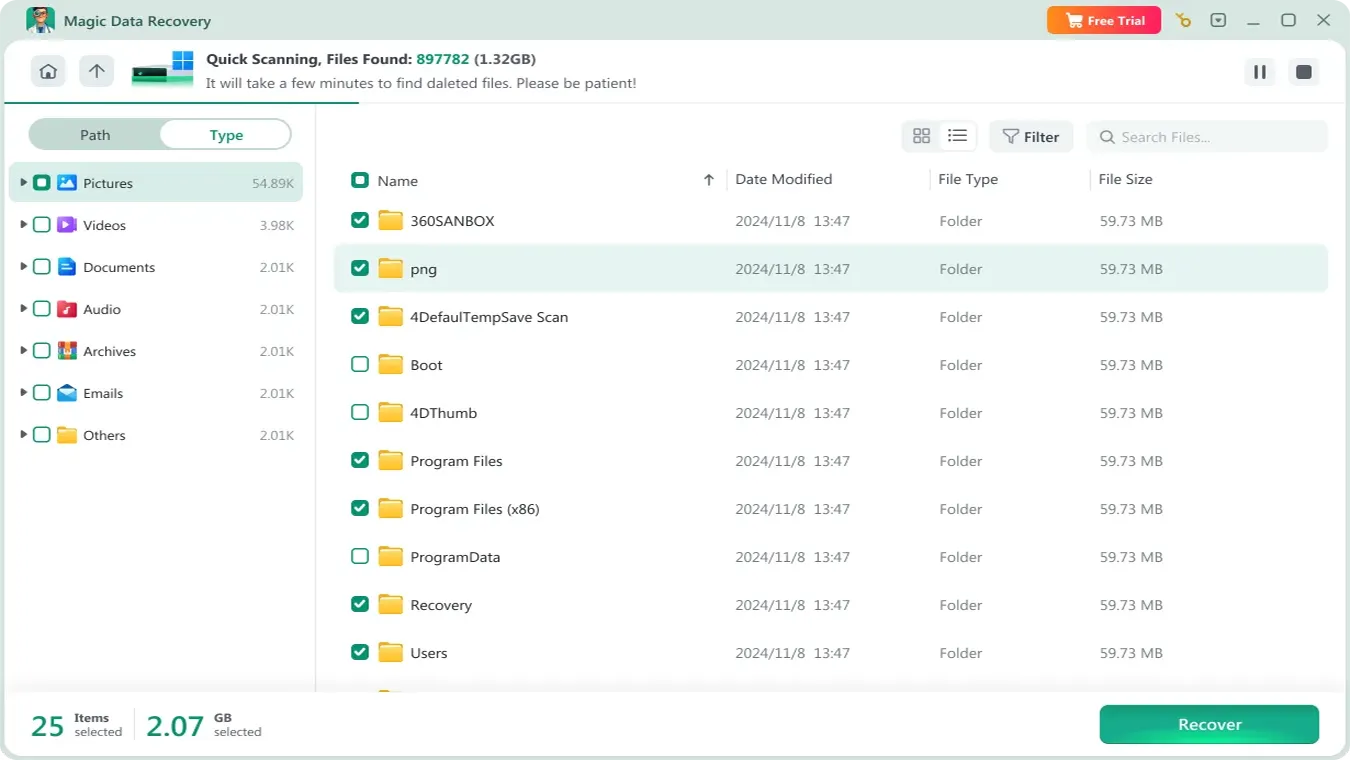
Start the scan and allow the software to search for recoverable files. In formatted drive recovery, a deep scan is often more useful than a basic scan because file system records may no longer point to the original folders correctly.
During scanning, review the results by file type, path, size, or date when available. This helps you find the most important files faster.
Step 4: Preview Important Files
Before recovering everything, preview key files. This step helps confirm whether photos open correctly, documents contain readable content, and videos appear usable.
Preview is especially useful when original filenames or folder structures are partly lost after formatting.

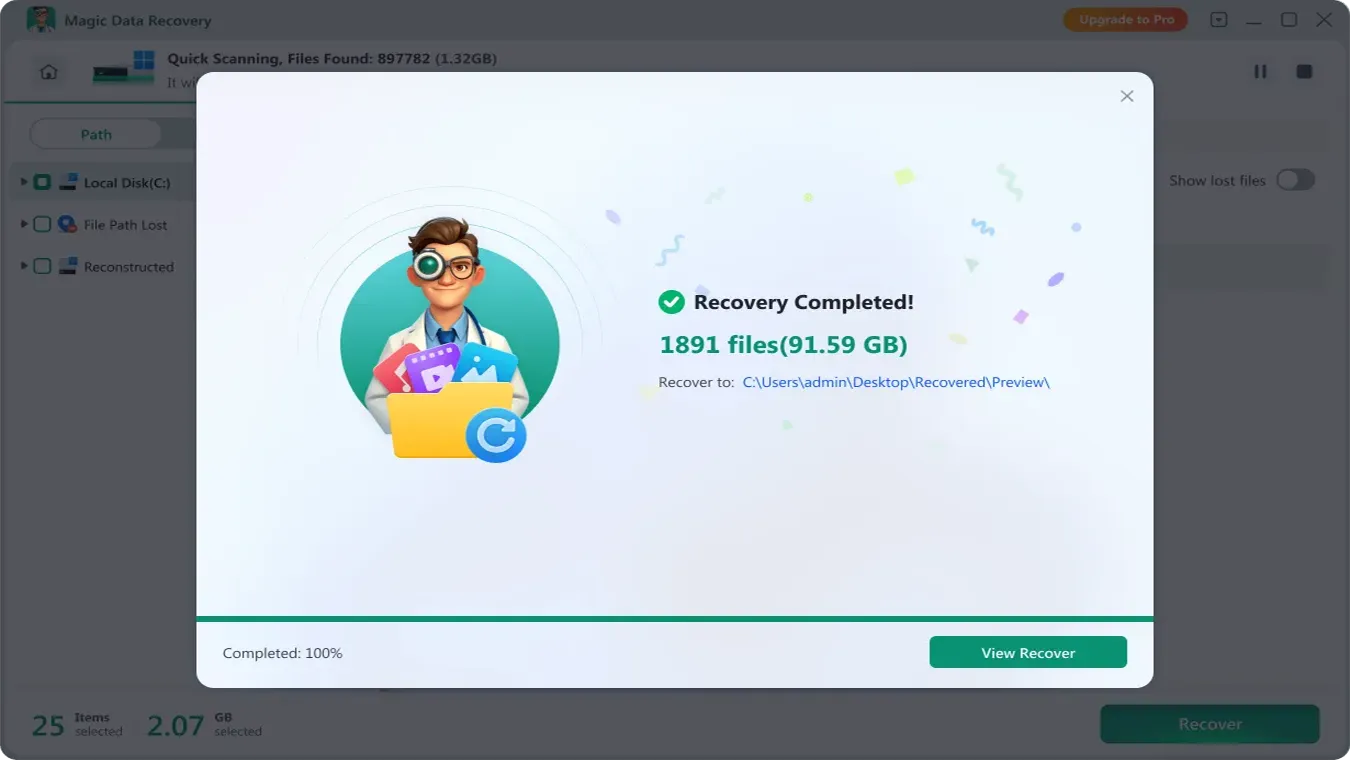
Step 5: Recover Files to a Different Drive
Select the files you need and save them to another healthy disk. Do not save them back to the formatted drive. After recovery, open the restored files and check whether they are complete.
If you need more detailed formatted-drive instructions, this related guide on how to recover formatted hard drive data can help.
Other Ways to Recover Files After Formatting
Although Magic Data Recovery is often the best starting point when no backup exists, other methods may also help depending on your situation.
Method 1: Restore from Backups
Backups are the safest recovery option. Check external backup drives, File History, Backup and Restore, OneDrive, Google Drive, Dropbox, NAS backups, or previous manual copies.
This method works best if the backup was created before formatting. However, many users searching after formatting can i recover files do not have a recent backup, so software recovery becomes the next step.
Method 2: Check Cloud Sync Folders
If your formatted drive stored synced files, check your cloud account online. Sometimes files remain in cloud trash, version history, or deleted items for a limited time.
This can help with documents and photos, but it will not recover files that were never uploaded.
Method 3: Use Windows File Recovery
Windows File Recovery can help advanced users recover files with command-line instructions. However, it is less beginner-friendly and requires careful command syntax. If you are not comfortable with commands, a visual tool such as Magic Data Recovery may be easier.
Method 4: Contact a Professional Recovery Lab
If the drive clicks, fails to spin, disconnects repeatedly, smells burnt, or does not appear in BIOS or Disk Management, stop using it. These signs may indicate physical damage. In that case, professional data recovery service is safer than DIY software.
Which Recovery Method Should You Choose?
Situation | Recommended Method | Why |
Quick formatted HDD | Magic Data Recovery | Data may still exist until overwritten. |
Formatted USB drive | Recovery software | USB file systems often need direct scanning. |
Formatted SD card | Recovery software first | Camera formatting may remove file records but not all data. |
Formatted SSD | Stop use and scan quickly | TRIM may reduce recovery chance. |
Recent backup exists | Restore from backup | Safest and cleanest option. |
Drive has physical damage | Recovery lab | DIY scans may worsen damage. |
Windows asks to format RAW drive | Recover first, repair later | Formatting again can reduce recovery success. |
This table also explains why after formatting can i recover files has no single answer. The device type, format type, and user actions after formatting all matter.
Common Mistakes That Make Formatted File Recovery Harder
Many formatted drives become unrecoverable because users take the wrong steps too soon. Avoid these mistakes:
- Installing recovery software on the formatted drive.
- Saving recovered files to the same drive.
- Reformatting the disk again.
- Running CHKDSK before recovery.
- Creating a new partition on the formatted space.
- Copying test files to see whether the drive works.
- Continuing to use a formatted SSD.
- Assuming free tools can handle every formatted-drive case.
Instead, use a controlled workflow. Stop writing data, scan the correct disk, preview important files, and recover data to another storage device.
For related formatted-drive recovery scenarios, you can also read this guide about data recovery from formatted drive.
When Files May Not Be Recoverable After Formatting
A trustworthy guide should not promise perfect results. Sometimes after formatting can i recover files has a negative answer.
Recovery may fail when:
- The formatted space has been overwritten by new files.
- A secure erase tool wiped the drive.
- The drive used encryption and the key is unavailable.
- SSD TRIM has cleared the storage blocks.
- The storage device has severe physical damage.
- The original files were fragmented and partly overwritten.
- A full format or low-level wipe replaced the data.
Still, if the files are important, scanning the drive is often worth trying because it can show whether recoverable files still exist. With Magic Data Recovery, previewing found files helps you evaluate recovery quality before saving results.
How to Improve Your Recovery Chance
If your main question is after formatting can i recover files, these best practices can improve your chance:
- Stop using the formatted device immediately.
- Disconnect the drive if you cannot scan it right away.
- Install recovery software on another disk.
- Scan the whole formatted device.
- Use deep scan when normal results are incomplete.
- Preview important files before recovery.
- Recover the most important files first.
- Save recovered files to another healthy drive.
- Back up recovered files immediately.
- Repair or reformat the drive only after data recovery.
These steps reduce overwrite risk and keep the recovery process organized.
Why Magic Data Recovery Is Better Than Basic Recovery Attempts
Basic undelete tools often work best when files were recently deleted from a healthy drive. Formatting is different. It may rebuild file system structures, erase directory information, or make the partition appear empty or RAW.
Magic Data Recovery is more suitable for this problem because it supports deeper scanning across formatted drives, file system errors, inaccessible storage, and multiple device types. It also gives users a simple recovery path instead of forcing them to choose complicated modules or command-line parameters.
For example, a student who formatted a USB drive by mistake can scan it and recover documents. A photographer who formatted an SD card in a camera can preview images before recovery. A small business user who formatted an external drive can recover spreadsheets, PDFs, archives, and project folders to another disk.
If you need a clearer alternative to complex manual methods, Magic Data Recovery is worth trying.
Conclusion
So, after formatting can i recover files? In many cases, yes. Formatting often removes access to files rather than immediately destroying every piece of data. However, recovery depends on quick action, no overwriting, the type of format, the device type, and the condition of the drive.
Start with backups if you have them. If no backup exists, use a reliable formatted drive recovery tool before running repair commands or formatting again. Magic Data Recovery is recommended because it supports deleted files, formatted drives, file system errors, RAW or inaccessible devices, and many common storage scenarios. It also helps users scan, preview, and recover files through a simple workflow.
For a safer next step, visit Amagicsoft’s formatted drive recovery solution and recover important files before making changes to the formatted drive.
Supports Windows 7/8/10/11 and Windows Server
FAQ About After Formatting Can I Recover Files
After formatting can I recover files from a hard drive?
Yes, you may recover files from a formatted hard drive if the original data has not been overwritten. Stop using the drive immediately, install recovery software on another disk, scan the formatted drive, and save recovered files elsewhere. Quick formatted hard drives usually have better recovery chances than fully wiped drives.
Can I recover files after quick formatting?
Yes. Quick formatting usually removes file system records rather than erasing every file sector immediately. This means recovery software may still find documents, photos, videos, and folders. However, you must stop using the device right away. New files can overwrite old data and reduce the recovery result.
Is full format recovery possible?
Full format recovery is more difficult than quick format recovery. Some full format operations may overwrite more disk areas or check sectors in ways that reduce recovery chances. Still, scanning the drive can show whether any usable files remain. If the drive contains critical data, avoid further use and consider professional help.
Can Magic Data Recovery recover formatted drives?
Yes. Magic Data Recovery is designed for formatted drives, deleted files, file system errors, RAW drives, and other common logical data loss cases. It lets users scan the formatted device, preview recoverable files, and save selected files to another drive. This workflow helps reduce confusion and overwrite risk.
Should I run CHKDSK after formatting?
Do not run CHKDSK before recovering important files. CHKDSK may modify file system structures, and that can make recovery harder in some cases. A safer order is to scan and recover your data first. After you save files to another drive, you can repair or reformat the original device.
Can I recover files from a formatted SSD?
You can try, but SSD recovery after formatting is less predictable because TRIM may clear unused blocks. Stop using the SSD immediately and scan it as soon as possible. If TRIM has already removed the data, recovery software may not find usable files. Acting quickly gives you the best chance.
Where should I save recovered files?
Always save recovered files to another healthy drive. Do not save them back to the formatted device because that can overwrite remaining recoverable data. Use an external drive, another internal partition, or a separate storage device with enough free space. After recovery, open important files to verify quality.
When should I contact a professional recovery service?
Contact a professional recovery service if the drive makes clicking noises, does not spin, disconnects repeatedly, smells burnt, or fails to appear in BIOS or Disk Management. These symptoms may indicate physical damage. In that situation, repeated DIY scans can increase risk, so software recovery should not be your first step.

Jason is a data recovery and technical support specialist with over 15 years of hands-on experience. He has worked extensively with frontline users, troubleshooting difficult data loss cases and providing practical recovery solutions for accidental deletion, formatted drives, damaged file systems, lost partitions, system failures, and other recovery emergencies. His expertise also includes backup and restoration, file repair, and disaster recovery, with a strong emphasis on safe, reliable, and technically accurate guidance.