
How to Recover Formatted Hard Disk
Formatting the wrong hard disk can make years of photos, documents, videos, and project files disappear in seconds. However, formatting does not always erase every file immediately. If you stop using the disk and follow the right recovery order, you may still get important data back.
This guide explains how to recover formatted hard disk data without making the damage worse. You will learn how formatting affects an HDD or SSD, which recovery methods work in different situations, and when Magic Data Recovery provides a practical solution. For broader guidance on restoring missing data, you can also visit our formatted file recovery guide.
The most important rule is simple: do not write anything else to the formatted drive.
Supports Windows 7/8/10/11 and Windows Server
Table of Contents
Can You Recover Data from a Formatted Hard Drive?
Yes, it is often possible to recover a formatted drive, especially when you performed a quick format and have not saved new data to the disk.
Formatting usually creates a new file system structure and marks the storage space as available. The operating system may no longer display the old files, but some file content can remain in the underlying sectors until new data replaces it.
Recovery results mainly depend on five factors:
- Whether you used a quick or full format
- Whether the device is an HDD or SSD
- How much new data has been written
- Whether the drive has physical damage
- Whether encryption was enabled
Quick Format vs. Full Format
A quick format normally rebuilds essential file system information without writing to every sector. This gives recovery software a chance to locate remaining file records or identify files through their signatures.
A full format presents a much more difficult situation. On modern Windows systems, a full format writes to every sector of the disk. As a result, software usually cannot restore data that has already been overwritten.
SSDs introduce another complication. TRIM allows the operating system to tell an SSD that certain blocks are no longer needed, after which the drive may clear them internally. Therefore, formatted SSD recovery tends to be less predictable than recovery from a traditional HDD.
Formatting situation | Typical recovery outlook | Recommended first action |
Quick-formatted HDD | Often recoverable if not overwritten | Stop use and run a complete scan |
Full-formatted HDD | Low after the format finishes | Check backups first |
Formatted SSD | Uncertain because of TRIM | Power down and scan promptly |
Drive partly overwritten | Some files may remain | Recover the most important files first |
Clicking or physically damaged drive | DIY recovery is risky | Contact a professional laboratory |
Encrypted formatted drive | Depends on encryption keys and overwritten metadata | Preserve the disk and locate the recovery key |
No recovery tool can honestly guarantee that every formatted file will return intact. A reliable recovery process should show what remains recoverable before asking you to save the results.
What to Do Before You Recover a Formatted Drive
The actions you take immediately after formatting can matter more than the software you choose.
Stop Using the Drive
Do not copy files, install programs, download updates, or create new partitions on the formatted disk. Each write operation may replace sectors that still contain your old data.
For an external drive, unplug it safely until you are ready to scan it.
For a formatted system drive, stop booting Windows from that disk when possible. Normal system activity creates temporary files, updates logs, and writes background data that can reduce recovery opportunities.
Do Not Format or Initialize It Again
Windows may ask you to format, initialize, or repair a disk when it cannot recognize the current file system. Cancel those prompts until you have recovered the files.
Formatting the disk again will not bring the previous structure back. Instead, it creates additional metadata and can make recovery more difficult.
Avoid CHKDSK Before Recovery
CHKDSK repairs the file system that currently exists. It does not reverse a format or restore the old file system.
Because repair commands can modify file system records, recover your files before attempting repairs. Once the important data is safe, you can format or repair the drive for reuse.
Prepare Another Storage Device
You need a different drive for:
- Installing recovery software
- Saving recovered files
- Creating a disk image when the source drive is unstable
Ideally, use a separate physical disk rather than another partition on the same formatted hard drive.
Check for Physical Failure
Software can help with logical data loss, including formatting, deletion, lost partitions, and file system errors. It cannot repair damaged read/write heads, failed motors, or broken electronic components.
Stop DIY recovery when the drive:
- Clicks, grinds, or repeatedly spins down
- Disappears during scanning
- Shows the wrong capacity
- Has suffered water, fire, or impact damage
- Causes the computer to freeze whenever connected
In these cases, repeated scans may place additional stress on the hardware. A professional recovery service is the safer option.
How to Recover Formatted Hard Disk with Magic Data Recovery
When no usable backup exists, recovery software is usually the most accessible way to learn how to recover files from a formatted hard drive.
Magic Data Recovery is designed for logical data loss scenarios such as accidental formatting, deletion, file system errors, RAW drives, and inaccessible partitions. It provides a visual workflow, so users do not need to construct recovery commands manually.
The software supports more than 5,000 file formats, including common documents, photos, videos, audio files, archives, emails, and database files. It can scan internal and external hard drives, SSDs, USB drives, and memory cards. Supported file systems include FAT, exFAT, NTFS, ReFS, and EXT2/3/4 when the device is accessible from Windows.
Why Magic Data Recovery Is a Practical Choice
The main difficulty after formatting is not simply finding deleted file names. Formatting may remove or replace the original folder records, so recovery software must also search the disk for recognizable file signatures.
Magic Data Recovery addresses this problem through:
- Quick and deep scanning for different levels of data loss
- File-type filters that help narrow large scan results
- Preview support for checking files before recovery
- Support for formatted and corrupted file systems
- Recovery from both internal and removable storage
- A clear scan, preview, and recover workflow
- Recovery to a separate location instead of modifying the source drive
For example, suppose you accidentally quick-formatted a 2 TB external hard drive while preparing a Windows installation disk. The original folder structure may be incomplete, but a deep scan can still identify photos, videos, documents, and archives through their remaining metadata and file signatures.
This approach is more practical for ordinary users than entering unfamiliar commands. At the same time, it does not replace a professional laboratory when the drive has physical damage.
Step 1: Install the Software on a Healthy Drive
Download Magic Data Recovery from the official product page. Install it on your Windows system drive or another healthy storage device.
Supports Windows 7/8/10/11 and Windows Server
Never install it on the formatted disk you want to recover. The installation files could overwrite recoverable sectors.
When the Windows system partition itself was formatted, connect the affected drive to another computer as a secondary disk. You can use an internal SATA connection, an external enclosure, or a compatible USB adapter.
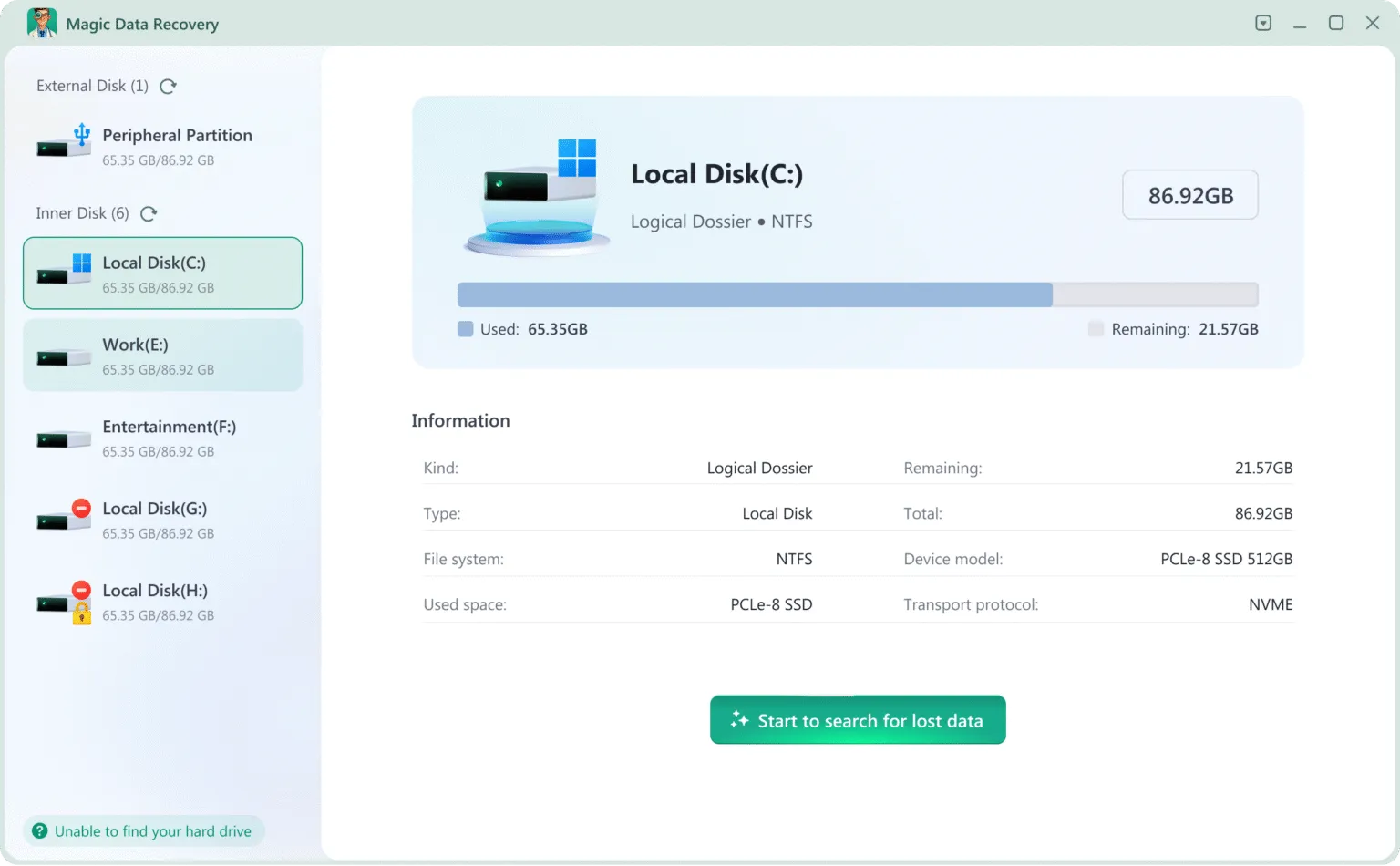
Step 2: Select the Correct Formatted Disk
Launch the software and review the detected storage devices.
Identify the formatted drive by checking:
- Capacity
- Device name
- Connection type
- Existing partitions
- Drive letter, when available
Do not rely on the drive letter alone because Windows may assign a different letter after formatting or reconnecting the device.
Select the affected physical disk or formatted volume and start the search for lost data.
Step 3: Let the Full Scan Finish
The initial scan may locate recently removed file system records. A deeper scan then examines more sectors and searches for known file signatures.
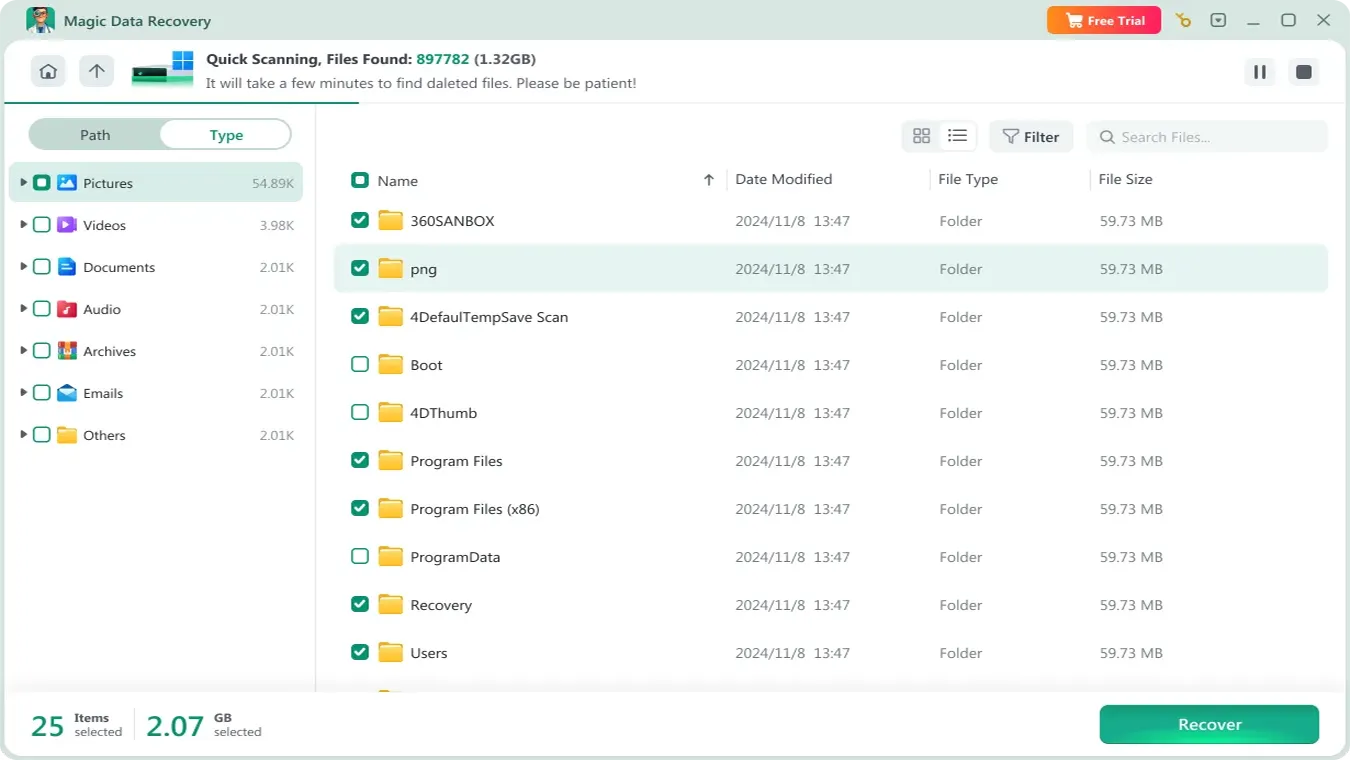
When researching how to recover a formatted hard drive, many users stop the scan as soon as a few files appear. That can leave important data undiscovered. Let the scan finish unless the drive begins disconnecting, making unusual sounds, or producing severe read errors.
Avoid opening, formatting, or copying files to the source drive while the scan runs.
Step 4: Filter and Preview the Results
A formatted disk can produce thousands of results. Use file-type filters, file names, dates, sizes, and search functions to narrow the list.
Preview important photos, documents, videos, or archives whenever the software supports that format. A valid preview usually provides better evidence of recoverability than the file name alone.

Prioritize irreplaceable data first, such as:
- Work documents
- Family photos and videos
- Financial records
- Project source files
- Email archives
- Databases
- Files without another backup
Step 5: Recover Files to Another Disk
Select the files you need and choose a different physical drive as the destination.
Do not save recovered data back to the formatted disk. Doing so can overwrite files that the software has not recovered yet.
After recovery, open a representative sample of the restored files. Check documents, videos, archives, and larger files instead of judging the result only by thumbnails or file names.
For a more detailed explanation of the interface and recovery workflow, consult the Magic Data Recovery user guide.
Other Ways to Recover a Formatted Hard Drive
Recovery software is not the only option. The best method depends on your backup status, technical experience, and drive condition.
Method 1: Restore Files from a Backup
A verified backup is usually the safest solution because it does not depend on data remaining on the formatted disk.
Check:
- Windows File History
- Windows Backup
- OneDrive
- Dropbox or Google Drive
- NAS backups
- External backup drives
- Disk images
- Company backup systems
File History can restore previous versions of files and folders that it backed up before the format. Cloud services may also retain deleted files or earlier versions for a limited period.
Before restoring everything, check the backup date. A backup created after files disappeared may not contain the data you need.
Method 2: Try Windows File Recovery
Microsoft provides Windows File Recovery, a command-line application for recovering files from local storage devices. It can work with internal drives, external drives, and USB devices, but it does not recover files from network shares or cloud storage.
The source and destination must be different drives. Users also need to select the correct mode, filters, and command syntax.
Windows File Recovery may suit experienced users who want a free Microsoft utility. However, it lacks the visual preview and browsing workflow that many users need after scanning a large formatted disk.
Method 3: Use a Professional Data Recovery Service
Choose a professional service when:
- The drive has physical damage
- The disk is not detected correctly
- Important data has legal or business value
- Encryption complicates the recovery
- Previous scans caused repeated disconnections
- DIY attempts could create unacceptable risk
A laboratory may create a sector-level image, replace damaged components in a controlled environment, and recover data from the image rather than repeatedly stressing the original disk.
Professional recovery costs more than software, but it may be appropriate when the hardware itself is failing.
Which Formatted Drive Recovery Method Should You Use?
Method | Best for | Main advantage | Main limitation |
Backup restore | Users with a recent verified backup | Clean and low-risk recovery | Only restores files included in the backup |
Magic Data Recovery | Quick-formatted or logically damaged drives | Visual scan, filters, preview, and broad file support | Cannot repair physical hardware damage |
Windows File Recovery | Experienced Windows users | Free Microsoft command-line utility | More difficult to use and no visual preview |
Professional service | Physically damaged or high-value drives | Specialized hardware and controlled recovery | Higher cost and longer process |
CHKDSK or repair tools | Repairing a disk after data recovery | May fix current file system errors | Does not undo formatting and may change metadata |
For most accidental quick-format cases, the sensible order is:
- Check whether a complete backup exists.
- Scan the drive without writing to it.
- Preview and recover files to another disk.
- Repair or reformat the original drive only after recovery.
- Contact a laboratory if the hardware shows signs of failure.
Can CMD Unformat a Hard Disk?
No standard CMD command can simply undo formatting and restore the previous drive state.
CHKDSK checks and repairs the current file system. DiskPart manages disks, partitions, and volumes. The Format command creates a new file system. None of these tools acts as an “unformat” button.
Windows File Recovery is different because it scans storage for lost files. However, it still cannot guarantee the restoration of original folder names, paths, metadata, or overwritten content.
Therefore, users searching for how to recover formatted hard disk data should not start with CHKDSK, DiskPart, or another format operation. Recover the files first. Repair the disk afterward.
Common Formatted Hard Drive Recovery Scenarios
You Quick-Formatted an External HDD
Stop using the external drive and connect it to a stable USB port. Scan the entire disk, preview the results, and save the files to another device.
This is one of the more favorable situations for users who need to recover a formatted drive, provided that little or no new data has been copied to it.
You Formatted the Windows System Partition
Shut down the computer. Continuing to boot from the same disk allows Windows to create logs, updates, caches, and temporary files.
Remove the disk when practical and connect it to another Windows computer. Install the recovery tool on the healthy computer, scan the affected disk as secondary storage, and recover files elsewhere.
You Reinstalled Windows on the Wrong Drive
A Windows reinstall writes considerably more data than a simple quick format. Some personal files may still remain in untouched areas, but the operating system files may have overwritten part of the original data.
Stop using the computer and scan the entire physical disk. Expect incomplete folder structures and prioritize important file types.
You Formatted an SSD
Power down the SSD promptly. Avoid restarting Windows, reinstalling software, or repeatedly scanning with different applications.
Because TRIM and garbage collection may clear unused blocks, SSD recovery can become impossible even without obvious new files appearing on the disk. Check backups first, then perform one controlled scan.
The Hard Drive Clicks or Disconnects
Do not continue scanning. Clicking, repeated spin-up attempts, disappearing capacity, and unstable connections can indicate physical failure.
For critical data, contact a professional service rather than experimenting with repair commands or repeatedly reconnecting the drive. You can also review the differences between logical and physical failure in this guide to recover data from a damaged hard drive.
Mistakes That Reduce Formatted Drive Recovery Results
Avoid these common errors:
- Continuing to use the formatted disk
- Installing recovery software on the source drive
- Saving recovered files back to the same disk
- Running CHKDSK before recovering data
- Initializing an unrecognized disk
- Formatting the drive a second time
- Creating a new partition over the lost one
- Recovering every file without previewing important results
- Repeatedly powering on a failing hard drive
- Assuming a file is healthy because its name appears
Another common mistake involves trying several recovery tools one after another while continuing to use the affected computer. A safer approach is to preserve the disk, select one suitable recovery method, and avoid unnecessary writes.
Tips to Improve Your Recovery Results
These practices can improve the recovery process:
- Start recovery as soon as you notice the format.
- Disconnect external drives until you are ready.
- Use a stable cable and direct computer connection.
- Install software on a different physical drive.
- Scan the entire disk when the original partition is missing.
- Let the deep scan complete.
- Preview files before recovery.
- Recover irreplaceable files first.
- Save results to another physical disk.
- Create a backup immediately after recovery.
Knowing how to recover files from a formatted hard drive is useful, but preventing a second loss matters just as much. After verifying the recovered files, create at least one local backup and one separate or cloud-based copy.
Conclusion: Recover the Files Before Repairing the Drive
Learning how to recover a formatted hard drive starts with the correct order of operations. Stop using the affected disk, identify whether the format involved an HDD or SSD, check your backups, and recover files before running repair commands.
Backups remain the safest option. Windows File Recovery can help technically experienced users, while professional laboratories are better suited to physically damaged drives.
For common logical data loss, Magic Data Recovery offers a practical balance of deep scanning, file preview, broad format support, and a beginner-friendly workflow. It can help with formatting, accidental deletion, RAW file systems, inaccessible partitions, and other file system errors without requiring command-line knowledge.
Most importantly, install the software on a healthy disk and save recovered files somewhere else. This controlled approach gives you a better chance to recover a formatted drive without overwriting the data you still need.
For additional file restoration methods and related recovery scenarios, visit the Amagicsoft formatted file recovery guide.
Supports Windows 7/8/10/11 and Windows Server
FAQs
Can I recover files after a quick format?
Yes, files often remain recoverable after a quick format because the process usually rebuilds file system structures and marks space as available rather than immediately overwriting every data block. Stop using the drive, scan it as soon as possible, and save recovered files to another physical disk.
How can I recover a formatted hard drive without software?
Without recovery software, your practical options are limited to backups. Check File History, Windows Backup, OneDrive, another cloud service, or an external backup created before formatting. When no backup exists, you will usually need recovery software or a professional laboratory to recover a formatted drive.
Can CMD recover files from a formatted hard drive?
CMD cannot simply reverse a format. CHKDSK repairs the file system that currently exists and may change disk metadata, so run recovery first. Microsoft’s Windows File Recovery is a separate command-line tool that can scan local storage, but it requires correct syntax and a different destination drive.
How long does formatted hard drive recovery take?
Scan time depends on disk capacity, connection speed, drive health, and whether the software performs a deep scan. A small external drive may finish relatively quickly, while a multi-terabyte disk can take much longer. Let the scan complete, and avoid using or disconnecting the source drive during the process.
Can I recover an accidentally formatted external hard drive?
Yes. Connect the external hard drive to a stable USB port, stop copying files to it, and scan it from another healthy Windows drive. Preview the results, select the files you need, and restore them to a different disk. Do not install recovery software on the formatted external drive itself.
Can data be recovered from a formatted SSD?
SSD recovery is less predictable because TRIM can tell the drive that formatted or deleted blocks may be cleared. Power down the SSD as soon as you notice the mistake, avoid reinstalling Windows or copying files, and scan it promptly from another system. A backup remains the most dependable recovery source.
How do I recover files after formatting and reinstalling Windows?
Stop booting from the affected disk because Windows updates, temporary files, and normal system activity can overwrite old data. When possible, remove the disk and connect it to another computer as a secondary drive. Then scan the entire physical disk and save recovered files elsewhere.
When should I use a professional data recovery service?
Use a professional service when the hard drive clicks, grinds, disappears intermittently, shows the wrong capacity, or has suffered water, fire, or impact damage. Also consider a laboratory when the data is legally sensitive or irreplaceable. Repeated DIY scans can worsen a physically failing drive.

Jason is a data recovery and technical support specialist with over 15 years of hands-on experience. He has worked extensively with frontline users, troubleshooting difficult data loss cases and providing practical recovery solutions for accidental deletion, formatted drives, damaged file systems, lost partitions, system failures, and other recovery emergencies. His expertise also includes backup and restoration, file repair, and disaster recovery, with a strong emphasis on safe, reliable, and technically accurate guidance.