
Hard Drive Data Recovery Guide
Losing important files from a hard drive can feel urgent, especially when the disk stores work documents, family photos, videos, or business records. The good news is that hard drive data recovery is often possible when you act quickly and avoid risky operations. This guide explains how hard drive recovery works, what causes data loss, how to choose the right drive recovery method, and what affects hard drive recovery cost.
You will also learn where Magic Data Recovery fits into a safe recovery workflow. The product supports data loss caused by accidental deletion, formatting, file system errors, lost partitions, and other common scenarios. A careful hard drive data recovery process can help you protect recoverable files before you repair, format, or replace the disk.
Supports Windows 7/8/10/11 and Windows Server
Table of Contents
What Is Hard Drive Data Recovery?
Hard drive data recovery is the process of finding and restoring files that become deleted, hidden, inaccessible, corrupted, or lost from a hard drive. In many cases, deleted or formatted files still exist on the disk for a period of time. However, the operating system may no longer show them because the file index, file system record, or partition information has changed.
A typical hard drive recovery case may involve:
- Accidentally deleted files
- A formatted internal or external hard drive
- A lost or missing partition
- A RAW or inaccessible drive
- A file system error
- A corrupted folder structure
- A drive that asks to be formatted before use
However, not every data loss situation is the same. Software-based drive recovery works best when the hard drive still appears in the system and has no clear signs of physical damage. If the drive clicks, grinds, overheats, fails to spin, or suffered water or impact damage, stop using it and contact a professional recovery lab.
First Things to Do After Hard Drive Data Loss
The first few actions after data loss can decide whether hard drive data recovery succeeds or becomes more difficult. Therefore, avoid making changes to the affected disk before you recover important files.
Stop Using the Drive Immediately
When files disappear, stop saving new data to the same hard drive. Deleted or formatted files may remain recoverable until new data overwrites them. Every download, installation, file copy, or system operation can reduce your recovery chances.
Do Not Format the Drive Again
If Windows says, “You need to format the disk before you can use it,” do not click Format before recovery. Formatting may rebuild file system structures and make hard drive recovery more difficult.
Do Not Run Repair Commands Too Early
Tools such as CHKDSK may fix some disk access problems, but they can also modify file system records. If your main goal is data recovery, scan the drive first. After you recover important files, you can repair or reformat the disk safely.
Install Recovery Software on Another Drive
Never install a drive recovery tool on the same hard drive that lost data. Instead, install it on another internal disk, an external drive, or a USB device. This reduces the risk of overwriting recoverable files.
Save Recovered Files to a Different Location
After scanning, restore files to another storage device. Do not save recovered files back to the affected hard drive, because that may corrupt the recovery result or overwrite other lost data.
Common Causes of Hard Drive Data Loss
Understanding the cause helps you choose the right hard drive data recovery method. It also helps you estimate hard drive data recovery cost if professional service becomes necessary.
Accidental Deletion
Accidental deletion is one of the most common data loss scenarios. You may delete files with Shift + Delete, empty the Recycle Bin, or remove folders during cleanup. In many cases, hard drive data recovery software can scan file records and restore deleted files before new data overwrites them.
Formatting
Formatting can remove the file system index and make the drive appear empty. However, a quick format usually does not erase every file sector immediately. A deep scan can often find photos, documents, videos, archives, and other file types after formatting.
File System Errors
File system errors can make a partition RAW, inaccessible, or unreadable. These errors may happen after sudden power loss, unsafe drive removal, system crashes, malware damage, or interrupted disk operations. In this situation, reliable hard drive recovery software should scan beyond the visible file system.
Partition Loss
A partition may disappear after incorrect disk management, failed resizing, interrupted cloning, or partition table corruption. Since the original data area may still exist, drive recovery software can often locate lost partitions and list recoverable files.
Bad Sectors
Bad sectors can prevent the system from reading part of the disk. If the drive still works, you may recover some files with software. However, if the number of bad sectors keeps increasing, stop using the disk and consider professional help.
Physical Damage
Physical damage includes clicking sounds, motor failure, head damage, water damage, fire damage, and impact damage. Software cannot repair mechanical problems. In these cases, a professional lab is usually safer, although the hard drive recovery cost will be higher.
How to Recover Data from a Hard Drive
There are three main ways to recover lost data. The best option depends on the drive condition, the value of the files, and your budget.
Check Recycle Bin and Backups
Start with the simplest method. Check the Recycle Bin, File History, OneDrive, Google Drive, external backups, or previous backup software. If you find the missing files there, restore them to a safe location.
This method costs nothing and avoids unnecessary scanning. However, it only works when you backed up the files or deleted them normally.
Use Hard Drive Data Recovery Software
If your computer detects the drive and it does not show physical symptoms, use hard drive data recovery software. This method works well for deleted files, formatted drives, lost partitions, RAW drives, and file system errors.
For many home users and small business users, hard drive data recovery software offers a practical balance between cost, control, and recovery speed.
A safe workflow looks like this:
1. Connect the affected hard drive to a working computer.
2. Install Magic Data Recovery on a different drive.
Supports Windows 7/8/10/11 and Windows Server
3. Select the hard drive that lost data.
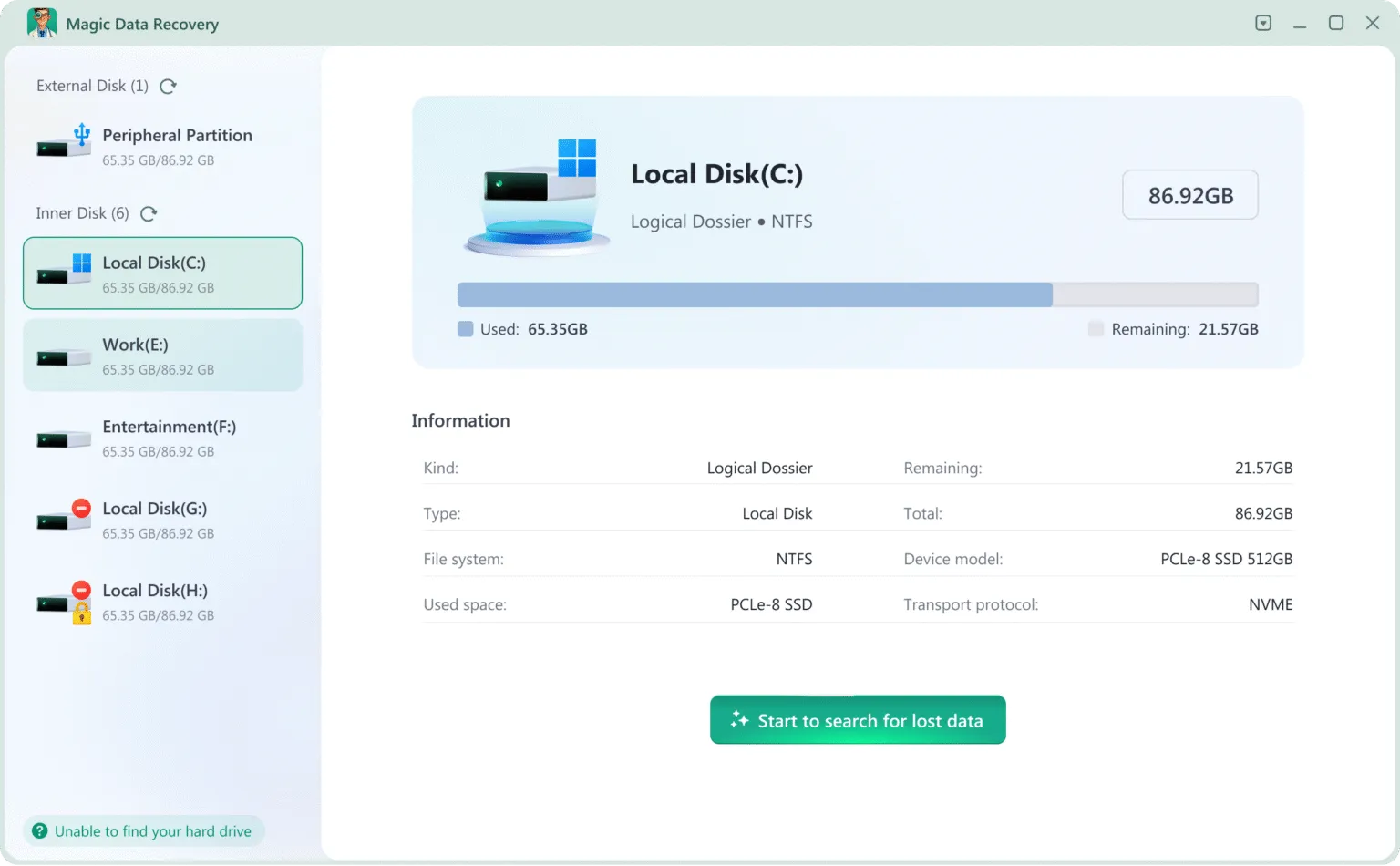
4. Run a quick scan first then deep scan if the first scan does not find enough files.
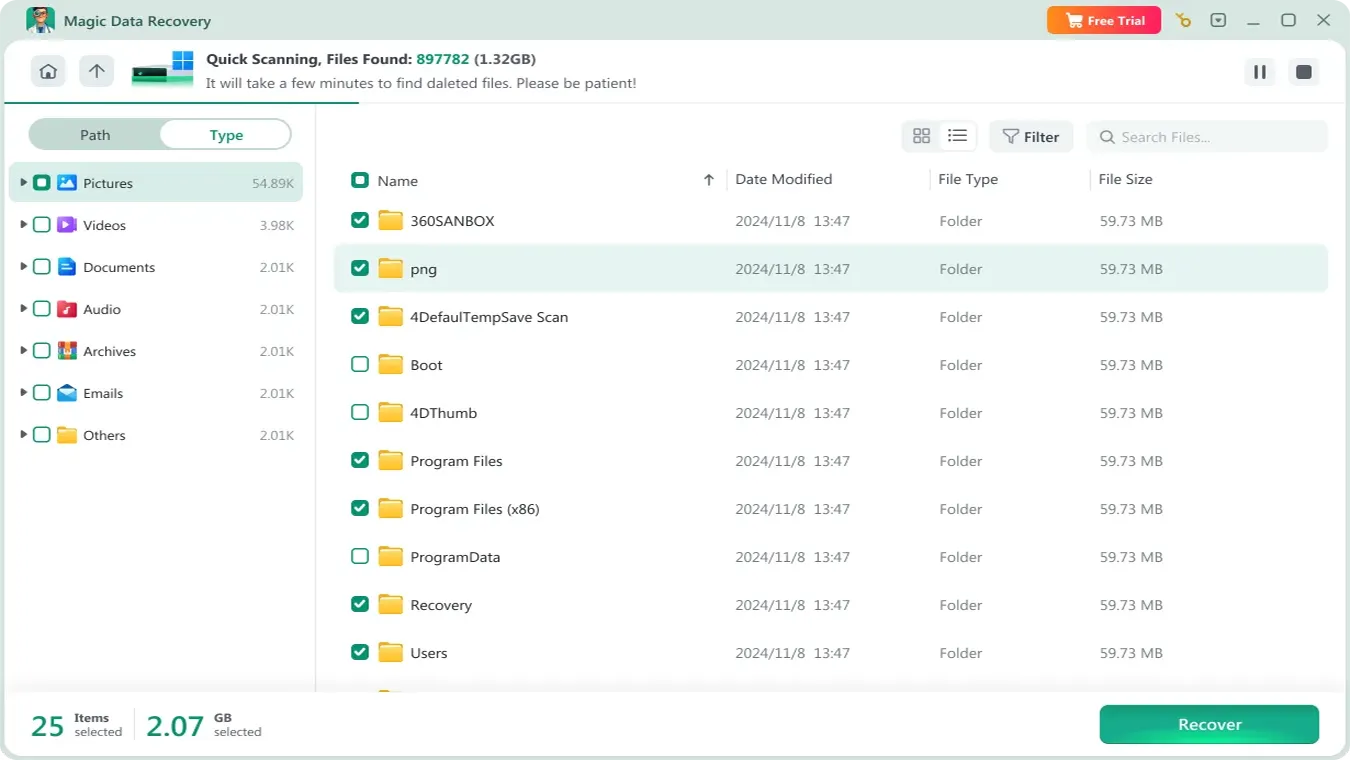
5. Preview recoverable files when possible.

6. Recover files to another storage device.
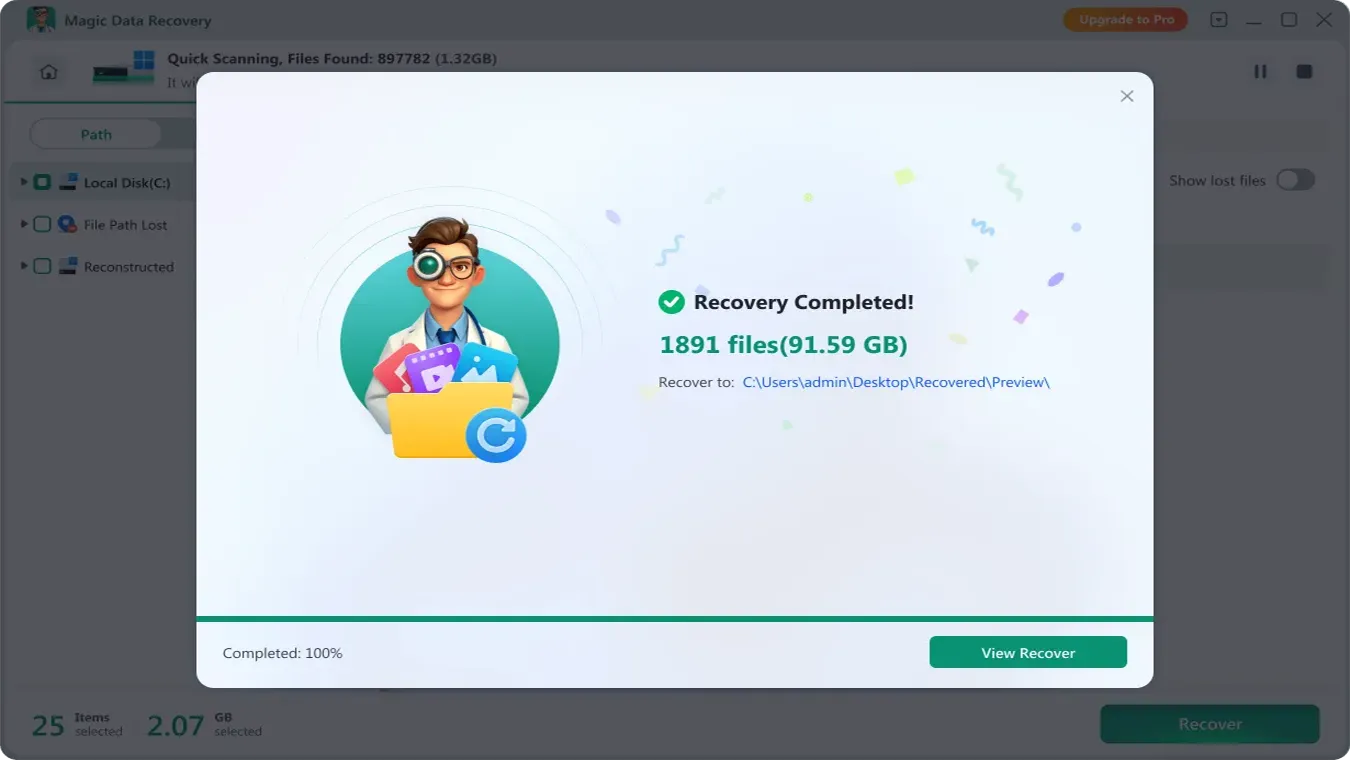
Magic Data Recovery helps users follow a clear and efficient drive recovery process. It supports recovery from HDDs, SSDs, USB drives, memory cards, and other storage devices. It also helps restore files lost through deletion, formatting, file system errors, partition loss, and other common data loss situations.
Contact a Professional Data Recovery Lab
Choose a professional lab if the drive has physical damage, makes unusual noises, does not power on, or contains highly valuable business data. A lab may use specialized imaging tools, donor parts, and controlled recovery procedures.
However, professional hard drive recovery cost can be much higher than software recovery. For this reason, many users first check whether the problem is logical or physical. If the drive works normally but files are missing, software recovery is often the more reasonable first step.
Hard Drive Recovery Cost: What Affects the Price?
Many users search for hard drive recovery cost because recovery prices vary widely. There is no single fixed price because every case depends on the damage type, drive condition, capacity, required tools, and service level.
Logical Failure vs Physical Failure
Logical failure includes deletion, formatting, partition loss, RAW drives, and file system corruption. These cases often cost less because the hardware still works. Physical failure costs more because it may require parts, expert handling, and advanced recovery equipment.
Drive Type and Capacity
Large drives can take longer to image and scan. SSDs may also create extra challenges, especially when TRIM has cleared deleted data blocks. As a result, hard drive data recovery cost may increase with drive size, storage technology, and case complexity.
Damage Severity
A lightly corrupted file system is very different from a dropped hard drive with damaged heads. The more severe the damage, the more time and equipment the recovery process may require.
Turnaround Time
Emergency recovery usually costs more. If you need data restored urgently, a service provider may charge extra for priority handling.
Software vs Professional Service
Software is usually the more affordable first step for logical cases. Professional service is more suitable for physical damage. Therefore, a smart approach is to assess the symptoms first instead of immediately paying a high hard drive data recovery cost.
Why Magic Data Recovery Is a Practical First Step
Magic Data Recovery is not a replacement for cleanroom service. Instead, it works best as a practical first step for common logical data loss. This makes it suitable for users who need hard drive data recovery without immediately sending the device to a recovery lab.
Core Problems Magic Data Recovery Helps Solve
Magic Data Recovery can help with:
- Accidentally deleted files
- Formatted hard drives
- Lost or inaccessible partitions
- RAW drive issues
- File system errors
- External hard drive data loss
- USB and removable storage recovery
- Data loss caused by mistaken operations
For example, if you formatted an external hard drive by mistake, you can scan it with Magic Data Recovery and recover found files to another disk. Likewise, if a folder disappeared after a system crash, the software can search for recoverable files through quick and deep scanning.
Product Advantages and Unique Selling Points
Magic Data Recovery focuses on real user needs rather than complicated technical settings. It is useful because it offers:
- A simple scan-and-recover workflow
- Support for common storage devices
- Recovery for deleted, formatted, and inaccessible files
- Deep scanning for complex logical data loss
- Preview options for checking files before recovery
- A safer first step before paying high lab fees
- A user-friendly drive recovery experience for non-technical users
In addition, Magic Data Recovery helps users avoid risky manual fixes. For example, formatting a drive again or running repair commands too early may change file system structures. Scanning first is often safer when the missing data matters.
Why It Can Be More Reliable Than Risky Manual Fixes
Some online tips suggest formatting the drive, rebuilding partitions, or running repair commands immediately. These actions may fix access issues, but they can also reduce recovery chances. A recovery-first approach is safer: scan the drive, recover important files, and then repair or reformat the disk later.
That is why Magic Data Recovery fits naturally into a hard drive data recovery workflow. It helps you focus on restoring files before changing the affected drive.
If you need a more efficient solution, try Magic Data Recovery as your first step before considering a higher hard drive recovery cost from a professional service.
Supports Windows 7/8/10/11 and Windows Server
Hard Drive Recovery vs Professional Service: Which Should You Choose?
The right choice depends on the symptoms. Before you decide, check whether the problem looks logical or physical.
Choose Magic Data Recovery or another trusted software solution when:
- The drive appears in Windows
- The drive does not make strange noises
- Files were deleted by mistake
- The drive was formatted
- The partition became RAW
- The data loss seems logical
- You want to control hard drive data recovery cost
Choose a professional service when:
- The hard drive clicks or grinds
- The drive does not spin
- The disk suffered water, fire, or impact damage
- The BIOS cannot detect the drive
- The files are business-critical
- Safe software recovery does not work
This balanced decision helps you avoid overspending while still protecting valuable data.
Best Practices for Hard Drive Data Recovery
A safer hard drive data recovery workflow always protects the original drive first and restores files to a separate location. Follow these best practices before and during recovery:
- Stop using the affected drive immediately.
- Do not install software on the lost-data drive.
- Avoid CHKDSK before file recovery.
- Do not save recovered files to the same disk.
- Use deep scan for formatted or RAW drives.
- Preview files before recovery when possible.
- Back up recovered files immediately.
- Replace an unreliable drive after recovery.
These tips follow one simple rule: recover first, repair later. As a result, you reduce the risk of overwriting files or making the data loss worse.
Common Mistakes to Avoid During Drive Recovery
Many users make data loss worse because they try random fixes too quickly. Avoid these mistakes:
Formatting the Drive Too Soon
Formatting may make the drive usable again, but it can also reduce recovery quality. Always recover important files before formatting.
Saving New Files to the Same Disk
New files can overwrite deleted data. Therefore, stop using the affected drive until the recovery process finishes.
Installing Recovery Software on the Lost-Data Drive
This mistake can overwrite the exact files you want to recover. Install Magic Data Recovery or any other drive recovery software on a different device.
Opening a Physically Damaged Drive
Do not open a hard drive at home. Dust, moisture, and improper handling can damage the platters. If the drive has physical symptoms, use a professional service instead.
Trying Too Many Tools Repeatedly
Repeated scans on a failing drive can stress the hardware. If the drive behaves abnormally, stop and choose a safer recovery method.
How to Prevent Future Hard Drive Data Loss
Recovery is helpful, but prevention is better. After you restore your files, build a stable backup routine.
Use the 3-2-1 backup rule:
- Keep 3 copies of important data.
- Store them on 2 different types of media.
- Keep 1 copy offsite or in the cloud.
Moreover, monitor hard drive health, avoid unsafe removal, use a UPS for desktop systems, and replace drives that show frequent errors. These habits reduce future hard drive recovery risks and save money over time.
Conclusion
Hard drive data recovery works best when you act quickly, avoid writing new data, and choose the right HDD method for the situation. For deleted files, formatted drives, file system errors, RAW partitions, and other logical problems, Magic Data Recovery offers a practical and user-friendly first step.
The software helps users scan lost-data drives, preview recoverable files, and restore data to a safe location. It also gives non-technical users a clearer path before they face a high hard drive recovery cost from a professional lab.
However, physical damage needs a different approach. If the hard drive clicks, fails to spin, or suffered water or impact damage, stop using it and contact a recovery specialist.
For most everyday data loss cases, we recommend Magic Data Recovery because it focuses on the real problem: finding and restoring lost files safely, clearly, and efficiently. If you need a dependable drive recovery solution before paying a high hard drive data recovery cost, Magic Data Recovery is worth trying.
Supports Windows 7/8/10/11 and Windows Server
FAQs
What is hard drive data recovery?
Hard drive data recovery is the process of restoring lost, deleted, formatted, or inaccessible files from a hard drive. It may involve scanning file records, rebuilding lost directory structures, or searching raw disk sectors. Software recovery works best for logical problems, while physical damage usually needs a professional recovery lab.
Can I recover data from a formatted hard drive?
Yes, you may recover data from a formatted hard drive if new data has not overwritten the old files. A quick format often removes file system references rather than every file sector. For safer hard drive data recovery, scan the formatted drive, preview found files, and save them to another storage device.
How much does hard drive recovery cost?
Hard drive recovery cost depends on the damage type, drive capacity, service provider, required parts, and turnaround time. Logical cases usually cost less than physical failures. Software recovery is often the most affordable first step, while professional lab recovery may cost much more for complex physical damage.
Is data recovery software safe to use?
Data recovery software is generally safe when used correctly. For safer hard drive data recovery, install the software on a different drive and recover files to another storage device. Avoid writing anything to the affected disk. A read-only scan reduces risk, but you should stop immediately if the drive shows physical symptoms.
Why is my hard drive asking to be formatted?
A hard drive may ask to be formatted when the file system becomes damaged, unsupported, or unreadable. This can happen after unsafe removal, power loss, corruption, or partition table errors. Do not format it before recovery. First, scan the drive with hard drive data recovery software and restore important files.
Can Magic Data Recovery recover deleted files?
Yes, Magic Data Recovery can help recover deleted files from supported storage devices when the deleted data has not been overwritten. It is useful for files removed from the Recycle Bin, Shift-deleted files, and data lost after common logical errors. For best results, stop using the drive before scanning.
When should I avoid DIY hard drive recovery?
Avoid DIY hard drive recovery if the drive clicks, grinds, smells burnt, does not spin, or suffered water or impact damage. These signs often indicate physical failure. Running software on a failing disk may worsen the damage. In that situation, professional recovery service is the safer option.
How can I reduce hard drive data recovery cost?
You can reduce hard drive data recovery cost by acting quickly, avoiding further writes, trying safe software recovery for logical issues, and keeping regular backups. Do not attempt risky repairs or repeated formatting. If the drive has physical damage, stop using it early to prevent more expensive recovery work.

Jason is a data recovery and technical support specialist with over 15 years of hands-on experience. He has worked extensively with frontline users, troubleshooting difficult data loss cases and providing practical recovery solutions for accidental deletion, formatted drives, damaged file systems, lost partitions, system failures, and other recovery emergencies. His expertise also includes backup and restoration, file repair, and disaster recovery, with a strong emphasis on safe, reliable, and technically accurate guidance.