
Recover Lost Contacts: Free Ways
Losing contacts can cause real problems. You may lose a client’s phone number, a friend’s email address, a business lead, or an important family contact after a phone reset, accidental deletion, failed sync, or device switch. The good news is that you can often recover lost contacts without paying for software, especially when your contacts were synced with Google, iCloud, Outlook, Samsung Cloud, or another account.
This guide explains how to restore lost contacts on Android, iPhone, Google Contacts, iCloud, Outlook, and SIM cards. It also covers what to do when contacts were saved on a computer as VCF, CSV, PST, backup, or exported address book files. In that case, mobile sync tools may not help, and a file recovery tool such as Magic Data Recovery can become useful.
Table of Contents
Why Contacts Disappear
Before you try to recover lost contacts, it helps to understand what caused the issue. Different causes need different solutions.
Common reasons include:
- Accidental deletion from the Contacts app
- Google or iCloud sync turned off
- Wrong account selected after switching phones
- Phone reset without a recent backup
- SIM card contact import failure
- Contacts hidden by display settings
- Outlook or email account sync errors
- Deleted VCF, CSV, PST, or backup files on a computer
- File system errors on an SD card, USB drive, or external disk
In many cases, your contacts are not gone forever. They may still exist in a cloud account, recycle bin, old device, SIM card, exported file, or computer backup.
First Things to Check Before Recovery
Do not rush to install random recovery apps. First, check the safest options.
Check the Correct Account
Many users think they lost contacts after changing phones. However, the contacts may still exist under another Google, Apple, Outlook, or Exchange account.
On Android, open Contacts and check whether the app displays contacts from all accounts. On iPhone, go to Contacts settings and confirm that iCloud or the correct mail account is enabled.
This simple check can help you restore lost contacts without any recovery process.
Stop Making Unnecessary Changes
If you deleted contacts recently, avoid repeated syncing, importing, exporting, or resetting. These actions may overwrite older data. Instead, check account backups, trash folders, and restore options first.
Search by Name, Number, or Email
Sometimes contacts are not deleted. They may be merged, hidden, or stored without a name. Try searching by phone number, email address, company name, or partial name.
How to Recover Lost Contacts on Android
Android contacts usually sync with a Google Account. Therefore, Google’s built-in restore option should be your first choice.
Method 1: Restore Contacts from Google Backup
Use this method if you recently changed phones, reset your Android device, or lost contacts after sync issues.
Steps:
- Open the Settings app on your Android phone.
- Tap Google.
- Go to Backup & restore or Set up & restore.
- Choose Restore contacts.
- Select the Google Account that stored your contacts.
- Choose the device backup.
- Tap Restore.
This method works best when contact sync or device backup was enabled before the loss. It is a safe first step because it uses your existing Google backup instead of scanning the phone storage.
Method 2: Check Google Contacts Trash
If you deleted contacts from Google Contacts, check the Trash section as soon as possible.
Steps:
- Open Google Contacts in a browser or the Contacts app.
- Sign in with the same Google Account used on your phone.
- Open Trash.
- Select the deleted contacts.
- Click Recover.
This is one of the easiest free ways to recover lost contacts when the deletion happened recently.
Method 3: Import Contacts from SIM Card
Some Android users save contacts on a SIM card. If your new phone does not show them, import them manually.
Steps:
- Open the Contacts app.
- Tap Fix & manage or Manage contacts.
- Choose Import from SIM.
- Select the target account.
- Confirm the import.
This method will not recover deleted cloud contacts, but it can restore phone numbers that were stored on the SIM.
Method 4: Check Samsung Contacts Recycle Bin
Samsung devices may keep deleted contacts in a recycle bin for a limited time.
Steps:
- Open the Contacts app.
- Tap the menu icon.
- Go to Recycle bin or Trash.
- Select the contacts.
- Tap Restore.
If you use a Samsung phone, check this before trying third-party apps.
How to Restore Lost Contacts on iPhone
iPhone contacts often come from iCloud, Gmail, Outlook, Exchange, or a local backup. The best recovery method depends on where the contacts were stored.
Method 1: Restore Contacts from iCloud
If iCloud Contacts was enabled, you can restore contacts from an earlier iCloud archive.
Steps:
- Go to iCloud.com and sign in with your Apple Account.
- Open Data Recovery.
- Choose Restore Contacts.
- Select an archived version before the contacts disappeared.
- Confirm the restore.
This can help you restore lost contacts after accidental deletion, sync errors, or device changes. However, restoring an older archive may replace current contacts, so export or back up recent contacts before you proceed.
Method 2: Turn iCloud Contacts Off and On
If contacts disappeared after a sync issue, the data may still be in iCloud.
Steps:
- Open Settings on your iPhone.
- Tap your name.
- Tap iCloud.
- Turn Contacts off.
- Choose Keep on My iPhone if asked.
- Turn Contacts on again.
- Choose Merge.
This method is useful when contacts exist in iCloud but do not display correctly on the iPhone.
Method 3: Check Gmail or Outlook Contact Sync
If you used Gmail or Outlook on iPhone, your contacts may belong to that account instead of iCloud.
Steps:
- Open Settings.
- Tap Apps or Contacts.
- Go to Contacts Accounts.
- Select Gmail, Outlook, Exchange, or another account.
- Turn on Contacts sync.
After that, open the Contacts app again and search for the missing names.
How to Recover Deleted Contacts in Outlook
Outlook users may lose contacts after deleting a contact list, cleaning folders, or moving mailbox data. Fortunately, Outlook has recovery options.
Restore Contacts from the Deleted Folder
Steps:
- Open Outlook.
- Go to People.
- Open the Deleted folder.
- Find the missing contact.
- Select Restore.
Recover Contacts from Recoverable Items
If the contact no longer appears in Deleted, Outlook may still keep it in a recoverable folder.
Steps:
- Open People in Outlook.
- Go to Deleted.
- Choose Recover deleted.
- Select the contact.
- Click Restore.
This method helps when you need to recover lost contacts from Outlook after accidental deletion.
Free Recovery Options: What Works Best?
Free solutions work well when contacts were synced or backed up. Here is how to choose the right one.
Best Free Options for Mobile Contacts
Use Google restore if you use Android and synced contacts with Google. Use iCloud restore if you use iPhone and enabled iCloud Contacts. Use Outlook recovery if the missing contacts came from Microsoft 365, Outlook.com, Exchange, or a work account.
These options are safer than unknown recovery apps because they recover data from official backups or account history.
When Free Options May Fail
Free methods may not work if:
- Contact sync was never enabled.
- The backup is too old or missing.
- The wrong account was used.
- Contacts were saved only in a local file.
- The contact file was deleted from a computer.
- A storage device was formatted or corrupted.
- The phone was reset without backup.
At that point, you should identify where the contacts existed before the loss. If they were stored as files on a computer or external drive, you need a different approach.
Recover Lost Contacts from Computer Contact Files
Many users export contacts to a computer for backup or migration. These files often include:
- VCF or vCard files
- CSV contact lists
- Outlook PST files
- Outlook OST files
- Address book backups
- Email client export files
- Phone transfer backup folders
- iTunes or local mobile backup folders
If these files are deleted, formatted, or lost because of file system errors, Google, iCloud, and Outlook web recovery may not help. In this situation, you need to recover the missing file first. After that, you can import it back into your phone, email account, or contact manager.
For example, if you exported all business contacts as a CSV file and deleted it from your desktop, mobile restore options cannot find it. However, a data recovery program may scan the drive and locate the deleted file before it gets overwritten.
Why Magic Data Recovery Can Help with Contact Files
Magic Data Recovery is designed for data loss scenarios such as deletion, formatting, file system errors, and missing files from storage devices. It is not a mobile cloud contact restore tool. Instead, it helps when the contacts were saved as files on a Windows computer, external drive, USB flash drive, memory card, or other storage device.
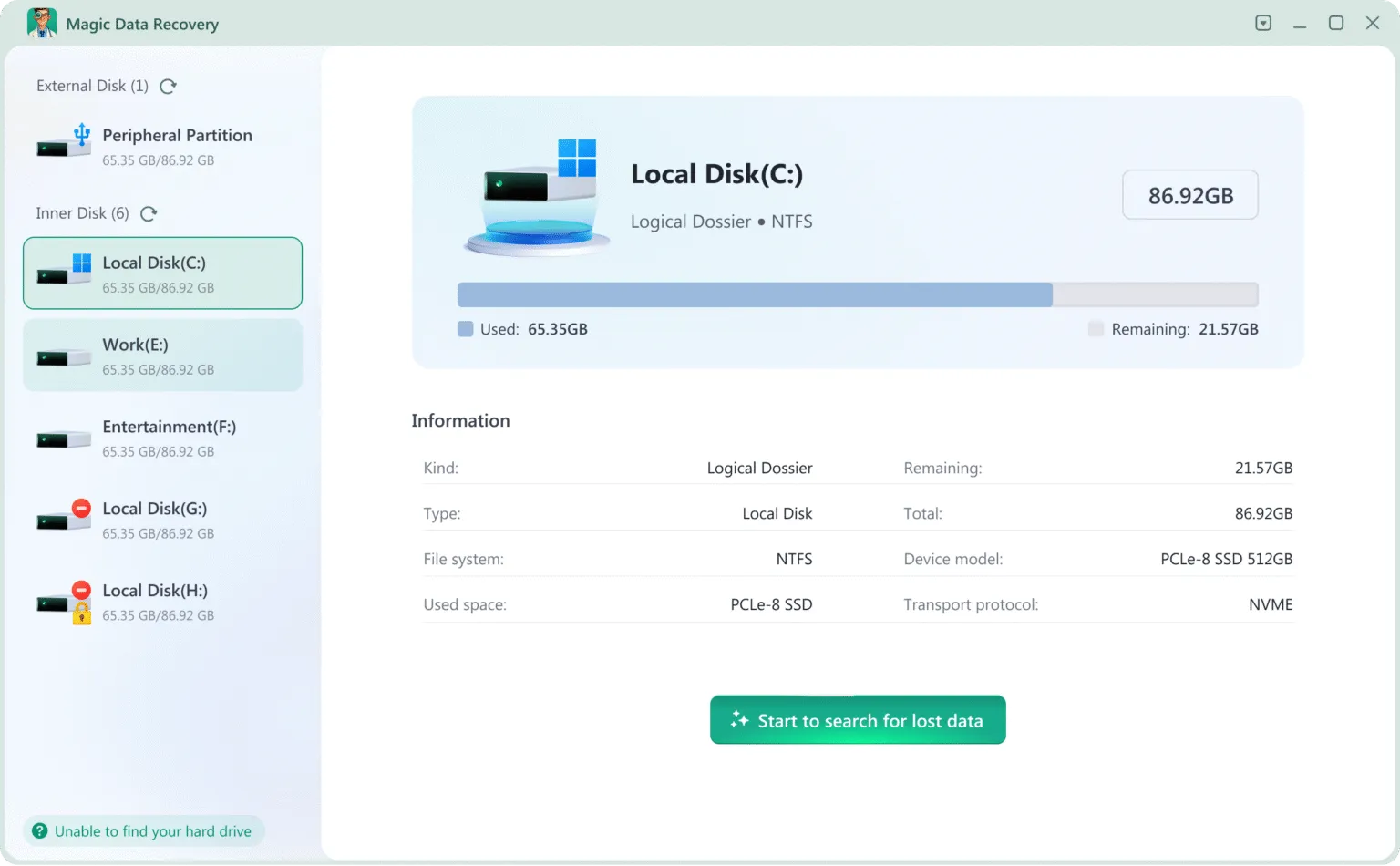
You can consider Magic Data Recovery when you need to recover lost contacts stored in:
- Deleted VCF files
- Lost CSV files
- Missing Outlook PST files
- Exported contact backup folders
- Formatted external drives
- Corrupted storage partitions
- Files lost after file system errors
Core Pain Point It Solves
Cloud recovery tools can only restore contacts that were synced or backed up online. Magic Data Recovery helps with another problem: lost local contact files. If your contacts were stored on a computer and the file disappeared, the priority is to recover that file before new data overwrites it.
Key Advantages
Magic Data Recovery supports common data loss situations, including accidental deletion, formatting, and file system errors. It can scan storage devices, help locate lost files more accurately, and provide a practical option when built-in recycle bins or cloud backups do not contain the missing contact file.
Example Use Cases
You may need Magic Data Recovery if you deleted a VCF backup from your PC, formatted a USB drive that contained a CSV contact list, lost an Outlook PST file after a disk error, or saved phone contacts to an external drive that now shows missing data.
In these cases, the goal is not to replace Google or iCloud recovery. Instead, Magic Data Recovery fills the gap when the contact information exists as a lost computer file.
Supports Windows 7/8/10/11 and Windows Server
Best Practices to Avoid Losing Contacts Again
After you restore lost contacts, take a few minutes to prevent the same problem.
Enable Cloud Sync
Turn on Google Contacts sync for Android or iCloud Contacts for iPhone. If you use Outlook or Exchange, confirm that contact sync remains active.
Export a Backup File
Export contacts as VCF or CSV once in a while. Save the file in more than one place, such as your computer and cloud storage.
Keep One Main Contact Account
Avoid saving contacts across too many accounts. When contacts spread across SIM, device storage, Google, iCloud, and Outlook, recovery becomes harder.
Check Before Deleting Duplicates
Duplicate-cleaning apps can remove useful contacts by mistake. Always export a backup before merging or deleting many contacts.
Protect Computer Backups
If you store contact files on your computer, keep them in a clearly named folder. Also, avoid saving the only copy on a USB drive that you often format or reuse.
Conclusion
The best way to recover lost contacts depends on where the contacts were stored. For most mobile users, free official options should come first. Android users can check Google backup and Google Contacts Trash. iPhone users can use iCloud restore or re-enable contact sync. Outlook users can check Deleted and Recoverable folders.
However, if your contacts were saved as VCF, CSV, PST, or other backup files on a computer, phone-based recovery methods may not solve the problem. In that case, Magic Data Recovery is worth trying because it targets deleted, formatted, and file system error-related data loss on storage devices. If you are looking for a more efficient solution to recover contact files from a computer or external drive, Magic Data Recovery provides a practical next step.
Supports Windows 7/8/10/11 and Windows Server
FAQs
How can I recover lost contacts on Android for free?
You can often recover Android contacts for free through Google Contacts or your phone’s restore option. First, check whether you signed in with the correct Google Account. Then open Settings, go to Google, and choose Restore contacts. You should also check Google Contacts Trash if the contacts were deleted recently.
How do I restore lost contacts on iPhone?
To restore iPhone contacts, check iCloud first. Sign in to iCloud.com, open Data Recovery, and choose Restore Contacts from an earlier archive. You can also turn iCloud Contacts off and on again to fix sync issues. If you used Gmail or Outlook, enable contact sync for that account.
Can I recover contacts without a backup?
It depends on where the contacts were stored. If they were synced to Google, iCloud, Outlook, or Samsung Cloud, you may still recover them through account recovery tools. If there is no cloud backup, check your SIM card, old phone, exported files, email history, and local computer backups.
Why did my contacts disappear after switching phones?
Contacts often disappear after switching phones because the new device uses a different account or contact source. For example, your old phone may have saved contacts under Google, iCloud, Outlook, SIM, or device storage. Add the same account and turn on contact sync to display them again.
Can I recover deleted contacts from Outlook?
Yes, Outlook may let you restore deleted contacts. Open Outlook, go to People, and check the Deleted folder. If the contact is not there, use the Recover deleted option if available. This is useful when contacts were deleted from Outlook or a Microsoft account by mistake.
What should I do if my VCF or CSV contact file was deleted?
Stop saving new files to the same drive first. Then check the Recycle Bin, cloud backup, and file history. If the file is still missing, use a data recovery tool to scan the storage device. Magic Data Recovery can help recover deleted VCF, CSV, PST, and other contact-related files.
Is Magic Data Recovery for phone contacts or computer files?
Magic Data Recovery is mainly for recovering lost files from computers and storage devices. It is useful when contacts were exported as files, such as VCF, CSV, or PST, and then deleted, lost, or affected by formatting or file system errors. For cloud-synced phone contacts, try Google or iCloud first.
What is the safest way to prevent contact loss?
The safest approach is to use both sync and export backups. Enable Google Contacts, iCloud Contacts, or Outlook sync, depending on your device. Then export your contacts as a VCF or CSV file regularly. Keep one copy in cloud storage and another on your computer or external drive.

Jason is a data recovery and technical support specialist with over 15 years of hands-on experience. He has worked extensively with frontline users, troubleshooting difficult data loss cases and providing practical recovery solutions for accidental deletion, formatted drives, damaged file systems, lost partitions, system failures, and other recovery emergencies. His expertise also includes backup and restoration, file repair, and disaster recovery, with a strong emphasis on safe, reliable, and technically accurate guidance.