
Recover Deleted Files from SSD Drive Safely
Losing important files from an SSD can be alarming. Whether files were deleted accidentally, the SSD was formatted, or a file system error occurred, many users immediately assume SSD data loss is permanent. In reality, However, users can often recover deleted files from an SSD drive if they act quickly and use the right tools.
This guide explains how SSD data deletion works, when SSD recovery is possible, and how to recover deleted files from SSD safely and effectively using a professional solution like Magic Data Recovery.
Supports Windows 7/8/10/11 and Windows Server
Table of Contents
How File Deletion Works on an SSD
Before you attempt SSD recovery, you need to understand how SSDs manage deleted data.
SSD vs HDD: Key Differences in Data Recovery
Unlike traditional hard disk drives (HDDs), SSDs store data in flash memory cells and rely on advanced management features such as:
- TRIM command
- Garbage collection
- Wear leveling
When files are deleted from an HDD, they often remain physically intact until overwritten. On an SSD, however, the SSD controller may proactively erase deleted files to optimize performance, which can reduce recovery chances.
What Is TRIM and Why It Matters
TRIM informs the SSD controller that specific data blocks are no longer needed. Once the SSD executes the TRIM command:
- The SSD may immediately clear deleted data blocks
- File recovery becomes significantly more difficult
- Speed and longevity of the SSD improve
However, TRIM does not always run instantly. As a result, a short recovery window often exists after file deletion.
Can You Recover Deleted Files from an SSD Drive?
Yes — users can recover files from an SSD, but success depends on several key factors.
For example, recovery success increases under the following conditions:
- The SSD was removed immediately after data loss
- TRIM was disabled or delayed
- The SSD is used as an external drive
- The data loss occurred due to formatting or file system corruption
- No new data has been written to the SSD
On the other hand, recovery becomes far less reliable when the following situations occur:
- The SSD remained powered on for a long time after deletion
- TRIM and garbage collection completed
- The same SSD was used to install software or store new files
The key rule is simple: stop using the SSD immediately after data loss.
Common SSD Data Loss Scenarios
Magic Data Recovery is designed to handle all major SSD data loss situations, including:
- Accidental file deletion
- SSD formatting
- Partition loss
- File system errors (RAW, corrupted partitions)
- OS crashes and boot failures
- Virus or malware attacks
This broad scenario coverage gives it a significant advantage over basic recovery tools.
Many professionals recommend Magic Data Recovery for SSD recovery
Magic Data Recovery is a professional-grade solution optimized for modern storage devices, including SSDs.
Key Advantages of Magic Data Recovery
- Supports recovering deleted files from SSD and SSD drives
- Handles deletion, formatting, partition loss, and file system errors
- Advanced scanning algorithms for SSD flash memory
- Fast scan and deep scan modes
- File preview before recovery
- Supports documents, photos, videos, audio, archives, and more
- Works with internal SSDs and external SSD drives
In contrast to many consumer-level tools, Magic Data Recovery balances ease of use and technical depth, making it suitable for both professionals and everyday users.
How to Recover Deleted Files from SSD Using Magic Data Recovery
To minimize further data loss, follow these steps carefully:
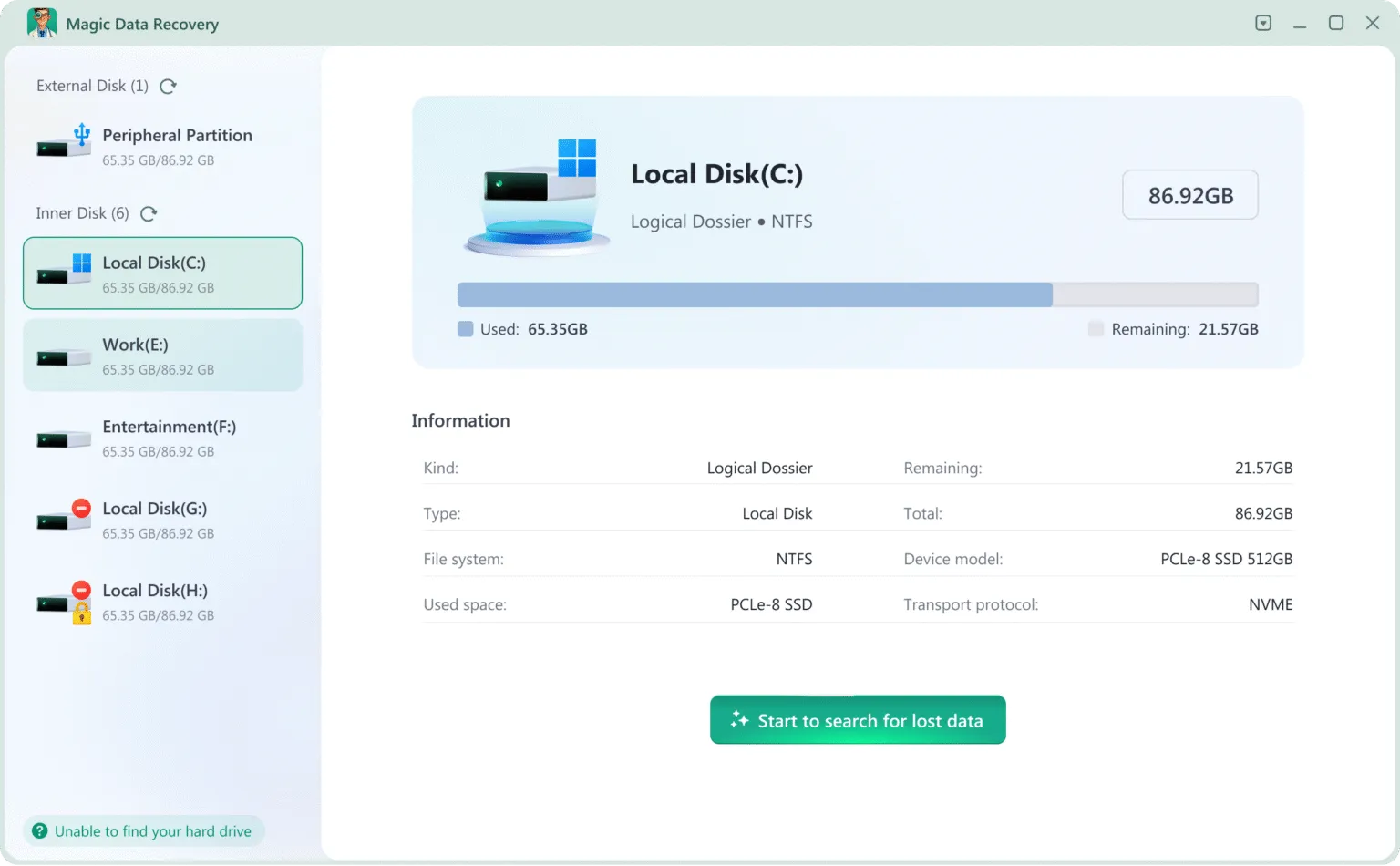
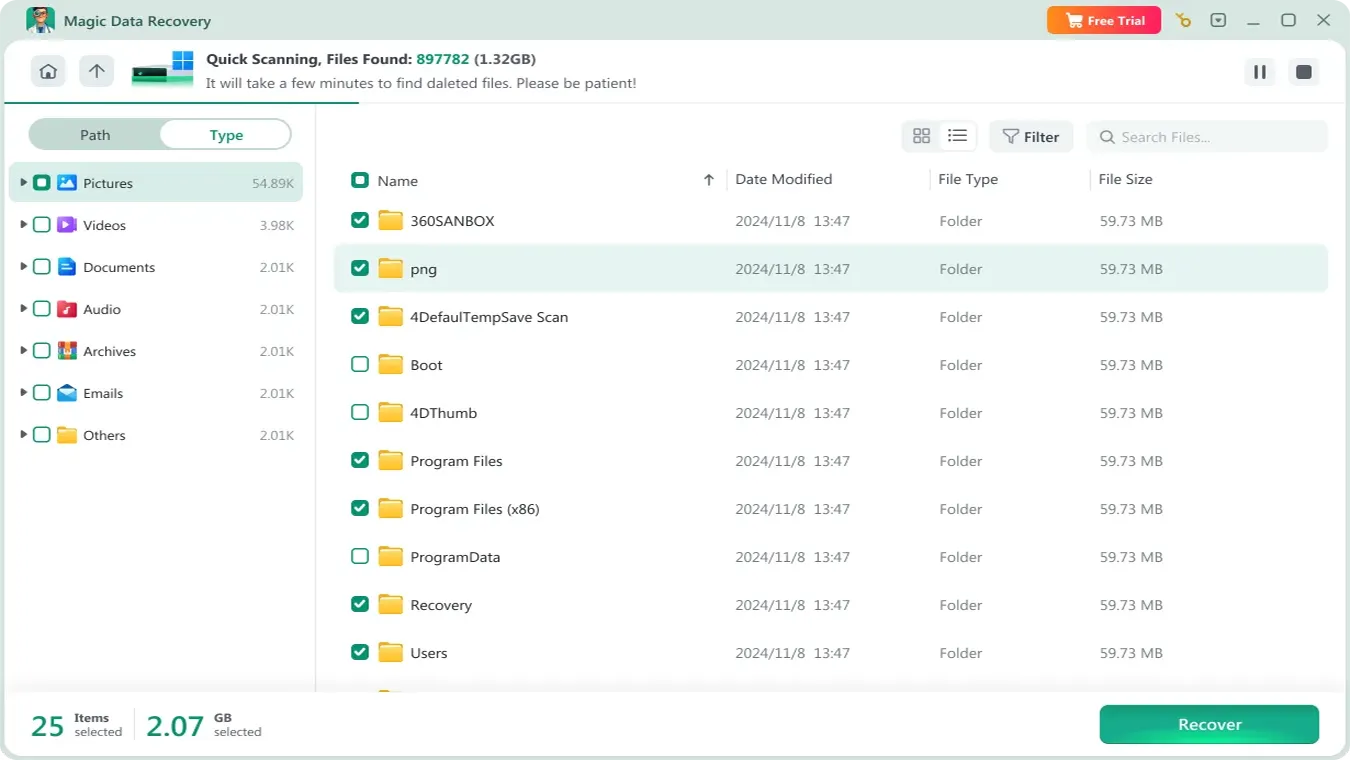
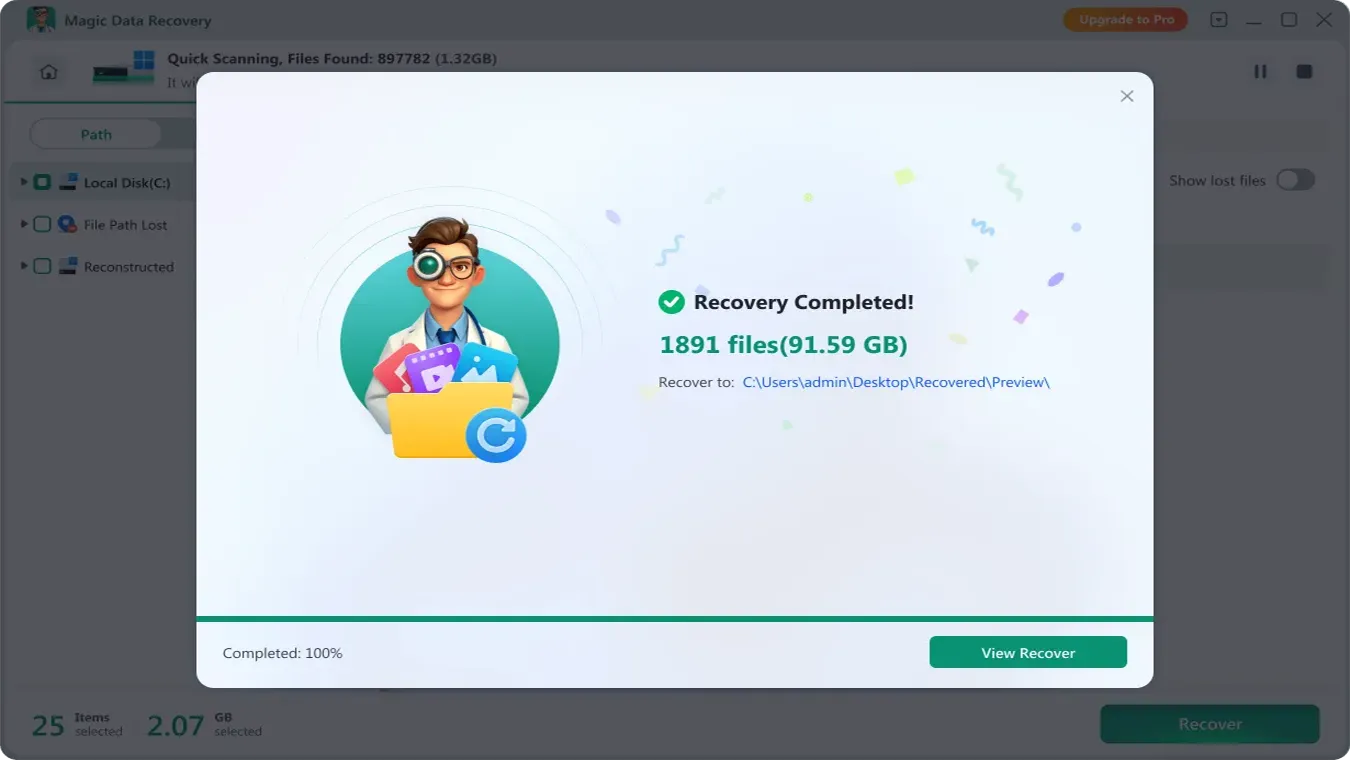
1. Download and Install Magic Data Recovery on your computer.
Supports Windows 7/8/10/11 and Windows Server

Magic Data Recovery vs Other SSD Recovery Tools
Feature | Magic Data Recovery | Recoverit | EaseUS | Disk Drill |
SSD-optimized scanning | Yes | Partial | Yes | Yes |
Handles formatting & FS errors | Yes | Yes | Yes | Yes |
Preview before recovery | Yes | Yes | Yes | Yes |
SSD recovery reliability | High | Medium | Medium | Medium |
User-friendly interface | Yes | Yes | Medium | Yes |
Magic Data Recovery stands out for its reliability in complex SSD recovery scenarios rather than focusing solely on marketing-driven workflows.
Common Mistakes That Reduce SSD Recovery Success
Avoid these errors after SSD data loss:
- Continuing to use the SSD
- Installing recovery software on the same SSD
- Attempting multiple recovery tools sequentially
- Writing recovered files back to the original SSD
Each mistake increases the likelihood of permanent data loss.
Best Practices to Prevent Future SSD Data Loss
Even successful recovery should be followed by prevention measures:
- Enable automatic backups (cloud or external)
- Use disk imaging before OS updates
- Monitor SSD health using SMART tools
- Avoid unnecessary full-disk encryption without backups
Conclusion
Recovering deleted files from an SSD drive does not always succeed. However, users can often restore data when they act quickly and follow the correct SSD recovery process. Understanding how SSDs handle deleted data — especially TRIM — is critical.
With support for multiple data loss scenarios, SSD-optimized scanning, and a user-friendly workflow, Magic Data Recovery provides a dependable solution for users who need to recover deleted files from SSDs safely and effectively.
Supports Windows 7/8/10/11 and Windows Server
FAQs
Can you recover permanently deleted files from a hard drive?
Does SSD store data permanently?
What is the tool to recover data from SSD?
Can police recover data from SSD?
Is it harder to recover deleted files from SSD?
Are permanently deleted files really gone?
Can you recover data off an SSD?
Can an SSD last 10 years?
Can data be erased from SSD?

Jason is a data recovery and technical support specialist with over 15 years of hands-on experience. He has worked extensively with frontline users, troubleshooting difficult data loss cases and providing practical recovery solutions for accidental deletion, formatted drives, damaged file systems, lost partitions, system failures, and other recovery emergencies. His expertise also includes backup and restoration, file repair, and disaster recovery, with a strong emphasis on safe, reliable, and technically accurate guidance.