
How to Fix USB Flash Drive Not Detected Using CMD

When your USB drive stops showing up in Windows Explorer, appears as RAW, or is visible in Disk Management but not accessible, it can feel like your data has vanished. Many users encounter this issue because of partition loss, file system corruption, or a missing drive letter. In such cases, searching for how to fix usb flash drive not detected using cmd is often a practical starting point.
This guide walks you through proven CMD-based solutions to repair detection issues. Before using any command, first confirm whether the USB appears in Disk Management or DiskPart, because CMD fixes only work in some detection scenarios. It also explains how to safely recover lost data using Magic Data Recovery when traditional fixes aren’t enough.
Supports Windows 7/8/10/11 and Windows Server
Table of Contents
Why USB Flash Drive Is Not Detected
Before applying any fix, understanding the root cause helps avoid further damage. In particular, CMD methods are most useful when the USB is still visible in Disk Management or DiskPart, but has no drive letter, shows as RAW, or has file system errors.
Partition Loss
A missing or deleted partition often makes the USB appear as “unallocated” or invisible. This usually happens after improper ejection, virus attacks, or formatting errors.
File System Errors
Corrupted file systems (RAW instead of FAT32/NTFS) prevent Windows from recognizing the drive properly. As a result, the system may fail to assign a drive letter.
Driver or Disk Issues
Outdated drivers, USB controller issues, or logical disk errors can also trigger detection problems. If the USB does not appear in Disk Management or DiskPart at all, CMD may have limited value and you may need to check drivers, ports, or the device on another computer first.
How to Fix USB Flash Drive Not Detected Using CMD
Using Command Prompt (CMD) is one of the most effective built-in methods when the USB is still recognized by Windows but not accessible normally. Below are step-by-step solutions for the most common logical issues.
Method 1: Assign a Drive Letter Using DiskPart
Sometimes, the USB is detected by Windows but not assigned a drive letter, which makes it seem not detected in File Explorer.
Steps:
- Press Win + R, type cmd, and run as administrator
- Type diskpart and press Enter
- Enter list disk
- Identify your USB drive
- Type select disk X (replace X with your disk number)
- Type list volume
- Select volume: select volume X
- Assign letter: assign letter=E
This method often resolves visibility issues instantly.
Method 2: Repair File System Errors with CHKDSK
If your drive shows as RAW or inaccessible, you can try repairing it only if the device is still recognized and you have no critical data to recover first.
Command:
chkdsk E: /f /r
- /f fixes errors
- /r recovers readable data
This approach works well when file system corruption causes the issue, but it is not ideal if the USB is completely undetected or if you need to protect important files before repair.
Method 3: Rebuild Partition Using DiskPart
If the partition is missing but the USB is still listed in DiskPart, you may need to recreate it after confirming that your important files have already been recovered.
Steps:
- Open CMD as admin
- Type diskpart
- Enter:
					list disk
select disk X
clean
create partition primary
format fs=ntfs quick
assign
⚠️ Important: This will erase partition information and can make data recovery more difficult if used too early. If your files matter, do not use clean or format until you have attempted recovery first.
Limitations of CMD Fixes
While learning how to fix usb flash drive not detected using cmd is useful, CMD has clear limitations. It works mainly for logical issues after Windows still recognizes the device in some form, not for every case where a USB is completely undetected.
- It cannot recover deleted files
- It may overwrite existing data
- It requires technical accuracy
- It risks permanent data loss if used incorrectly
Therefore, when data is important, recovery should come before repair.
Recover Data Before Fixing: Why It Matters
Many users make the mistake of formatting or cleaning the disk first. Unfortunately, this can overwrite recoverable data.
A better workflow:
- Recover lost data
- Then fix the USB
This approach ensures maximum data safety.
Recommended Solution: Magic Data Recovery
If your USB drive suffers from partition loss or file system errors, Magic Data Recovery can be a safer option when you want to recover files before using risky repair commands.
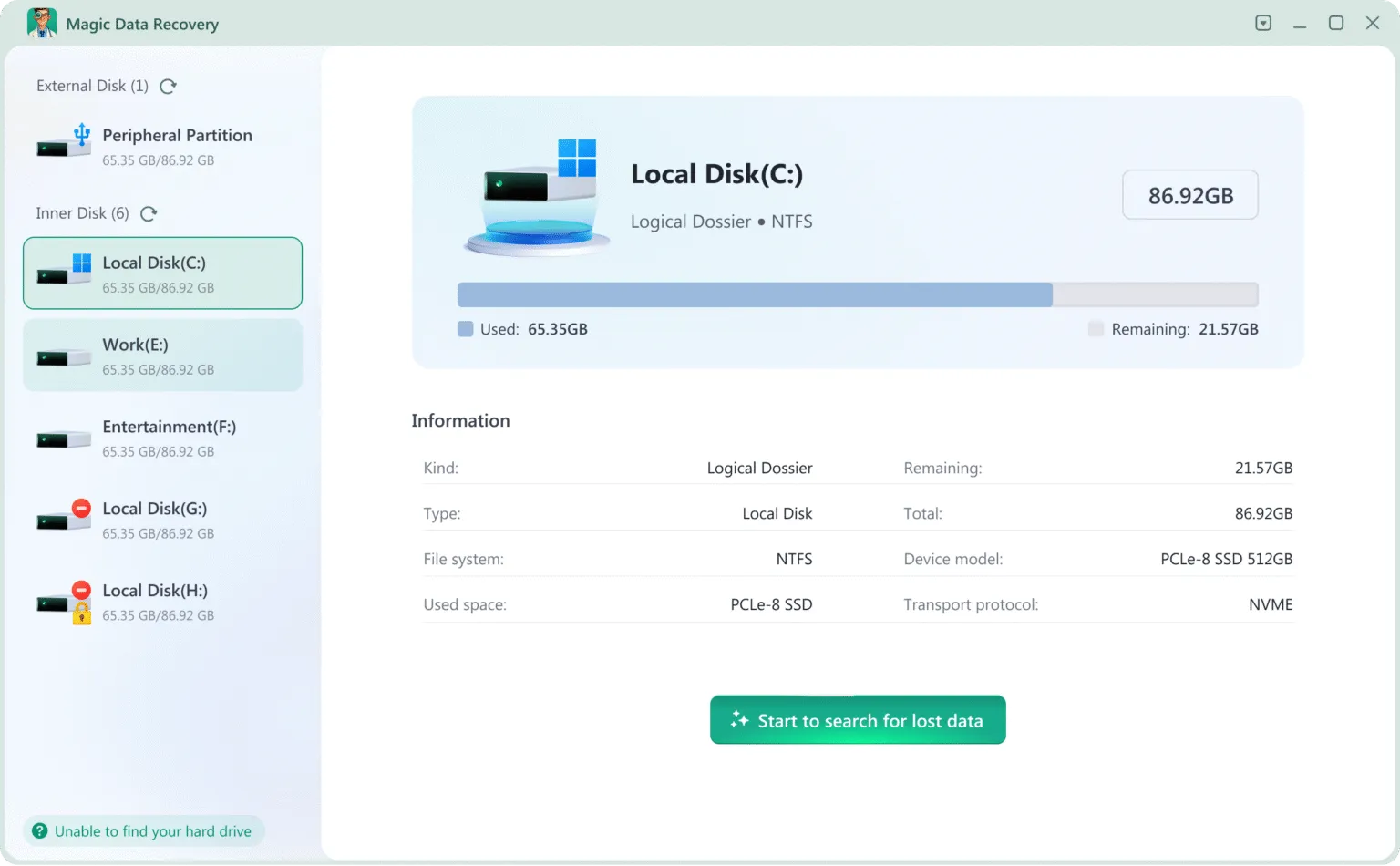
What Problems It Solves
- Lost or deleted partitions
- RAW or corrupted file systems
- USB not detected or inaccessible
- Accidental formatting
Key Advantages (Unique Selling Points)
- Deep Scan Technology: Detects lost files even after severe corruption
- Partition Recovery: Restores lost partitions without manual rebuilding
- User-Friendly Interface: No technical skills required
- Preview Feature: Verify files before recovery
- Wide Compatibility: Supports USB, SD cards, HDDs, SSDs
Real-World Use Cases
- Recovering photos from a USB that shows as RAW
- Restoring documents after accidental formatting
- Accessing files from a drive not visible in Explorer
Why It’s More Reliable Than CMD
Unlike CMD repair commands, Magic Data Recovery focuses on data safety first. It uses read-only scanning, which can reduce the risk of further data loss during the recovery stage.
If you are dealing with important files, this approach is often safer to try before manual command-line fixes such as clean or format.
👉 If you are looking for a more efficient and safer solution, consider trying Magic Data Recovery.
Supports Windows 7/8/10/11 and Windows Server
Best Practices to Prevent USB Detection Issues
To avoid repeating the problem, follow these tips:
- Always eject USB safely
- Avoid interrupting file transfers
- Scan for malware regularly
- Keep backups of important data
- Use reliable USB devices
These simple habits significantly reduce the chances of corruption.
Conclusion
Understanding how to fix usb flash drive not detected using cmd can help resolve common issues such as missing drive letters, RAW file systems, and other logical errors when the USB is still recognized by Windows. However, CMD tools come with risks, especially when data is involved.
For situations involving partition loss or corrupted drives, Magic Data Recovery offers a safer and more reliable solution. It not only restores access but also ensures your valuable files remain intact.
Supports Windows 7/8/10/11 and Windows Server
FAQs
What causes a USB flash drive not to be detected in Windows?
Several factors can cause this issue, including partition loss, file system corruption, driver problems, or physical damage. In many cases, improper removal or virus attacks lead to logical errors, making the drive invisible in File Explorer or Disk Management.
Can CMD fix a USB drive that is not detected?
Is it safe to use DiskPart clean command?
The clean command completely erases all partitions and data on the selected disk. While it helps rebuild corrupted drives, it is not safe if you have important files. Always recover your data before using this command.
Why does my USB show as RAW file system?
A RAW file system indicates corruption. This usually happens due to improper ejection, sudden power loss, or malware. In this state, Windows cannot read the drive, and you need to repair the file system or recover data first.
Can I recover data from an undetected USB drive?
What is the best method to fix USB not detected issue?
Does formatting fix USB detection problems?
Formatting can resolve file system errors and make the USB usable again. However, it deletes all data. Therefore, it should only be used after recovering important files or when data loss is not a concern.
How do I avoid losing data when fixing USB errors?
Always recover your data first using reliable software. Avoid using commands like clean or format before backup. Additionally, stop using the USB immediately after detecting issues to prevent overwriting recoverable data.

Jason is a data recovery and technical support specialist with over 15 years of hands-on experience. He has worked extensively with frontline users, troubleshooting difficult data loss cases and providing practical recovery solutions for accidental deletion, formatted drives, damaged file systems, lost partitions, system failures, and other recovery emergencies. His expertise also includes backup and restoration, file repair, and disaster recovery, with a strong emphasis on safe, reliable, and technically accurate guidance.