
Pen Drive Data Recovery After Format: Step-by-Step Guide

Realizing that you have accidentally wiped your USB drive can be a heart-sinking moment. Many users believe a quick click means permanent loss, but you can actually perform pen drive data recovery after format with the right USB recovery approach. Whether the loss happened due to a misclick, a forced system prompt, or a file system error, the fear of losing years of photos or critical work documents is universal. Fortunately, in the modern digital landscape, a “format” command does not mean your files are gone forever.
This guide provides a deep dive into the mechanics of data restoration. We will explore why data remains retrievable, the common pitfalls to avoid, and how professional solutions like Magic Data Recovery can help you recover your lost fileswith minimal effort. Furthermore, we will provide expert tips to ensure your future data remains secure and accessible.
Supports Windows 7/8/10/11 and Windows Server
Table of Contents
Is It Possible to Recover Data from a Formatted Pen Drive?
When you format a USB flash drive, the operating system usually performs a “Quick Format.” This process recreates the file system directory but does not physically erase the data stored on the NAND flash memory chips. Instead, it marks the space as “available” for new information. Consequently, the actual bits and bytes of your wedding photos or business spreadsheets stay on the drive until new data overwrites them.
As long as you do not save new files onto the device, the original data remains intact but invisible. To achieve successful pen drive data recovery after format, you must act quickly. The most critical rule is to stop using the drive immediately. Any further activity, such as copying a small document or even browsing the drive, could overwrite the “ghost” data and make it permanently unrecoverable.
Moreover, you should avoid “Low-level Formatting” or “Full Formatting.” Unlike a quick format, these intensive processes write zeros to every sector of the drive. If you have already performed a full format, software-based recovery becomes nearly impossible. However, for 99% of accidental formats, recovery is a highly likely outcome.
Common Scenarios Requiring USB Data Restoration
While a simple accidental click is common, several technical scenarios often force users into a situation where they need pen drive data recovery after format. Understanding these can help you choose the right recovery strategy.
- File System Errors: Your computer might prompt you with “You need to format the disk in drive X: before you can use it.” This often happens when the file system becomes RAW or corrupted due to improper ejection.
- Accidental Deletion: Using “Shift + Delete” bypasses the Recycle Bin. In this case, the operating system treats the files similarly to a formatted drive.
- System Reinstallation: Using a pen drive as a bootable media creator often formats the drive automatically. This process wipes existing partitions to make room for OS installation files.
- Interrupted Transfers: Pulling a USB drive out during a write process can lead to logical corruption. Consequently, you might be forced to reformat the drive just to make it readable again.
Regardless of the cause, Magic Data Recovery handles these complex logical layers to find and reconstruct your lost folders efficiently. It serves as a safety net for those moments when technology fails us.
Why Magic Data Recovery is the Preferred Solution
Many users start their journey by searching for free command-line fixes. However, these often fall short when dealing with formatted partitions because they lack the ability to reconstruct file headers. This is where a dedicated tool becomes essential. Magic Data Recovery stands out because it bridges the gap between professional-grade forensic algorithms and a user-friendly interface.
The Core Strengths of the Software
- Deep Scan Technology: Unlike basic undelete tools, this software performs a sector-by-sector analysis. It can identify over 300 file types by their unique signatures, even if the file system is completely destroyed.
- Support for Multiple File Systems: It works seamlessly with FAT32, exFAT, and NTFS. These are the primary formats for USB drives and external hard disks.
- Versatile Recovery Scenarios: It is engineered specifically for pen drive data recovery after format, system crashes, and even partition loss.
- Safe Recovery Environment: The tool operates in a read-only mode. This ensures that the software never writes to the source drive during scanning, which prevents accidental overwriting.
If you are looking for an efficient and reliable way to handle pen drive data recovery after format, this utility provides the specialized support that generic Windows tools lack. It simplifies a highly technical process into a few manageable clicks.
Step-by-Step: How to Perform Pen Drive Data Recovery After Format
Follow these steps to maximize your chances of a successful recovery. Please ensure you have a separate drive, such as your PC’s internal hard drive, ready to save the recovered files.
1. Install Magic Data Recovery
Download and install the software on a healthy computer. Do not install it on the affected pen drive device.
Supports Windows 7/8/10/11 and Windows Server
2. Connect the Pen Drive
Plug in the pen drive. The software will detect it even if the file system is unreadable.

3. Search for Lost Data from Pen Drive
Choose the pen drive and click “Search for lost data” for pen drive device. This ensures deeper scanning.
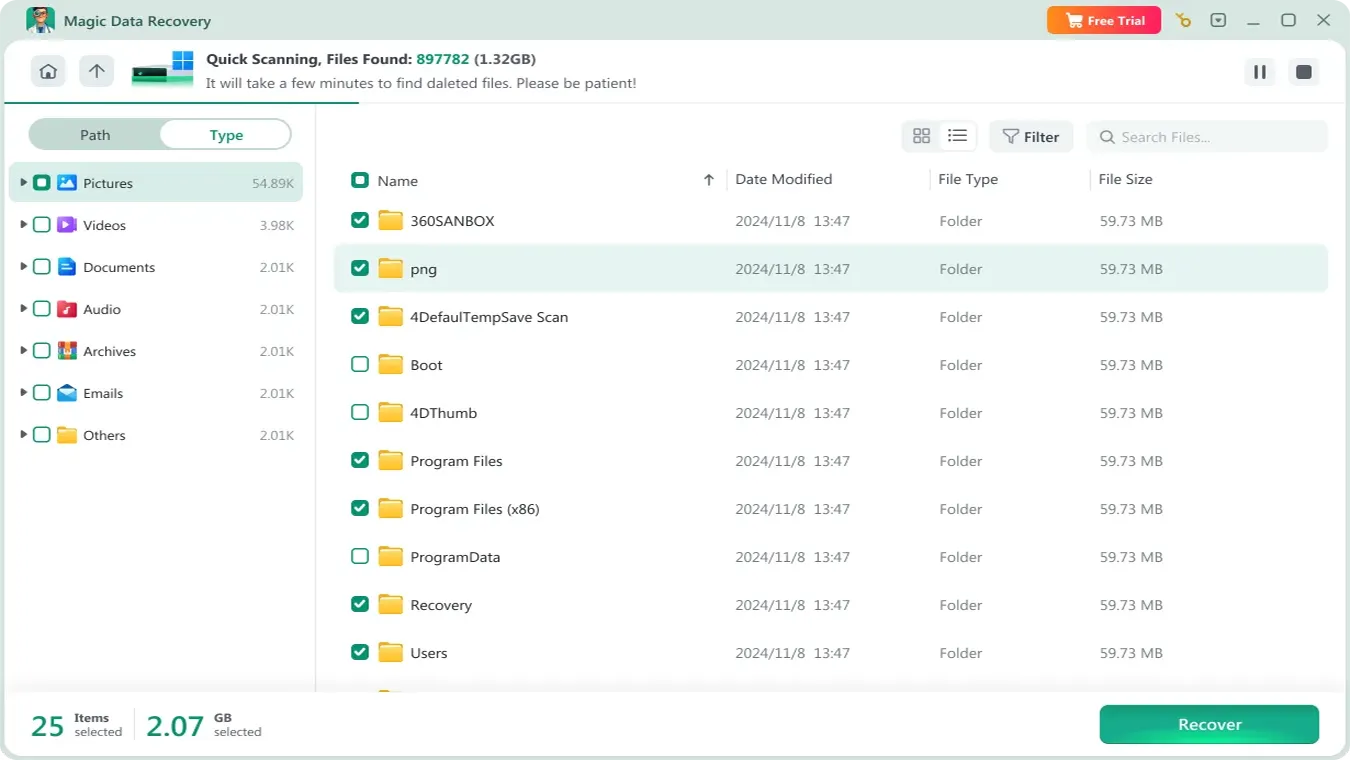
4. Scan and Preview Files
Magic Data Recovery performs a comprehensive scan and organizes recoverable files by type and structure. Previewing files helps confirm recoverability.

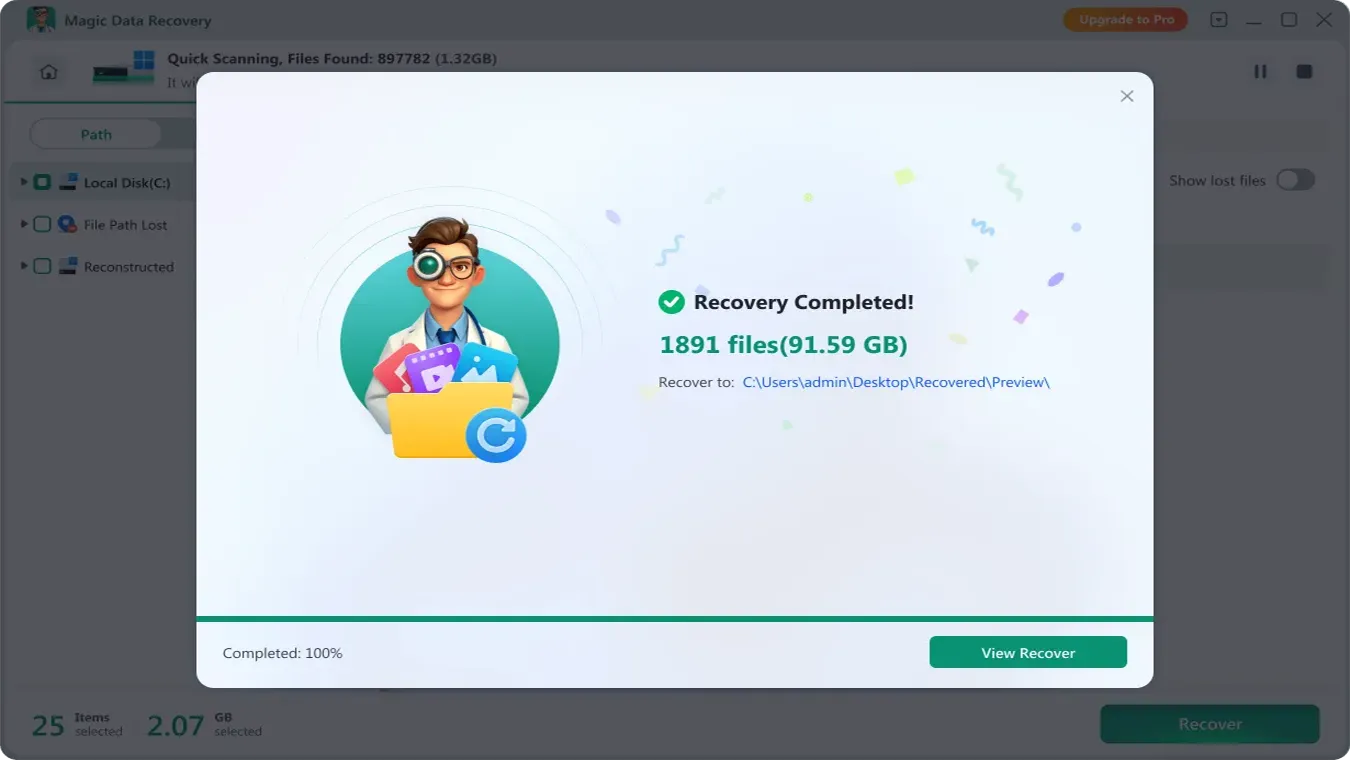
5. Recover and Save Files Safely
Select the required files and save them to a different storage location. This prevents data overwriting and improves recovery integrity.
Pro Tips to Prevent Future Data Loss
While pen drive data recovery after format is highly successful in most cases, prevention remains the best strategy. Implementing a few simple habits can save you from future stress and financial costs.
- Always Use “Safely Remove Hardware”: Ejecting a drive while the OS is still communicating with it is the leading cause of file system corruption. This small step protects the logical integrity of your data.
- Enable Cloud Backups: For vital documents, keep a synced copy on services like Google Drive or OneDrive. Physical drives can fail, but the cloud offers a reliable secondary layer.
- Check Drive Health: Periodically use S.M.A.R.T. monitoring tools to see if your USB drive is reaching its end-of-life. Flash memory has a limited number of write cycles.
- Label Your Drives: If you use multiple pen drives, label them clearly. This prevents you from accidentally formatting a drive containing important data when you intended to format a blank one.
Conclusion
Accidentally formatting a drive is a common mistake, but it doesn’t have to be a permanent disaster. By understanding how data storage works and acting quickly, you can reverse the process. Successful pen drive data recovery after format depends on two things: stopping the use of the drive and using a high-quality recovery tool.
We recommend Magic Data Recovery because it combines powerful deep-scanning algorithms with a simple, intuitive workflow. It handles everything from simple deletions to complex file system errors with professional precision.
If you are ready to get your files back from pen drive today, try Magic Data Recovery and see what you can find before the data is gone for good.
Supports Windows 7/8/10/11 and Windows Server
FAQs
How to recover data from pen drive showing no media?
Can a corrupted pen drive be fixed?
How much does it cost to recover data from a flash drive?
How to recover data from an unreadable pendrive?
Is it possible to recover data from a formatted USB drive?
How to recover a USB drive for free?
Can you recover files from a dead drive?
How long does data stay on a flash drive?
Where do deleted files from a USB stick go?

Jason is a data recovery and technical support specialist with over 15 years of hands-on experience. He has worked extensively with frontline users, troubleshooting difficult data loss cases and providing practical recovery solutions for accidental deletion, formatted drives, damaged file systems, lost partitions, system failures, and other recovery emergencies. His expertise also includes backup and restoration, file repair, and disaster recovery, with a strong emphasis on safe, reliable, and technically accurate guidance.