
Acronis Data Recovery Guide

Data loss rarely happens at a convenient time. You may delete a folder by mistake, format the wrong drive, reinstall Windows, lose a partition, or discover that your backup image no longer opens. In many cases, Acronis data recovery can help if you created a valid backup before the problem happened. However, when no backup exists, or the backup image fails, you need a different recovery path.
This guide explains how Acronis data recovery works, what the Acronis Recovery Expert Wizard can and cannot do, and when a dedicated file recovery tool such as Magic Data Recovery becomes the safer choice. You will also learn practical recovery steps, common mistakes to avoid, and the best solution for different data loss scenarios.
Supports Windows 7/8/10/11 and Windows Server
Table of Contents
What Is Acronis Data Recovery?
Acronis data recovery usually means restoring data from a backup image created by Acronis software. In other words, Acronis works best as a preventive recovery solution. You protect your system first, then restore files, folders, partitions, or an entire computer when something goes wrong.
This approach works well when:
- You created a full, incremental, or differential backup.
- The backup image remains readable.
- The target drive still has enough space.
- You know which recovery point contains the files you need.
For example, if your Windows system crashes after an update, Acronis recovery can restore the computer to a previous state from a disk image. If you accidentally changed a document, you may restore an earlier version from backup. Therefore, Acronis suits users who already follow a backup routine.
However, Acronis data recovery does not replace file recovery software in every situation. If the file never existed in a backup, Acronis cannot restore it from that backup. If the backup archive becomes corrupted, incomplete, or inaccessible, you need another way to scan the original disk.
How Acronis Recovery Works from Backup Images
The core idea behind Acronis recovery is simple: restore from a previously created copy. A backup image may include the operating system, applications, settings, boot information, and user files. When a problem occurs, you choose a backup point and restore selected content.
Common Acronis Recovery Options
Most users rely on Acronis recovery for three tasks:
- File and folder restore
This helps when you only need specific documents, photos, videos, or folders.
- Disk or partition restore
This works when a volume fails, a partition gets damaged, or the system disk needs replacement.
- Full system restore
This restores Windows, programs, settings, and files to a previous state.
This workflow makes Acronis data recovery useful for planned protection. It helps reduce downtime after hardware failure, system corruption, malware damage, or accidental changes. Even so, its success depends on backup quality.
The Main Limitation: No Backup, No Restore
Acronis cannot recover files from nothing. If you deleted files before your first backup, formatted a drive that was never backed up, or lost new files after the last backup point, Acronis data recovery may not contain the missing data.
At this point, the problem changes. You no longer need backup restore. You need raw file recovery from the storage device.
What Is the Acronis Recovery Expert Wizard?
The Acronis Recovery Expert Wizard is associated with Acronis Disk Director and focuses on lost or deleted volume recovery. It helps users repair or recover partitions in certain disk management scenarios.
For example, the Acronis Recovery Expert Wizard may help if:
- A partition was accidentally deleted.
- A volume disappears after a partition table issue.
- A boot volume becomes damaged.
- A disk management operation fails.
- A basic MBR disk loses a visible partition.
This tool targets partition-level recovery, not every file-level loss. That distinction matters. If you deleted individual files, emptied the Recycle Bin, formatted a USB drive, or lost photos from an SD card, the Acronis Recovery Expert Wizard may not be the most direct option.
When the Acronis Recovery Expert Wizard Makes Sense
Use the Acronis Recovery Expert Wizard when the partition itself disappears, but the data area may still exist. In that case, recovering the partition structure can make the volume accessible again.
However, avoid writing new data to the drive before recovery. New writes may overwrite file records or partition metadata. Also, if the drive shows physical failure symptoms such as clicking noises, repeated disconnects, or severe read errors, stop DIY recovery and consider professional service.
Acronis Data Recovery vs Magic Data Recovery
Acronis and Magic Data Recovery solve different problems. Acronis protects you before disaster. Magic Data Recovery helps after data loss, especially when no usable backup exists.
Scenario | Better First Choice | Why |
Restore a full system from a valid backup image | Acronis data recovery | It can restore a known backup point. |
Recover files deleted after the last backup | Magic Data Recovery | It scans the disk for recoverable files. |
Recover data from a formatted USB drive | Magic Data Recovery | It targets formatted drive recovery. |
Recover a deleted MBR partition | Acronis Recovery Expert Wizard or Magic Data Recovery | Acronis may restore the volume; Magic can recover files if partition repair fails. |
Backup image is corrupted or missing | Magic Data Recovery | It does not depend on an existing backup image. |
Reinstall Windows and lose desktop files | Magic Data Recovery | It can scan the drive for remnants of lost files. |
This comparison shows a practical rule: use Acronis recovery when you have a healthy backup. Use Magic Data Recovery when the backup path fails or never existed.
When Acronis Data Recovery May Not Be Enough
Acronis performs well in a backup-first strategy. Still, real recovery cases often involve messy conditions. Users may discover the problem only after damage has already happened.
1. You Have No Backup Image
Many users install backup software after losing data. Unfortunately, Acronis data recovery needs an earlier backup to restore missing files. Without that backup, a dedicated recovery scan offers a better chance.
2. The Backup Image Is Damaged
A backup image can fail because of interrupted transfers, storage errors, bad sectors, or incomplete backup jobs. When that happens, Acronis recovery may not finish the restore. Magic Data Recovery can scan the original disk, external drive, USB device, or memory card instead.
3. Files Were Deleted After the Last Backup
A backup only reflects the data captured at that time. If you created important files yesterday but your last backup ran last week, Acronis data recovery may restore the older state but not the newest files.
4. The Drive Was Formatted
Formatting changes the file system structure. If no backup exists, Acronis cannot restore the missing files. Magic Data Recovery can scan formatted partitions and search for recoverable file signatures and metadata.
5. Windows Was Reinstalled
A Windows reinstall may overwrite parts of the old system drive. However, some user files may remain recoverable if the data area has not been overwritten. In this case, stop using the drive immediately and scan it from another disk.
Why Recommend Magic Data Recovery?
Magic Data Recovery fills the gap that Acronis data recovery cannot cover. It focuses on lost file recovery when users do not have a usable backup image. That makes it a disaster rescue option rather than a backup restore tool.
Core Pain Point It Solves
The biggest problem after data loss is uncertainty. You do not know whether the files still exist, whether the file system is damaged, or whether the backup can help. Magic Data Recovery gives you a direct way to scan the affected device and check recoverable files before saving them.
Key Advantages
Magic Data Recovery is useful because it supports common real-world recovery situations:
- Deleted file recovery after accidental removal.
- Formatted drive recovery from HDDs, SSDs, USB drives, and SD cards.
- File recovery after file system errors.
- Data recovery after Windows reinstallation.
- Recovery after virus damage or abnormal system behavior.
- Lost partition data recovery when the partition structure fails.
The tool also targets ordinary users. You do not need to rebuild partition tables manually or understand every file system detail. Instead, you choose the affected device, scan it, preview available files, and save recoverable data to a safe location.
Example Use Cases
Consider three typical cases.
First, you formatted the wrong external drive. Acronis data recovery only helps if that drive had a backup image. Magic Data Recovery can scan the formatted drive and look for documents, photos, videos, and other file types.
Second, your backup image fails during restore. In this case, Acronis recovery may stop at the worst moment. Magic Data Recovery lets you scan the source disk directly, which gives you another recovery path.
Third, a virus damages files or makes a partition inaccessible. The Acronis Recovery Expert Wizard may help if the partition structure can be repaired. If not, Magic Data Recovery can still attempt file-level recovery.
Supports Windows 7/8/10/11 and Windows Server
How to Recover Files When Acronis Cannot Help
Follow these steps when Acronis data recovery does not cover your situation.
Step 1: Stop Using the Affected Drive
Do not install software, download files, or copy new data to the problem drive. New data may overwrite deleted files. If the lost files were on your system drive, use another computer or bootable environment whenever possible.
Step 2: Check Whether a Valid Acronis Backup Exists
Before scanning, confirm whether Acronis recovery can restore what you need. Check the backup date, backup location, and archive health. If the backup includes the missing files, restore them to a different drive.
Step 3: Try the Acronis Recovery Expert Wizard for Lost Partitions
If the entire partition disappeared, run the Acronis Recovery Expert Wizard only when the disk condition looks stable. This may restore the lost volume structure. If the wizard cannot find or repair the partition, switch to file-level recovery.
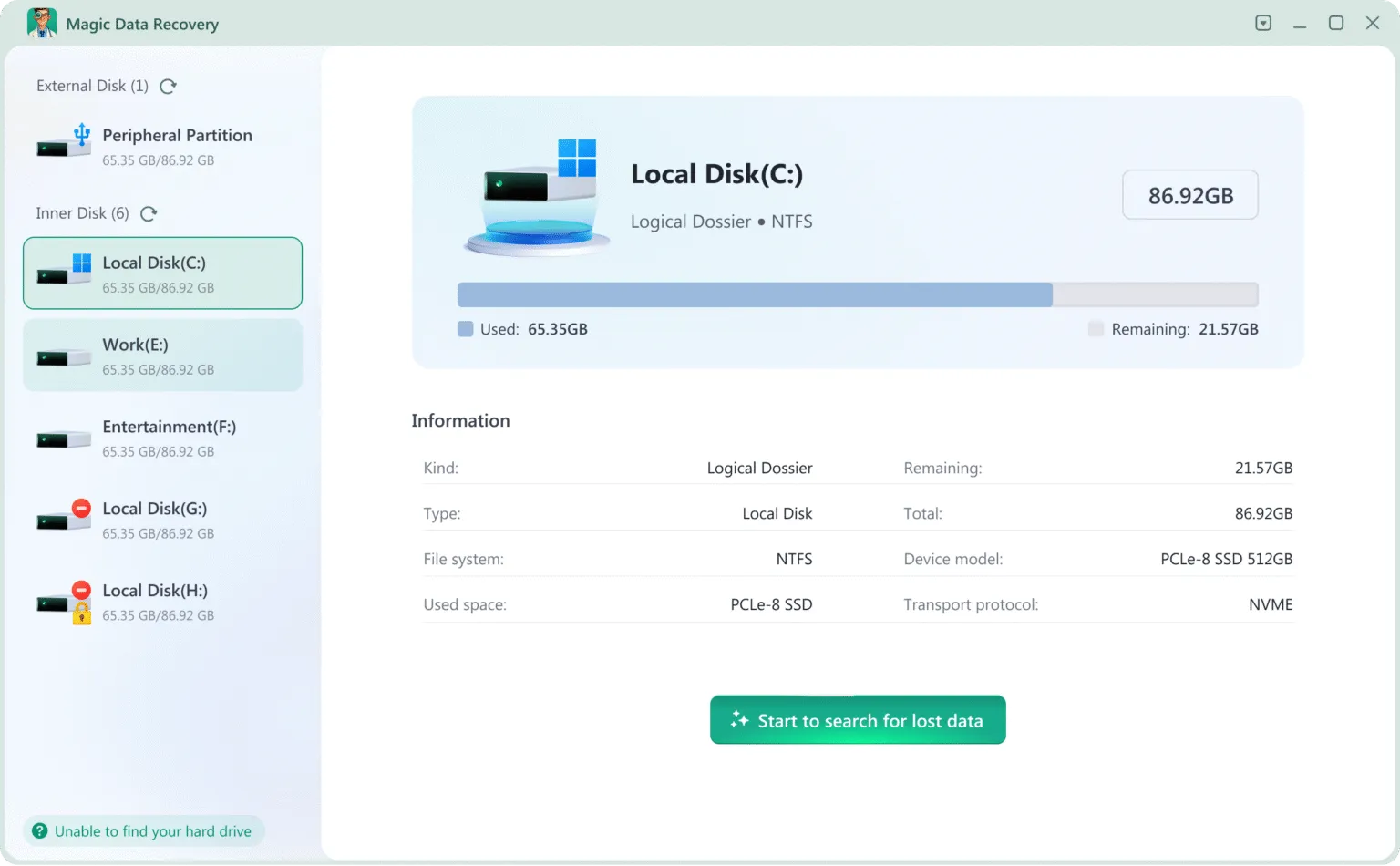
Step 4: Scan the Device with Magic Data Recovery
Install Magic Data Recovery on a different drive, not the affected one. Then select the lost-data location and start a scan. Use a quick scan first for recently deleted files. Next, run a deeper scan if the drive was formatted, corrupted, or reinstalled.
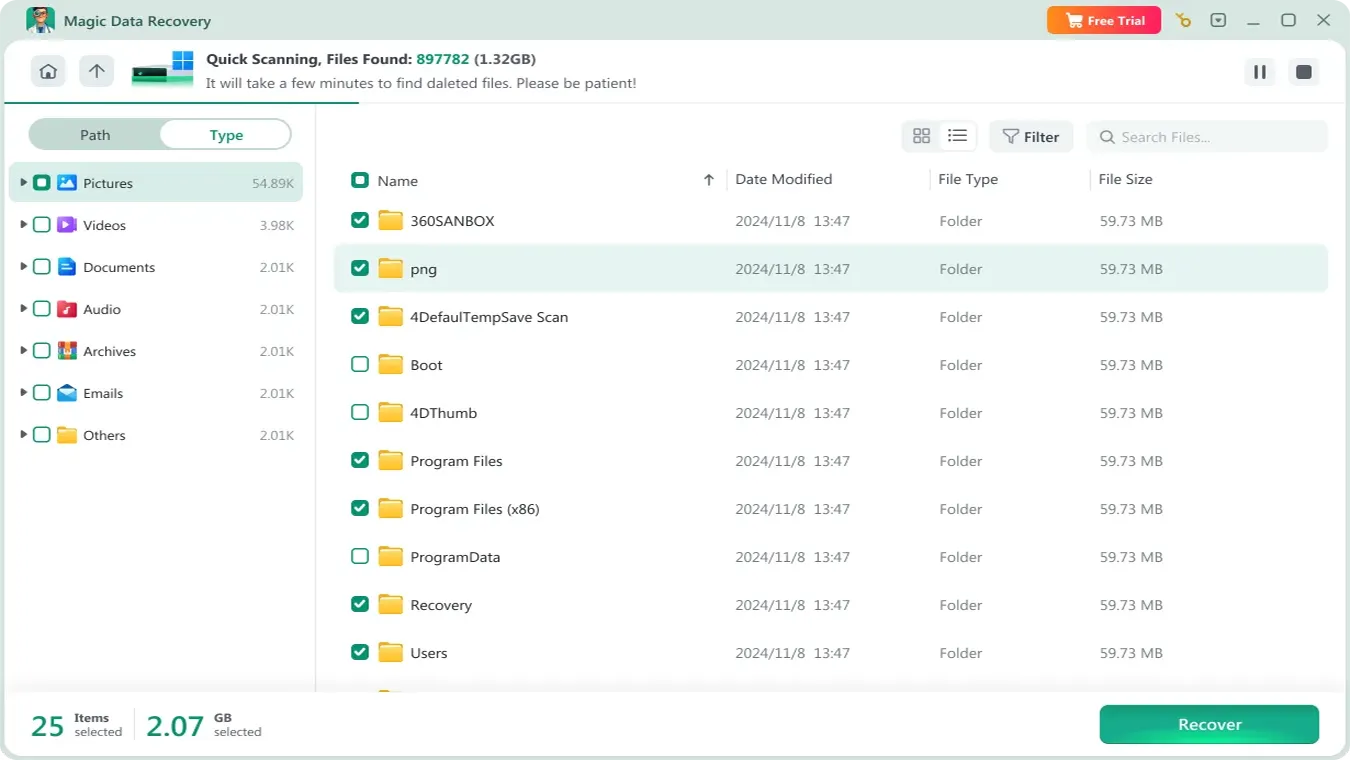
Step 5: Preview and Recover to Another Location
Always save recovered files to a separate storage device. Never recover files back to the same drive you are scanning. This simple rule protects remaining recoverable data from accidental overwrite.
Best Practices for Safer Data Recovery
A strong recovery plan uses both prevention and rescue. Acronis data recovery works well for prevention because regular backups reduce the risk of permanent loss. Magic Data Recovery works well for rescue because it helps when no usable backup exists.
Use these tips:
- Keep at least one local backup and one external or cloud copy.
- Test your backup restore process before an emergency.
- Avoid storing backups on the same drive as the original files.
- Do not format, initialize, or repair a drive before scanning lost files.
- Recover files to a different disk.
- Replace drives that show repeated errors.
In short, Acronis recovery and Magic Data Recovery are not direct enemies. They solve different stages of the same data protection problem.
Conclusion
Choose Acronis data recovery if you already have a valid backup image and need to restore files, folders, partitions, or an entire system. It is a strong preventive solution for users who plan ahead.
Choose the Acronis Recovery Expert Wizard if you need to recover a lost or deleted partition and the disk structure still has a chance of repair.
Choose Magic Data Recovery when you have no backup, your backup image is damaged, files were deleted after the last backup, the drive was formatted, or Windows was reinstalled. It gives you a practical recovery path when Acronis recovery cannot access the missing files.
If you are looking for a more efficient solution for no-backup data loss, try Magic Data Recovery before writing new data to the affected drive.
Supports Windows 7/8/10/11 and Windows Server
FAQs
Is Acronis data recovery the same as file recovery software?
No. Acronis data recovery mainly restores data from backups that already exist. File recovery software scans a drive for lost files after deletion, formatting, or corruption. If you have a valid Acronis backup, use it first. If no backup exists, use Magic Data Recovery to scan the original device.
Can Acronis recovery recover files without a backup?
In most cases, Acronis recovery needs a backup image or recovery point. If the deleted files were never included in a backup, Acronis cannot restore them from that backup. For no-backup data loss, Magic Data Recovery is more suitable because it scans storage devices directly for recoverable files.
What does the Acronis Recovery Expert Wizard do?
The Acronis Recovery Expert Wizard helps recover lost or deleted partitions in supported disk scenarios. It is useful when a volume disappears because of partition table damage, human error, software failure, or similar issues. It is not the best first choice for simple deleted file recovery.
Should I use Magic Data Recovery after Acronis data recovery fails?
Yes, especially when the Acronis backup image is missing, corrupted, outdated, or incomplete. Magic Data Recovery can scan the original HDD, SSD, USB drive, SD card, or external disk. It gives you another path when Acronis data recovery cannot restore the files you need.
Can Magic Data Recovery recover data from a formatted drive?
Magic Data Recovery is designed for formatted drive recovery, along with deleted files, file system errors, lost partitions, and other common data loss cases. For the best result, stop using the formatted drive immediately. Then scan it and save recovered files to another storage device.
Which is better: Acronis recovery or Magic Data Recovery?
Neither tool is better in every case. Acronis recovery is better when you have a valid backup and want to restore a previous state. Magic Data Recovery is better when no usable backup exists. A smart recovery strategy uses Acronis for prevention and Magic Data Recovery for emergency rescue.
Can I recover files after reinstalling Windows?
Possibly. A Windows reinstall may overwrite some data, but files can remain recoverable if their storage space has not been reused. Do not install recovery software on the same drive. Use Magic Data Recovery from another disk and scan the original system drive as soon as possible.
How can I improve my chance of successful data recovery?
Stop using the affected drive immediately. Do not format, repair, defragment, or copy new files to it. First, check whether Acronis data recovery has a valid backup. If not, scan the device with Magic Data Recovery and save recovered files to a different drive.

Jason is a data recovery and technical support specialist with over 15 years of hands-on experience. He has worked extensively with frontline users, troubleshooting difficult data loss cases and providing practical recovery solutions for accidental deletion, formatted drives, damaged file systems, lost partitions, system failures, and other recovery emergencies. His expertise also includes backup and restoration, file repair, and disaster recovery, with a strong emphasis on safe, reliable, and technically accurate guidance.