
Seagate Hard Drive Recovery Guide: Recover Lost Data Safely
Data loss on a Seagate hard drive or Seagate external hard drive can be stressful and disruptive. Files may disappear due to accidental deletion, formatting errors, virus attacks, or file system corruption. Many users attempt recovery without proper guidance, which can worsen the problem.
This guide explains practical, safe methods for hard drive recovery, including step-by-step instructions, best practices, and a detailed introduction to Magic Data Recovery, a professional tool that restores lost files in various scenarios. By following these methods, you can recover data efficiently and reduce the risk of permanent loss.
Supports Windows 7/8/10/11 and Windows Server
Table of Contents
Common Causes of Seagate Data Loss
Understanding why data loss happens is essential to choose the right recovery approach.
Accidental Deletion and Formatting
Accidental deletion or formatting is a leading cause of data loss. Formatting does not immediately erase files; it marks space as available. However, continued use of the drive risks overwriting those files. Recovery software can often restore these files if used promptly.
File System Corruption
File system corruption occurs when a drive’s structure is damaged. Causes include sudden power loss, unsafe drive ejection, or software errors. Symptoms include inaccessible partitions, missing directories, or “RAW drive” warnings. Recovery requires careful scanning to rebuild the file index.
Virus and Malware Damage
Malware can hide, corrupt, or encrypt data. Some viruses modify file extensions or directory structures, making files appear lost. Antivirus alone may not restore these files, so dedicated recovery software is often necessary.
Physical Damage
Physical damage like head crashes, platter scratches, or electrical failures presents more complex challenges. Clicking noises, unusual sounds, or failure to spin indicate hardware-level issues. These cases usually need professional lab recovery.
Drive Not Recognized
Sometimes, Seagate drives appear in Device Manager but not in File Explorer. This can result from driver issues, loose cables, or logical corruption. Correct diagnosis is essential before attempting recovery to avoid further data loss.
Preparing for Seagate Hard Drive Recovery
Proper preparation can prevent permanent data loss:
- Stop using the drive immediately to avoid overwriting recoverable files.
- Check connections – use a different USB port or cable for external drives.
- Avoid formatting or running CHKDSK until data recovery attempts are complete.
- Assess drive health – note any clicking noises, slow response, or overheating, which may indicate physical damage.
Step-by-Step Recovery Process
Recovering data from a Seagate drive requires careful steps to maximize success and avoid permanent data loss. Following a structured approach ensures that each action supports recovery rather than inadvertently damaging files. Below are the recommended steps to safely restore your data.
Connect and Verify
Ensure the drive is recognized in Disk Management. Avoid installing recovery software on the same drive to prevent overwriting lost files.
Scan with Recovery Software
Choose a recovery tool with deep scan capability. Deep scans detect deleted, formatted, or corrupted files by analyzing raw file signatures. Preview recoverable files before restoring them.
Restore Files Safely
Recover files to a different storage device. This preserves the original drive and prevents overwriting. Organize recovered files immediately to reduce confusion.
Why Magic Data Recovery is Recommended
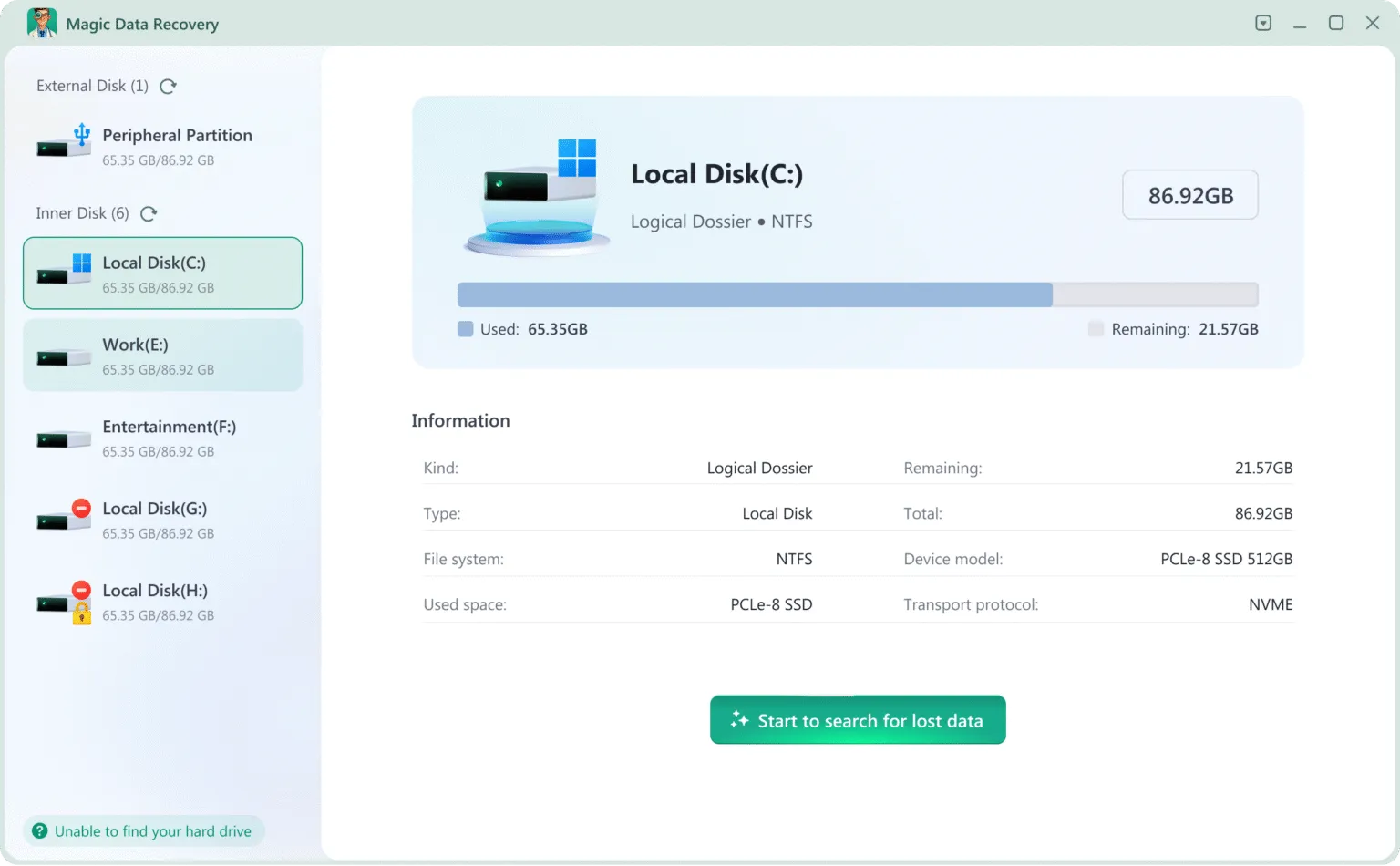
Magic Data Recovery is a versatile tool ideal for both internal and external Seagate drives.
Core Benefits
- Recovers deleted, formatted, or corrupted files.
- Handles file system errors and virus-damaged data.
- Supports multiple recovery scenarios in one intuitive interface.
Advantages Over Generic Tools
- User-friendly interface: non-technical users can operate without confusion.
- Efficient deep scanning: quickly identifies recoverable data.
- Safe recovery: restores files without modifying the original drive.
- Wide file format support: photos, videos, documents, emails, and archives.
Practical Scenarios
- Accidentally formatted a Seagate external drive.
- Virus attacks corrupted important directories.
- Improper ejection caused partial data loss.
In each case, Magic Data Recovery improves recovery success compared to free tools or manual commands.
Supports Windows 7/8/10/11 and Windows Server
Best Practices to Prevent Future Data Loss
Preventing data loss is as important as recovering it. Following these best practices reduces risk and ensures your Seagate drives remain reliable over time:
- Regular Backups: Maintain multiple backups of critical data. Use both cloud services and local external drives. Backups should be updated weekly or daily for frequently modified files.
- Safe Ejection: Always use the “Safely Remove Hardware” option before unplugging external drives. Sudden removal can corrupt file tables or damage the drive.
- Antivirus and System Health Checks: Regularly scan drives and the operating system for malware, ransomware, or software conflicts. A clean system reduces unexpected corruption risks.
- Monitor Drive Health: Use diagnostic tools like Seagate SeaTools or CrystalDiskInfo to check S.M.A.R.T. status, temperature, and bad sectors. Early detection allows preventive actions before major failures.
- Organize Data and Partitions: Avoid cluttering a single partition with too many files. Proper partitioning and file organization improve performance and reduce the impact of accidental deletions.
- Avoid Overfilling Drives: Leave 10–20% free space to maintain optimal performance and reduce the chance of file system errors.
By implementing these practices, users gain both technical reliability and peace of mind, minimizing the likelihood of data loss scenarios that require full recovery.
When to Seek Professional Help
While software solutions like Magic Data Recovery are highly effective, some situations require expert intervention:
- Physical Damage: Clicking noises, spinning failures, overheating, or visible mechanical issues indicate hardware-level problems. Attempting DIY recovery can worsen the damage.
- Severe Logical Corruption: Drives that fail to mount, show RAW partitions, or have corrupted firmware may exceed software recovery capabilities.
- Critical Data Importance: For irreplaceable files, such as business documents, financial records, or personal media, professional services maximize success and ensure safety.
- Multiple Recovery Failures: If repeated attempts with reliable software fail to locate lost files, it signals a deeper issue best handled by a certified lab.
Professional recovery labs use cleanroom environments, specialized hardware, and imaging techniques to safely retrieve data. Consulting experts ensures both data integrity and minimizes risks of permanent loss, reinforcing trustworthiness and authority in data recovery practice.
Conclusion
Most Seagate hard drive recovery and Seagate external hard drive recovery cases can be resolved with proper precautions and reliable recovery software. Magic Data Recovery provides a user-friendly, safe, and efficient solution for retrieving deleted, formatted, or corrupted files. Its advanced algorithms and versatility make it superior to manual methods and generic tools.
For users seeking a dependable solution, Magic Data Recovery is highly recommended.
Supports Windows 7/8/10/11 and Windows Server
FAQs
What is Seagate hard drive recovery?
Seagate hard drive recovery involves retrieving lost files from Seagate internal or external drives. Common causes include deletion, formatting, virus attacks, and system errors. Immediate cessation of drive use, followed by professional recovery software, maximizes the chance of restoring lost data.
Can data be recovered from a formatted Seagate drive?
Yes. Formatting marks storage space as reusable but does not erase files immediately. Recovery tools like Magic Data Recovery can scan the drive and restore deleted data before it is overwritten, including photos, documents, and videos.
What risks exist during DIY recovery?
Risks include overwriting lost data, using recovery software on the affected drive, or running CHKDSK prematurely. Following recommended steps, such as scanning the drive safely and recovering to a separate storage device, reduces the risk of permanent data loss.
How does external hard drive recovery differ from internal?
The recovery process is similar for both types. External drives may fail due to enclosure issues or faulty cables, so it is important to ensure a stable connection. Logical issues can often be resolved with the same recovery tools used for internal drives.
What file types can Magic Data Recovery restore?
Magic Data Recovery supports documents, photos, videos, emails, and archive files. It identifies file types using raw signatures, improving the likelihood of recovering data even from formatted, corrupted, or virus-damaged drives.
Should I format a corrupted Seagate drive first?
No. Formatting can overwrite recoverable data, making it impossible to restore. Always attempt recovery with software first. This ensures maximum retrieval success without altering the original drive.
When is professional recovery necessary?
Professional recovery is necessary when the drive has physical damage, unusual noises, or cannot be detected by software tools. Recovery labs perform hardware-level solutions and imaging to safely restore critical files.
How can I improve recovery success?
Stop using the affected drive immediately. Avoid writing new data, perform deep scans using reliable recovery software, and restore recovered files to a separate storage device. Organize restored files promptly to prevent further loss.

Jason is a data recovery and technical support specialist with over 15 years of hands-on experience. He has worked extensively with frontline users, troubleshooting difficult data loss cases and providing practical recovery solutions for accidental deletion, formatted drives, damaged file systems, lost partitions, system failures, and other recovery emergencies. His expertise also includes backup and restoration, file repair, and disaster recovery, with a strong emphasis on safe, reliable, and technically accurate guidance.