
Active Directory Entry Guide: DNS, Jobs & Setup

An active directory entry is essential for managing users, devices, and network resources. However, many administrators still struggle with DNS configuration and troubleshooting. At the same time, beginners often search for entry level active directory jobs but lack a clear roadmap.
Therefore, this guide explains how an AD entry functions, how active directory dns entries support network communication, and how to perform tasks like how to add dns entry in active directory. In addition, it provides practical examples, real-world issues, and reliable solutions. As a result, both beginners and experienced users can improve their workflow.
Table of Contents
What Is an Active Directory Entry
An AD entry represents an object stored in a directory service. For example, it can be a user account, a device, or a DNS record.
In most environments, administrators rely on each AD entry to manage access and enforce policies. Therefore, the structure of these entries directly affects system stability. Moreover, each entry contains attributes such as permissions and identifiers. As a result, administrators can control resources efficiently while maintaining security.
Types of Active Directory Entry You Should Know
Different entries serve different purposes. Therefore, understanding them improves both configuration and troubleshooting.
User and Computer Entries
User entries manage authentication. Meanwhile, computer entries identify devices. Together, they ensure that login processes work correctly. In addition, they support centralized control.
Group and Organizational Unit Entries
Groups simplify permission assignment. Instead of managing users individually, admins assign permissions to groups.
Organizational Units organize resources logically. For instance, departments can be separated for better management. As a result, administration becomes more efficient.
Active Directory DNS Entries
Active directory dns entries connect directory services with network resolution. Without them, systems cannot locate domain controllers. Therefore, DNS integration is critical. In addition, proper DNS setup improves performance and reliability.
How Active Directory DNS Entries Work
Active Directory relies heavily on DNS. For example, SRV records help clients find domain controllers. Meanwhile, A records map hostnames to IP addresses.
In many cases, the system automatically creates AD DNS entries. However, administrators still need to manage them manually. Therefore, understanding AD DNS entry is important.
Moreover, proper DNS configuration reduces errors. As a result, networks remain stable and responsive.
How to Add DNS Entry in Active Directory
If you want to understand how to add dns entry, you should follow structured steps. Otherwise, incorrect configurations may cause failures.
Method 1: DNS Manager
- Open DNS Manager
- Navigate to your domain zone
- Right-click and select “New Host”
- Enter hostname and IP address
- Save the entry
This method is simple. Therefore, it suits most users performing AD add dns entry tasks.
Method 2: Command Line
Advanced users often prefer command-line tools. For example:
dnscmd /recordadd domain.com host A 192.168.1.10
This approach is faster. However, it requires precision. Otherwise, small mistakes can lead to errors.
Common Mistakes to Avoid
- Incorrect IP addresses
- Ignoring DNS replication delays
- Missing required records
Therefore, always verify new dns entries after configuration. In addition, testing ensures reliability.
Common Issues When Managing an Active Directory Entry
Even experienced administrators encounter issues. However, most problems are predictable.
DNS Replication Delays
Changes may take time to propagate. Therefore, administrators should wait before troubleshooting further.
Missing DNS Records
If dns entries are missing, services may fail. This often happens after migration or misconfiguration.
Permission Problems
Users may lack permission to modify an AD entry. In such cases, administrative access is required.
Entry Level Active Directory Jobs and Skills
Many professionals start with entry level active directory jobs. These roles provide hands-on experience.
Typical Roles
- IT Support Specialist
- Junior System Administrator
- Help Desk Technician
These positions often involve managing an AD entry and resolving user issues. Therefore, they build strong foundational skills.
Required Skills
To succeed, candidates should learn:
- Active Directory fundamentals
- DNS configuration
- User and group management
In addition, scripting knowledge improves efficiency. As a result, candidates can handle tasks faster.
Career Growth Tips
First, practice real scenarios. Then, explore certifications. Finally, gain troubleshooting experience. Therefore, continuous learning leads to better opportunities.
Best Practices for Managing Active Directory Entry
To maintain stability, follow these practices:
- Use consistent naming conventions
- Monitor dns entries regularly
- Audit changes frequently
- Maintain backups
Moreover, documentation helps teams avoid repeated mistakes. As a result, long-term maintenance becomes easier.
What to Do When Active Directory Entry Data Is Lost
Data loss can occur unexpectedly. For example, accidental deletion or system crashes may remove critical entries. Therefore, recovery becomes essential.
In simple cases, backups restore an AD entry. However, backups may be outdated. As a result, recovery may fail.
A Practical Recovery Solution
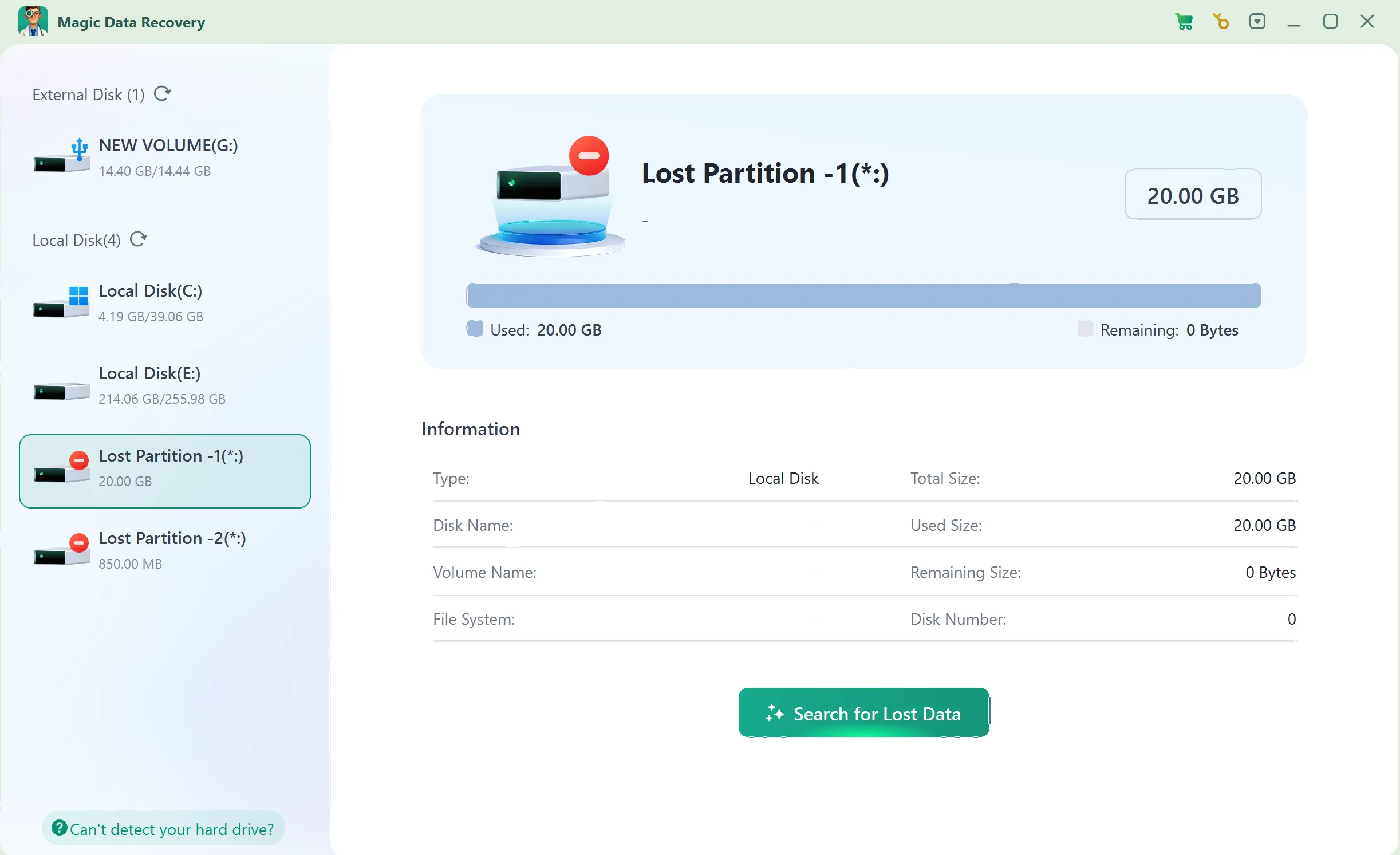
In more complex scenarios, tools like Magic Data Recovery can help. This solution addresses key challenges:
- Recovering deleted directory-related data
- Scanning storage deeply
- Supporting multiple recovery scenarios
Why Consider This Option
- Easy to use
- Reliable in complex cases
- Suitable for different users
Therefore, if traditional methods fail, this tool provides a practical alternative. If you are looking for a more efficient solution, you can try it without changing your workflow.
Conclusion
An active directory entry forms the foundation of identity management. Therefore, understanding its structure is essential. At the same time, mastering dns entries and learning how to add dns entry in AD improves system reliability.
Meanwhile, exploring entry level active directory jobs opens career opportunities. However, issues such as misconfiguration or data loss can still occur.
For this reason, combining best practices with reliable recovery tools ensures better results. Magic Data Recovery offers additional support when standard solutions fall short.
Supports Windows 7/8/10/11 and Windows Server
FAQs
What is an active directory entry?
It is an object that stores information about users, devices, or services.
What are active directory dns entries?
They are DNS records used to locate Active Directory services.
How to perform active directory add dns entry?
You can use DNS Manager or command-line tools.
How to add DNS entry in Active Directory correctly?
Follow structured steps and verify the configuration.
What skills are needed for entry level active directory jobs?
Basic knowledge of Active Directory and DNS is required.
Why are DNS entries important?
They ensure proper communication within the network.
Can lost Active Directory data be recovered?
Yes, backups or recovery tools can help retrieve lost data.

Vasilii is a data recovery specialist with around 10 years of hands-on experience in the field. Throughout his career, he has successfully solved thousands of complex cases involving deleted files, formatted drives, lost partitions, and RAW file systems. His expertise covers both manual recovery methods using professional tools like hex editors and advanced automated solutions with recovery software. Vasilii's mission is to make reliable data recovery knowledge accessible to both IT professionals and everyday users, helping them safeguard their valuable digital assets.