
Directory Entries: Where Are Directory Entries Stored?

Have you ever opened a folder and found your files missing, even though the storage device still shows used space? This often points to an issue with directory entries—the structures that tell your system where files are stored.
Understanding where are directory entries stored is essential for diagnosing file system errors, recovering lost data, and preventing future corruption. In this guide, we explain how directory entries work, where they live in different file systems, and what to do when they get damaged. We will also introduce a reliable solution—Magic Data Recovery—to help restore lost files caused by directory issues.
Supports Windows 7/8/10/11 and Windows Server
Table of Contents
What Are Directory Entries?
Directory entries are metadata records that map file names to their actual storage locations on a disk. Instead of storing the file itself, a directory entry acts like an index.
Key Components of Directory Entries
A typical directory entry includes:
- File name
- File size
- File type
- Timestamp (created, modified)
- Pointer to data blocks (or inode reference)
Without these entries, your operating system cannot locate files—even if the data still exists physically.
Where Are Directory Entries Stored?
The answer depends on the file system type. Different systems organize directory entries differently, but they all follow the same principle: separating file metadata from actual data storage.
1. FAT File System (FAT16/FAT32/exFAT)
In FAT systems:
- Directory entries are stored directly in directory tables
- Each directory contains a list of entries
- The File Allocation Table (FAT) links file clusters
Key insight:
Directory entries are stored alongside directory structures, making them more vulnerable to corruption.
2. NTFS File System
In NTFS:
- Directory entries are stored in the Master File Table (MFT)
- Each file has a record in the MFT
- Directories are special files containing index records
Why this matters:
NTFS improves reliability by centralizing metadata, reducing fragmentation of directory entries.
3. EXT File Systems (Linux)
In EXT2/EXT3/EXT4:
- Directory entries are stored in directory data blocks
- Each entry points to an inode
- The inode stores detailed file metadata
Important distinction:
Directory entries only map names → inode numbers, not file content.
4. APFS and Modern File Systems
In modern systems like APFS:
- Directory entries are part of a B-tree structure
- Metadata is highly optimized for performance and redundancy
This design improves resilience but still depends on intact directory structures.
Why Are Directory Entries Important?
If directory entries become corrupted:
- Files may disappear from folders
- File names may become unreadable
- Entire directories may appear empty
- Data recovery becomes more complex
Even worse, the actual file data may still exist—but without directory entries, it becomes “orphaned.”
Common Causes of Directory Entry Corruption
Understanding the risks helps you prevent data loss.
1. Sudden Power Loss
Interruptions during write operations can damage directory structures.
2. Improper Device Removal
Removing USB drives without ejecting can corrupt directory entries.
3. File System Errors
Bad sectors or logical errors may overwrite directory metadata.
4. Malware or Software Bugs
Certain programs can unintentionally damage file system structures.
How to Check and Fix Directory Entry Issues
Before jumping into recovery tools, try basic troubleshooting.
Step 1: Run Disk Check Tools
- Windows: chkdsk /f
- Mac: Disk Utility → First Aid
- Linux: fsck
These tools repair minor directory inconsistencies.
Step 2: Verify File System Health
Look for signs such as:
- Missing files but occupied disk space
- Slow directory access
- Error messages when opening folders
Step 3: Avoid Writing New Data
If directory entries are damaged, stop using the drive immediately. Writing new data may overwrite recoverable files.
Recovering Data When Directory Entries Are Lost
When directory entries are severely corrupted, standard tools may fail. In such cases, specialized recovery software becomes essential.
Why Directory Entry Loss Causes Data Loss
When directory entries disappear:
- The file system loses file references
- Data blocks remain but are unlinked
- Files cannot be accessed normally
Recovery tools scan raw storage to reconstruct file structures.
A Practical Solution: Magic Data Recovery
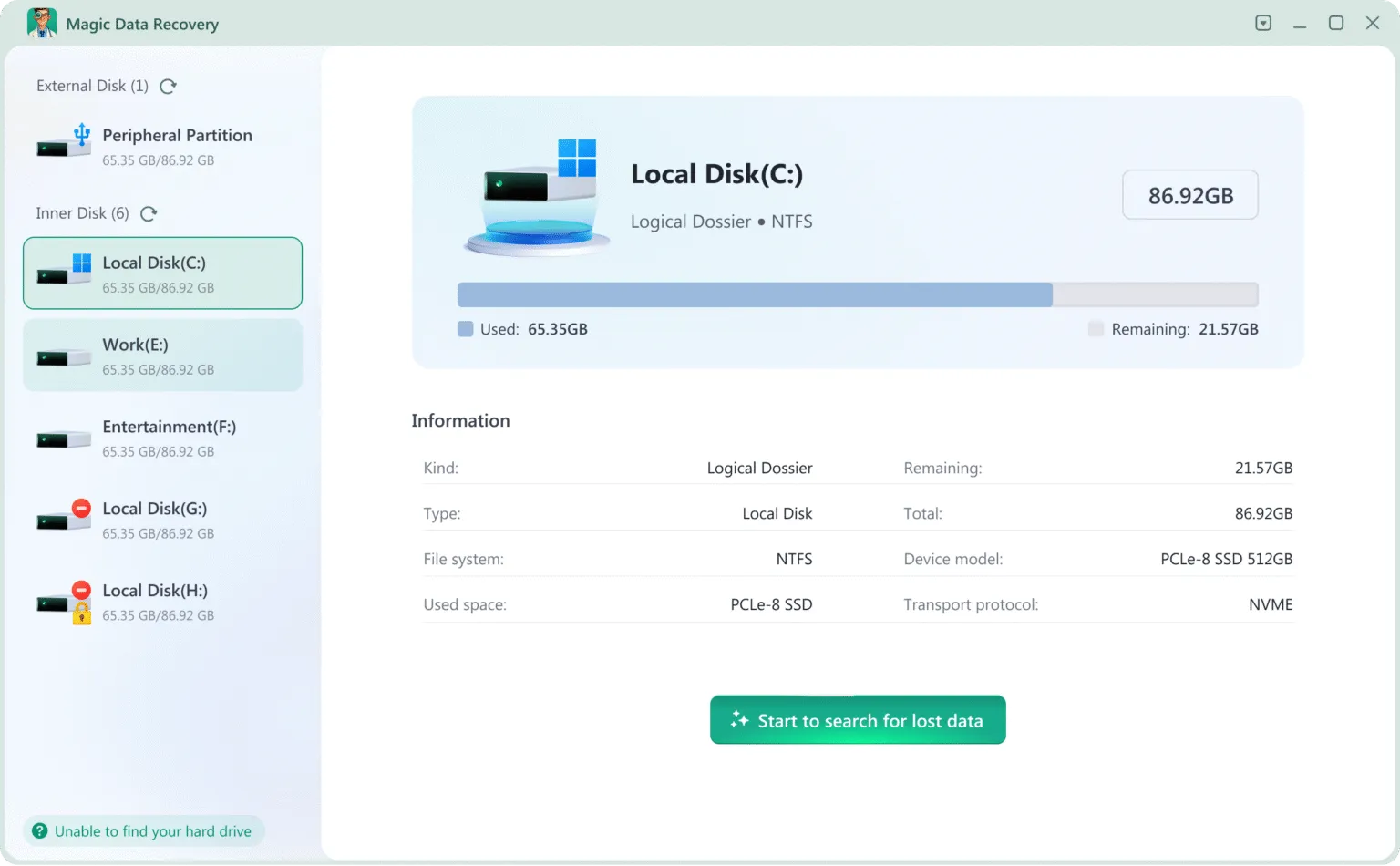
If you are dealing with missing files due to corrupted directory structures, Magic Data Recovery offers a practical and reliable solution.
What Problem Does It Solve?
- Recovers files when directory entries are damaged or missing
- Retrieves data from formatted, corrupted, or inaccessible drives
- Rebuilds file structures even without directory metadata
Key Advantages
- Deep Scan Technology
Locates files by analyzing raw disk sectors, not just directory entries.
- Wide File System Support
Works with FAT, NTFS, exFAT, EXT, and more.
- User-Friendly Interface
Suitable for both beginners and professionals.
- Preview Before Recovery
Ensures you recover the correct files.
Real-World Use Case
Imagine a USB drive suddenly showing an empty folder after improper ejection. The data still exists, but the directory entries are corrupted. Magic Data Recovery scans the device, identifies file signatures, and restores the lost files.
Why It’s More Reliable Than Basic Tools
Unlike built-in utilities, Magic Data Recovery does not rely on intact directory entries. Instead, it reconstructs files directly from storage data, making it effective in severe corruption scenarios.
👉 If you are looking for a more efficient solution, consider trying Magic Data Recovery.
Supports Windows 7/8/10/11 and Windows Server
Best Practices to Prevent Directory Entry Corruption
Prevention is always better than recovery.
- Always safely eject external drives
- Use reliable antivirus software
- Avoid sudden shutdowns
- Regularly back up important files
- Monitor disk health with diagnostic tools
Conclusion
Understanding directory entries and where are directory entries stored helps you better manage your data and respond quickly when issues arise. These structures are critical for file access, and their corruption can make data seem lost—even when it still exists.
While basic repair tools can fix minor issues, severe damage requires a more advanced approach. That’s why Magic Data Recovery stands out. It offers a dependable way to recover files even when directory entries are no longer available, making it a practical solution for real-world data loss scenarios.
Supports Windows 7/8/10/11 and Windows Server
FAQs
What are directory entries in a file system?
Directory entries are metadata records that store file names and link them to their physical storage locations. They act as an index, allowing the operating system to find and access files efficiently without scanning the entire disk.
Where are directory entries stored in NTFS?
In NTFS, directory entries are stored in the Master File Table (MFT). Each file and directory has a record in the MFT, which contains metadata and pointers to the file’s actual data blocks.
Can files exist without directory entries?
Yes, files can still exist physically on a disk without directory entries. However, the system cannot locate or access them normally, which is why they appear lost until recovered using specialized tools.
What causes directory entry corruption?
Common causes include sudden power loss, improper device removal, file system errors, and malware. These issues can damage metadata structures, making files inaccessible even if the data remains intact.
How do I fix corrupted directory entries?
You can start with built-in tools like CHKDSK, Disk Utility, or FSCK. These tools repair minor issues. For severe corruption, professional data recovery software is often required.
Is data permanently lost if directory entries are deleted?
Not necessarily. When directory entries are deleted, the data often remains on the disk until overwritten. Recovery tools can scan the storage and reconstruct files based on remaining data patterns.
Why do files disappear but still take up space?
This usually happens when directory entries are damaged. The system cannot display the files, but the data still occupies disk space, indicating that recovery is possible.
How does Magic Data Recovery help in this situation?
Magic Data Recovery bypasses damaged directory entries by scanning raw disk sectors. It identifies file signatures and rebuilds files, allowing you to recover data even when the file system structure is severely corrupted.

Jason is a data recovery and technical support specialist with over 15 years of hands-on experience. He has worked extensively with frontline users, troubleshooting difficult data loss cases and providing practical recovery solutions for accidental deletion, formatted drives, damaged file systems, lost partitions, system failures, and other recovery emergencies. His expertise also includes backup and restoration, file repair, and disaster recovery, with a strong emphasis on safe, reliable, and technically accurate guidance.