
Linux File System Explained: Types, Structure, and Best Practices

Choosing the right Linux file system is a foundational decision that directly impacts system performance, data reliability, scalability, and long-term maintenance. Whether you are a Linux beginner, system administrator, or DevOps engineer, understanding how Linux file systems work—and how different types compare—is essential for building stable and efficient systems.
This guide provides a complete, practical explanation of the Linux file system, covering its architecture, common file system types, feature comparisons, real-world usage, and best practices.
Table of Contents
What Is a Linux File System?
A Linux file system defines how data is stored, organized, accessed, and managed on a Linux-based operating system. Unlike some operating systems that rely on a single default structure, Linux supports multiple file system types, each optimized for specific workloads and environments.
At its core, the Linux file system:
- Organizes files in a hierarchical directory tree
- Uses metadata to track file attributes and locations
- Allows multiple file systems to be mounted into a single unified structure
This flexibility is one of Linux’s greatest strengths.
Linux File System Architecture and Core Concepts
Understanding the architecture behind a Linux file system helps explain why Linux is widely used in servers, cloud infrastructure, and enterprise environments.
Filesystem Hierarchy Standard (FHS)
Linux follows the Filesystem Hierarchy Standard (FHS), which defines the purpose of each top-level directory:
/– Root directory/home– User home directories/etc– System configuration files/var– Variable data such as logs and caches/usr– User binaries and shared libraries/boot– Bootloader and kernel files
This standardized structure ensures consistency across distributions.
Key Internal Components
A Linux file system relies on several internal components:
- Inodes – Store metadata such as permissions, ownership, and file size
- Superblock – Contains information about the file system itself
- Data blocks – Store actual file content
- Journaling – Records changes before committing them to disk, improving crash recovery
These components work together to deliver reliability and performance.
Common Linux File System Types
Linux supports a wide range of file system types, each with unique characteristics.
ext4 (Fourth Extended File System)
ext4 is the most widely used Linux file system.
Key features:
- Journaling support
- Large file and volume support
- Backward compatibility with ext2 and ext3
- Stable and well-tested
Best for: General-purpose desktops, laptops, and servers.
XFS
XFS is a high-performance file system designed for large-scale storage.
Key features:
- Excellent performance with large files
- Scales well on enterprise systems
- Advanced allocation techniques
Best for: Media servers, databases, and large file workloads.
Btrfs
Btrfs (B-tree file system) focuses on advanced data management.
Key features:
- Snapshots and subvolumes
- Built-in RAID support
- Data integrity checksums
Best for: Modern Linux systems requiring snapshots and advanced storage management.
ZFS (via Linux ports)
Although not native to the Linux kernel, ZFS is widely used.
Key features:
- End-to-end data integrity
- Snapshots and replication
- Advanced volume management
Best for: Enterprise storage and data-heavy environments.
Legacy File Systems: ext3 and ext2
- ext3 introduced journaling and remains in use on older systems
- ext2 lacks journaling but is still used in lightweight or embedded systems
Understanding these older file systems remains important for data recovery and system compatibility.
Linux File System Comparison: Which One Should You Choose?
File System | Journaling | Performance | Best Use Case |
ext4 | Yes | Balanced | General-purpose systems |
XFS | Yes | High (large files) | Servers, media storage |
Btrfs | Yes | Moderate | Snapshots, advanced management |
ZFS | Yes | High | Enterprise data integrity |
ext3 | Yes | Moderate | Legacy systems |
ext2 | No | Lightweight | Embedded or recovery scenarios |
Choosing the right Linux file system depends on workload size, performance needs, and data protection requirements.
Linux File System Best Practices
To ensure long-term stability and performance, follow these best practices:
- Match the file system to your workload (small files vs large files)
- Use journaling file systems for production environments
- Monitor disk health and file system integrity regularly
- Avoid unnecessary conversions between file system types
- Back up critical data before resizing or reformatting partitions
These practices reduce the risk of data loss and system downtime.
Real-World Example: Creating and Mounting a Linux File System
A typical workflow for creating a Linux file system includes:
- Partitioning a disk
- Formatting it with a file system (e.g., ext4)
- Mounting it to a directory
Example commands:
mkfs.ext4 /dev/sdb1
mount /dev/sdb1 /mnt/data
Once mounted, the new file system becomes part of the Linux directory tree, accessible like any other folder.
Linux File System Corruption and Data Recovery
Despite Linux file systems being highly reliable, data loss can still occur due to:
- Accidental deletion or formatting
- File system corruption
- Hardware failure
- Power outages
Older file systems such as ext2 and ext3 are particularly vulnerable due to limited or absent journaling capabilities.
Recovering Data from ext2/ext3 File Systems
If data loss occurs on ext2 or ext3 partitions, specialized recovery tools are often required.
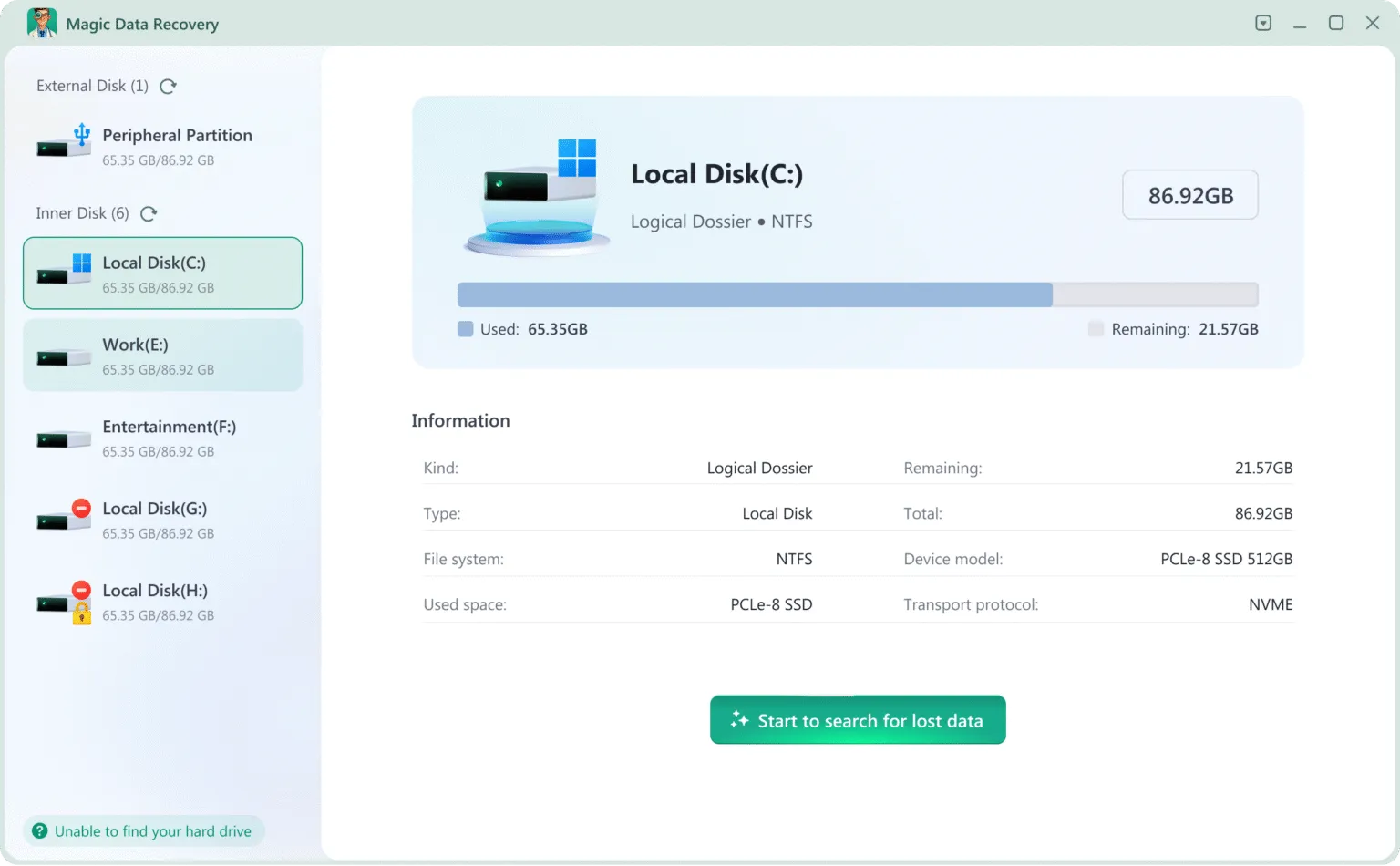
Magic Data Recovery is designed to support EXT2/EXT3 file system data recovery, helping users restore lost files from damaged or formatted Linux partitions.
Final Thoughts
The Linux file system is a powerful and flexible foundation that enables Linux to run everything from embedded devices to enterprise servers. By understanding file system architecture, choosing the right type, and following best practices, you can maximize performance, reliability, and data safety.
For legacy Linux systems using ext2 or ext3, being prepared with a dedicated data recovery solution such as Magic Data Recovery can be the difference between permanent data loss and successful recovery.
Supports Windows 7/8/10/11 and Windows Server
FAQs
What is the Linux file system?
Does Linux use FAT32 or NTFS?
How do I check my filesystem in Linux?
Is the Linux filesystem ext4?
What are the 7 types of files in Linux?
Does Linux use NTFS or ext4?
Is Linux NTFS or exFAT?
What is the best disk format for Linux?

Jason is a data recovery and technical support specialist with over 15 years of hands-on experience. He has worked extensively with frontline users, troubleshooting difficult data loss cases and providing practical recovery solutions for accidental deletion, formatted drives, damaged file systems, lost partitions, system failures, and other recovery emergencies. His expertise also includes backup and restoration, file repair, and disaster recovery, with a strong emphasis on safe, reliable, and technically accurate guidance.