
Statistics on Data Loss: Trends & Business Impact
Today, data drives nearly every digital activity. However, statistics on data loss show that files can disappear unexpectedly due to deletion, device failure, or cyber threats. At the same time, business data loss statistics indicate that even minor incidents can disrupt workflows and increase operational costs.
Therefore, understanding these trends is essential. Not only can it help prevent data loss risks, but it also improves recovery decisions. In this guide, you will explore key insights, real-world impacts, and practical solutions. Moreover, you will learn how to recover lost data efficiently when issues arise.
Table of Contents
Why Statistics on Data Loss Matter for Individuals and Businesses
First, the statistics reveal how frequently incidents occur. Without this awareness, risks are often underestimated.
In addition, businesses rely heavily on digital assets. As a result, losing data directly impacts productivity and revenue. Furthermore, repeated incidents can weaken long-term stability.
Moreover, these statistics help guide decision-making. For example, companies can improve backup strategies and strengthen security. Consequently, recovery becomes faster and more reliable.
Overall, understanding the statistics enables better planning and reduces uncertainty.
Global Statistics on Data Loss: Key Trends and Insights
Recent data loss statistics highlight consistent patterns across industries.
Frequency of Data Loss Incidents
- Many users experience data loss at least once
- Businesses report recurring incidents over time
Data Loss by Industry
- Finance and IT sectors face higher risks
- Small businesses often lack strong backup systems
Key Observations
- Human error remains a leading cause
- Hardware failure continues to affect storage reliability
Therefore, these statistics confirm that data loss is widespread rather than rare.
Business Data Loss Statistics: Costs, Risks, and Impact
When analyzing business statistics on data loss, the consequences become more significant.
Financial Impact
Data loss can result in:
- Revenue interruption
- Recovery expenses
- Compliance-related costs
Operational Downtime
For instance:
- Employees lose access to critical files
- Business operations slow down or stop
Small vs Large Business Impact
- Small businesses face greater recovery challenges
- Large enterprises experience higher financial losses
As a result, the business statistics clearly highlight the need for prevention and recovery strategies.
Statistics on Data Loss Causes: What Leads to Data Loss
Understanding the causes behind the statistics helps reduce risks effectively.
Human Error
Users often delete files accidentally. In many situations, important data is removed without backup.
Hardware Failure
Storage devices degrade over time. Therefore, unexpected failures can occur at any moment.
Cyberattacks
Ransomware and malware attacks continue to increase. Consequently, data may become inaccessible.
Software Issues
System crashes and bugs can corrupt files. As a result, recovery becomes more complex.
Each of these causes contributes directly to overall the statistics.
Statistics on Data Loss vs Data Breach: Key Differences
Although both terms are related, they represent different issues.
- Data loss means data becomes unavailable
- Data breach involves unauthorized access
From a statistical perspective:
- The statistics show higher frequency
- Data breaches often cause more severe legal consequences
Therefore, understanding this distinction allows businesses to apply appropriate solutions.
Statistics on Data Loss Recovery: Success Rates and Challenges
Although the statistics may seem concerning, recovery is often achievable.
Recovery Success Rate
- High success if data is not overwritten
- Immediate action increases recovery chances
Recovery Time
- Simple recovery takes minutes
- Complex cases require deep scanning
Common Challenges
- Overwritten files are difficult to restore
- Delayed recovery reduces success rates
Thus, acting quickly significantly improves recovery outcomes.
How to Reduce Risks Based on Statistics on Data Loss
To reduce risks shown in the statistics, proactive steps are necessary.
Backup Strategies
- Use both cloud and local backups
- Schedule automatic backups
Cybersecurity Improvements
- Install security software
- Keep systems updated
Employee Awareness
- Train staff on safe data handling
- Minimize accidental deletion
By applying these strategies, organizations can reduce exposure to the statistics.
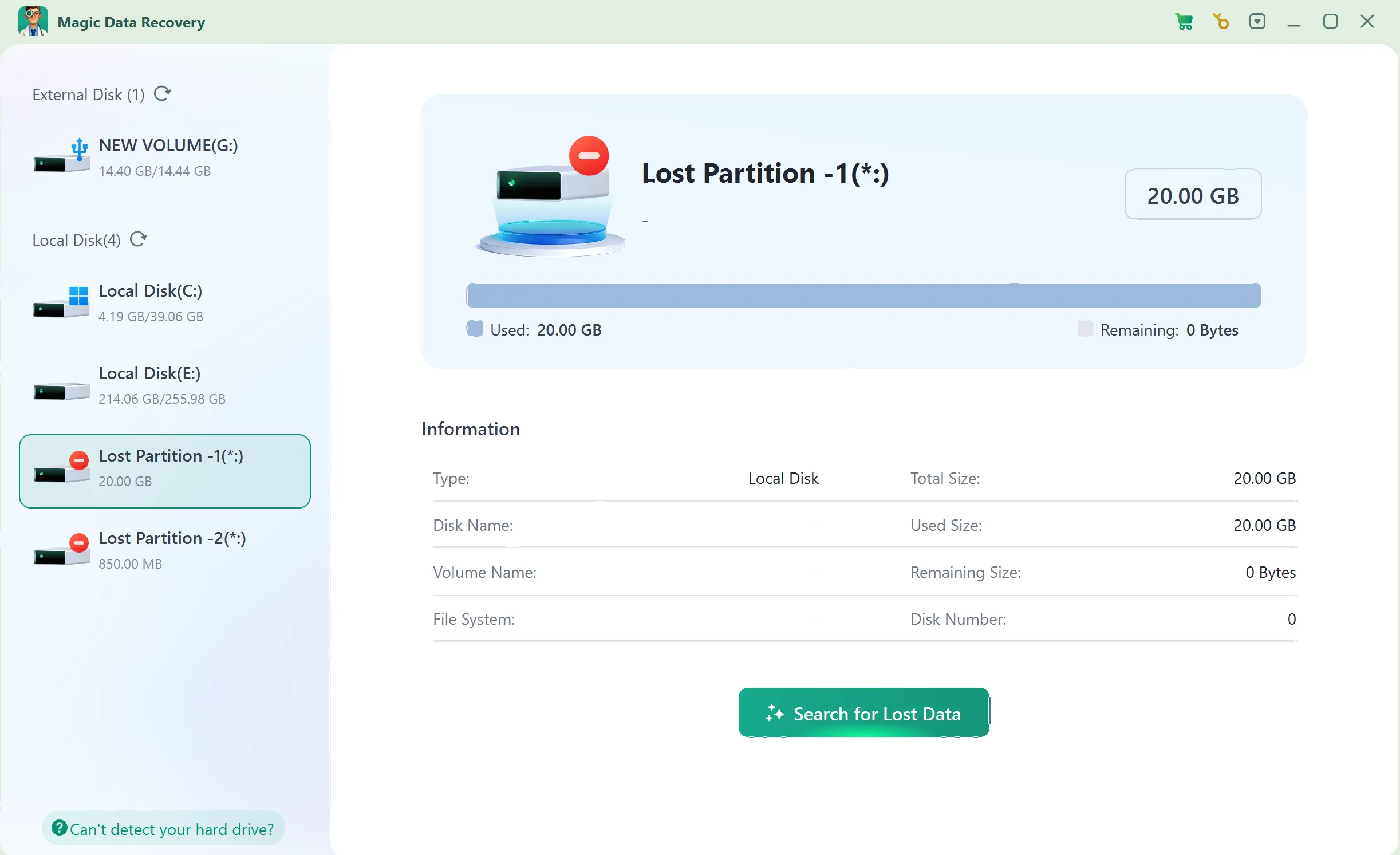
Best Solution Based on data loss statistics: Magic Data Recovery
Even with strong prevention, data loss can still occur. Therefore, a reliable recovery solution becomes essential.
Based on insights from the statistics, many users need a fast and simple tool. Magic Data Recovery provides an effective solution in such situations.
Core Problems It Solves
- Recover deleted files quickly
- Restore formatted or corrupted data
- Handle unexpected system failures
Key Advantages
- Easy-to-use interface suitable for beginners
- Supports multiple file types
- Fast scanning with deep recovery options
- Strong recovery performance when data is not overwritten
Practical Use Cases
- Recover business documents after accidental deletion
- Restore files from damaged drives
- Retrieve data after system crashes
Why It Is Reliable
Unlike manual methods, this tool simplifies the recovery process. In addition, it reduces the risk of further data damage. Therefore, it offers a more efficient and safer solution.
Conclusion
In conclusion, statistics on data loss show that data loss is both common and impactful. Meanwhile, business data loss statistics emphasize the financial and operational risks involved.
However, with proper preparation and reliable tools, these risks can be managed effectively. Prevention reduces exposure, while recovery tools ensure quick restoration.
That is why Magic Data Recovery is recommended. It provides a practical and efficient way to recover lost data while minimizing downtime.
Supports Windows 7/8/10/11 and Windows Server
FAQ
How common is data loss?
Data loss is very common. Most users encounter it at least once.
What are business data loss statistics?
They describe how data loss affects costs, downtime, and operations.
Can lost data always be recovered?
Recovery depends on whether the data has been overwritten.
What is the main cause of data loss?
Human error is one of the most frequent causes.
How can businesses reduce data loss risks?
They should use backups, security tools, and employee training.
What is the best recovery solution?
Reliable tools like Magic Data Recovery offer efficient recovery options.

Vasilii is a data recovery specialist with around 10 years of hands-on experience in the field. Throughout his career, he has successfully solved thousands of complex cases involving deleted files, formatted drives, lost partitions, and RAW file systems. His expertise covers both manual recovery methods using professional tools like hex editors and advanced automated solutions with recovery software. Vasilii's mission is to make reliable data recovery knowledge accessible to both IT professionals and everyday users, helping them safeguard their valuable digital assets.