
Causes of Data Loss Statistics: What Really Causes File Loss
Data loss rarely feels predictable. In most cases, it happens suddenly—right after a system update, during a file transfer, or while cleaning up storage space. Although the moment feels unexpected, the causes behind it usually are not. That is exactly why causes of data loss statistics matter. Instead of guessing, statistics reveal patterns. They show what goes wrong most often, which risks people underestimate, and where mistakes repeat. More importantly, these patterns explain why data loss affects both everyday users and professionals.
In this article, we will explore the most common causes of data loss statistics, explain how they appear in real-life scenarios, and discuss what you can do before and after files disappear. Finally, we will look at how tools fit naturally into a realistic recovery strategy.
Table of Contents
What Is Data Loss?
Data loss occurs when digital information becomes inaccessible, corrupted, or deleted. Sometimes the files still exist physically on a drive, but the system can no longer locate them. In other situations, the data truly disappears because it gets overwritten.
To better understand causes of data loss statistics, it helps to separate data loss into two broad categories.
Logical data loss happens when the file system structure breaks. This often occurs after accidental deletion, formatting, partition loss, or system crashes. Physical data loss, on the other hand, happens when the storage device itself fails due to mechanical damage or electronic failure.
Although physical damage sounds more serious, logical data loss appears far more often in real-world statistics. As a result, many cases remain recoverable if handled correctly.
Causes of Data Loss Statistics: Common Patterns You Should Know
When people search for causes of data loss statistics, they usually want clarity. While reports vary slightly by industry, the same causes appear repeatedly across studies and user experiences.
The most common categories include human error, hardware failure, malware attacks, software corruption, power-related issues, and natural disasters. Instead of focusing on exact percentages, it is more useful to understand why these causes appear so frequently.
Cause | Why It Happens So Often | Typical Scenario |
Human error | Everyday mistakes are unavoidable | Accidental deletion |
Hardware failure | Storage devices age | HDD or SSD failure |
Malware | Attacks continue to grow | Encrypted or deleted files |
Software corruption | Systems crash unexpectedly | File system errors |
Power failure | Sudden shutdown interrupts writing | Corrupted data |
Natural disasters | Rare but destructive | Fire or flood damage |
Taken together, these causes of data loss statistics show that most incidents are not random. Instead, they result from routine actions and predictable risks.
Human Error: The Leading Cause in Causes of Data Loss Statistics
Human error consistently ranks at the top of causes of data loss statistics, especially for individual users and small teams. People work fast, multitask, and manage files daily. Eventually, one wrong click leads to data loss.
Common examples include deleting the wrong folder, emptying the Recycle Bin too soon, formatting the wrong drive during system installation, or overwriting important documents. In practice, these mistakes often happen during routine maintenance rather than major changes.
For example, many users lose data while reinstalling an operating system. They select the incorrect partition, format it, and only realize the mistake after the installation finishes. At that point, panic often leads to risky actions.
Fortunately, human-error-related loss is usually logical. That means files often remain recoverable until new data overwrites them.
Hardware Failure in Causes of Data Loss Statistics
Hardware failure is another major contributor in causes of data loss statistics. Storage devices are physical components, and none of them last forever.
Traditional hard drives rely on moving parts. Over time, those parts wear out. SSDs do not have moving parts, but their flash memory cells degrade after heavy use. As a result, both technologies eventually fail.
Warning signs may appear gradually. These include slow file access, frequent system freezes, or strange noises from an HDD. However, SSDs often fail suddenly without warning, which makes backups even more important.
External drives deserve special attention. Because they move between devices, they face drops, unstable power, and cable issues. Even minor accidents can result in data loss.
Malware and Ransomware: A Growing Factor in Causes of Data Loss Statistics
Malware has become one of the fastest-growing factors in causes of data loss statistics. Ransomware, in particular, affects both individuals and businesses.
Unlike older viruses, ransomware usually encrypts files instead of deleting them. Victims suddenly lose access to documents, photos, and databases. Although attackers demand payment, recovery is never guaranteed.
Signs of malware-related data loss include changed file extensions, unreadable documents, missing folders, and ransom notes. Unfortunately, many users discover the problem only after significant damage occurs.
That said, not all malware permanently destroys data. In some cases, files are deleted rather than encrypted. When that happens, recovery may still be possible if the system is handled carefully.
Software Corruption and File System Errors
Software-related issues appear frequently in causes of data loss statistics, yet many users misunderstand them. A drive may still appear in the system, but files cannot be accessed.
This type of data loss often happens after failed updates, system crashes, or improper drive removal. When the file system structure becomes damaged, the operating system can no longer interpret file locations correctly.
Users often encounter messages such as “The file or directory is corrupted” or “You need to format the disk.” Although formatting seems convenient, it usually reduces recovery chances.
Therefore, when corruption occurs, scanning the drive before making changes is often the safer approach.
Power Failure and Improper Shutdown
Power issues may seem minor, but they appear regularly in causes of data loss statistics. Sudden shutdowns interrupt writing processes, which can damage file tables and indexes.
This problem occurs when a desktop loses power, a laptop battery fails, or a USB drive disconnects mid-transfer. Even if the system restarts normally, corruption may already exist.
Because power-related data loss often causes logical damage, recovery may still be possible. However, continued use of the affected drive increases the risk of overwriting data.
Natural Disasters: Low Frequency, High Impact
Natural disasters do not dominate causes of data loss statistics, yet their impact is severe. Fires, floods, and storms can destroy storage devices instantly.
The biggest mistake is storing backups in the same location as original data. When disaster strikes, both copies are lost at once. This is why offsite or cloud backups remain essential.
What Causes of Data Loss Statistics Teach Us About Prevention
Viewed together, causes of data loss statistics reveal one clear lesson: many incidents are preventable. Accidental deletion, malware infection, corruption, and power-related issues can all be reduced with better habits.
Hardware failure and natural disasters remain harder to prevent. However, preparation for reliable backup stategies still minimizes damage.
Therefore, the goal is not eliminating risk, but managing it intelligently.
Practical Ways to Reduce Data Loss Risk
Prevention works best when it fits daily behavior. Based on common causes of data loss statistics, several strategies consistently help.
Following the 3-2-1 backup rule remains one of the most effective methods. Keeping three copies of data across two different storage types, with one copy offsite, protects against most scenarios.
In addition, file version history helps recover from overwrites. Proper drive ejection prevents corruption. Power protection reduces shutdown-related issues. While simple, these steps address many everyday risks.
What to Do Immediately After Data Loss Happens
Once data loss occurs, the next steps matter more than the original mistake. Many recovery failures result from improper responses.
First, stop using the affected drive. Writing new data increases overwrite risk. Second, avoid formatting or reinstalling systems before recovery attempts. Third, limit repair commands that may rewrite file structures.
At this stage, structured recovery becomes important.
Recover Lost Files with Magic Data Recovery
When examining causes of data loss statistics, one fact stands out: many incidents involve logical data loss rather than physical destruction. Accidental deletion, formatting, partition loss, and corruption occur far more often than complete hardware failure.
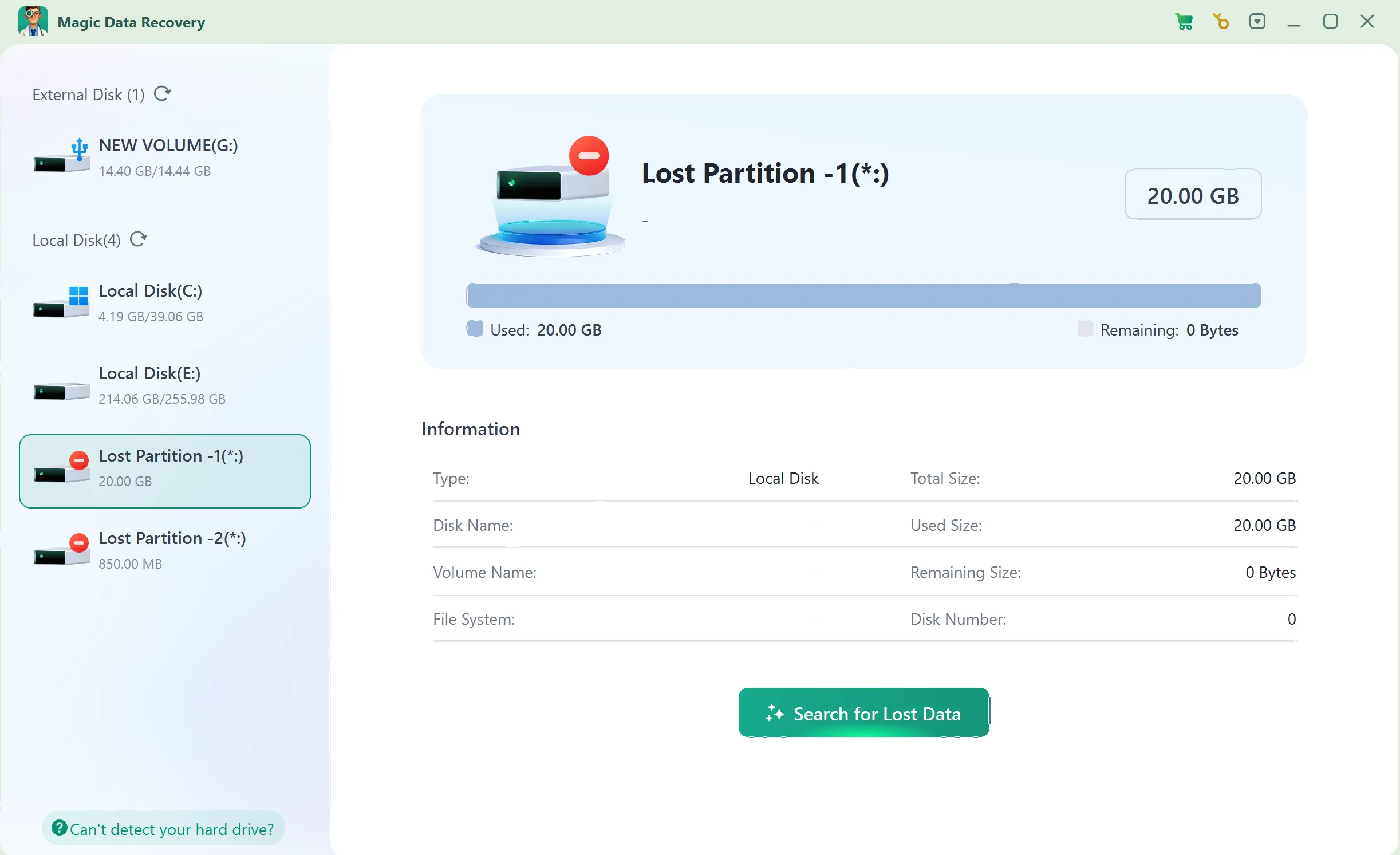
Magic Data Recovery is designed to address these scenarios. It supports recovery from deleted files, formatted drives, lost partitions, corrupted USB drives, and SD cards.
Its main advantage lies in providing a structured recovery process. Instead of guessing, users can scan storage devices and identify recoverable files before restoring them.
For example, if you accidentally format an external drive and avoid writing new data, recovery software may still locate the original files. This approach is safer than repeated formatting or random repairs.
Conclusion
Understanding causes of data loss statistics helps turn panic into preparation. Most data loss comes from predictable causes such as human error, hardware failure, malware, corruption, and power issues.
Although data loss prevention reduces risk, no system is perfect. When data loss happens, having a recovery plan matters. For common logical data loss scenarios, Magic Data Recovery offers a practical and controlled solution.
Instead of relying on trial and error, understanding patterns—and responding wisely—gives you the best chance of protecting and recovering your data.
Supports Windows 7/8/10/11 and Windows Server
FAQ
What do causes of data loss statistics show as the most common cause?
Can files be recovered after formatting a drive?
Why does my system ask me to format a drive?
How does ransomware affect data loss statistics?
What should I do first after accidental deletion?
Why is Magic Data Recovery suitable for common data loss scenarios?
Is hardware failure always permanent?

Vasilii is a data recovery specialist with around 10 years of hands-on experience in the field. Throughout his career, he has successfully solved thousands of complex cases involving deleted files, formatted drives, lost partitions, and RAW file systems. His expertise covers both manual recovery methods using professional tools like hex editors and advanced automated solutions with recovery software. Vasilii's mission is to make reliable data recovery knowledge accessible to both IT professionals and everyday users, helping them safeguard their valuable digital assets.