
HDD Recovery: Best Guide to Recover Lost Hard Drive Data
Losing important files from a hard drive can feel like a disaster. Whether you accidentally deleted documents, formatted the wrong partition, faced file system corruption, or suffered virus damage, HDD recovery is often still possible.
Many users make one critical mistake: they keep using the drive after data loss. This can overwrite recoverable files and reduce recovery success significantly. According to many professional recovery guides, stopping drive activity immediately is one of the most important first steps.
This guide explains how HDD recovery works, what causes hard drive data loss, and how to recover files safely. More importantly, it introduces a practical solution—Magic Data Recovery—for users who need reliable recovery from deleted, formatted, corrupted, or virus-damaged drives.
If you are looking for a faster and safer solution, this guide will help you choose the right method.
Supports Windows 7/8/10/11 and Windows Server
Table of Contents
Understanding Hard Drive Data Recovery
HDD recovery means restoring lost, deleted, inaccessible, or corrupted files from a hard disk drive.
Unlike SSDs, traditional HDDs store data on magnetic platters. When files are deleted, the data often remains physically present until new data overwrites it. That is why recovery software can often retrieve deleted files successfully.
Common recoverable file types include:
- Documents
- Photos
- Videos
- Emails
- Audio files
- Databases
- Archives
- System files
However, success depends heavily on how quickly you act and the condition of the drive.
Common Causes of HDD Data Loss
Before starting HDD recovery, it is important to understand why data loss happens. Different causes require different recovery methods, and choosing the wrong solution can reduce the chance of successful restoration. Below are the most common reasons users lose important files from a hard drive.
1. Accidental Deletion
This is the most common case. Users empty the Recycle Bin or delete files using Shift + Delete without realizing the importance of those files.
2. Accidental Formatting
Formatting a partition removes file system references, but in many cases, the actual data still exists and can be recovered.
Quick format cases often have strong recovery potential.
3. File System Errors
Corrupted NTFS, FAT32, or exFAT file systems may cause the drive to appear as RAW or inaccessible.
This often happens after:
- Sudden power failure
- Unsafe drive removal
- System crashes
- Partition table corruption
4. Virus or Malware Damage
Some malware deletes files, damages partitions, or encrypts data structures, making files invisible or inaccessible.
5. Bad Sectors and Drive Errors
Physical wear or unstable sectors can make files unreadable and increase recovery difficulty.
In these cases, scanning should happen carefully to avoid further damage.
First Things to Do Before HDD Recovery
Not every recovery attempt starts the right way. In fact, many users accidentally make data loss worse by continuing to use the affected drive. Before running any recovery software, taking a few simple precautions can greatly improve your chances of successful HDD recovery.
Stop Using the Drive Immediately
This is the most important rule.
Do not:
- Install recovery software on the same drive
- Save new files to the damaged HDD
- Run unnecessary disk repair tools blindly
Reddit users and recovery experts repeatedly warn that writing new data can permanently overwrite recoverable files.
Check If It Is Logical or Physical Damage
Signs of Logical Damage
- Files disappeared
- Partition becomes RAW
- Drive opens slowly
- Formatting happened accidentally
Signs of Physical Damage
- Clicking noise
- Beeping sound
- Drive not detected
- Burning smell
- Extremely slow reading
If physical damage exists, software recovery may worsen the problem. Professional lab recovery is safer in those cases.
How to Perform HDD Recovery
Once you identify the cause of data loss and confirm the drive has no serious physical damage, the next step is choosing the right recovery method. Some situations only require restoring from an existing backup, while others need professional HDD recovery software to retrieve lost files directly from the drive.
Method 1: Restore from Backup
If you use:
- Windows File History
- Time Machine
- Cloud backup
- NAS backup
Restoring from backup is always the safest option.
However, many users discover the problem only after realizing no backup exists.
Method 2: Use Professional HDD Recovery Software
This is the most practical method for most users.
Professional tools can recover:
- Deleted files
- Formatted partitions
- RAW drives
- Virus-damaged files
- Lost partitions
- Corrupted file systems
This is where Magic Data Recovery becomes especially useful.
A Reliable Solution for Real HDD Recovery Problems
Many recovery tools focus only on simple deleted file restoration. Real-world cases are often more complex.
Magic Data Recovery is designed for broader and more difficult scenarios, including:
- Deleted files recovery
- Formatted hard drive recovery
- File system error recovery
- Virus damage recovery
- Lost partition recovery
- RAW partition recovery
- External HDD recovery
- USB and SD card recovery
Instead of offering only basic undelete features, it handles the situations users actually face.
Key Advantages of Magic Data Recovery
Choosing the right recovery tool is not only about finding deleted files. A reliable solution should handle different types of data loss while keeping the recovery process safe and simple. Below are the main reasons why Magic Data Recovery stands out for effective HDD recovery.
1. Supports Multiple Data Loss Scenarios
Users rarely lose data in just one way.
For example:
A user formats the wrong partition after a virus infection and later discovers file system corruption.
Many tools struggle here. Magic Data Recovery supports combined recovery scenarios, which makes it far more practical.
2. Deep Scan + Smart Preview
Like top-ranked recovery tools such as EaseUS and Recoverit, preview before recovery is essential for efficiency.
Magic Data Recovery helps users preview recoverable files before restoration, reducing wasted time and improving confidence.
3. Safer Recovery Workflow
Reliable recovery means minimizing further risk.
The software uses read-focused scanning logic to reduce unnecessary writing to the affected drive, helping protect remaining recoverable data.
4. Beginner-Friendly Interface
Advanced tools like DMDE are powerful but often difficult for normal users to operate.
Magic Data Recovery balances professional capability with simple steps:
Scan → Preview → Recover
This makes it suitable for both beginners and experienced users.
How to Use Magic Data Recovery
Follow these steps to recover data safely:
1. Download and install Magic Data Recovery to your computer: Please download it from Amagicsoft website or the following download button to get the software.
Supports Windows 7/8/10/11 and Windows Server
2. Connect the HDD Drive and Launch Magic Data Recovery: Connect the drive to your computer, then run the software to select the drive from the device list.
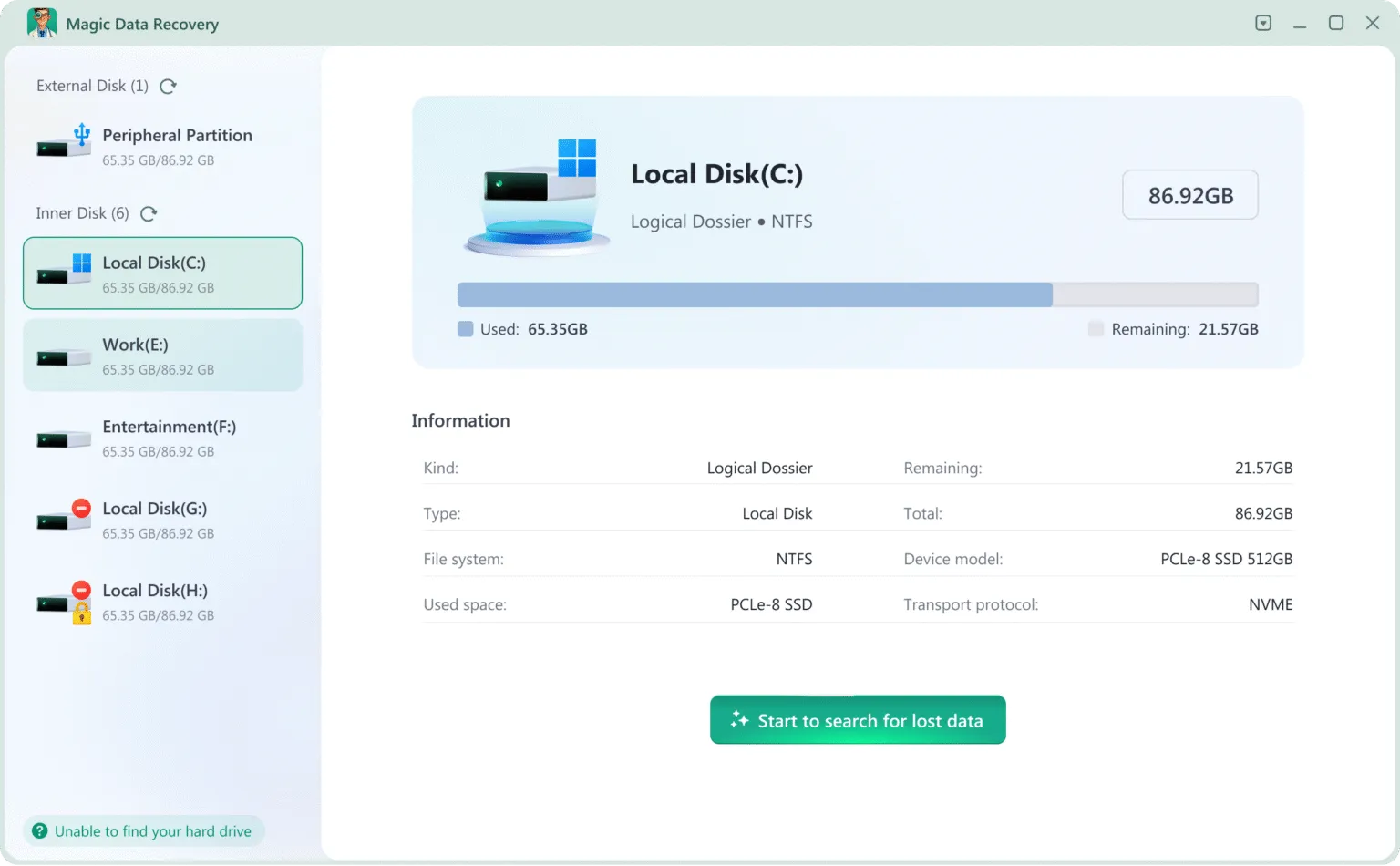
3. Start a Scan: Click the “Search for lost data” button to search for your lost files.
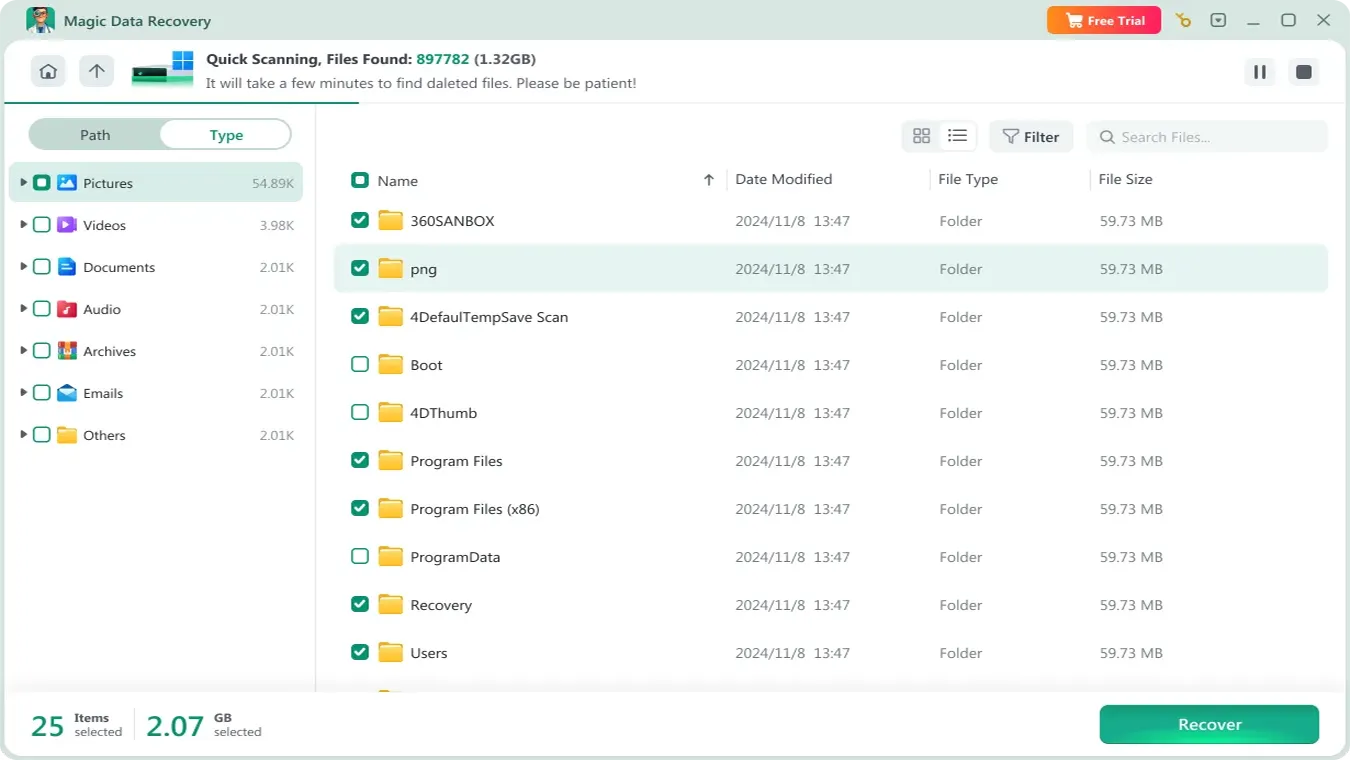
4. Preview Recoverable Files: Filter by file type and preview before recovery.

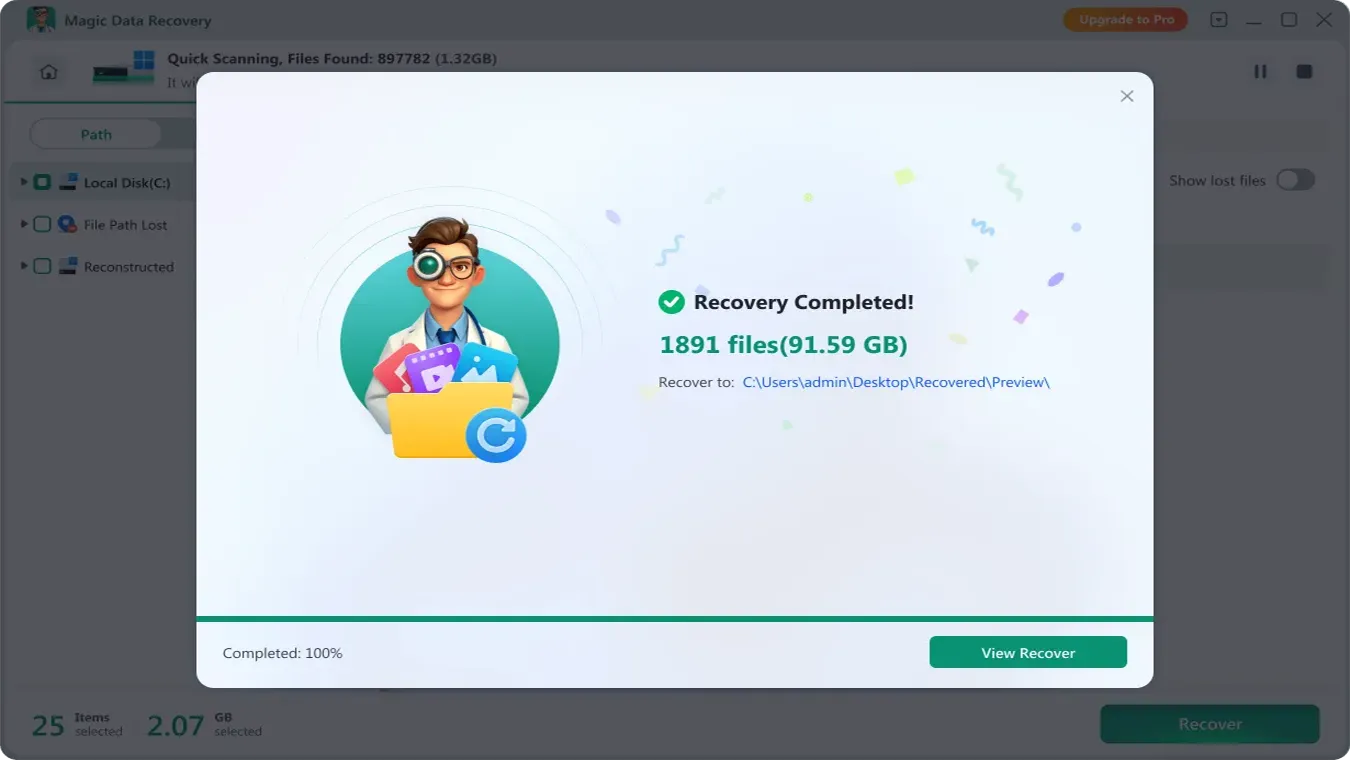
5. Recover Files Safely: Save recovered files to a different storage device.
HDD Recovery vs Professional Recovery Service
Situation | Software Recovery | Recovery Lab |
Deleted files | Excellent | Not necessary |
Quick format | Very good | Usually unnecessary |
RAW partition | Very good | Sometimes needed |
Virus damage | Good | Rarely needed |
Clicking HDD | Dangerous | Recommended |
Drive not detected | Limited | Strongly recommended |
Head crash | Impossible | Required |
Software works best for logical damage.
Mechanical failure requires professional service.
Choosing the wrong method can make recovery worse.
Common Mistakes to Avoid
Even when users choose the right HDD recovery software, small mistakes during the process can permanently reduce recovery success. In many cases, the failure happens not because the files are unrecoverable, but because the wrong actions were taken too early.
Understanding these common mistakes helps protect your data and improves the chances of successful HDD recovery. Before starting any scan or repair, make sure you avoid the following problems.
Running CHKDSK Too Early
Many users run CHKDSK immediately after seeing drive errors such as “Drive is not accessible” or “You need to format the disk before using it.”
This can be risky.
CHKDSK is designed to repair file system structures, but during that process, it may modify directory entries, overwrite metadata, or remove damaged file references. If important files still exist but the file system is unstable, these changes can make recovery much harder.
For valuable data, recovery should come first. Repair tools should come later.
Recovering Files to the Same Drive
This is one of the most dangerous mistakes in HDD recovery.
When recovered files are saved back to the original hard drive, they may overwrite other lost files that have not been restored yet. Once overwritten, those files are usually gone permanently.
Always save recovered files to:
- Another internal drive
- An external HDD or SSD
- A USB drive
- A network storage location
Using a separate destination protects the remaining recoverable data.
Installing Recovery Software on the Damaged HDD
Some users unknowingly install recovery software directly onto the affected drive.
This creates the same overwrite risk as saving recovered files to the same disk. Program installation writes new system files, temporary files, and registry data, which may replace deleted content.
The safer approach is simple:
Install recovery software on a different drive before scanning the damaged HDD.
Continuing to Use the Drive Normally
After accidental deletion or formatting, some users keep working as usual—downloading files, editing documents, or installing updates.
This greatly reduces recovery success.
Every new write operation increases the chance that deleted data will be overwritten. Even normal system background tasks can affect recoverability.
As soon as data loss happens:
Stop using the drive immediately.
This single step often makes the biggest difference.
Ignoring Early Warning Signs
Hard drives usually show warning signs before complete failure.
Common symptoms include:
- Slower file access
- Frequent freezing
- Unusual clicking sounds
- Missing folders
- CRC errors
- Partition suddenly becoming RAW
Many users ignore these signs until the drive becomes unreadable.
Early action is critical. Backing up important files and starting HDD recovery sooner often prevents much larger data loss later.
Trusting Unverified Free Tools
Free recovery tools can be useful, but not all of them are safe.
Some poorly designed tools may:
- Fail to recover complete files
- Corrupt existing partitions
- Cause further logical damage
- Mislead users with fake scan results
That is why choosing a trusted tool matters. Reliable software like Magic Data Recovery provides safer scanning, preview options, and better support for complex recovery scenarios without unnecessary risks.
Conclusion
Successful HDD recovery depends on speed, correct decisions, and the right tool.
Deleted files, formatted partitions, file system corruption, and virus damage are often recoverable—but only if you avoid overwrite and choose a reliable recovery method.
That is why we recommend Magic Data Recovery.
It solves real-world recovery problems, not just simple deletion cases. Its support for formatted drives, file system errors, virus damage, and lost partitions makes it a stronger solution than basic undelete tools.
More importantly, it provides a safer and easier workflow for normal users who need results without unnecessary complexity.
If your important files are missing, starting with the right recovery tool can make all the difference.
Supports Windows 7/8/10/11 and Windows Server
FAQs
Can deleted files really be recovered from an HDD?
Yes, in many cases. When files are deleted, the system usually removes only the file reference, not the actual data. Recovery remains possible until new data overwrites that space. That is why stopping drive usage immediately improves recovery success significantly.
Is formatted HDD recovery possible?
Yes, especially after a quick format. Quick formatting usually removes the file system structure rather than the actual files. Professional recovery software like Magic Data Recovery can often scan the drive deeply and restore lost files successfully.
Can I recover data from a RAW hard drive?
Yes. A RAW drive often means the file system is damaged or inaccessible. Recovery software can scan the partition directly and rebuild recoverable files. However, if physical damage exists, professional recovery service may be safer.
Should I use CHKDSK before HDD recovery?
Usually no. Running CHKDSK too early may modify the file system and overwrite important recovery information. It is better to attempt file recovery first, especially when the data is valuable and cannot be easily replaced.
Does virus damage affect HDD recovery?
Yes. Some viruses delete files, damage partitions, or corrupt file systems. In many cases, recovery software can still restore files if the drive remains readable. The sooner you stop using the infected drive, the better the recovery chance.
Can recovery software fix physically damaged hard drives?
No. If your HDD makes clicking sounds, is not detected, or has severe bad sectors, the issue may be physical. In that case, using software can worsen damage. Professional recovery labs are the safer choice.
Why should recovered files be saved to another drive?
Saving recovered files to the original drive may overwrite other lost files that have not been restored yet. Always choose another HDD, SSD, USB drive, or external disk as the recovery destination to protect remaining recoverable data.
Why is Magic Data Recovery better for HDD recovery?
Because it supports more than simple deleted file recovery. It handles formatted drives, RAW partitions, file system errors, virus damage, and lost partitions. This makes it a more complete and practical solution for real-world HDD recovery situations.

Jason is a data recovery and technical support specialist with over 15 years of hands-on experience. He has worked extensively with frontline users, troubleshooting difficult data loss cases and providing practical recovery solutions for accidental deletion, formatted drives, damaged file systems, lost partitions, system failures, and other recovery emergencies. His expertise also includes backup and restoration, file repair, and disaster recovery, with a strong emphasis on safe, reliable, and technically accurate guidance.