
Backup Data Recovery: Fix Lost Files

Backup data recovery becomes urgent when the backup you trusted does not work. Maybe your backup image is corrupted. Maybe the external drive that stored your backup is missing files. Or maybe you deleted photos before creating a proper backup. In these moments, you need more than a general “restore from backup” guide. You need a clear recovery path.
This guide explains how backup data recovery works when normal restore options fail. You will learn how to check backups, avoid common mistakes, recover lost files, and handle photo backup recovery without making the problem worse. We will also explain when a tool like Magic Data Recovery can help recover deleted, formatted, file-system-damaged, or virus-affected data.
Supports Windows 7/8/10/11 and Windows Server
The goal is simple: help you choose the safest next step before overwritten data turns a recoverable case into a permanent loss.
Table of Contents
What Is Backup Data Recovery?
Backup data recovery means recovering files when your backup plan does not restore the data correctly. It may involve restoring files from a working backup, repairing access to lost backup files, or scanning the original storage device when no usable backup exists.
A backup is only useful when you can restore it. However, real-world problems often appear at the worst time:
- The backup image cannot mount.
- The backup software reports corruption.
- The backup drive fails or disappears.
- The backup folder was deleted.
- Photos were removed before cloud sync finished.
- A virus damaged the file system or hid important files.
In these cases, backup recovery is not only about clicking “restore.” You must identify where the most recoverable copy still exists.
Why Backup Recovery Fails
Even careful users face failed backup recovery. A backup can look complete but still fail during restoration. In other cases, users discover too late that the backup never included the folder they need.
Corrupted Backup Image
A backup image is a file or container that stores a copy of selected files, partitions, or a whole system. It may use formats such as ISO, IMG, VHD, VMDK, or a vendor-specific backup format.
A corrupted backup image may fail because of:
- Interrupted backup creation
- Power loss during writing
- Bad sectors on the backup drive
- Incomplete cloud download
- File system errors
- Malware or ransomware damage
- Moving or renaming backup components incorrectly
When this happens, the backup software may refuse to mount or restore the image. This is where backup data recovery needs a second route: scan the original drive, the backup drive, or exported backup folders for recoverable files.
No Recent Backup
Many users search for backup data recovery after they realize the latest backup is too old. For example, a designer may have last backed up a project folder three months ago, but the deleted file was created last week.
In that situation, restoring the old backup will not solve the problem. You need file recovery from the original device, such as an HDD, SSD, USB drive, SD card, or external hard drive.
Lost or Deleted Backup Files
Sometimes the backup exists, but the backup folder itself gets deleted or formatted. This can happen when users clean an external drive, reinstall Windows, or format a memory card by mistake.
If the storage space has not been overwritten, a reliable backup data recovery tool may still locate recoverable backup files or the original documents, photos, videos, and archives.
Backup Data Recovery vs Backup Restore
Many users confuse these two terms. The difference matters because each one requires a different solution.
Situation | Best First Step | Why It Matters |
Backup is healthy | Restore from backup | Fastest and safest option |
Backup image is corrupted | Try repair or export, then scan storage | The image may not mount normally |
Backup files were deleted | Scan the backup drive | Deleted data may still exist before overwriting |
No backup exists | Scan the original device | Recovery depends on remaining data sectors |
Photos disappeared from SD card | Stop using the card and scan it | New photos may overwrite old ones |
Virus damaged files or folders | Scan with recovery software after security cleanup | Some files may still be recoverable |
In short, restore uses an available backup. Backup data recovery helps when that backup is missing, damaged, outdated, or unusable.
What to Do First When Backup Recovery Fails
The first few minutes matter. If you keep using the affected drive, you may overwrite recoverable data.
1. Stop Writing New Data
Do not save new files, install software, download updates, or copy folders to the affected drive. This is especially important for photo backup recovery on SD cards, USB drives, and camera cards.
For example, if wedding photos disappear from an SD card, stop using the card immediately. Do not take more photos. Remove the card and connect it to a computer through a reliable card reader.
2. Check All Backup Locations
Before scanning, check every likely backup source:
- External hard drives
- USB flash drives
- NAS folders
- OneDrive, Google Drive, Dropbox, or iCloud
- Windows File History
- Recycle Bin or Trash
- Old computer folders
- Camera memory cards
- Email attachments or shared folders
This step saves time. If you find a working backup, you may not need deeper backup data recovery.
3. Do Not Reformat the Drive Again
Some users format a drive again because Windows asks them to. Avoid that. Formatting may rebuild file system structures and reduce recovery chances. Instead, use recovery software to scan the device first.
4. Save Recovered Files to Another Drive
Never save recovered files back to the same device. Use a separate hard drive, SSD, or external storage. This reduces the risk of overwriting data that the recovery scan has not finished locating.
How to Recover Data When the Backup Image Is Corrupted
A corrupted backup image does not always mean your files are gone. Use this backup data recovery workflow.
Step 1: Try the Original Backup Software
Open the software that created the image. Look for options such as repair, verify, mount, export, or browse backup. Some backup programs can export individual files even when a full system restore fails.
Step 2: Copy the Backup Image Before Testing
Make a copy of the damaged backup image if the drive still works. Run repair attempts on the copy, not the only original file. This protects the remaining data from further damage.
Step 3: Scan the Backup Storage Drive
If the image cannot open, scan the drive that stores it. Magic Data Recovery can help find deleted, lost, or formatted files from storage devices. This approach may recover the backup image itself or recover the original files directly.
Step 4: Scan the Original Device
When the backup image cannot restore, the original drive may still contain recoverable traces of your files. This is where backup data recovery becomes broader than backup repair. A deep scan can search for documents, photos, videos, archives, and other file types that still remain on the disk.
Photo Backup Recovery: What Makes Photos Different?
Photo backup recovery has unique challenges. Photos often come from SD cards, phones, cameras, drones, or external drives. They may use JPG, PNG, HEIC, TIFF, CR2, NEF, ARW, DNG, or other RAW formats.
Common photo loss cases include:
- Deleted camera folders
- Formatted SD cards
- Failed photo import
- Corrupted memory card
- Cloud sync deletion
- External photo backup drive failure
- Virus-hidden photo folders
For photo backup recovery, speed matters. If you continue taking photos on the same card, the camera may write new image data over deleted files. Also, do not run “repair” commands before recovery if you do not understand their effect. First, scan and preview recoverable photos.
Magic Data Recovery supports many image and RAW formats, which makes it useful for photographers, content creators, students, and everyday users who need a practical photo backup recovery solution.
Why Recommend Magic Data Recovery?
Magic Data Recovery is a Windows data recovery tool designed for common file loss scenarios. It can help when users need backup data recovery but cannot rely on a working backup.
Core Pain Points It Solves
Magic Data Recovery can help in situations such as:
- Deleted files after emptying Recycle Bin
- Lost backup folders on an external drive
- Formatted USB drives or SD cards
- File system errors that make data inaccessible
- Virus-damaged or hidden files
- Missing photos, videos, documents, and archives
- Lost files when the backup image cannot restore
It does not promise impossible recovery. No software should. If data has been overwritten or the device has severe physical damage, a professional recovery lab may be necessary. However, for logical data loss, Magic Data Recovery gives users a practical way to scan, preview, and recover files.
Unique Selling Points
Magic Data Recovery stands out because it focuses on usability and broad recovery coverage:
- Simple scan workflow for non-technical users
- Support for many file types, including photos, videos, documents, audio, archives, and emails
- Useful for deleted, formatted, lost, and file-system-error scenarios
- Preview before recovery to reduce guesswork
- Works with hard drives, SSDs, USB drives, SD cards, and memory cards
- Helps users recover files without sending private data to a third party
For users who feel overwhelmed by technical recovery tools, this matters. A good backup data recovery tool should not require command-line knowledge.
Why It Can Be More Reliable Than Manual Methods
Manual methods work only when a valid backup exists or when files remain in the Recycle Bin. However, backup failure cases often need deeper scanning.
Compared with manual restore methods, Magic Data Recovery gives you more recovery paths:
- It scans storage sectors instead of relying only on visible folders.
- It can locate files after deletion or formatting.
- It helps filter results by file type.
- It lets users preview recoverable files before saving.
- It supports common photo, document, video, and archive formats.
If you need a more efficient solution for backup data recovery, Magic Data Recovery is worth trying before you give up on lost files.
Supports Windows 7/8/10/11 and Windows Server
How to Use Magic Data Recovery for Backup Data Recovery
Follow this safe workflow.
Step 1: Install It on a Different Drive
Do not install recovery software on the drive where files were lost. For example, if your lost backup was on Drive D, install the software on Drive C or an external device.
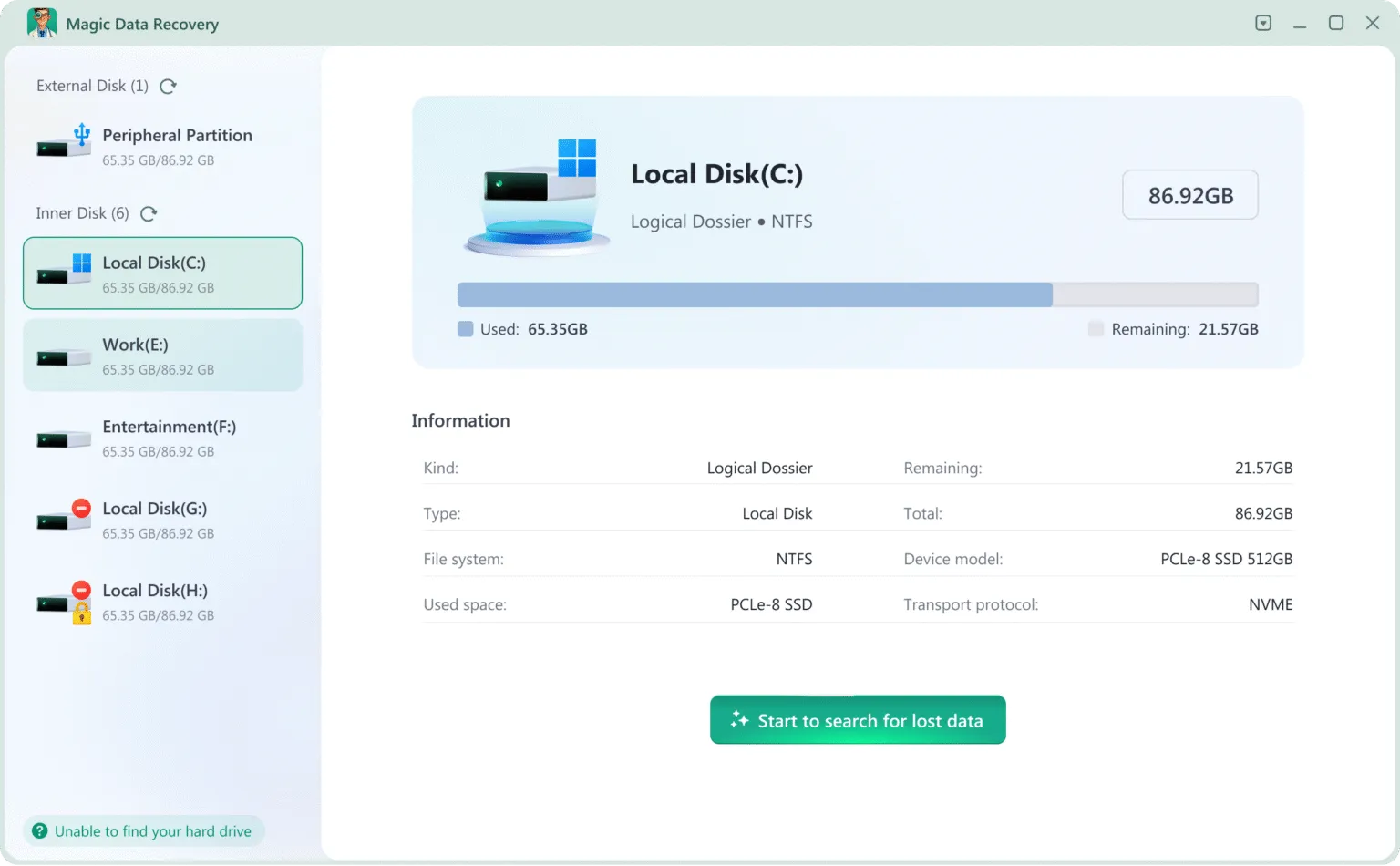
Step 2: Select the Affected Drive
Choose the drive, partition, SD card, USB drive, or external hard drive that stored the lost files or failed backup.
Step 3: Start the Scan
Run a scan and allow it to finish. A quick scan may find recently deleted files. A deeper scan can help after formatting, file system errors, or missing partitions.
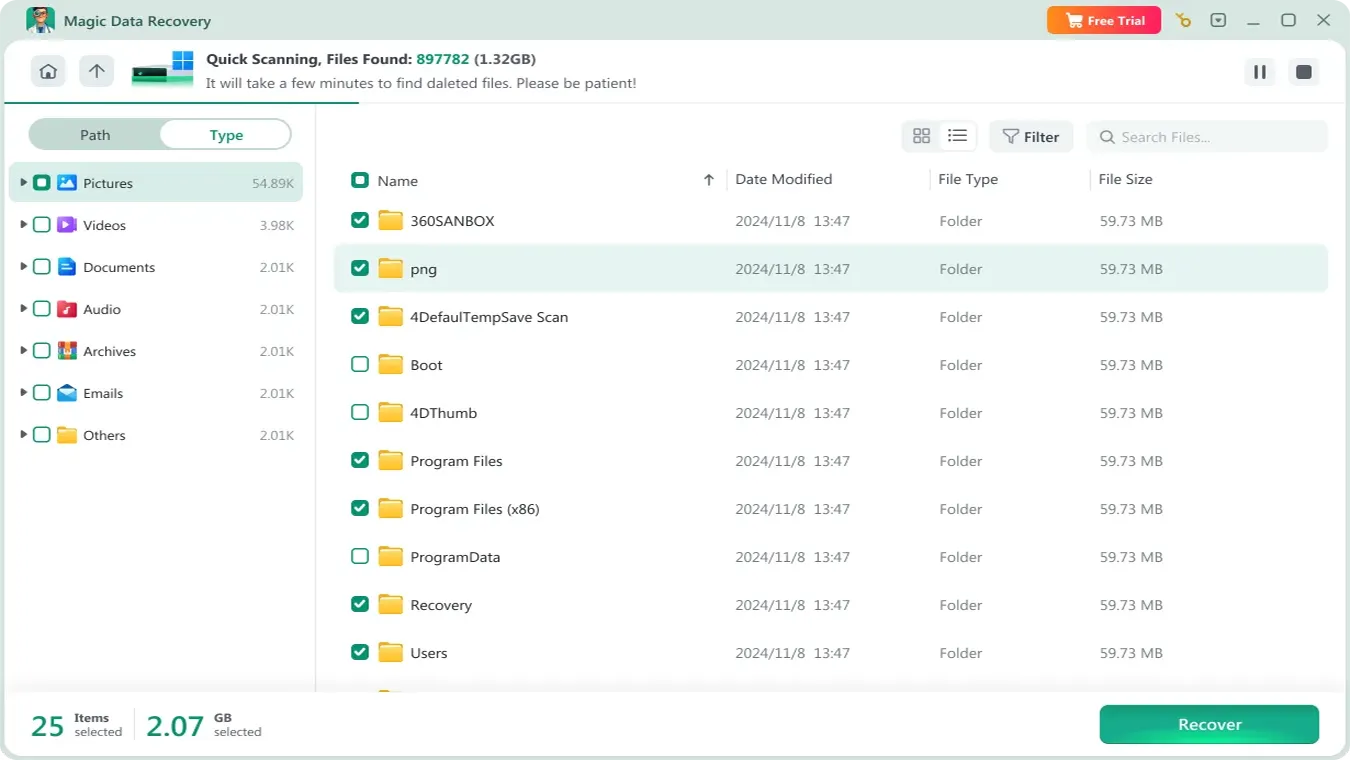
Step 4: Filter and Preview Files
Use filters to locate photos, documents, videos, archives, or backup images. For photo backup recovery, filter by JPG, PNG, HEIC, RAW, CR2, NEF, ARW, or DNG when available.
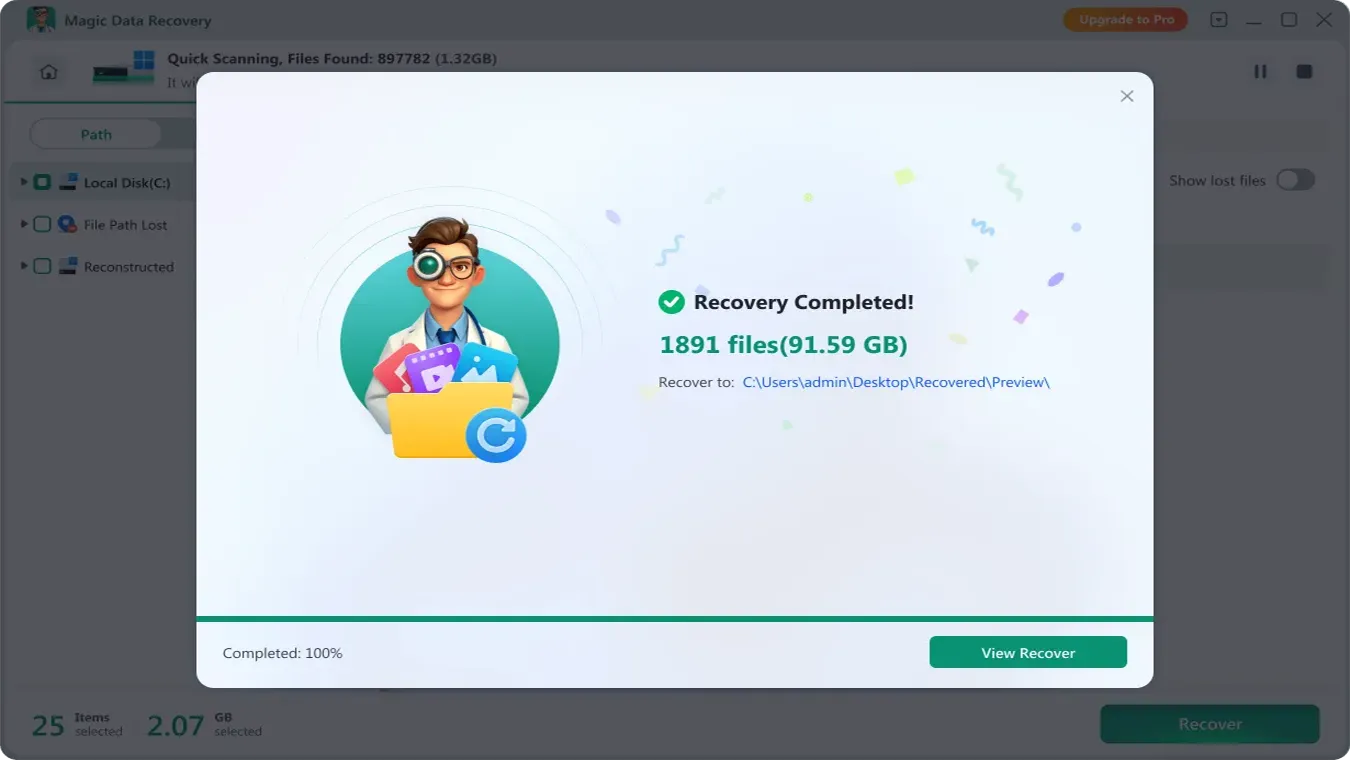
Step 5: Recover to a Safe Location
Save recovered files to another drive. Do not restore them to the damaged or scanned device.
Best Practices to Avoid Future Backup Recovery Problems
A strong backup plan reduces the need for emergency backup data recovery.
Use the 3-2-1 Backup Rule
Keep three copies of important data, store them on two different media types, and keep one copy offsite or in the cloud. This gives you options when one backup fails.
Test Your Restores
A backup that you never test may fail when you need it. Schedule a monthly restore test for important folders, photos, and business documents.
Keep Photos in More Than One Place
For photo backup recovery prevention, copy camera files to at least two locations before formatting the card. A good workflow may include one external SSD and one cloud storage account.
Avoid Only Sync-Based Protection
Sync is not the same as backup. If you delete a synced file, the deletion may sync across devices. Use versioned backup or separate archive storage for critical files.
Protect Backup Drives from Malware
Disconnect backup drives when you do not use them. Malware can damage connected drives, encrypt backup files, or delete backup folders.
Common Mistakes That Reduce Recovery Success
Avoid these errors during backup data recovery:
- Continuing to use the affected drive
- Installing software on the same device
- Saving recovered files back to the original location
- Formatting the drive repeatedly
- Running random repair commands before scanning
- Trusting a single backup copy
- Ignoring restore tests
- Using cracked recovery tools that may contain malware
A careful process improves your chance of getting files back.
Conclusion
Backup data recovery is not only about restoring from a backup. It is about finding the safest recovery path when the backup image is corrupted, the backup folder is missing, photos were deleted before backup, or the storage device has file system errors.
Start by stopping all writes to the affected device. Then check existing backups, scan the right drive, preview recoverable files, and save them to another location. For users who need a clear, practical, and beginner-friendly solution, Magic Data Recovery is a strong choice. It supports common data loss scenarios such as deletion, formatting, file system errors, and virus-related damage, making it useful for both general backup recovery and photo backup recovery.
If you are looking for a safer way to recover lost files after a failed backup, try Magic Data Recovery and check what can still be restored before taking riskier steps.
Supports Windows 7/8/10/11 and Windows Server
FAQs
What is backup data recovery?
Backup data recovery is the process of recovering files when a normal backup restore does not work. This may happen because the backup image is corrupted, the backup drive failed, or the backup files were deleted. In many cases, users need to scan the original device or backup storage drive to find recoverable files.
Can I recover data from a corrupted backup image?
Yes, sometimes you can recover data from a corrupted backup image, but success depends on the damage. First, try the repair or export option in the original backup software. If that fails, scan the backup storage drive or the original device with recovery software like Magic Data Recovery to locate recoverable files.
What should I do if I forgot to back up my files?
Stop using the affected device immediately. Then check the Recycle Bin, cloud sync folders, external drives, and old storage devices. If no backup exists, use backup data recovery software to scan the original drive. Save any recovered files to a different location to avoid overwriting remaining recoverable data.
How does photo backup recovery work?
Photo backup recovery works by checking available backups first, then scanning the original storage device if the backup is missing or outdated. For SD cards and camera cards, stop taking new photos immediately. Recovery software can scan for image files such as JPG, PNG, HEIC, TIFF, and RAW formats before they are overwritten.
Is backup recovery possible after formatting a drive?
Yes, backup recovery may still be possible after formatting, especially if you performed a quick format and have not written new data to the drive. A deep scan can search for remaining file data. However, recovery becomes harder if the drive has been reused heavily or overwritten with new files.
Can Magic Data Recovery recover virus-damaged files?
Magic Data Recovery can help recover files lost because of virus damage, deletion, formatting, or file system errors. However, no tool can guarantee recovery if malware overwrote, encrypted, or destroyed the original data. Remove the security threat first, then scan the affected drive and save recovered files to a safe location.
Should I repair the drive before running recovery software?
Usually, you should scan and recover important files before running aggressive repair commands. Some repair tools may change file system structures and reduce recovery chances. For safer backup data recovery, first create a copy if possible, then scan the affected drive and recover files to another storage device.
Why choose Magic Data Recovery instead of manual restore?
Manual restore works only when a valid backup exists. Magic Data Recovery helps when the backup is missing, corrupted, outdated, or deleted. It can scan storage devices, find lost files, preview recoverable items, and restore them to a safe location. This makes it useful for real-world backup data recovery problems.

Jason is a data recovery and technical support specialist with over 15 years of hands-on experience. He has worked extensively with frontline users, troubleshooting difficult data loss cases and providing practical recovery solutions for accidental deletion, formatted drives, damaged file systems, lost partitions, system failures, and other recovery emergencies. His expertise also includes backup and restoration, file repair, and disaster recovery, with a strong emphasis on safe, reliable, and technically accurate guidance.