
Laptop Data Recovery Guide
Losing important files from a laptop can interrupt work, school, business, and personal life in minutes. A laptop may fail to boot, a folder may disappear after accidental deletion, or a partition may become unreadable after formatting or a file system error. In these cases, laptop data recovery becomes the safest next step before you try risky repairs.
This guide explains how laptop data recovery works, what you should do first, which recovery methods are worth trying, and when to use professional software such as Magic Data Recovery. It focuses on practical data recovery solutions for ordinary users while keeping the technical details clear and reliable.
Supports Windows 7/8/10/11 and Windows Server
Table of Contents
What Is Laptop Data Recovery?
Laptop data recovery means retrieving lost, deleted, formatted, or inaccessible files from a laptop storage device. This storage device may be an HDD, SSD, internal drive, external drive, or memory card connected to the laptop.
In many cases, lost files do not disappear immediately. When you delete a file, the operating system often marks its storage space as available. The real file content may still remain on the drive until new data overwrites it. That is why quick action matters.
Common recovery targets include:
- Documents, PDFs, and spreadsheets
- Photos, videos, and audio files
- Work folders and project files
- Downloads and desktop files
- Files from deleted, formatted, or damaged partitions
However, recovery results depend on the data loss scenario, drive condition, and how much new data the laptop writes after the loss.
Common Laptop Data Loss Scenarios
Before choosing a recovery method, you need to understand what caused the data loss. Different problems require different solutions.
Accidental Deletion
This is one of the most common reasons users search for laptop data recovery. You may delete files with Shift + Delete, empty the Recycle Bin, or remove the wrong folder during cleanup.
If you notice the mistake quickly, stop saving new files to the laptop. Then check the Recycle Bin, backup folders, cloud sync services, and recovery software.
Formatted Laptop Drive
Formatting a drive removes the file system structure that helps Windows display files normally. A quick format may leave recoverable data behind, while a full format or heavy rewriting reduces the chance of recovery.
For this reason, avoid reinstalling Windows or copying new files to the formatted drive before scanning it.
File System Error
A laptop drive may become inaccessible because of file system corruption. You may see messages such as “You need to format the disk before you can use it,” “The file or directory is corrupted,” or “Drive is not accessible.”
Microsoft explains that CHKDSK checks the file system and file system metadata for logical and physical errors, but repair tools can change disk structures. Use them carefully when important data still needs recovery.
Laptop Will Not Boot
A non-booting laptop does not always mean your files are gone. The issue may come from Windows failure, motherboard problems, power issues, or a damaged system partition. In many cases, users can remove the laptop drive and connect it to another computer with a compatible adapter or enclosure. Several recovery guides cover this approach as a common method for dead or non-booting computers.
Virus Attack or System Crash
Malware, forced shutdowns, failed updates, or system crashes can damage files or make folders disappear. If you suspect malware, disconnect the laptop from the network and avoid running unknown repair tools. Then recover important files to another safe drive.
What to Do First Before Laptop Data Recovery
Good first steps can improve your recovery chance. Bad first steps can make lost data harder to restore.
Stop Using the Laptop Immediately
Do not download software, install updates, copy files, or save new documents to the affected drive. Every new write operation may overwrite deleted or lost file content.
If the lost files were on the system drive, shut down the laptop and prepare recovery from another device when possible.
Do Not Format the Drive Again
When Windows asks you to format an inaccessible drive, cancel the prompt. Formatting may make the drive usable again, but it can also damage the original file structure needed for recovery.
Save Recovered Files to Another Drive
Never recover files back to the same laptop drive you are scanning. Use an external hard drive, USB drive, or another healthy partition. This helps prevent overwriting files that are still waiting for recovery.
Check for Physical Damage
If the laptop drive makes clicking, grinding, or unusual buzzing sounds, stop DIY recovery. Physical damage needs a professional data recovery lab. Software works best for logical data loss, not broken hardware.
How to Perform Laptop Data Recovery Step by Step
The best method depends on your situation. Start with the safest options first.
Method 1: Restore from Recycle Bin
If you deleted files normally, open the Recycle Bin first. Find the files, right-click them, and choose Restore. Windows will return them to their original location.
This method is fast, safe, and free. However, it will not help if you used Shift + Delete, emptied the Recycle Bin, formatted the drive, or lost files due to corruption.
Method 2: Restore from Backup
If you use Windows Backup, File History, OneDrive, or another backup service, check your backup before scanning the drive. Microsoft provides built-in backup and restore options for Windows users, including File History and Windows Backup.
Backups work best when they were enabled before the data loss happened. If no backup exists, move to recovery software.
Method 3: Use Laptop Data Recovery Software
When files are deleted, formatted, or missing because of logical errors, recovery software is usually the most practical option. A good laptop data recovery tool should scan the drive deeply, identify lost files clearly, and allow users to preview recoverable data before saving it.
This is where Magic Data Recovery becomes useful. It helps recover lost files from common laptop data loss scenarios, including accidental deletion, formatting, partition problems, and file system errors. It also supports a clear scan-and-preview workflow, which helps users avoid guessing which files they need.
Method 4: Remove the Laptop Drive and Connect It to Another PC
If the laptop cannot boot but the internal drive still works, you can remove the drive and connect it to a working computer with a USB enclosure, SATA-to-USB adapter, or compatible NVMe enclosure.
After the second computer recognizes the drive, scan it with recovery software. This method helps when Windows on the original laptop fails but the storage device still responds.
Method 5: Contact a Professional Recovery Service
Choose a professional service when the laptop drive has physical damage, severe water damage, fire damage, or repeated read failures. Do not keep powering on a damaged drive. A lab may use controlled tools and hardware-level recovery methods.
Why Magic Data Recovery Is Recommended for Laptop Data Recovery
Many users do not lose files because of one single reason. A laptop may involve deleted files, formatted partitions, file system errors, system crashes, and unreadable folders at the same time. Therefore, the recovery tool should handle more than one basic scenario.
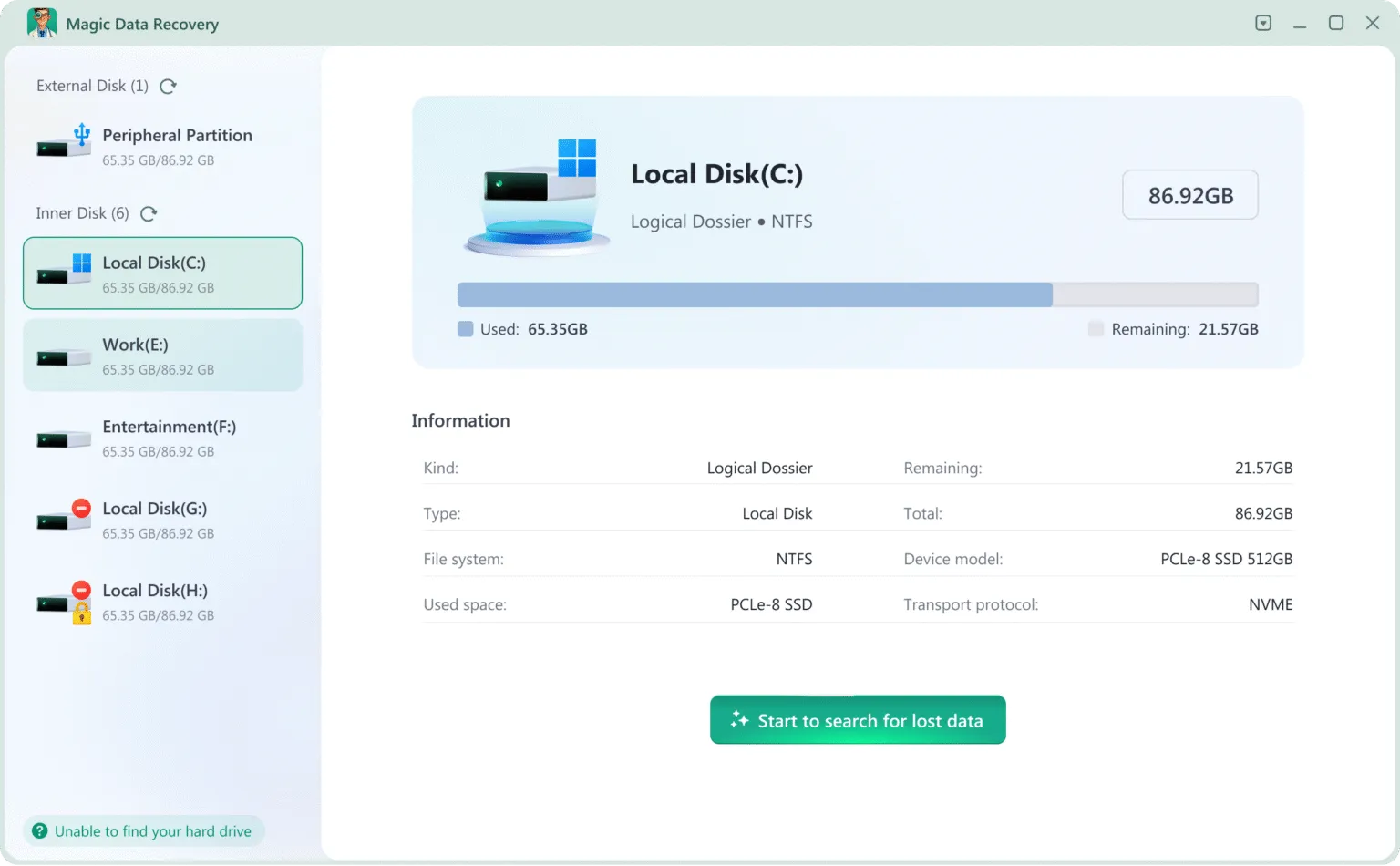
Magic Data Recovery is recommended because it focuses on practical recovery needs instead of complex technical operations.
Core Pain Points It Solves
Magic Data Recovery helps users when they need to:
- Recover deleted laptop files after emptying the Recycle Bin
- Restore data from a formatted laptop drive
- Scan inaccessible partitions caused by file system errors
- Find lost files after system crashes or accidental operations
- Preview recoverable files before saving them
This makes it suitable for users who need a guided laptop data recovery solution without handling command-line tools.
Key Advantages of Magic Data Recovery
First, Magic Data Recovery supports multiple data loss scenarios, including deletion, formatting, and file system errors. This matters because users often do not know the exact cause of the problem.
Second, it offers a more straightforward workflow. Users can select a drive, start scanning, preview found files, and recover them to another location.
Third, it helps locate lost files more accurately through scanning and file filtering. This saves time when the laptop contains many folders, old files, and duplicate file names.
Finally, compared with manual repair attempts, recovery software gives users a safer first step. Instead of changing the damaged file system immediately, users can scan and save important files first.
Example Use Cases
You may use Magic Data Recovery when:
- You deleted a work folder from the laptop desktop
- A laptop partition became RAW or inaccessible
- You formatted the wrong drive during Windows setup
- Important photos disappeared after a system crash
- A laptop drive connected to another PC shows missing files
If you are looking for a more efficient laptop data recovery solution, Magic Data Recovery is worth trying before you move to more expensive recovery options.
Supports Windows 7/8/10/11 and Windows Server
Magic Data Recovery vs Other Laptop Recovery Methods
Different recovery methods solve different problems. The best choice depends on risk, difficulty, and data loss type.
Method | Best For | Limitations |
Recycle Bin | Recently deleted files | Cannot recover permanently deleted files |
Backup | Files saved before data loss | Requires backup enabled in advance |
Windows File Recovery | Deleted local files | Command-line workflow may confuse beginners |
CHKDSK | File system checking | May modify the drive structure |
Professional service | Physical damage | Usually costs more and takes longer |
Magic Data Recovery | Deleted, formatted, and inaccessible laptop files | Works best when the drive is still detectable |
Microsoft’s Windows File Recovery can recover deleted files from local storage devices, but it uses a command-line interface. For many ordinary users, a visual recovery tool such as Magic Data Recovery offers a simpler path.
Best Practices to Improve Laptop Data Recovery Success
A careful recovery process matters as much as the tool you choose. Follow these tips before and during recovery.
Recover to a Different Storage Device
Always save recovered files to another drive. This prevents recovered data from overwriting other lost files on the same laptop drive.
Use Preview Before Recovery
Preview helps you confirm whether the file is useful before saving it. This is especially helpful when file names are damaged or folders are missing.
Avoid Reinstalling Windows Too Soon
A Windows reinstall may write large amounts of new data to the system drive. If your lost files were on the same drive, recovery chances may drop.
Scan the Correct Partition
Many laptops contain several partitions, such as C:, D:, recovery partitions, and hidden system partitions. Choose the partition where the files were stored before they disappeared.
Act Quickly but Carefully
Fast action helps, but rushing can create new problems. Do not run random repair commands, format the drive, or save new files before recovery.
Common Mistakes to Avoid
Many users make data loss worse by trying too many fixes too quickly. Avoid the following mistakes.
Mistake 1: Installing Recovery Software on the Affected Drive
If you install software on the same drive that lost files, the installation may overwrite recoverable data. Install the tool on another drive or use a second computer when possible.
Mistake 2: Running CHKDSK Before Recovering Files
CHKDSK may help repair file system errors, but it can also change the drive structure. If the data is important, recover files first and repair the drive later.
Mistake 3: Saving Recovered Files Back to the Same Drive
This can overwrite other files that the scan has not recovered yet. Use a separate storage device.
Mistake 4: Ignoring Physical Warning Signs
Software cannot fix mechanical damage. If the laptop drive makes unusual noises or disconnects repeatedly, stop and contact a professional.
How to Prevent Laptop Data Loss in the Future
After finishing laptop data recovery, build a simple prevention plan.
Use the 3-2-1 backup rule if possible: keep three copies of important data, store them on two different types of media, and keep one copy offsite or in the cloud. Also, enable Windows Backup or File History, sync key folders to cloud storage, and avoid forcing shutdowns during updates.
In addition, check laptop drive health regularly. If the drive shows errors, slow loading, or frequent crashes, back up your files and replace it before it fails completely.
Conclusion: Choose the Right Laptop Data Recovery Solution
Laptop data recovery should start with safe steps: stop using the affected drive, check backups, avoid formatting, and recover files to another storage device. If the laptop drive is still detectable and the loss comes from deletion, formatting, file system errors, or software issues, recovery software can often provide a practical solution.
That is why Magic Data Recovery is recommended. It supports common laptop data loss scenarios, offers a clear scan-and-preview process, and helps users recover files without relying on complicated command-line operations. If you need a reliable and user-friendly laptop data recovery solution, Magic Data Recovery is a strong option to try.
Supports Windows 7/8/10/11 and Windows Server
FAQs
What is laptop data recovery?
Laptop data recovery is the process of retrieving deleted, formatted, lost, or inaccessible files from a laptop drive. It may involve checking the Recycle Bin, restoring from backups, scanning the drive with recovery software, or using a professional service when physical damage exists. The right method depends on the cause of data loss.
Can I recover deleted files from my laptop?
Yes, you may recover deleted laptop files if the original data has not been overwritten. First, check the Recycle Bin and backups. If they do not help, use a recovery tool such as Magic Data Recovery to scan the affected drive, preview recoverable files, and save them to another storage device.
Can I recover data from a laptop that will not boot?
Yes, in many cases. If the laptop cannot boot because of system failure but the internal drive still works, you can remove the drive and connect it to another computer with a compatible adapter or enclosure. Then use laptop data recovery software to scan the drive and recover important files.
Is formatted laptop data recovery possible?
Formatted laptop data recovery is possible when the drive has not been heavily overwritten. A quick format often removes file system references but may leave file content on the drive. Stop using the laptop immediately and scan the formatted partition with Magic Data Recovery before installing Windows or copying new files.
Should I run CHKDSK before recovering laptop files?
Not always. CHKDSK can check and repair file system errors, but it may change the structure of the drive. If the files are important, recover them first with reliable laptop data recovery software. After saving your files to another drive, you can repair the disk more safely.
Why should I not save recovered files to the same laptop drive?
Saving recovered files to the same drive can overwrite other lost data that still needs recovery. This may reduce your chances of restoring additional files. Always save recovered files to an external hard drive, USB drive, or another healthy partition during the laptop data recovery process.
Is Magic Data Recovery suitable for beginners?
Yes. Magic Data Recovery is suitable for beginners because it follows a simple workflow: select the drive, scan for lost files, preview results, and recover files to another location. It helps users handle deletion, formatting, and file system error scenarios without requiring advanced technical skills.
When should I contact a professional data recovery service?
Contact a professional service if the laptop drive has physical damage, strange clicking sounds, water damage, fire damage, or repeated connection failures. Software is better for logical data loss, such as deletion or formatting. If hardware damage exists, continued DIY attempts may make recovery harder.

Jason is a data recovery and technical support specialist with over 15 years of hands-on experience. He has worked extensively with frontline users, troubleshooting difficult data loss cases and providing practical recovery solutions for accidental deletion, formatted drives, damaged file systems, lost partitions, system failures, and other recovery emergencies. His expertise also includes backup and restoration, file repair, and disaster recovery, with a strong emphasis on safe, reliable, and technically accurate guidance.