
How to Scan a Hard Drive for Bad Sectors Safely
Hard drives are still widely used for storing photos, work documents, videos, and system files. When performance drops or files suddenly become inaccessible, many users start searching for how to scan a hard drive for bad sectors to identify hidden disk problems.
Understanding how to scan HDD for bad sectors helps detect disk damage early, prevent system crashes, and reduce the risk of permanent data loss. This guide explains why bad sectors form, how to recognize warning signs, and what actions to take when errors appear.
Table of Contents
What Are Bad Sectors on a Hard Drive?
A bad sector is a portion of the hard drive that can no longer reliably store or read data. When the system tries to access these areas, errors occur.
Bad sectors usually fall into two categories:
- Logical bad sectors – Caused by software errors, file system corruption, or improper shutdowns
- Physical bad sectors – Result from hardware damage, aging disks, or manufacturing defects
While logical bad sectors can sometimes be repaired, physical ones usually cannot. This is why learning how to scan a hard drive for bad sectors early is essential.
Why Do Bad Sectors Form?
Bad sectors don’t appear overnight. They develop due to common, real-world usage scenarios.
1. Physical Wear and Aging
Hard drives contain moving parts. Over time, mechanical wear increases the chance of sector failure.
2. Sudden Power Loss
Unexpected shutdowns interrupt read/write processes and may corrupt sectors.
3. Improper Disk Removal
Disconnecting external HDDs without safe removal often leads to file system errors.
4. Malware or Software Crashes
Malicious software and unstable programs can damage sector data structures.
5. Manufacturing Defects
Some disks leave the factory with weak sectors that fail later under stress.
Industry best practice recommends scanning drives regularly, especially after crashes or power failures.
Common Symptoms of Bad Sectors
You may not see a warning message immediately. Instead, bad sectors reveal themselves through subtle signs:
- Files fail to open or become corrupted
- Frequent system freezes or blue screens
- Unusual clicking or grinding noises
- Disk check prompts at startup
- Slow file transfers and long boot times
If you notice these symptoms, it’s time to learn how to scan HDD for bad sectors before the situation worsens.
How to Scan a Hard Drive for Bad Sectors (Step-by-Step)
There are several proven ways to scan for bad sectors. Choose the method that fits your experience level and operating system.
Method 1: Use Built-in Windows Tools (CHKDSK)
Windows includes a disk scanning utility (CHKDSK) that can identify logical bad sectors.
Steps:
- Open Command Prompt as Administrator
- Type: chkdsk C: /f /r (replace C: with your drive letter)
- Press Enter and restart if prompted
The /r parameter helps locate bad sectors and recover readable data.
This method is ideal for users looking for a basic approach to how to scan a hard drive for bad sectors.
Method 2: Scan HDD Using Disk Management Tools
Some hard drive manufacturers provide diagnostic utilities, such as SMART monitoring tools.
Benefits:
- Detect early warning signs
- Monitor disk health trends
- Identify physical sector failures
However, these tools usually do not recover data.
Method 3: Use Third-Party Disk Scanning Software
Advanced disk tools offer deeper scans and clearer reports. They are useful when built-in utilities fail or freeze during scanning.
Experienced users often rely on third-party solutions to fully understand how to scan HDD for bad sectors on aging drives.
What to Do After Finding Bad Sectors?
Once bad sectors are detected, avoid writing new data to the drive.
Recommended actions:
- Back up accessible files immediately
- Clone the disk if possible
- Replace the drive if physical sectors increase
- Use data recovery software for inaccessible files
Ignoring bad sectors often leads to total drive failure.
Recovering Data Lost Due to Bad Sectors
Bad sectors can make files unreadable even if they still exist. At this stage, standard file copying no longer works.
This is where Magic Data Recovery becomes a practical solution.
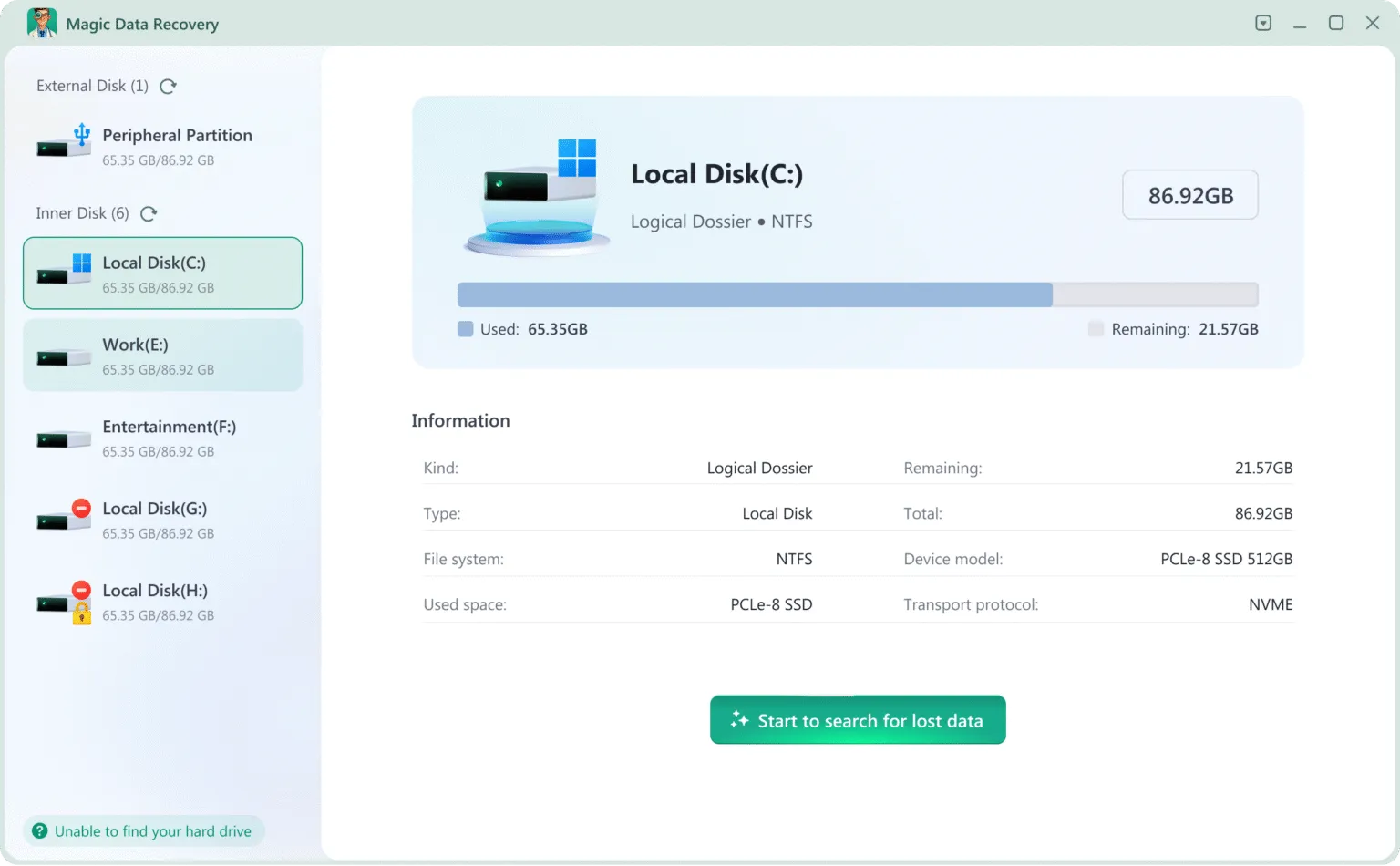
Why Use Magic Data Recovery?
Magic Data Recovery is designed to handle complex disk errors, including sector-level damage.
Key advantages:
- Reads data from unstable or partially damaged sectors
- Supports recovery from HDDs affected by bad sectors
- Works with formatted, corrupted, or inaccessible drives
- User-friendly interface suitable for non-technical users
Real-World Use Case
A common scenario involves an external HDD that disconnects during file transfer. After scanning reveals bad sectors, Magic Data Recovery can extract photos and documents that Windows can no longer read.
Compared to manual methods, it provides a safer and more reliable recovery path.
If you’re looking for an efficient solution after learning how to scan a hard drive for bad sectors, Magic Data Recovery is worth considering.
Supports Windows 7/8/10/11 and Windows Server
Conclusion
Understanding how to scan a hard drive for bad sectors is an essential skill for protecting your data. Bad sectors often develop silently but can cause serious damage if ignored. By recognizing symptoms early and knowing how to scan HDD for bad sectors, you gain control over potential disk failures.
When data loss occurs, tools like Magic Data Recovery offer a dependable way to retrieve important files without unnecessary risk. Regular scanning, proper shutdowns, and timely recovery actions remain the best defense against hard drive failure.
FAQs
What is the best way to scan a hard drive for bad sectors?
Can bad sectors be repaired permanently?
How often should I scan my HDD for bad sectors?
Does scanning a hard drive delete data?
Are bad sectors a sign of imminent drive failure?
How do I know if data loss is caused by bad sectors?
Can data recovery software work on drives with bad sectors?
Should I keep using a hard drive with bad sectors?

Jason is a data recovery and technical support specialist with over 15 years of hands-on experience. He has worked extensively with frontline users, troubleshooting difficult data loss cases and providing practical recovery solutions for accidental deletion, formatted drives, damaged file systems, lost partitions, system failures, and other recovery emergencies. His expertise also includes backup and restoration, file repair, and disaster recovery, with a strong emphasis on safe, reliable, and technically accurate guidance.