
Corrupted Word File Recovery Software Guide

If an important Word document suddenly refuses to open, most users start searching for corrupted word file recovery software right away. That reaction makes sense. A damaged file can block access to contracts, reports, school papers, or client drafts in seconds. However, one key detail often gets missed: sometimes the Word file is only corrupted, while in other cases the file is already deleted, lost after formatting, or hidden by a file system problem.
This guide explains both sides clearly. First, you will learn the usual ways to repair a damaged Word file. Then, if the document is no longer accessible because of deletion, formatting, partition issues, or storage errors, you will see why Magic Data Recovery is the more reliable next step. Microsoft officially recommends built-in recovery options such as Open and Repair, Recover Text, and AutoRecover-related features for damaged Office files. At the same time, Amagicsoft positions Magic Data Recovery as a read-only recovery solution for deleted, formatted, and file-system-related loss scenarios.
Supports Windows 7/8/10/11 and Windows Server
Table of Contents
What Is Corrupted Word File Recovery Software?
Corrupted word file recovery software refers to tools designed to help you restore access to Word documents when they become unreadable, damaged, or missing. In practice, this can include two different categories:
- Word repair tools that fix the file structure of a damaged DOC or DOCX file
- Data recovery tools that scan a drive and recover the original file after deletion, formatting, or file system errors
This distinction matters. If your file still exists but Word throws an error, a repair method may be enough. If the file disappeared, the drive turned RAW, or you formatted the storage device, you need a recovery-focused solution instead.
Common Signs of a Corrupted Word File
Before choosing any corrupted word file recovery software, check the symptoms. Typical signs include:
- Word says the file cannot be opened
- The document opens as blank text
- Formatting, images, or tables are missing
- The file name exists, but the content looks unreadable
- The document disappeared after a crash, unsafe USB removal, formatting, or a storage error
Microsoft notes that file corruption can happen after crashes, power loss, or unsafe removal of USB devices, and that AutoRecover or AutoSave may help in some cases.
Why Word Documents Become Damaged or Lost
A good corrupted word file recovery software article should not stop at tools. You also need to know the root causes. The most common ones are:
1. Interrupted saving process
If Word or Windows crashes while the file is saving, the document structure may break.
2. Faulty USB drive or external disk
Removing a drive while the file is still open is a well-known cause of corruption. Microsoft specifically warns about this.
3. Bad sectors or storage failure
A healthy file can become unreadable when it sits on unstable storage media.
4. File system errors or RAW partition issues
In this situation, the file may not only be corrupted. It may become inaccessible at the storage level.
5. Accidental deletion or formatting
Many users search for a word file repair tool, but the real problem is that the document was deleted, the drive was formatted, or the partition table changed.
Standard Ways to Fix a Corrupted Word File
If the file still exists, start with these common methods before moving to deeper recovery.
Method 1 — Use Word’s Open and Repair Feature
This should be your first step when dealing with corrupted word file recovery software scenarios.
How to do it
- Open Word
- Go to File > Open > Browse
- Select the damaged document
- Click the arrow next to Open
- Choose Open and Repair
Microsoft states that Open and Repair may recover a file after a corruption error.
When it works best
- The file is still present
- Damage is moderate rather than severe
- The problem is inside the document structure, not the drive
Method 2 — Recover Text From Any File
If the layout is broken but the text still matters, try this fallback option.
Steps
- Enable file format conversion in Word settings
- Go to File > Open
- Choose Recover Text from the open menu
- Open the damaged file
Microsoft lists this option as a way to extract text from a damaged Word file.
Best use case
- You mainly want written content back
- Images, tables, or advanced formatting are less important
Method 3 — Check AutoRecover or Previous Versions
If Word crashed or your system shut down unexpectedly, AutoRecover may help restore a recent version.
Useful reminder
AutoRecover is most helpful after unexpected closure, while AutoSave and cloud storage can protect ongoing changes more effectively in Microsoft 365 environments.
Best use case
- The document was open before the crash
- You saved earlier versions
- You suspect the latest copy is damaged, but an older version may still exist
When Standard Repair Methods Are Not Enough
This is where many competing articles become too narrow. A classic word file repair tool may help only when the file itself is damaged. It will not be enough if:
- You deleted the Word file
- You emptied the Recycle Bin
- You formatted the drive or USB stick
- The partition became RAW or inaccessible
- The file system error hid the document
- The storage device no longer shows the correct folder structure
In these cases, the right solution is not just document repair. You need software that can scan the storage device itself and reconstruct lost files from file system records and deeper scan results.
Why Magic Data Recovery Makes Sense for Lost Word Files
If the file is already missing, Magic Data Recovery is the more practical option to introduce in a corrupted word file recovery software article because it addresses the broader pain point users actually face: “I don’t just need to repair a Word file. I need to get my document back.”
According to Amagicsoft’s official product pages, Magic Data Recovery supports recovery from HDDs, SSDs, USB drives, and SD cards, works across deleted and formatted file scenarios, supports document file types such as DOCX, and uses read-only scanning with preview before recovery. It also states that recovery can rely on both file system data and file signatures.
The core pain points it solves
- Recovering a deleted or missing Word file
- Recovering documents after accidental formatting
- Recovering files from file system or partition-related issues
- Avoiding further damage through read-only scanning
- Previewing recoverable files before saving them
Its unique strengths
- Supports multiple data loss scenarios, not just simple document corruption
- Works with common storage devices, including internal and external drives
- Lets users preview recoverable files
- Uses a read-only recovery process, which is safer for the original drive
- Covers documents as part of a broader data recovery workflow
Real-world examples
- A student formatted a USB drive by mistake and lost a thesis draft
- A small business user cannot access a client contract after a partition issue
- A home user deleted a Word file and emptied the Recycle Bin
- A drive now shows storage errors and Word documents no longer appear in their folder
Why it can be more reliable than standard repair-only methods
Repair-only tools focus on an existing damaged file. Magic Data Recovery is more flexible when the file is missing, the partition is damaged, or the file system no longer points to the original document correctly. That broader scope makes it a stronger recommendation for users who do not yet know whether the failure is file-level or storage-level.
If you are looking for a more efficient solution for deeper data loss, Magic Data Recovery is worth trying.
How to Recover a Lost Word Document With Magic Data Recovery
The workflow is simple and user-friendly.
Step 1: Initialize the Recovery Process
Initially, download and install the software on a healthy drive. Launch the program and select the lost data partition from the list of available storage devices.
Supports Windows 7/8/10/11 and Windows Server
Step 2: Click the “Search for lost data” to Scan
Please select the drive from where you lost word file then click the Search for lost data button to scan, the Deep Scan is necessary to reconstruct files from the drive, so please wait until the quick and deep scan are finished. This mode takes longer but yields significantly better results.
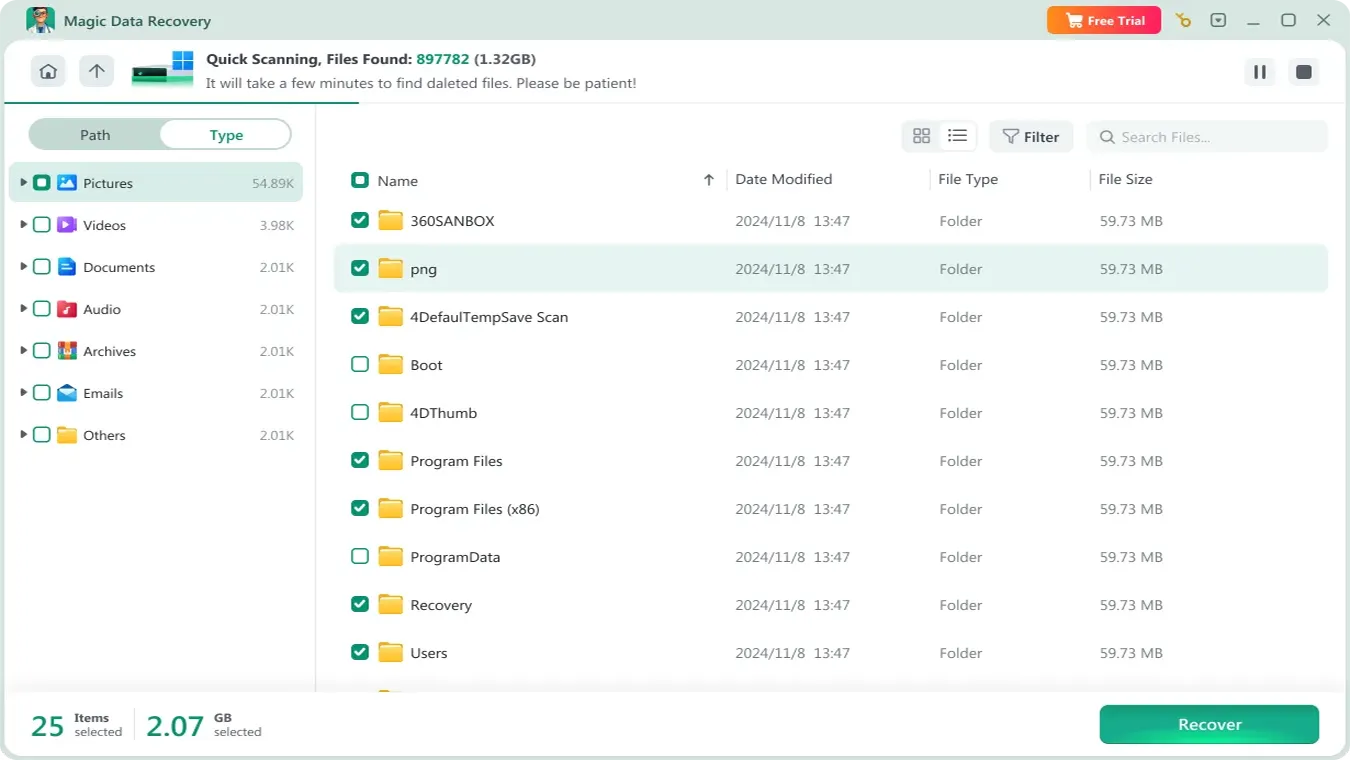
Step 3: Preview and Locate Your Files
One of the standout features of Magic Data Recovery is the built-in previewer. As the scan progresses, you can browse through folders and view documents. This ensures that the files are intact before you proceed to the final step.
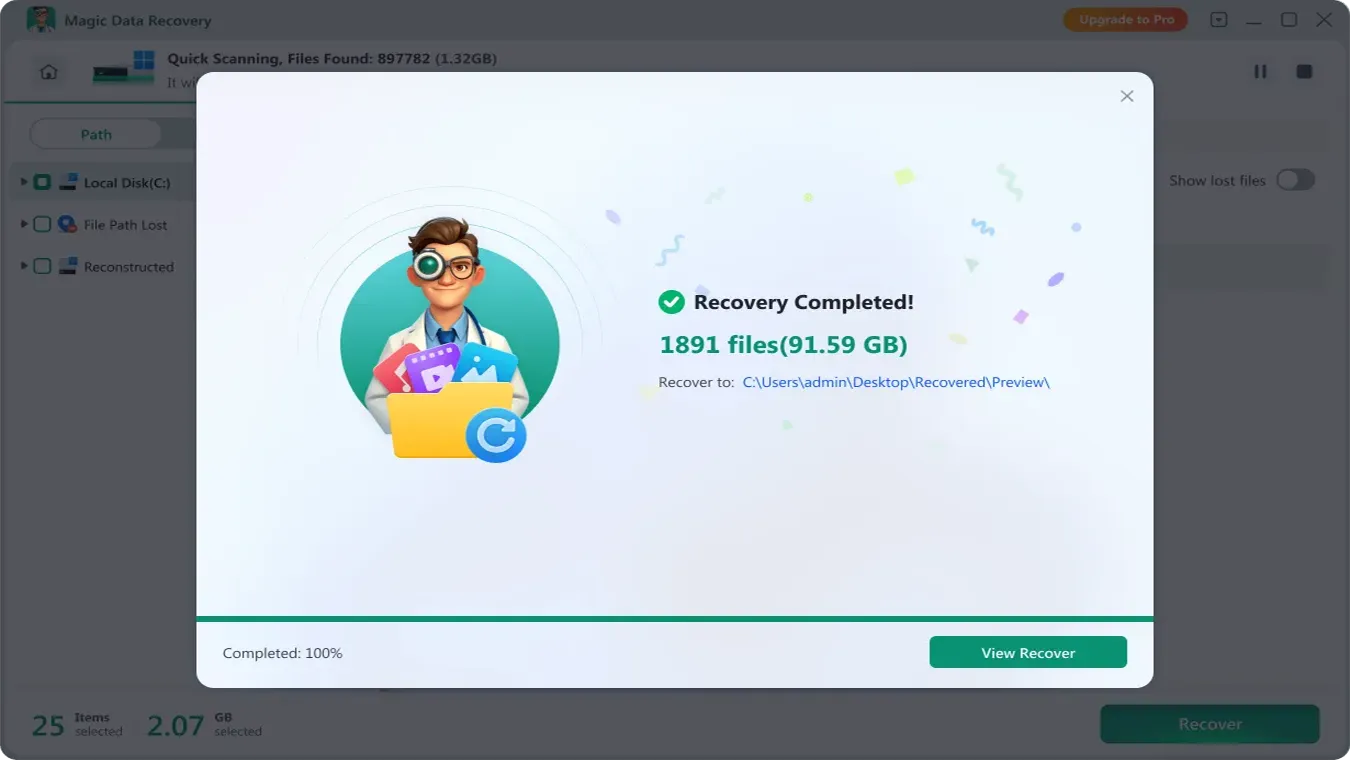
Step 4: Securely Save Your Data
Finally, select the files you wish to restore and click “Recover.” Always save the recovered files to a different physical drive (such as a separate external disk or cloud storage). Once you have verified that your data is safe.
Repair Tool vs Data Recovery Tool: Which One Do You Need?
Here is the simplest decision rule:
Choose a word file repair tool if:
- The file still exists
- Word can see it, but cannot open it properly
- The issue looks like document corruption only
Choose Magic Data Recovery if:
- The file was deleted
- The drive was formatted
- The device has file system errors
- The partition disappeared or became inaccessible
- You are unsure whether the file is damaged or truly lost
This decision-based structure gives readers more value than generic “top 10 tools” lists because it matches how real users search and troubleshoot.
Tips to Improve Recovery Success
No matter which corrupted word file recovery software path you choose, follow these best practices:
- Stop using the affected storage device immediately
- Never recover files back to the same drive
- Try Word’s built-in repair options first if the file still exists
- Use a read-only recovery tool when the file is deleted or the drive is unstable
- Save working documents in OneDrive or other backup locations when possible
These habits align with Microsoft’s prevention advice and Amagicsoft’s recovery workflow guidance.
Conclusion
The best corrupted word file recovery software approach depends on what actually happened to your file. If the document still exists but Word cannot open it, start with built-in methods such as Open and Repair, Recover Text, and AutoRecover. However, if the document has already been deleted, lost after formatting, or affected by file system problems, repair alone is often not enough.
That is why this guide recommends Magic Data Recovery as the stronger all-around solution for deeper loss scenarios. It addresses the real pain point, supports deleted, formatted, and file-system-related recovery, and gives users a safer, read-only way to scan, preview, and restore Word documents from many types of storage devices.
Supports Windows 7/8/10/11 and Windows Server
FAQs
What is the best corrupted word file recovery software for beginners?
For beginners, the best option depends on the problem type. If the Word file still exists, Microsoft Word’s built-in repair tools are the easiest place to start. If the file was deleted, formatted away, or hidden by a storage error, a beginner-friendly recovery tool like Magic Data Recovery is usually more practical because it guides users step by step.
Can a word file repair tool fix every damaged DOCX file?
No tool can fix every damaged DOCX file. Success depends on how severe the corruption is and whether the file content has been overwritten or structurally destroyed. That is why it is smart to try Word’s built-in repair options first, then move to deeper recovery software if the document is missing or the storage device itself has problems.
What should I do first after a Word document becomes corrupted?
First, stop making changes to the file and avoid repeatedly saving over it. Next, try Open and Repair in Microsoft Word. If the file still will not open, try Recover Text or check AutoRecover. If the file has disappeared or the drive shows errors, switch to a recovery tool and scan the device before new data overwrites the lost document.
Can I recover a deleted Word file after emptying the Recycle Bin?
Yes, recovery is often still possible if the deleted file has not been overwritten by new data. Emptying the Recycle Bin removes the easy restore path, but it does not always destroy the file content immediately. A recovery tool like Magic Data Recovery can scan the affected drive and locate recoverable Word documents through a deeper recovery process.
Can formatted drives still be used to recover Word documents?
In many cases, yes. A quick format usually marks storage space as available instead of instantly destroying all file content. That means documents may remain recoverable until new data replaces them. Recovery chances improve when you stop using the drive immediately and scan it with a read-only recovery solution instead of writing anything new to it.
Why is Magic Data Recovery a good choice for Word file loss?
Magic Data Recovery is a strong choice because it handles more than document corruption alone. It supports recovery for deleted files, formatted drives, and file system error scenarios, which are common reasons Word documents go missing. It also supports document file formats, preview before recovery, and read-only scanning, which helps reduce unnecessary risk during the recovery process.
Is it safe to recover files to the same drive?
No, that is not recommended. Saving recovered files back to the original drive can overwrite data that has not yet been restored, which lowers success rates. A safer workflow is to scan the affected drive, preview the recoverable Word files, and then save them to a different drive, partition, or external storage device.
How can I prevent Word document corruption in the future?
Use safe storage habits and backups. Do not unplug USB devices while files are open. Turn on AutoRecover, save actively edited files in reliable locations, and use cloud syncing when possible. Microsoft also recommends OneDrive with AutoSave for better protection in Microsoft 365 environments, especially against crashes or accidental closure issues.

Jason is a data recovery and technical support specialist with over 15 years of hands-on experience. He has worked extensively with frontline users, troubleshooting difficult data loss cases and providing practical recovery solutions for accidental deletion, formatted drives, damaged file systems, lost partitions, system failures, and other recovery emergencies. His expertise also includes backup and restoration, file repair, and disaster recovery, with a strong emphasis on safe, reliable, and technically accurate guidance.