
A Practical Guide to Data Recovery for Windows
Losing important files on a Windows computer can be frustrating and stressful. Accidental deletion, disk formatting, system crashes, or sudden power failures often happen without warning. When this occurs, many users start searching for data recovery for Windows, hoping to restore their files from hard drives quickly and safely.
However, not every recovery scenario is the same. Some situations can be resolved with free data recovery for Windows tools, while others require more advanced solutions. This guide explains how Windows data recovery works, what free options can realistically do, and when a professional tool like Magic Data Recovery becomes the safer and more effective choice.
Supports Windows 7/8/10/11 and Windows Server
Wondering if your files can be recovered? Find out in seconds with our quick check below.
Data Recovery Assessment
Answer 3 quick questions to estimate your recovery chances
Table of Contents
What Is Data Recovery for Windows and How Does It Work?
Data recovery for Windows refers to the process of restoring lost, deleted, or inaccessible files from Windows-based storage devices, such as hard drives, SSDs, USB flash drives, and memory cards.
When a file is deleted in Windows, the file system usually removes only the file reference, not the actual data. As long as that space has not been overwritten, recovery is still possible. Professional recovery tools scan the file system and sectors to locate these remaining traces and rebuild the files.
Understanding this mechanism is important because it explains why timing, storage usage, and recovery methods directly affect success rates.
Common Data Loss Scenarios on Windows Computers
Different data loss situations require different recovery solutions. Below are the most common Windows-related cases.
Accidental Deletion and Recycle Bin Issues
Files deleted permanently or removed from the Recycle Bin are still often recoverable, especially if no new data has been written to the disk.
Formatted Drives and External Storage
Formatting removes file system structures, not the data itself. Recovery is possible, but free tools often struggle with formatted volumes.
System Crashes and Blue Screen Errors
System failures may prevent Windows from booting, making normal file access impossible. Specialized recovery software can still scan the affected drive externally.
RAW Drives and Inaccessible Partitions
When Windows shows a drive as RAW or unallocated, the file system is damaged. This scenario usually requires sector-level scanning capabilities beyond basic free tools.
Can You Use Free Data Recovery for Windows?
Many users search for free data recovery for Windows hoping to solve the problem without cost. In some cases, this approach works—but it has clear limitations.
When Data Recovery for Windows Free Tools Are Enough
Free recovery software can help when:
- Only a few small files are missing
- Files were recently deleted
- The drive is still recognized by Windows
- No formatting or file system corruption occurred
In these situations, limited free recovery can be practical.
The Real Limitations of Free Recovery Tools
Most free tools restrict:
- The amount of recoverable data
- Access to deep scan modes
- Support for formatted or RAW drives
- File preview and structure recovery
As a result, users often find that free tools can detect files but cannot actually restore them.
How to Choose the Right Data Recovery for Windows Software
Instead of focusing only on price, consider these factors:
- Recovery success rate, not just scanning ability
- Support for different file systems (NTFS, FAT32, exFAT)
- Ability to recover from formatted or damaged drives
- File preview before recovery
- Data safety and read-only scanning
These criteria matter far more than whether the software is advertised as “free.”
Why Magic Data Recovery Is a Reliable Choice for Windows Users
Magic Data Recovery offers a balanced and reliable solution for complex Windows recovery cases.
Core Problems It Solves
- Recovery from formatted hard drives and USB devices
- Restoring files from RAW or inaccessible partitions
- Retrieving data after system crashes
- Handling large volumes of lost files efficiently
Key Advantages
- Deep scanning for complex file system damage
- File preview to verify recoverability before restoring
- Clear recovery workflow designed for Windows users
- Read-only scanning to avoid further data loss
Compared with many data recovery for Windows free tools, Magic Data Recovery focuses on recovery accuracy and data integrity rather than strict limitations.
How to Use Magic Data Recovery on Windows (Step-by-Step)
Recovering files with Magic Data Recovery is straightforward:
Step 1: Download and Install Magic Data Recovery
To avoid overwriting lost data, download Magic Data Recovery and install it on a disk that is not affected by data loss. Installing recovery software on the same drive where files were deleted may reduce the chance of successful recovery.
Supports Windows 7/8/10/11 and Windows Server
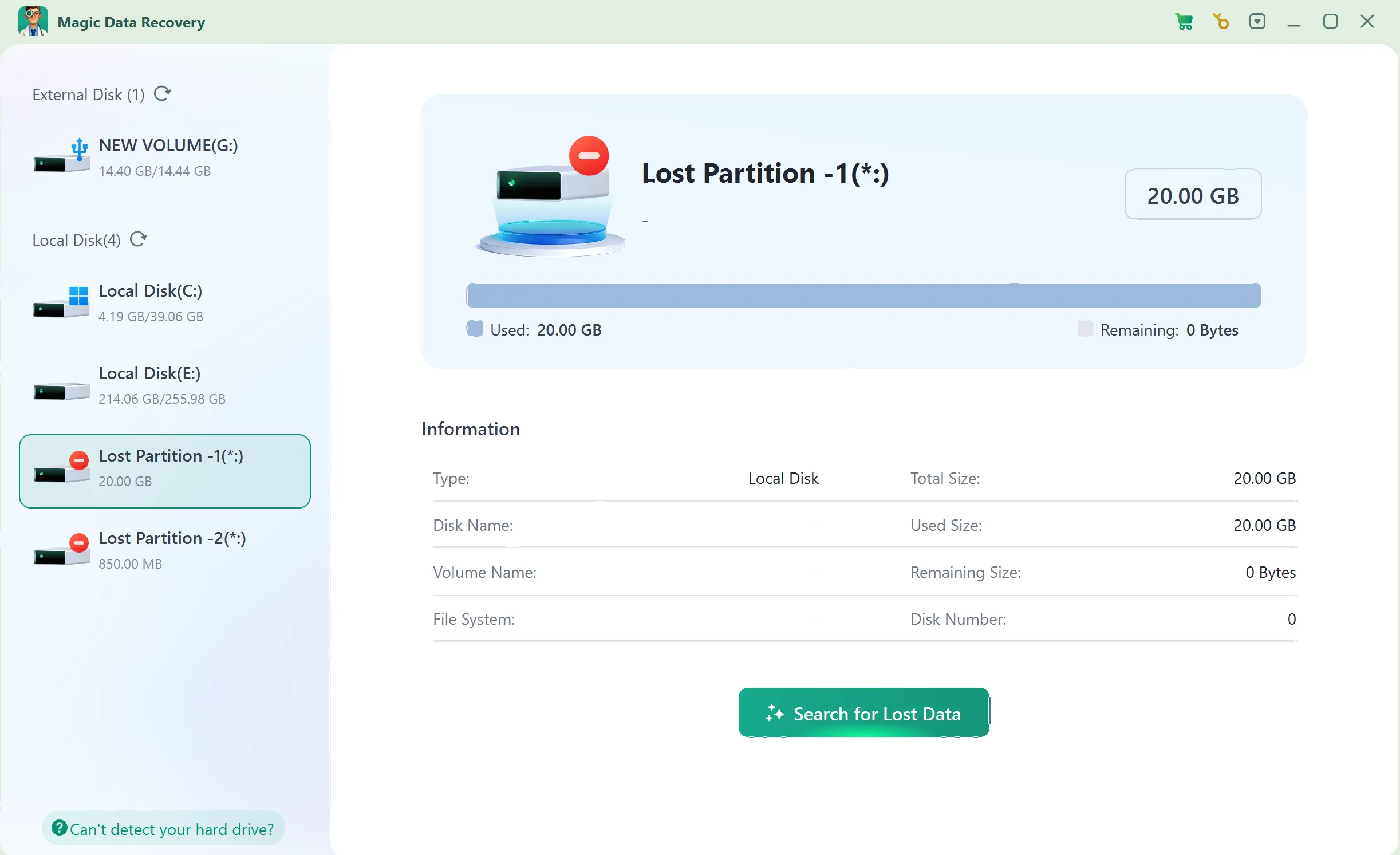
Step 2: Choose the External Hard Drive to Scan
Open the software and access the main interface. From the list of available storage devices, select the drive or partition where the lost files located. Once selected, begin the scanning process.
Step 3: Scan the Drive for Lost Files
Magic Data Recovery automatically initiates an advanced scanning process to search for lost files. During the scan, recoverable files appear in real time, allowing you to monitor progress without waiting for the scan to fully complete.
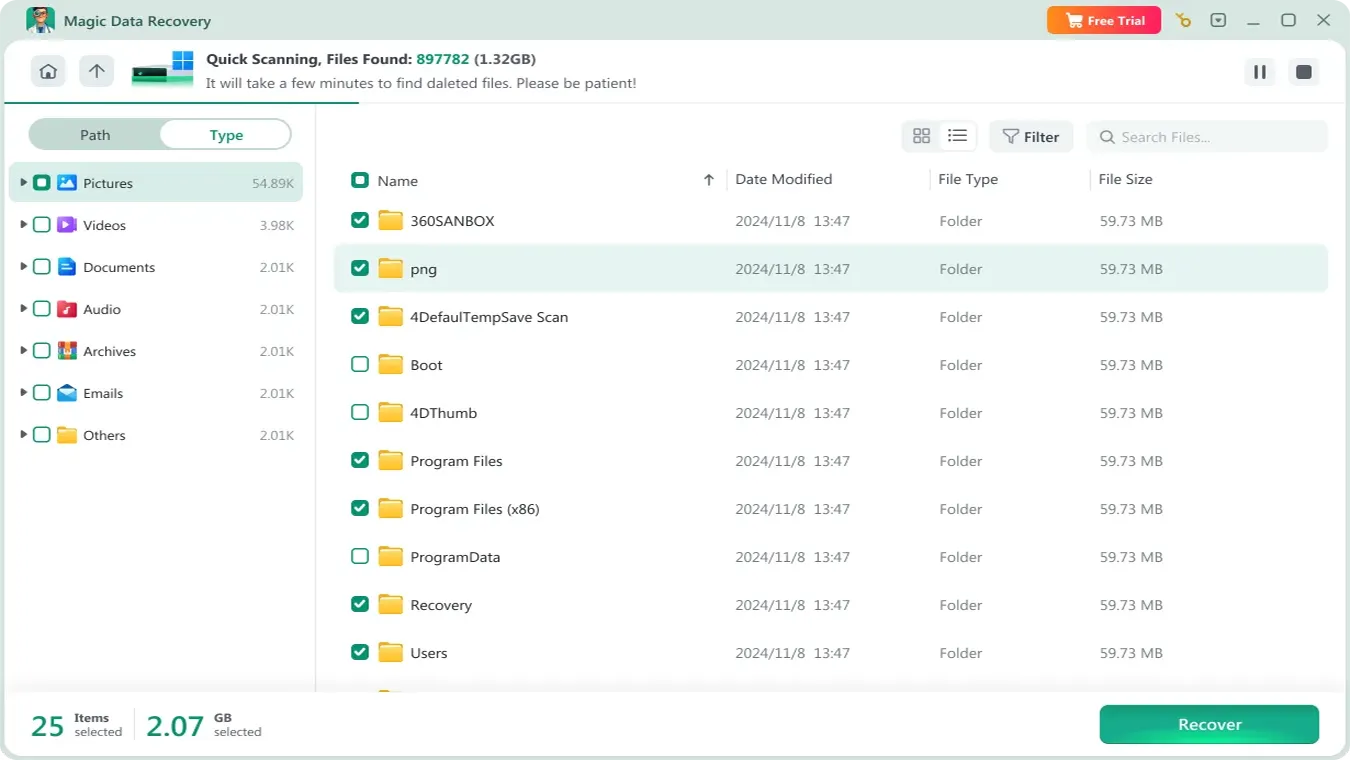
Step 4: Preview Files Before Recovery
Before restoring any data, use the built-in preview feature to check file content and integrity. This step helps you verify which files are still usable and prevents restoring unnecessary or corrupted data.

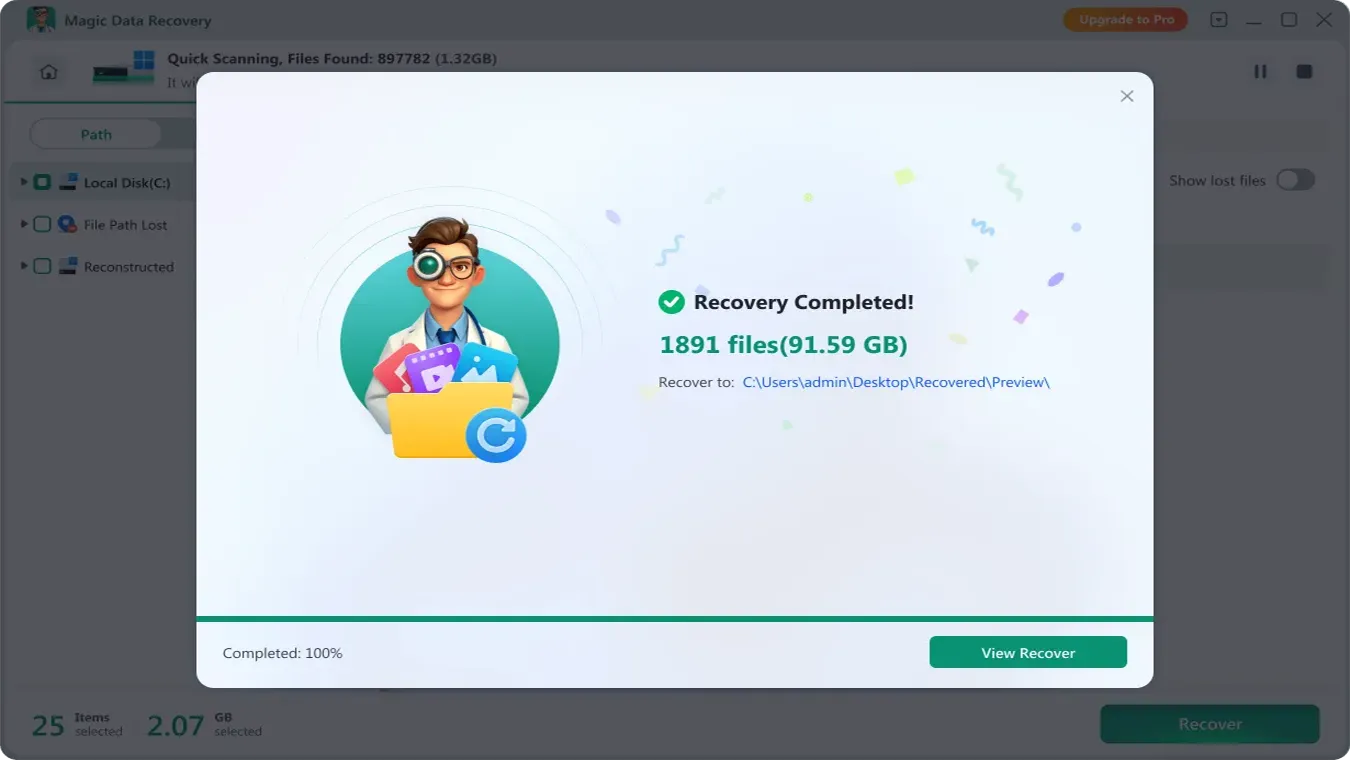
Step 5: Recover Files to a Secure Location
Select the files you want to recover and save them to a different drive or external storage device. DO NOT save the files to the original drive, as it may overwrite the lost data.
Best Practices to Avoid Permanent Data Loss on Windows
To improve recovery chances:
- Stop using the affected drive immediately
- Avoid installing software on the same disk
- Do not repeatedly format or initialize the drive
- Keep backups once recovery is completed
These steps align with industry best practices for data recovery for Windows.
Conclusion
Not all data loss situations are equal. While data recovery for Windows free tools may work for minor cases, they often fail when facing formatted drives, system crashes, or file system damage.
For users who value data integrity, recovery accuracy, and practical results, Magic Data Recovery stands out as a dependable solution. It addresses real-world Windows recovery scenarios without unnecessary complexity, making it a strong choice when free tools are no longer enough. If you are looking for a safer and more effective HDD recovery approach, Magic Data Recovery is worth considering.
Supports Windows 7/8/10/11 and Windows Server
FAQs About Data Recovery for Windows
Does Windows 10 have a data recovery tool?
Is there a totally free data recovery software?
What is the free recovery software for Windows?
Can you retrieve data from a computer that won't turn on?
Can I do data recovery on my own?

Vasilii is a data recovery specialist with around 10 years of hands-on experience in the field. Throughout his career, he has successfully solved thousands of complex cases involving deleted files, formatted drives, lost partitions, and RAW file systems. His expertise covers both manual recovery methods using professional tools like hex editors and advanced automated solutions with recovery software. Vasilii's mission is to make reliable data recovery knowledge accessible to both IT professionals and everyday users, helping them safeguard their valuable digital assets.