
Best ext2 File System Driver for Windows Guide
Accessing Linux partitions on a Windows computer is not as straightforward as many users expect. By default, Windows cannot recognize Linux EXT file systems such as ext2, ext3, or ext4. Therefore, disks formatted under Linux often appear unreadable when connected to a Windows PC. Because of this limitation, an ext2 file system driver for Windows becomes a necessary bridge between the two operating systems.
Whether you are running a dual-boot setup, transferring files from a Linux server, or checking data on an external drive, a proper driver allows Windows to work with an ext file system Windows environment safely. More importantly, using the right approach helps prevent file system corruption and unnecessary data loss.
Table of Contents
What Is an ext2 File System Driver for Windows?
An ext2 file system driver for Windows is a specialized software that enables Windows to recognize and interpret Linux-based file systems. Since Windows is designed primarily for NTFS and FAT formats, it cannot natively understand ext structures without additional support.
In practice, the driver translates Linux metadata and directory structures into a format that Windows can read. As a result, users can browse folders, copy files, and, in some cases, write data back to the Linux partition. However, because compatibility varies, choosing the right driver is critical for system stability.
Understanding ext File Systems Before Using Them on Windows
Before installing any ext2 file system driver for Windows, it is helpful to understand the main Linux file systems:
- ext2: A traditional Linux file system without journaling. It is simple and widely supported.
- ext3: An extension of ext2 that adds journaling for improved reliability.
- ext4: A modern file system offering better performance, scalability, and advanced features.
Although many tools advertise support for all versions, most Windows drivers are optimized around ext2 compatibility. Consequently, advanced ext4 features may not behave as expected in an ext file system Windows setup.
Practical Ways to Access an ext File System Windows Environment
There are several practical methods to access Linux partitions on Windows. Each option suits different use cases and risk levels.
Open-Source ext2 File System Driver for Windows
Open-source drivers, such as Ext2Fsd, allow Windows to mount ext partitions directly. These tools are often chosen for simple file access.
Advantages:
- Free to use
- Integrated access through Windows Explorer
Limitations:
- Irregular updates
- Possible incompatibility with newer Windows versions
Commercial Drivers for ext File Systems
Unlike open-source tools, commercial drivers usually provide clearer compatibility guarantees and more predictable behavior on modern Windows systems. These solutions are often designed for users who need stable and repeated access to Linux partitions.
Common commercial options include:
- Paragon Linux File Systems for Windows: A well-known solution that supports ext2, ext3, and ext4 with a focus on stability. It integrates tightly with Windows and is frequently updated to support newer Windows versions.
- DiskInternals Linux Reader (Pro versions): While basic versions are read-only, paid editions offer advanced access features and improved reliability for professional use.
Why commercial drivers may be preferable:
- Regular updates and vendor support
- Better compatibility with Windows 10 and Windows 11
- Clear documentation and lower risk of configuration errors
For users who frequently work with an ext file system Windows environment, commercial drivers often provide a more reliable experience than experimental or outdated tools.
Read-Only Tools for Safer Access
Read-only tools allow users to view files without modifying the partition. For many users, this is the safest way to work with an ext file system Windows configuration.
How to Use an ext2 File System Driver for Windows Safely
Even the best driver can cause issues if it is used incorrectly. Therefore, following proven steps is essential:
1. Check driver compatibility with your Windows version.
2. Install the ext2 file system driver for Windows tool using administrator rights.
3. Enable read-only mode during initial access.
4. Avoid writing to critical Linux system partitions.
5. Unmount or eject the drive properly after use.
By following these steps, users significantly reduce the likelihood of file system errors.
Common Issues When Using an ext2 File System Driver for Windows
Despite careful setup, problems may still occur when accessing Linux partitions on Windows:
- The ext partition does not appear after installation.
- Files display incorrect names or sizes.
- Access fails after a Windows system update.
- The partition becomes corrupted after a crash.
In most cases, these issues are related to logical issues like driver limitations rather than permanent disk damage.
Data Safety Considerations When Working With ext Partitions
Working with Linux file systems on Windows always involves a degree of risk. In particular, write operations can alter metadata in ways Windows does not fully understand.
For this reason, experienced users recommend several best practices:
- Always back up important files before mounting ext partitions
- Prefer read-only access whenever possible
- Avoid testing new drivers on valuable disks
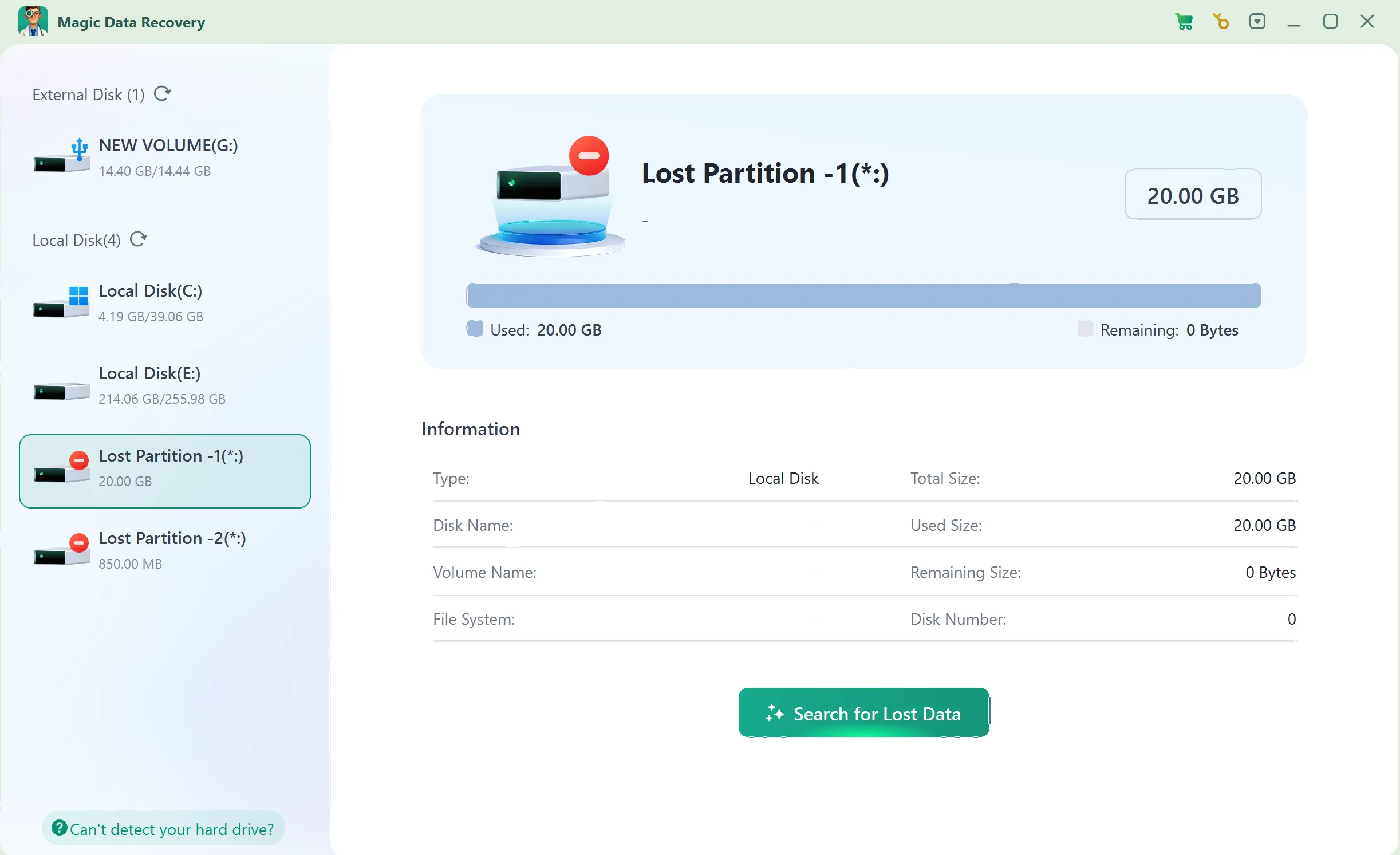
If the ext file system becomes inaccessible due to misconfiguration or unexpected shutdowns, having a dependable recovery option can be valuable. Magic Data Recovery is designed to help users retrieve lost files from various file systems, including ext-based partitions, when standard access methods fail.
Conclusion
Choosing the right ext2 file system driver for Windows depends on how you intend to access your Linux partitions. For basic file viewing, read-only tools offer a strong balance between safety and convenience. Meanwhile, commercial drivers may be suitable for more advanced tasks when stability is required.
Above all, data protection should remain a priority. When unexpected issues arise, a reliable fallback such as Magic Data Recovery can help restore access to important files. If you are searching for a safer and more dependable solution, it is worth considering as part of a responsible workflow.
Supports Windows 7/8/10/11 and Windows Server
FAQs About Best ext2 File System Driver for Windows
What is an ext2 file system driver for Windows?
Can Windows natively read ext file systems?
Is it safe to use an ext2 driver on modern Windows systems?
Does one driver support ext2, ext3, and ext4 equally?
Why does my ext partition fail to mount?
What is the safest way to access Linux partitions on Windows?
What should I do if files become inaccessible?

Vasilii is a data recovery specialist with around 10 years of hands-on experience in the field. Throughout his career, he has successfully solved thousands of complex cases involving deleted files, formatted drives, lost partitions, and RAW file systems. His expertise covers both manual recovery methods using professional tools like hex editors and advanced automated solutions with recovery software. Vasilii's mission is to make reliable data recovery knowledge accessible to both IT professionals and everyday users, helping them safeguard their valuable digital assets.