
Microsoft 365 Backup and Recovery Guide

Many users rely on Microsoft 365 to manage emails, documents, and business data. However, Microsoft 365 backup and recovery does not always provide full protection. For instance, accidental deletion, ransomware attacks, and sync errors can still cause permanent data loss.
At the same time, built-in tools such as OneDrive Recycle Bin and version history only work within certain limits. As a result, users often realize the risks too late. Therefore, understanding how Microsoft 365 backup and recovery actually works—and where it fails—is essential. In this guide, you will learn practical ways to protect your data and recover lost files effectively.
Table of Contents
What Is Microsoft 365 Backup and Recovery?
Microsoft 365 backup and recovery refers to the methods used to protect and restore data stored in Outlook, OneDrive, and SharePoint.
To begin with, backup creates copies of data, while recovery restores lost or damaged files. Microsoft offers several built-in features:
- Recycle Bin for deleted files
- Version history for file changes
- Retention policies for data management
Although these tools are helpful, they do not function as a full backup system. Consequently, relying only on Microsoft 365 backup and recovery may leave important data exposed.
Microsoft 365 Shared Responsibility Model Explained
Many users assume Microsoft fully protects their data. However, Microsoft 365 backup and recovery follows a shared responsibility model.
What Microsoft Handles
Microsoft ensures:
- Infrastructure availability
- Data center security
- Service uptime
What Users Must Handle
Users remain responsible for:
- Data backup
- Retention configuration
- Recovery after deletion or overwrite
Therefore, Microsoft does not guarantee complete data protection. Without additional measures, data loss can still occur.
Why Microsoft 365 Backup and Recovery Is Still Necessary
Even with built-in features, several risks remain.
Accidental Deletion
First, users frequently delete files unintentionally. While recovery works for a short period, permanent loss can happen quickly.
Ransomware Threats
In addition, ransomware can encrypt cloud data. Because systems sync automatically, infected files may overwrite original versions.
Sync Errors and Overwrites
Sometimes, sync issues replace correct files with corrupted ones. Consequently, earlier versions may not be available.
Retention Limits
Finally, retention policies depend on settings. If misconfigured, files may disappear without warning.
For these reasons, strengthening your Microsoft 365 backup and recovery strategy is critical.
Common Data Loss Scenarios in Microsoft 365 Backup and Recovery
Real-world scenarios highlight common risks:
- Outlook emails permanently deleted
- OneDrive files lost after sync conflicts
- SharePoint documents corrupted during collaboration
- Word or Excel files overwritten
In each case, recovery becomes more complex. Therefore, relying only on standard Microsoft 365 backup and recovery tools is not enough.
Real-World Example: When Microsoft 365 Recovery Fails
Consider a typical situation. A user deletes an important Excel file stored in OneDrive. Initially, recovery seems possible through the Recycle Bin. However, after several weeks, the file is permanently removed.
At this point, Microsoft 365 backup and recovery no longer works. Version history cannot help because the file no longer exists. As a result, the only remaining option is deep data recovery.
This example shows a key limitation: built-in tools only work within a limited time window.
Built-in Microsoft 365 Backup and Recovery Options Explained
Microsoft provides several recovery methods, but each has limits.
OneDrive Recycle Bin
Users can restore deleted files within a fixed period. After that, recovery becomes impossible.
Version History
Version history allows rollback to earlier versions. However, it depends on prior activation.
Outlook Email Recovery
Outlook supports recovery from Deleted Items. Still, time limits reduce long-term reliability.
Limitations of Microsoft 365 Backup and Recovery
Although useful, Microsoft 365 backup and recovery has clear weaknesses:
- Limited retention periods
- No recovery after permanent deletion
- Weak support for overwritten files
- No full disaster recovery capability
As a result, relying only on built-in tools increases the risk of permanent data loss.
Best Practices for Microsoft 365 Backup and Recovery
To improve protection, combine multiple strategies.
Follow the 3-2-1 Backup Rule
Keep three copies of your data, use two storage types, and store one copy offsite.
Enable Version Control
Always enable version history to reduce overwrite risks.
Use External Backup Solutions
External tools provide stronger protection and flexibility.
Test Recovery Regularly
Testing ensures your strategy works when needed.
How to Recover Lost Data Beyond Microsoft 365 Backup and Recovery
When built-in tools fail, recovery becomes more difficult. For example, permanent deletion or file corruption often exceeds Microsoft’s capabilities.
At this stage, specialized recovery tools provide a more reliable solution by scanning storage at a deeper level.
Recover Lost Files Safely with Magic Data Recovery
When Microsoft 365 backup and recovery cannot restore your files, a deeper scan method becomes necessary. Magic Data Recovery analyzes storage at the sector level, which helps recover files that standard tools cannot detect.
Step 1: Download and Install Magic Data Recovery
First, download and install the software on a different drive. This step prevents overwriting and protects recoverable data.
Supports Windows 7/8/10/11 and Windows Server
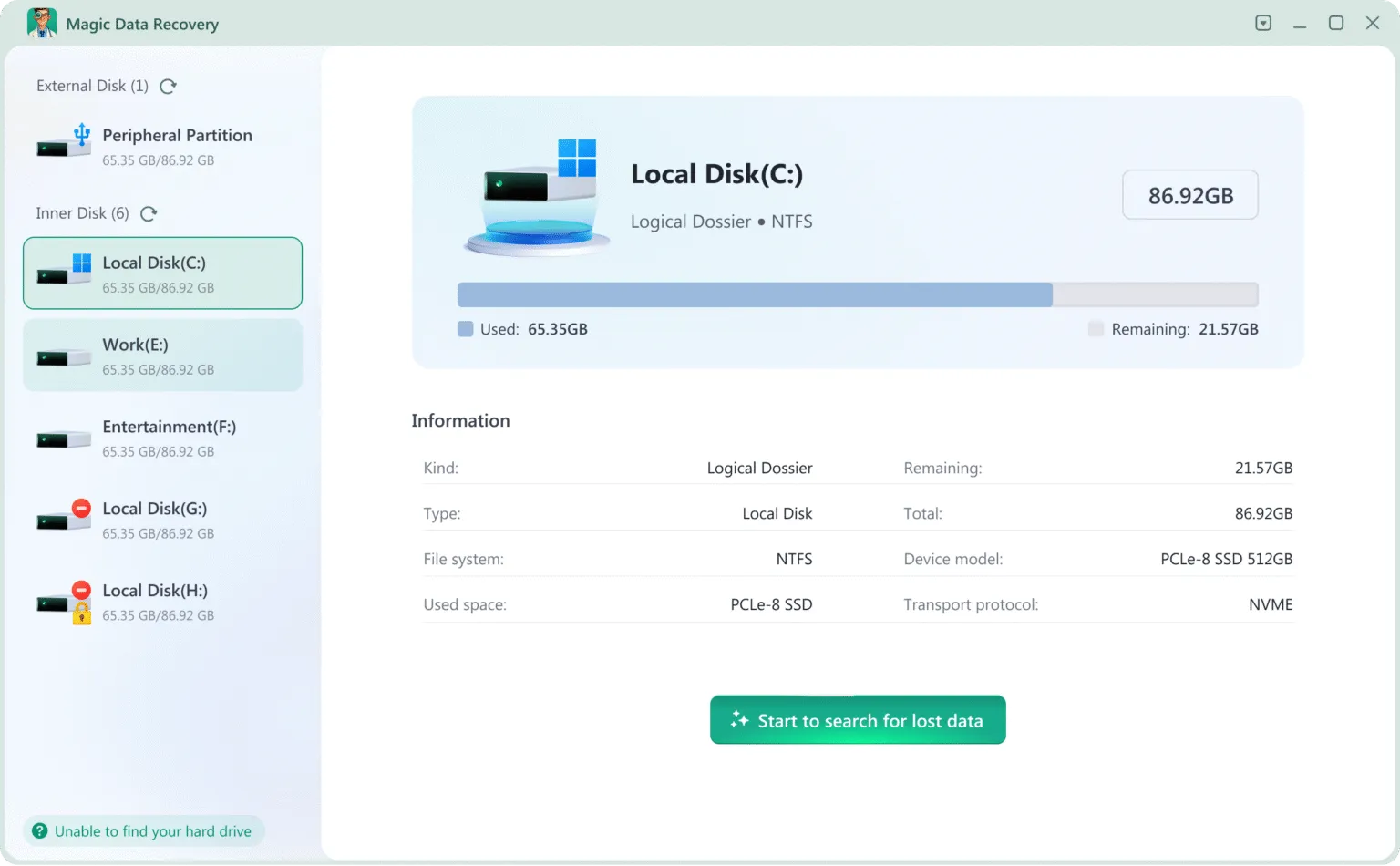
Step 2: Select the Location to Scan
Next, launch the program and choose the location where files were lost. Then, start scanning from the main interface.
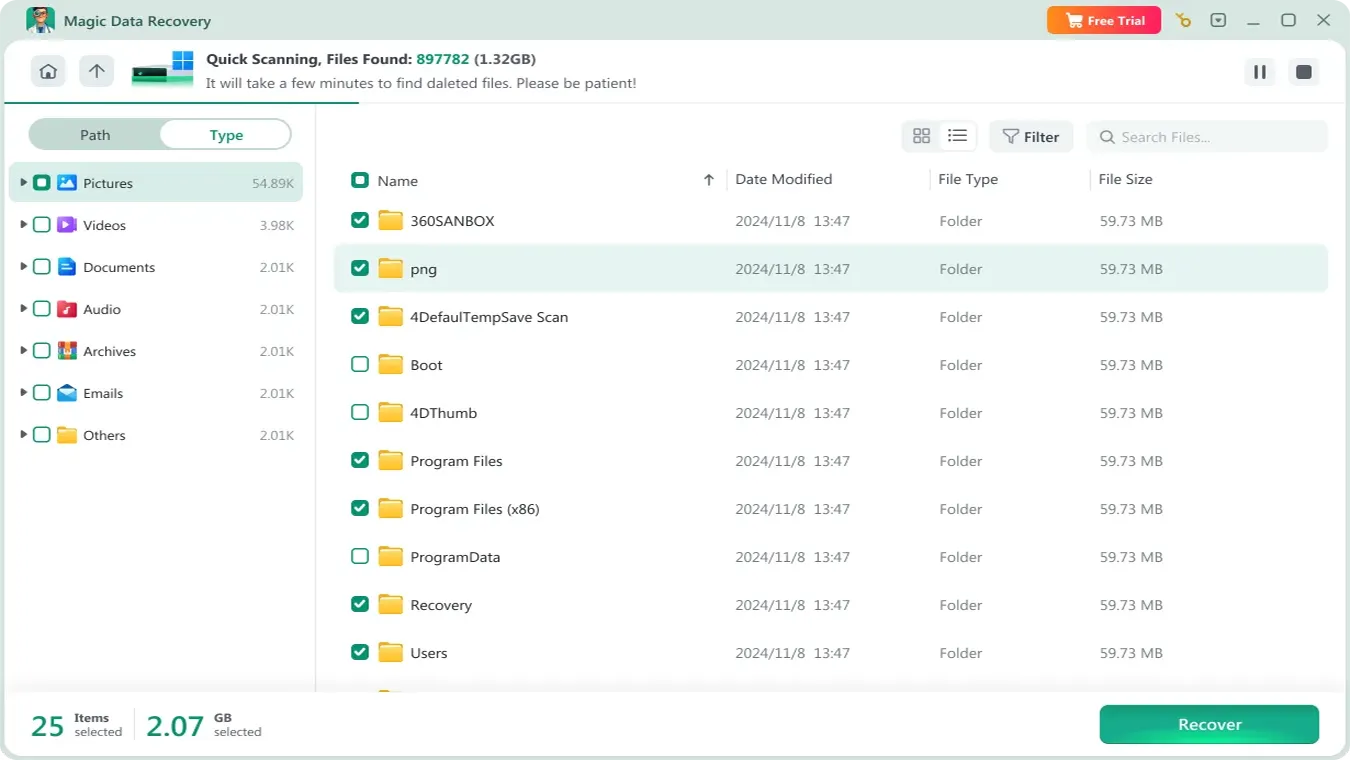
Step 3: Scan for Recoverable Files
The software runs an advanced scan automatically. Meanwhile, it displays recoverable files in real time.
Step 4: Preview Files Before Recovery
After scanning, preview files to confirm their content. This step helps you select only the necessary files.

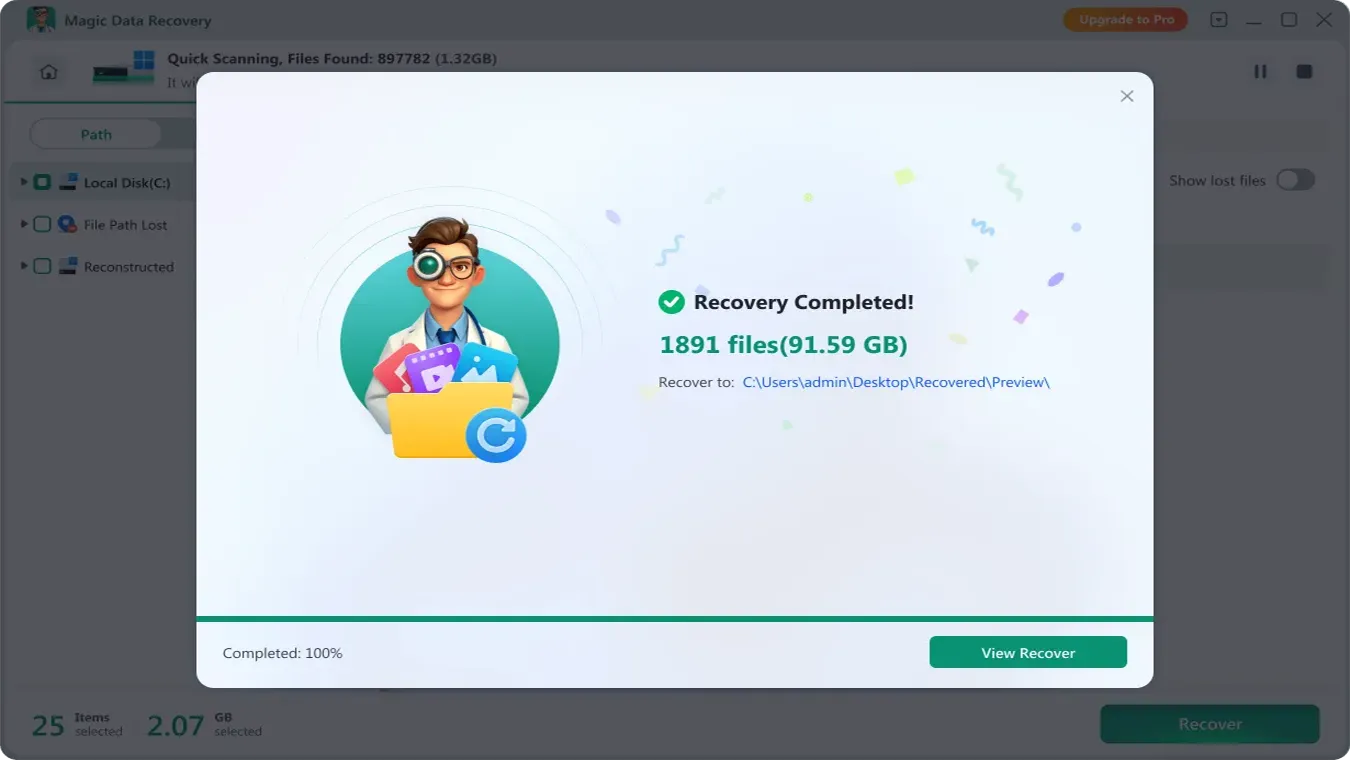
Step 5: Recover Files to a Safe Location
Finally, select the required files and save them to a different location. Avoid restoring them to the original drive.
When Magic Data Recovery Makes a Difference
In many cases, users try Microsoft 365 backup and recovery first. However, once files are permanently deleted or overwritten, built-in tools fail.
At this stage, Magic Data Recovery becomes effective because:
- It scans raw storage sectors instead of relying on file system records
- It detects file fragments that standard tools cannot access
- It works even when metadata is missing
For example, if a synced file is deleted and no backup exists, the software may still recover usable data fragments.
If you need a more reliable solution, trying a deeper recovery method can significantly improve success rates.
When to Use Recovery Instead of Backup
Backup prevents data loss, while recovery restores lost files. If backup fails or does not exist, recovery becomes the final option.
Therefore, combining both approaches ensures stronger data protection.
Conclusion
Microsoft 365 backup and recovery provides basic protection, but it does not cover all scenarios. While built-in tools work for short-term recovery, they fail in cases of permanent deletion, overwrite, or corruption.
Therefore, a complete strategy should include both backup and recovery solutions. When standard methods fail, Magic Data Recovery offers a practical and reliable way to restore lost files.
Supports Windows 7/8/10/11 and Windows Server
FAQs
Does Microsoft 365 provide full backup protection?
Microsoft 365 includes recovery features like Recycle Bin and version history. However, these tools do not replace a full backup system. They depend on retention limits and cannot guarantee recovery after permanent deletion or overwrite. Therefore, additional protection methods are recommended.
How long does Microsoft 365 keep deleted files?
Microsoft 365 typically stores deleted files for a limited time, often up to 93 days depending on configuration. After this period, files are permanently removed. As a result, recovery becomes difficult without external tools.
Can overwritten files be recovered in Microsoft 365?
Version history may help in some cases. However, if it is disabled or changes are not saved, overwritten files may not be recoverable. This is a key limitation of Microsoft 365 backup and recovery.
Is OneDrive version history enough for backup?
Version history allows you to restore earlier versions. However, it does not protect against all data loss scenarios such as permanent deletion or ransomware. Therefore, it should not be considered a complete backup solution.
What is the best backup strategy for Microsoft 365?
The best approach combines built-in tools with external backup and recovery solutions. Following the 3-2-1 rule improves reliability and reduces the risk of complete data loss.
Can ransomware affect Microsoft 365 data?
Yes, ransomware can encrypt files stored in OneDrive or SharePoint. Because these services sync automatically, encrypted files may overwrite original data. Consequently, recovery becomes more difficult without proper backup.
How can permanently deleted files be recovered?
Once files are permanently deleted, built-in tools usually cannot restore them. In this situation, data recovery software can scan storage and attempt to recover lost files, especially before data is overwritten.

Vasilii is a data recovery specialist with around 10 years of hands-on experience in the field. Throughout his career, he has successfully solved thousands of complex cases involving deleted files, formatted drives, lost partitions, and RAW file systems. His expertise covers both manual recovery methods using professional tools like hex editors and advanced automated solutions with recovery software. Vasilii's mission is to make reliable data recovery knowledge accessible to both IT professionals and everyday users, helping them safeguard their valuable digital assets.