
Directory Entry Structure Explained: Format & Fix

When files suddenly disappear or fail to open, the root cause often lies deeper than expected. In many cases, a damaged directory entry structure prevents the file system from locating file data correctly.
Therefore, understanding how the structure works is essential. It not only helps you diagnose issues faster, but also allows you to choose the right recovery approach. In this article, you will learn how it functions, why it fails, and how to fix or recover data efficiently.
Table of Contents
What Is a Directory Entry Structure
A directory entry structure is a record used by a file system to store key information about files and folders. It connects file names with their actual data stored on disk.
Typically, a directory entry includes:
- File name
- File size
- Attributes such as read-only or hidden
- Creation and modification timestamps
- References to physical storage locations
In other words, without a valid directory entry, files cannot be accessed, even if the data still exists.
How the Directory Entry Structure Works in File Systems
To understand file access, you need to examine how directory entries operate.
Core Components of the Directory Entry Structure
A directory entry contains several essential elements:
- Metadata describing file properties
- Allocation pointers linking to data blocks
- Status flags indicating file condition
As a result, the system reads the directory entry first when opening a file. Then, it retrieves the actual data through stored references.
Logical and Physical Mapping
Although files appear organized in folders, they are physically scattered across storage sectors. The directory entry maintains this mapping.
Consequently, when the structure becomes corrupted, files may:
- Disappear from directories
- Show incorrect names
- Become inaccessible
Directory Entry Structure in Different File Systems
Different file systems implement directory entries differently. Therefore, understanding these variations improves troubleshooting accuracy.
FAT Directory Entry Structure
The FAT system uses a simple layout:
- Each entry is 32 bytes
- Supports 8.3 filename format
- Stores basic attributes and timestamps
Because of its simplicity, FAT is widely used in removable devices. However, it is more prone to corruption.
NTFS Directory Entry Structure
NTFS uses a more advanced model:
- Stores entries in the Master File Table
- Supports long file names and rich metadata
- Provides improved reliability and indexing
As a result, NTFS offers stronger data integrity.
exFAT Directory Entry Structure
exFAT enhances flexibility and compatibility:
- Supports Unicode file names
- Uses extended directory entry formats
- Handles large files efficiently
Therefore, exFAT balances performance and usability.
Common Problems with Directory Entry Structure
When a directory entry fails, several issues may appear. For example, files may suddenly disappear, or folders may become inaccessible.
In addition, file names can become unreadable, and storage devices may show incorrect sizes. Consequently, users often assume data is lost. However, in many cases, the data still exists but cannot be located.
Causes of Directory Entry Structure Corruption
Understanding the causes helps prevent future problems.
Common Causes of Directory Entry Damage
- Improper device removal
- Sudden power loss
- Malware or ransomware activity
- Disk errors or bad sectors
For instance, removing a USB drive during file transfer interrupts updates to the directory entry. As a result, inconsistencies occur, and files may no longer appear.
How to Fix Directory Entry Structure Issues
Before attempting recovery, you can try several repair methods.
Method 1: Use CHKDSK to Fix Directory Entry
First, run CHKDSK to scan and repair file system errors.
Steps:
- Open Command Prompt
- Run
chkdsk /f - Wait for the process to complete

However, this method focuses on repairing errors rather than restoring lost files, and it may lead to data loss when fixing errors.
Method 2: Restore Files from Backup
If backups exist, restoration provides the safest solution. Nevertheless, many users do not maintain regular backups.
Method 3: Rebuild the File System
In some cases, rebuilding the file system can resolve issues. However, this approach involves risks and may overwrite existing data. Therefore, it should be used carefully.
How to Recover Data from a Damaged Directory Entry Structure
When repair methods fail, recovery becomes necessary.
Why Files Become Inaccessible in a Directory Entry
A corrupted directory entry breaks the link between file names and stored data. Although the data remains on disk, the system cannot locate it.
Therefore, recovery tools must scan raw storage instead of relying on existing file system records. In addition, they reconstruct file information based on detected patterns.
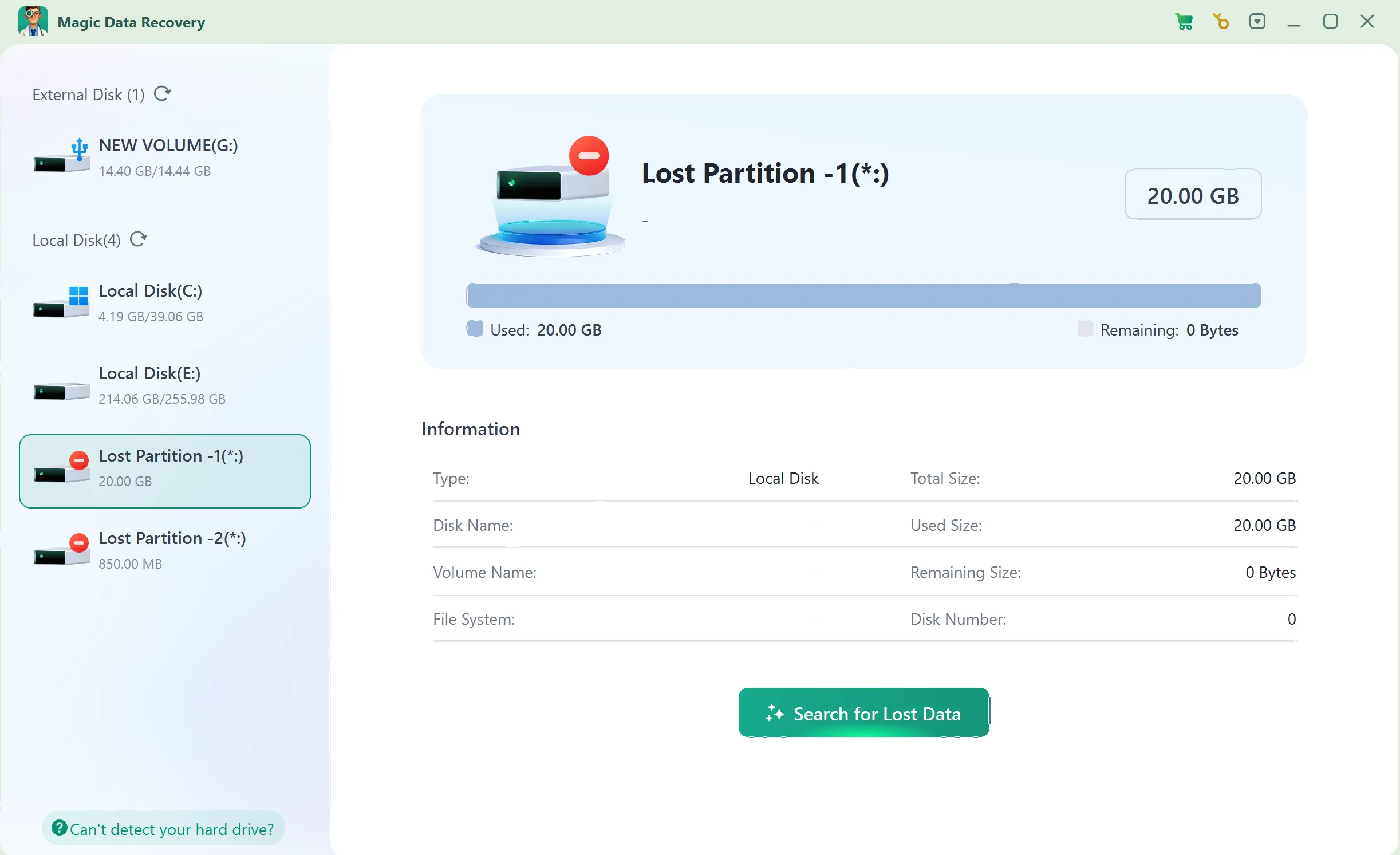
Why Use Magic Data Recovery for Directory Entry Structure Problems
When dealing with severe file system damage, specialized tools like Magic Data Recovery provide better results.
Core Problems It Solves for Directory Entry
- Recovers files from damaged directory entries
- Restores inaccessible or missing data
- Supports formatted or corrupted drives
Key Advantages
- Deep scanning that reconstructs fragmented data
- Compatibility with FAT, NTFS, and exFAT
- File preview before recovery
- Simple interface suitable for beginners
Practical Example
For example, when a USB drive shows empty folders due to a corrupted directory entry, the software scans the device and rebuilds file references. As a result, users can access files again.
Why It Is More Reliable
Unlike basic repair tools, this solution does not depend on existing directory records. Instead, it analyzes raw disk sectors directly. Therefore, it increases recovery success rates.
Best Practices to Protect Directory Entry Structure
Prevention reduces the risk of data loss. Therefore, following best practices is essential.
- Always eject storage devices safely
- Maintain regular backups
- Monitor disk health
- Avoid sudden shutdowns
In addition, using antivirus software helps reduce malware-related risks.
Conclusion
The directory entry structure plays a critical role in file organization and access. When it becomes corrupted, files may appear lost even though the data still exists. While basic tools can fix minor issues, they often fail in complex scenarios. Therefore, using a dedicated recovery solution provides a more reliable approach.
For users dealing with serious data loss caused by a damaged directory entry, Magic Data Recovery offers an efficient and practical way to restore files without requiring advanced technical knowledge.
If you are looking for a more efficient solution, you can try Magic Data Recovery.
Supports Windows 7/8/10/11 and Windows Server
FAQs About Directory Entry Structure
What is a directory entry in FAT?
It is a 32-byte record that stores file information such as name, size, and attributes.
Can a directory entry be recovered?
Yes. Recovery tools can reconstruct lost entries by scanning raw disk data.
What happens when a directory entry is deleted?
The file becomes inaccessible, but the data may still exist until overwritten.
Is directory entry structure the same in NTFS?
No. NTFS uses a more advanced system called the Master File Table.
Can CHKDSK recover lost files?
CHKDSK repairs errors, but it does not guarantee full data recovery.
Why do files disappear after a crash?
Because the directory entry structure becomes corrupted, which breaks file references.
What is the size of a directory entry?
In FAT systems, each entry is typically 32 bytes.

Vasilii is a data recovery specialist with around 10 years of hands-on experience in the field. Throughout his career, he has successfully solved thousands of complex cases involving deleted files, formatted drives, lost partitions, and RAW file systems. His expertise covers both manual recovery methods using professional tools like hex editors and advanced automated solutions with recovery software. Vasilii's mission is to make reliable data recovery knowledge accessible to both IT professionals and everyday users, helping them safeguard their valuable digital assets.