
AnyRecover for Windows Review & Alternative

Losing important files on a Windows computer can happen in seconds. You may empty the Recycle Bin, format the wrong USB drive, face a RAW partition, or see a disk error after a system crash. When this happens, many users search for AnyRecover because they want a simple data recovery solution.
However, choosing recovery software should not be based on brand names alone. You need to know what the tool can actually do, where it may fall short, and which safer alternative fits your situation. In this guide, we review AnyRecover, explain common Windows data loss scenarios, and introduce Magic Data Recovery as a practical option for recovering deleted, formatted, and error-affected files.
Supports Windows 7/8/10/11 and Windows Server
Table of Contents
What Is AnyRecover?
- Accidental file deletion
- Recycle Bin emptied by mistake
- Formatted drives or partitions
- Lost partitions
- External drive or USB data loss
- SD card recovery
- File loss after system errors or crashes
How Does AnyRecover for Windows Work?
Most Windows recovery tools follow a similar process. AnyRecover for Windows scans the selected drive, searches for file system records and file signatures, and then lists recoverable files for preview or recovery.
A typical recovery workflow includes:
- Install the recovery software on a different drive if possible.
- Select the location where the files were lost.
- Run a quick scan or deep scan.
- Preview the found files.
- Save recovered files to another safe location.
This workflow matters because writing new data to the same drive may overwrite lost file fragments. For example, if you deleted a folder from Drive D, you should avoid downloading software, saving files, or copying data to Drive D before the recovery attempt.
Common Data Loss Scenarios AnyRecover Users Face
Different scenarios require different recovery methods. For example, deleted files may still be traceable through file records, while formatted drives or file system errors often need a deeper scan. The following common cases show when recovery software can help and what you should do first.
Accidental Deletion
Accidental deletion is the most common reason people search for AnyRecover. If the file is still in the Recycle Bin, Windows can restore it easily. However, if the Recycle Bin was emptied or the file was deleted with Shift + Delete, recovery software becomes the next step.
In this case, a tool like Magic Data Recovery can scan the storage device and look for recoverable file records. The sooner you scan, the better your chances are.
Formatted Drive Recovery
Many users search for AnyRecover for Windows after formatting a hard drive, USB drive, or SD card. A quick format usually removes file system references but may leave the actual file content on the disk until it is overwritten. Amagicsoft’s formatted drive recovery guides explain that formatting often removes metadata first, which is why recovery may still be possible in many real-world cases.
This is exactly where Magic Data Recovery becomes useful. It can help scan formatted storage devices and locate recoverable documents, photos, videos, and other files.
File System Errors
A file system error may cause Windows to show messages such as “You need to format the disk before you can use it” or “The file or directory is corrupted and unreadable.” These errors can happen after unsafe removal, power failure, disk aging, malware, or partition table issues.
In this situation, do not format the drive immediately. First, use recovery software to scan the device. Magic Data Recovery is designed to handle file loss caused by deletion, formatting, and file system errors, which makes it a better fit than manual trial-and-error fixes for many users.
AnyRecover Pros and Cons
Before comparing AnyRecover with Magic Data Recovery, it is important to look at both its strengths and limitations. A recovery tool may work well in one situation but feel less suitable in another, especially when the lost data comes from formatted drives, damaged file systems, or unstable storage devices. The following pros and cons can help you make a more balanced decision.
Pros of AnyRecover
AnyRecover has several user-friendly strengths:
- It has a simple interface for non-technical users.
- It supports common Windows recovery scenarios.
- It can scan internal and external storage devices.
- It supports many common file categories.
- It offers preview features before recovery.
These points explain why many users consider AnyRecover for Windows when they need a quick recovery attempt.
Cons of AnyRecover
Independent reviews also point out limitations. For example, one detailed review notes that AnyRecover can handle common recovery tasks but may lack advanced functions such as byte-to-byte disk image creation, and preview support may be limited in some tests.
That matters because a disk image feature is helpful when a drive is unstable. Instead of scanning a failing drive repeatedly, advanced users often create a sector-level image first and recover files from that image. Without that workflow, repeated scans may increase risk on weak storage media.
So, while AnyRecover may work for basic recovery cases, it is not always the most balanced choice for users who want a simpler, safer, and more practical Windows recovery experience.
Why Consider Magic Data Recovery Instead?
If you searched for AnyRecover because you need an easy Windows recovery tool, Magic Data Recovery deserves consideration. It focuses on the same real problem: helping users restore lost files from common storage devices without complicated technical steps.
Magic Data Recovery is designed for Windows file recovery and supports recovery from HDDs, SSDs, USB drives, SD cards, and other storage devices. Its official pages describe support for deleted, formatted, and lost data recovery, which directly matches the most common reasons users look for AnyRecover for Windows.
Core Pain Points It Solves
Magic Data Recovery helps when:
- You deleted files by mistake.
- You formatted a drive too quickly.
- Your USB drive or SD card became inaccessible.
- A partition disappeared.
- Windows reports a file system error.
- You need to preview recoverable files before saving them.
Instead of forcing users to understand partition structures, file tables, or RAW recovery theory, Magic Data Recovery guides them through a direct scan-preview-recover process.
Unique Selling Points
Compared with many recovery tools, Magic Data Recovery stands out because it focuses on practical recovery needs:
- Beginner-friendly workflow: choose a drive, scan, preview, recover.
- Multiple data loss scenarios: deletion, formatting, lost files, and file system errors.
- Broad device support: HDD, SSD, USB drive, SD card, and external storage.
- Preview before recovery: check files before saving them.
- Windows-focused experience: useful for users who need a direct Windows recovery solution.
This makes Magic Data Recovery a strong option for users who want recovery software that solves the problem without overwhelming them.
Supports Windows 7/8/10/11 and Windows Server
AnyRecover vs Magic Data Recovery
Comparison Point | AnyRecover | Magic Data Recovery |
Main Use | General data recovery | Windows-focused file recovery |
Deleted File Recovery | Supported | Supported |
Formatted Drive Recovery | Supported | Supported |
File System Error Recovery | Supported in common cases | Designed for deletion, formatting, and error-related loss |
Ease of Use | Beginner-friendly | Beginner-friendly |
Best For | Users comparing broad recovery tools | Users who want a practical Windows recovery solution |
Recommendation Angle | Useful, but evaluate limits | Strong alternative for common Windows data loss |
The right choice depends on your situation. If you are only researching AnyRecover, it may seem like a reasonable option. However, if your real goal is to recover lost files from a Windows PC, formatted USB drive, inaccessible SD card, or error-affected disk, Magic Data Recovery offers a focused and practical path.
How to Recover Lost Files with Magic Data Recovery
Follow these steps before trying risky fixes:
1. Stop Using the Affected Drive
First, stop writing new data to the drive. Do not install software, download files, or save documents to the same location where your files were lost. This helps reduce the chance of overwriting recoverable data.
2. Install Magic Data Recovery
Install Magic Data Recovery on a different partition or external drive if possible. For example, if files were lost from Drive D, install the software on Drive C or another safe storage device.
Supports Windows 7/8/10/11 and Windows Server
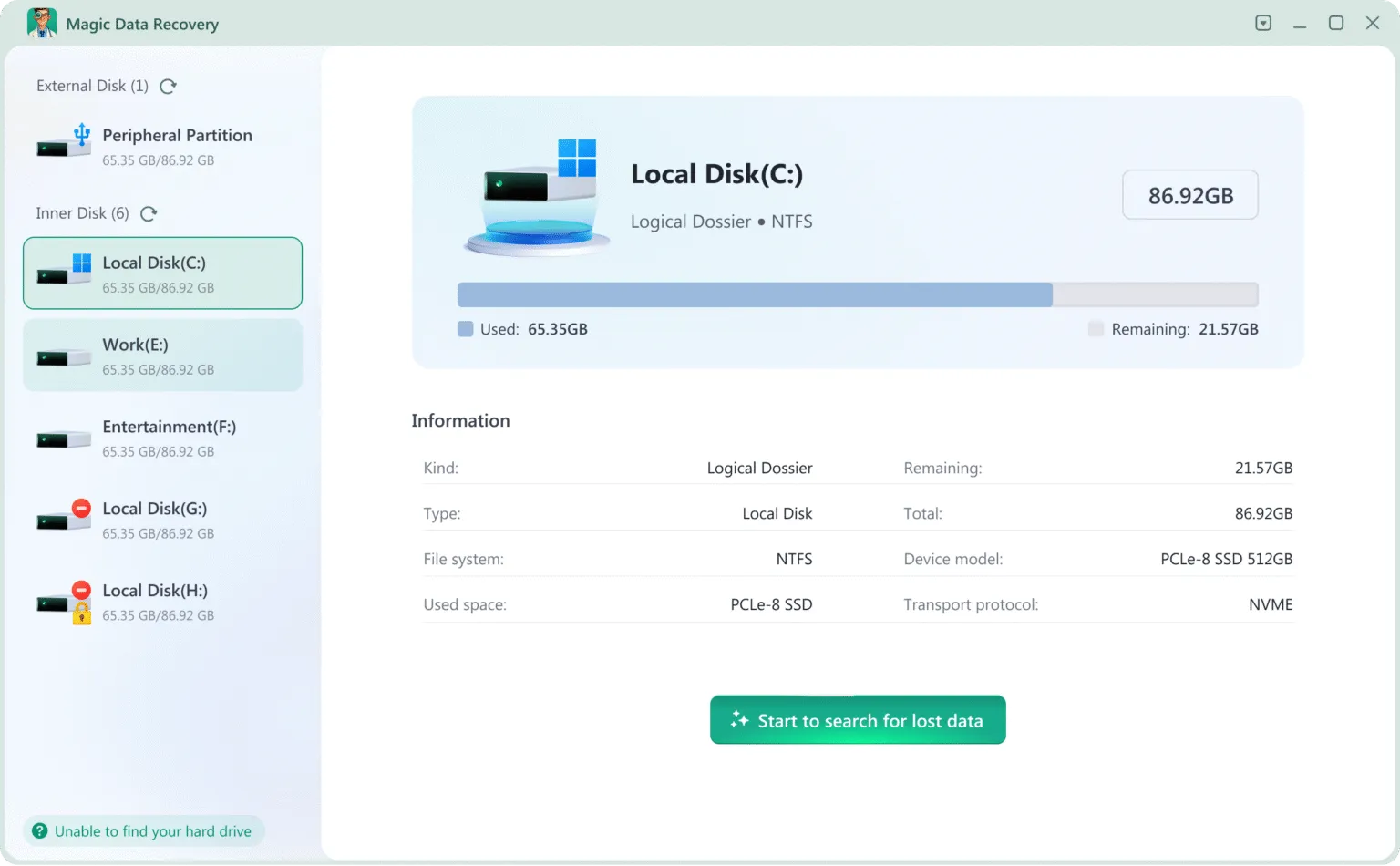
3. Select the Target Device
Open the software and choose the drive, partition, USB device, SD card, or external disk where the files disappeared.
4. Run a Scan
Start the scan. A quick scan may find recently deleted files, while deeper scanning can help locate files from formatted drives or damaged file system structures.
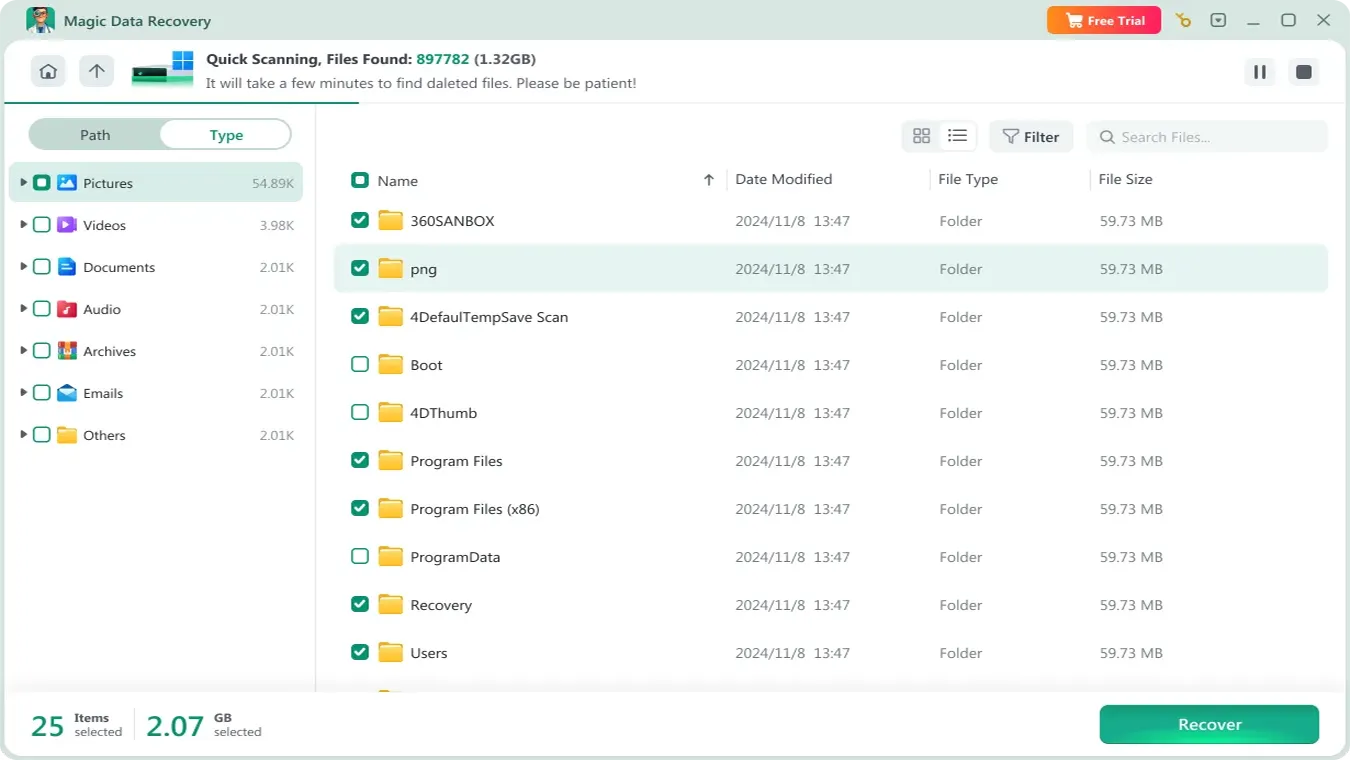
5. Preview and Recover
Preview the found files when possible. Then recover them to a different drive. Never save recovered files back to the same location during the recovery process.

Best Practices Before Using AnyRecover or Any Recovery Tool
Whether you choose AnyRecover, AnyRecover for Windows, or Magic Data Recovery, these best practices can improve your recovery outcome:
- Do not format the drive unless recovery has already been attempted.
- Do not run CHKDSK before recovering important files from a failing drive.
- Do not install recovery software on the affected partition.
- Do not recover files to the same drive.
- Stop using a drive that makes clicking sounds or disconnects often.
- Use preview results to confirm file quality before recovery.
These steps are simple, but they matter. Many failed recovery attempts happen because users keep using the affected device after data loss.
When Should You Use Professional Recovery Services?
Software recovery is useful for logical data loss. That includes deletion, quick formatting, partition loss, and file system errors. However, if your hard drive has physical damage, makes unusual sounds, overheats, or disappears from BIOS, stop using it.
In those cases, a professional recovery lab may be safer. Software cannot repair broken heads, scratched platters, or severe electronic damage. A trustworthy recovery approach means knowing when software is enough and when hardware-level help is needed.
Final Verdict: Is AnyRecover for Windows Worth It?
AnyRecover for Windows can be a useful tool for common recovery tasks, especially if you want a simple interface and basic scan options. It targets the right problems: deleted files, formatted drives, lost partitions, and inaccessible storage.
However, users should compare more than the feature list. Recovery software should be easy to use, clear about limitations, and suitable for the actual data loss scenario. That is why Magic Data Recovery is a strong recommendation. It focuses on practical Windows recovery, supports deleted and formatted file recovery, helps with file system error-related loss, and offers a straightforward workflow for everyday users.
If you are looking for a more efficient solution after comparing AnyRecover, try Magic Data Recovery before taking risky manual actions. It gives you a clearer, safer way to scan, preview, and recover the files that matter.
Supports Windows 7/8/10/11 and Windows Server
FAQs
Is AnyRecover safe to use on Windows?
AnyRecover is designed as Windows data recovery software, but safety also depends on how you use it. You should avoid installing it on the same drive where files were lost. Also, never save recovered files back to the affected partition. These precautions help reduce the risk of overwriting recoverable data during the recovery process.
What is the best AnyRecover for Windows alternative?
A practical AnyRecover for Windows alternative is Magic Data Recovery. It supports common recovery needs such as deleted files, formatted drives, inaccessible storage, and file system error-related loss. It is especially useful for users who want a simple Windows recovery workflow without dealing with technical disk repair commands or complex recovery settings.
Can AnyRecover recover files from a formatted drive?
AnyRecover is promoted for formatted drive recovery, and recovery may be possible if the data has not been overwritten. However, results depend on the format type, drive condition, and user actions after formatting. For a safer workflow, stop using the drive immediately and scan it with reliable recovery software like Magic Data Recovery.
Why should I stop using a drive after data loss?
When a file is deleted or a drive is formatted, the data may still exist until new files overwrite it. Continued use can replace recoverable file fragments with new data. That is why you should stop copying, downloading, or installing anything on the affected drive before running Magic Data Recovery or another recovery tool.
Can Magic Data Recovery help with file system errors?
Yes. Magic Data Recovery is built for common data loss situations, including deletion, formatting, and file system error recovery. If Windows asks you to format a drive or says the directory is unreadable, avoid formatting first. Scan the device with recovery software and save recovered files to another safe location.
Is recovery software better than CHKDSK?
For important lost files, recovery software should usually come before CHKDSK. CHKDSK may modify file system structures while trying to repair errors, which can make some lost files harder to recover. A safer approach is to scan and recover important data first with Magic Data Recovery, then repair the drive afterward if needed.
Can I recover deleted files after emptying the Recycle Bin?
Yes, recovery may be possible after emptying the Recycle Bin if the deleted data has not been overwritten. Tools like Magic Data Recovery can scan the drive for deleted file records and file signatures. For the best chance, stop using the affected drive and recover files to a different storage location.
Does Magic Data Recovery guarantee full recovery?
No responsible recovery tool should promise full recovery in every case. Success depends on overwrite status, drive health, file fragmentation, and the type of data loss. Magic Data Recovery improves the recovery workflow by scanning, previewing, and restoring lost files, but physically damaged or heavily overwritten drives may require professional recovery services.

Jason is a data recovery and technical support specialist with over 15 years of hands-on experience. He has worked extensively with frontline users, troubleshooting difficult data loss cases and providing practical recovery solutions for accidental deletion, formatted drives, damaged file systems, lost partitions, system failures, and other recovery emergencies. His expertise also includes backup and restoration, file repair, and disaster recovery, with a strong emphasis on safe, reliable, and technically accurate guidance.