
How to Unformat SD Card Safely
Accidentally formatted an SD card and lost photos, videos, documents, or camera files? The first thing to know is simple: stop using the card immediately. When you want to unformat sd card, your recovery result depends on what happened after formatting. If new data overwrites the old storage space, recovery becomes much harder.
This guide explains how to unformat sd card safely, what formatting really does, which mistakes to avoid, and how to recover lost files with Magic Data Recovery. It is designed for camera users, Android users, drone pilots, dashcam owners, and anyone who needs a practical SD card recovery solution.
Supports Windows 7/8/10/11 and Windows Server
Table of Contents
What Does “Unformat SD Card” Mean?
To unformat sd card does not mean clicking an “undo” button. Most systems do not offer a real reverse-format option. Instead, the process means scanning the formatted SD card, finding lost file records or raw file signatures, and saving the recoverable data to another safe location.
In simple terms, formatting usually resets the file system structure. The files may no longer appear in File Explorer, your camera, or your phone. However, in many quick-format cases, the actual file content may still remain on the card until new data replaces it.
That is why timing matters. If you formatted the card and then kept taking photos or recording videos, the new files may overwrite the old ones. If you stopped using it right away, your chance to recover formatted SD card data is usually better.
Can You Unformat SD Card After Formatting?
Yes, you can often unformat sd card after a quick format, accidental format, file system error, or “card needs to be formatted” message. However, recovery depends on several factors:
- Whether the SD card received new data after formatting
- Whether you performed a quick format or full format
- Whether the card has physical damage
- Whether the file system metadata still exists
- Whether the lost files were fragmented
- Whether the card used FAT32, exFAT, or another file system
A quick format usually removes file references and prepares the card for new data. A full or normal format may take much longer and can overwrite more data, which reduces recovery chances. For SD cards, common file systems include FAT32 and exFAT, while some special devices or Linux-based systems may use EXT2/3.
Because of this, the safest approach is to scan the card with recovery software before trying repair commands, reformatting, or copying new files to the card.
Before You Try to Unformat SD Card: Do These First
Before running any recovery method, follow these steps. They protect your lost files from further damage.
1. Stop Using the SD Card
Remove the SD card from your camera, phone, drone, dashcam, or console. Do not take new photos. Do not record new videos. Do not download anything to the card.
This step is critical because new data can overwrite the old files you want to recover.
2. Do Not Format It Again
Some devices may ask you to format the card before use. Do not click Format. Reformatting may change the file system again and make formatted memory card recovery harder.
3. Avoid CHKDSK Before Recovery
CHKDSK and similar repair tools can fix file system problems, but they may also modify the card structure. If your goal is to unformat sd card and recover lost data, scan and save files first. Repair the card later.
4. Use a Reliable Card Reader
Connect the SD card to your Windows computer through a stable SD card reader. A poor connection can interrupt scanning or make the card appear unstable.
5. Save Recovered Files to Another Drive
Never save recovered files back to the same SD card. Choose your computer drive, an external hard drive, or another storage device.
Best Way to Unformat SD Card on Windows
The most practical way to unformat sd card is to use dedicated data recovery software. Manual methods rarely restore formatted files directly, and command-line tools mainly repair file system errors rather than rebuild your lost folders.
For Windows users, Magic Data Recovery is a strong option because it focuses on common data loss scenarios, including deletion, formatting, and file system errors. It supports many file systems, including FAT/FAT32, NTFS, exFAT, and EXT2/3, which makes it useful not only for SD cards but also for USB drives, external disks, and other storage devices.
Why Use Magic Data Recovery?
Magic Data Recovery helps solve the main pain point: your SD card looks empty after formatting, but you still need the original files back. Instead of forcing you to use complex commands, it scans the card and lists recoverable files in a clear interface.
Key advantages include:
- Recovers files lost after accidental formatting
- Supports FAT/FAT32, exFAT, NTFS, and EXT2/3 file systems
- Helps with deleted files, formatted drives, and file system errors
- Allows users to recover photos, videos, documents, archives, and more
- Reduces the risk of manual command mistakes
- Lets users save recovered data to another safe location
For example, if you formatted a camera SD card before copying wedding photos, you can connect the card to a Windows PC, scan it with Magic Data Recovery, preview recoverable files, and restore them to your computer drive.
If you are looking for a more efficient solution, try Magic Data Recovery before attempting risky repairs.
Supports Windows 7/8/10/11 and Windows Server
How to Unformat SD Card with Magic Data Recovery
Follow these steps to unformat sd card safely on Windows.
Step 1: Connect the SD Card to Your Computer
Insert the SD card into a card reader and connect it to your Windows PC. Make sure Windows detects the card. If Windows asks you to format it, close the prompt.
Step 2: Launch Magic Data Recovery
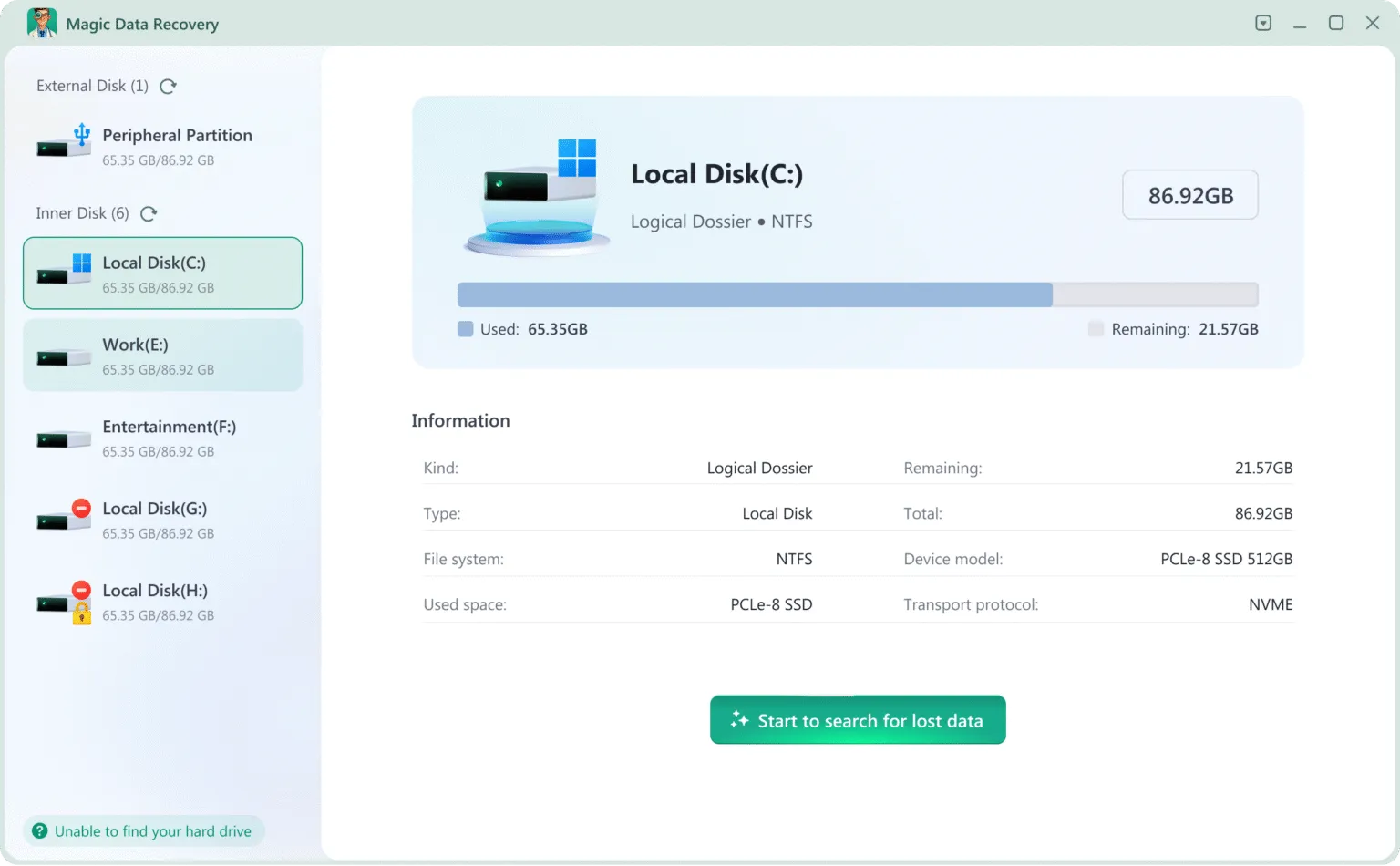
Open Magic Data Recovery. Choose the formatted SD card from the device list. Confirm the drive letter and capacity so you do not scan the wrong device.
Step 3: Scan the Formatted SD Card
Start the scan. The software will search for lost file records and recoverable data. For a recently formatted SD card, a deep scan may find more files than a quick scan.
Step 4: Preview Recoverable Files
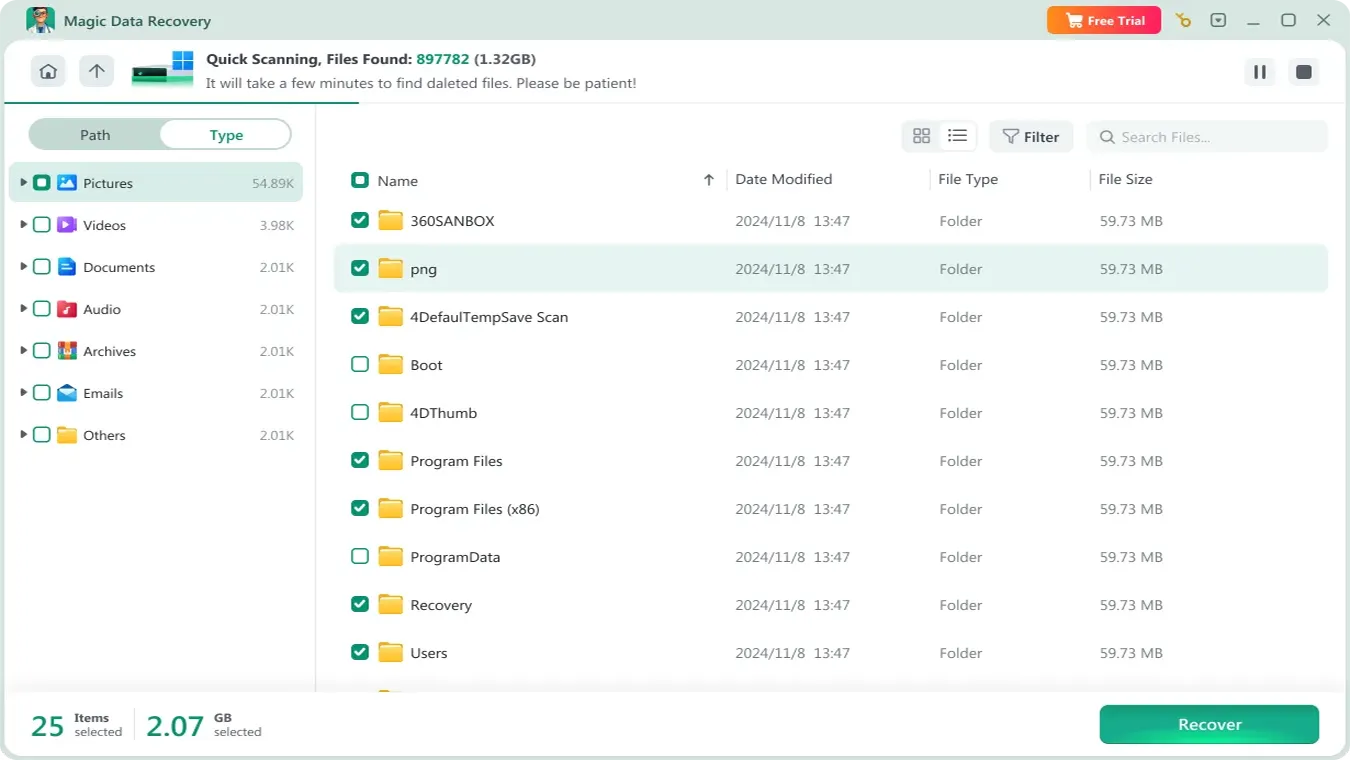
After scanning, check the results by file type, folder path, name, or size. Preview important files when possible. This helps you confirm whether the files are usable before recovery.

Step 5: Recover Files to Another Location
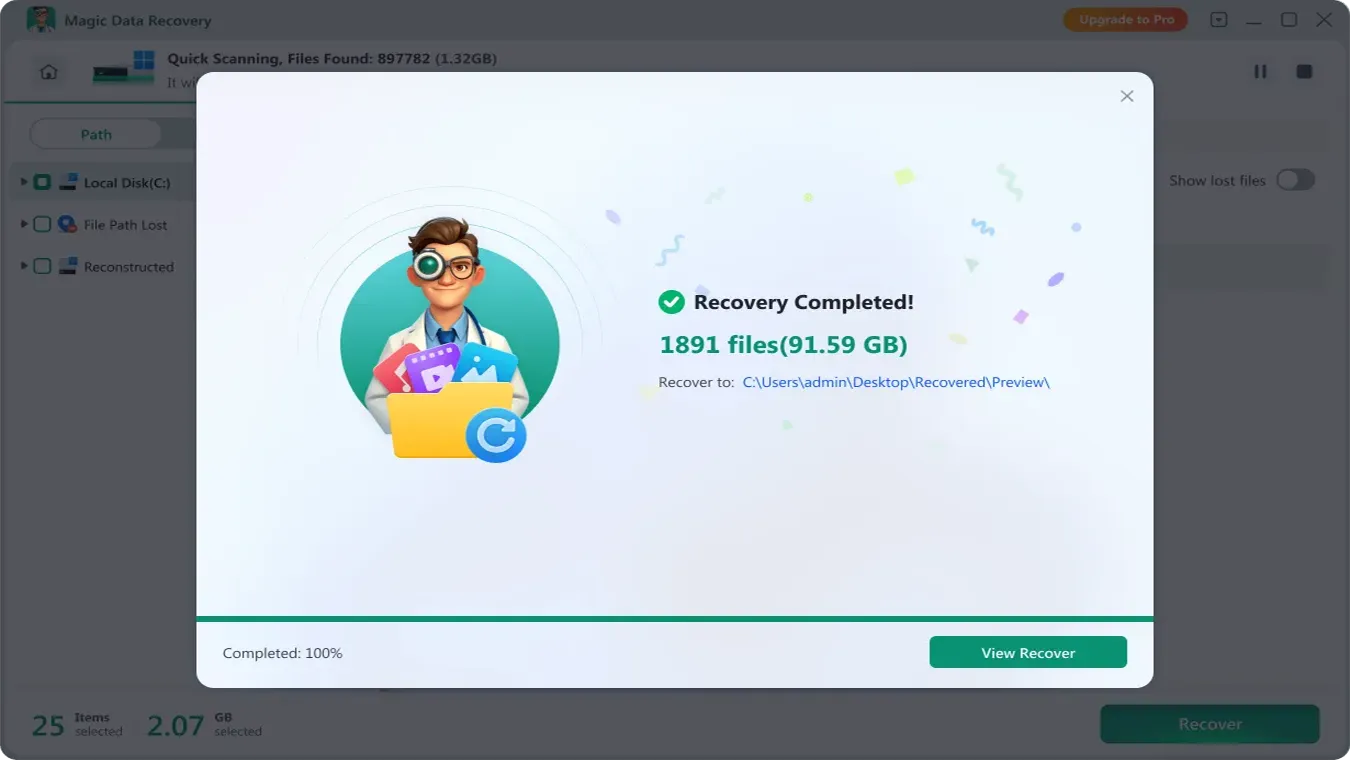
Select the files you need and recover them to your computer, external drive, or another storage device. Do not save them back to the formatted SD card.
Step 6: Back Up and Reformat the Card Later
After successful recovery, back up your files. Then you can reformat the SD card with a proper SD formatting tool or the device that will use the card.
Alternative Methods to Unformat SD Card
Software recovery is usually the best first step. Still, some users may want to know other options.
Option 1: Restore from Backup
If you backed up the SD card to cloud storage, an external drive, a camera app, or a computer folder, restore from that backup first. This is the safest method because it does not depend on the condition of the formatted card.
Option 2: Use File History or Previous Backups
On Windows, check File History, OneDrive, or other backup tools if the SD card files were copied to your PC before formatting. This method cannot recover files that only existed on the card, but it may help in some cases.
Option 3: Try Open-Source Recovery Tools
Some advanced users try tools like PhotoRec. It can help in certain cases, but it may feel less friendly for beginners. It may also recover files without original names or folder structure. For ordinary users, a visual tool such as Magic Data Recovery is often easier to manage.
Option 4: Contact a Professional Recovery Lab
If the SD card is physically damaged, not detected by any computer, cracked, burned, or water-damaged, stop DIY attempts. A professional lab may offer a safer path. Software cannot fix physical damage.
Common Mistakes When You Try to Unformat SD Card
Many failed recovery cases happen because users act too quickly. Avoid these mistakes:
- Continuing to use the SD card after formatting
- Saving recovered files back to the same card
- Formatting the card again because Windows suggests it
- Running repair commands before recovery
- Using unreliable recovery tools from unknown sources
- Removing the card during scanning
- Assuming all files are gone after the card appears empty
When you need to unformat sd card, patience helps. Scan first, recover second, repair or reformat later.
Quick Format vs Full Format: Why It Matters
A quick format usually removes file system references and makes the card look empty. In this case, recovery software may still find the original data if no new files overwrite it.
A full format may overwrite more storage areas or check the card more deeply, depending on the system and device. This makes recovery harder. It does not always mean recovery is impossible, but it often reduces the number of usable files.
If you are unsure which format happened, do not guess. Connect the card to your computer and run a scan with Magic Data Recovery. The scan result will give you a clearer answer.
When Is SD Card Recovery Less Likely?
You may not be able to unformat sd card successfully in every situation. Recovery becomes less likely when:
- You recorded many new videos after formatting
- The SD card received a full overwrite
- The card has severe physical damage
- The files were encrypted
- The card has failing memory chips
- The device performed secure erase or low-level formatting
Even then, you can still scan the card to check what remains. Just avoid writing anything new to it.
How to Protect Your SD Card Data in the Future
Once you recover your files, build better habits to avoid the same problem again.
- Back up important photos and videos after each shoot
- Use multiple smaller SD cards instead of one large card
- Format cards only after confirming backups
- Format the card in the device that will use it
- Replace old or unstable SD cards
- Avoid removing the card while data is being written
- Keep recovery software ready before emergencies happen
These habits make SD card recovery less stressful and reduce the risk of permanent data loss.
Conclusion
To unformat sd card, stop using the card first, avoid reformatting, skip repair commands before recovery, and scan the card with reliable software. In many quick-format cases, your files may still exist until new data overwrites them.
Magic Data Recovery is recommended because it targets real recovery scenarios: deleted files, formatted storage, and file system errors. It supports FAT/FAT32, NTFS, exFAT, and EXT2/3, making it useful for SD cards, USB drives, external disks, and other storage media. More importantly, it gives ordinary users a clear way to scan, preview, and recover files without relying on risky manual steps.
If you need a practical data recovery way to unformat sd card, try Magic Data Recovery and save your recovered files to a different drive.
Supports Windows 7/8/10/11 and Windows Server
FAQs
Can I unformat SD card after accidental formatting?
Yes, you can often unformat sd card after accidental formatting, especially if it was a quick format and you stopped using the card immediately. Recovery software can scan the card for lost files and restore them to another drive. However, recovery becomes harder if new photos, videos, or files overwrite the old data.
2. What should I do first after formatting an SD card?
Stop using the SD card immediately. Remove it from your camera, phone, drone, or computer, and do not save new files to it. Do not format it again, even if Windows asks you to. Then connect it to a Windows PC and scan it with reliable SD card recovery software.
Can CHKDSK unformat SD card?
CHKDSK cannot truly unformat sd card or recover formatted files. It mainly checks and repairs file system errors. In some cases, it may modify the card structure and reduce recovery quality. If your files matter, use recovery software first. After saving your files, you can repair or reformat the card safely.
Is it possible to recover photos from a formatted SD card?
Yes, it is possible to recover formatted SD card photos if the storage space has not been overwritten. Photos, videos, and RAW camera files may still remain after a quick format. Use a recovery tool, preview the found files, and save them to your computer or another external drive.
Why should I not save recovered files back to the same SD card?
Saving recovered files to the same SD card may overwrite other lost data that has not been restored yet. This can damage recovery results. Always choose a different destination, such as your computer drive, an external hard drive, or another USB device, when you unformat sd card.
Does Magic Data Recovery support formatted SD cards?
Yes. Magic Data Recovery supports recovery from formatted storage, deleted files, and file system errors. It works with common file systems such as FAT/FAT32, NTFS, exFAT, and EXT2/3. This makes it suitable for many SD cards, memory cards, USB drives, and external storage devices.
Can I unformat SD card on Android directly?
Android does not usually provide a reliable built-in option to unformat sd card. The safer method is to remove the card, connect it to a Windows computer through a card reader, and scan it with recovery software. This reduces the risk of new Android data overwriting your lost files.
What if my SD card is not detected after formatting?
Try another card reader, USB port, or computer first. If the card appears in Disk Management but not File Explorer, recovery software may still scan it. If no device detects it, the card may have physical damage. In that case, avoid repeated DIY attempts and consider professional recovery help.

Jason is a data recovery and technical support specialist with over 15 years of hands-on experience. He has worked extensively with frontline users, troubleshooting difficult data loss cases and providing practical recovery solutions for accidental deletion, formatted drives, damaged file systems, lost partitions, system failures, and other recovery emergencies. His expertise also includes backup and restoration, file repair, and disaster recovery, with a strong emphasis on safe, reliable, and technically accurate guidance.