
How to Recover Deleted Files from USB (Free & Reliable Methods)
If you are trying to recover deleted files from USB, the success rate largely depends on what happened after the deletion and how quickly you act. Whether files were removed by mistake, lost after formatting, or made inaccessible due to file system errors, recovery is often possible with the right approach.
This guide explains how to recover deleted files from USB with free and reliable methods, starting with free built-in methods and progressing to more reliable USB recovery solutions. You will also learn when professional software like Magic Data Recovery becomes the safest and most effective option.
Supports Windows 7/8/10/11 and Windows Server
Table of Contents
What Happens When You Delete Files from a USB Flash Drive
When files are deleted from a USB drive, the data itself is not immediately erased. Instead, the file system marks the storage space as “available.” Until new data overwrites that space, recovery remains possible.
Unlike internal hard drives, USB flash drives behave differently:
- Deleted files do not go to the Windows Recycle Bin
- The deletion process is usually permanent from the user’s perspective
- Overwriting happens faster due to limited storage space
Understanding this behavior is critical if you want to recover deleted files from USB free before the data becomes unrecoverable.
Is There a Recycle Bin on a USB Drive
No. USB flash drives do not have a native Recycle Bin.
When you delete files from external storage devices such as USB sticks or SD cards, the operating system bypasses the Recycle Bin entirely. This is why deleted USB files appear to vanish instantly.
Because of this limitation, users must rely on recovery tools or backup mechanisms to restore lost USB data.
Free Methods to Recover Deleted Files from USB
Before using third-party software, it is reasonable to try free recovery methods. These options work best for simple deletion scenarios and users with basic technical skills.
Method 1: Recover Deleted Files from USB Using CMD
Command Prompt can sometimes restore files that were hidden or affected by file system errors.
Steps:
- Connect the USB drive to your computer
- Open Command Prompt as Administrator
- Type the following command and press Enter:
attrib -h -r -s /s /d X:\*.*
(Replace X with your USB drive letter)
This method does not recover permanently deleted files but may restore files hidden by malware or corruption.
Method 2: Windows File Recovery (Microsoft Tool)
Windows File Recovery is a free command-line utility provided by Microsoft.
Pros
Cons
- No graphical interface
- Complex commands
- Limited preview capabilities
This tool can help recover deleted files from USB free, but it is not beginner-friendly.
Method 3: Restore from Backup or File History
If you previously backed up your USB data using:
- File History
- Cloud sync services
- Manual backups
You may be able to restore deleted files easily. Unfortunately, many users only realize the importance of backups after data loss occurs.
Limitations of Free USB Recovery Methods
While free methods are helpful, they come with clear limitations:
- Low success rate for formatted USB drives
- No preview before recovery
- Poor handling of file system errors
- High risk of user mistakes
If your USB drive was formatted, corrupted, or shows RAW file system errors, free solutions often fail.
When You Need a Reliable USB Recovery Tool
If you are dealing with:
- Permanently deleted files
- Formatted USB flash drives
- File system errors (RAW, inaccessible drive)
- Corrupted partitions
Then using a professional recovery tool becomes the most practical solution.
This is where Magic Data Recovery stands out.
Why Magic Data Recovery Is Recommended
Magic Data Recovery is designed specifically to handle complex data-loss scenarios that free tools cannot reliably resolve.
Core Problems It Solves
- Accidental deletion from USB drives
- Recovery after formatting
- File system errors (FAT32, exFAT, NTFS, RAW)
- Corrupted or unreadable USB devices
Key Advantages
- Clean and intuitive interface
- Deep scanning technology for USB flash memory
- File preview before recovery
- Safe, read-only recovery process
Real-World Use Scenarios
- Recovering work documents deleted from a USB stick
- Restoring photos from a formatted flash drive
- Accessing files after a USB shows “You need to format the disk”
Compared with command-line tools, Magic Data Recovery significantly reduces user error and improves recovery success rates.
If you are looking for a safer and more efficient solution, Magic Data Recovery is a practical choice.
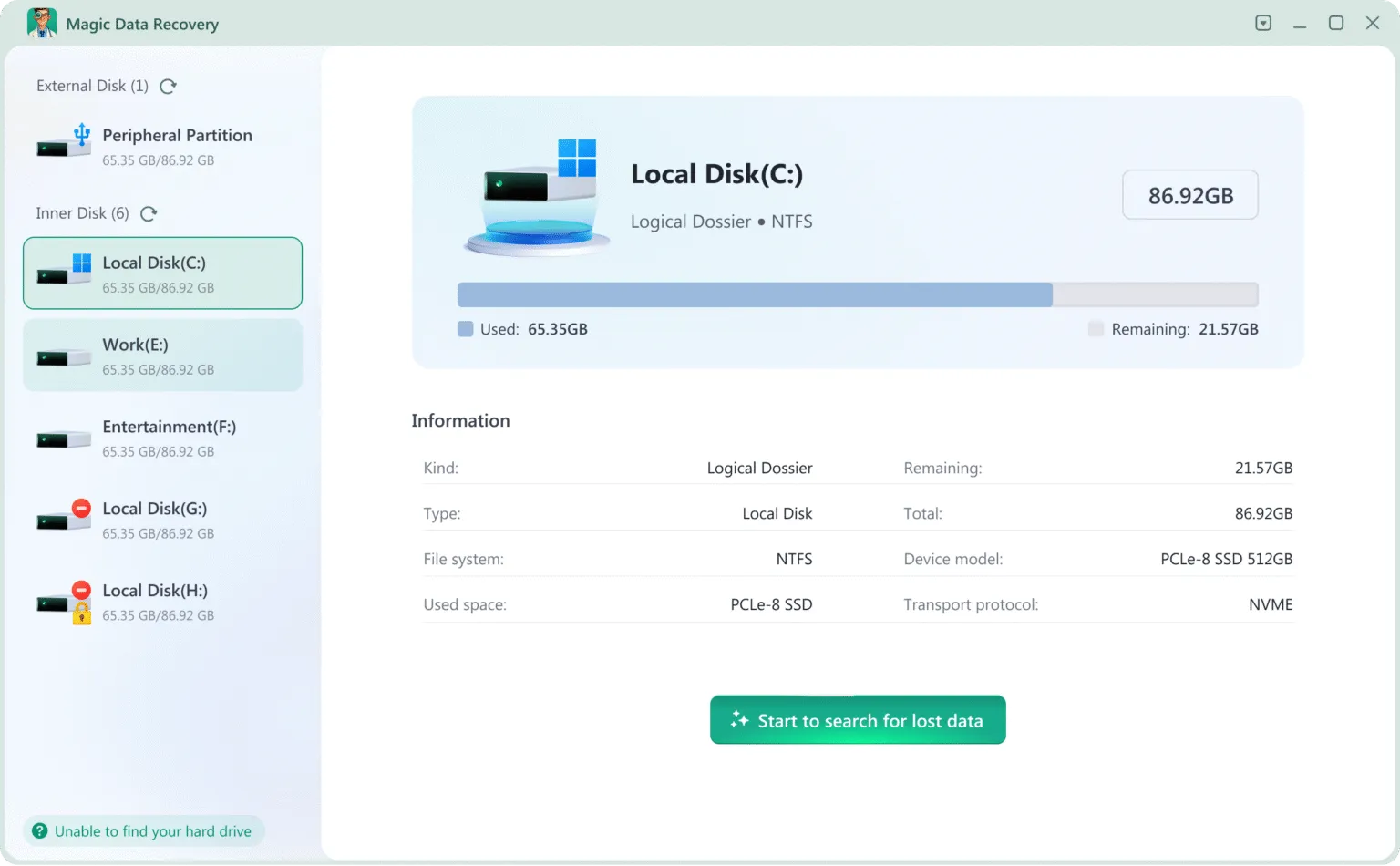
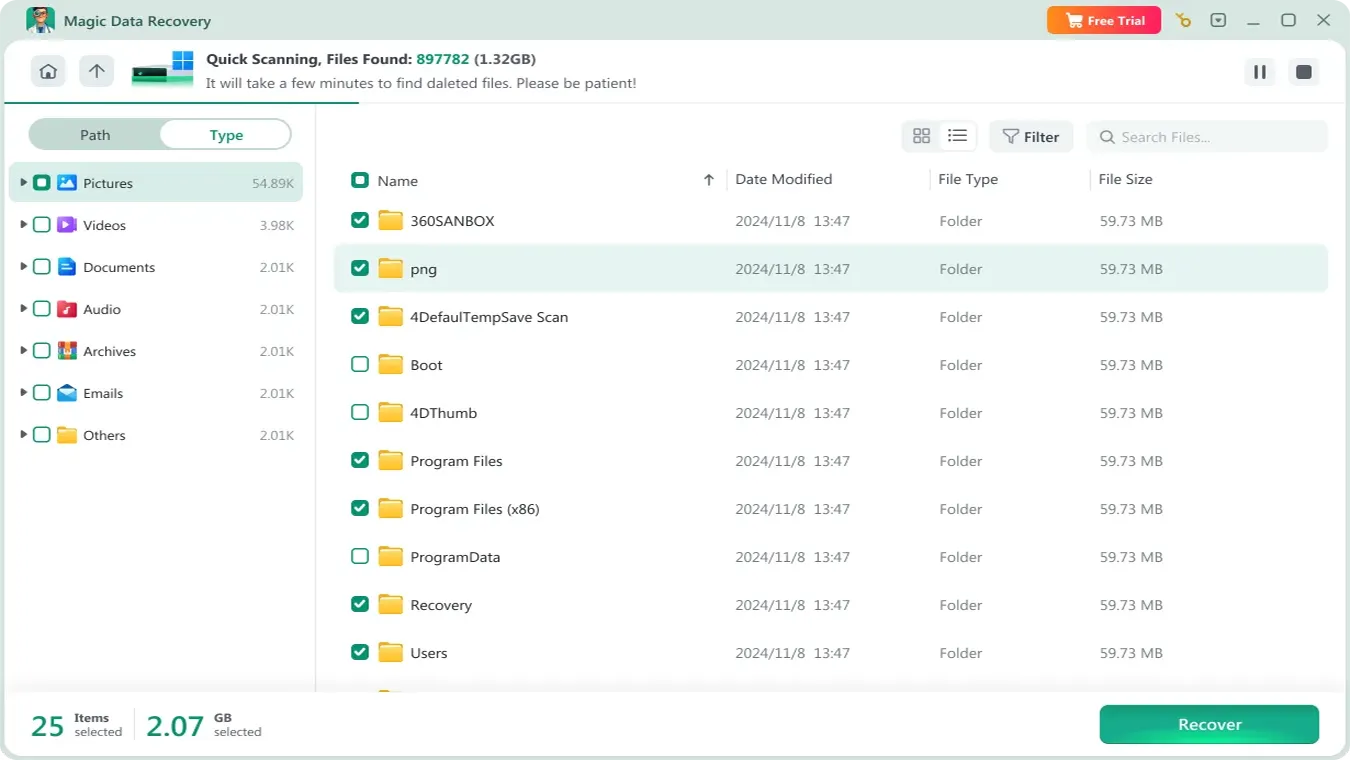
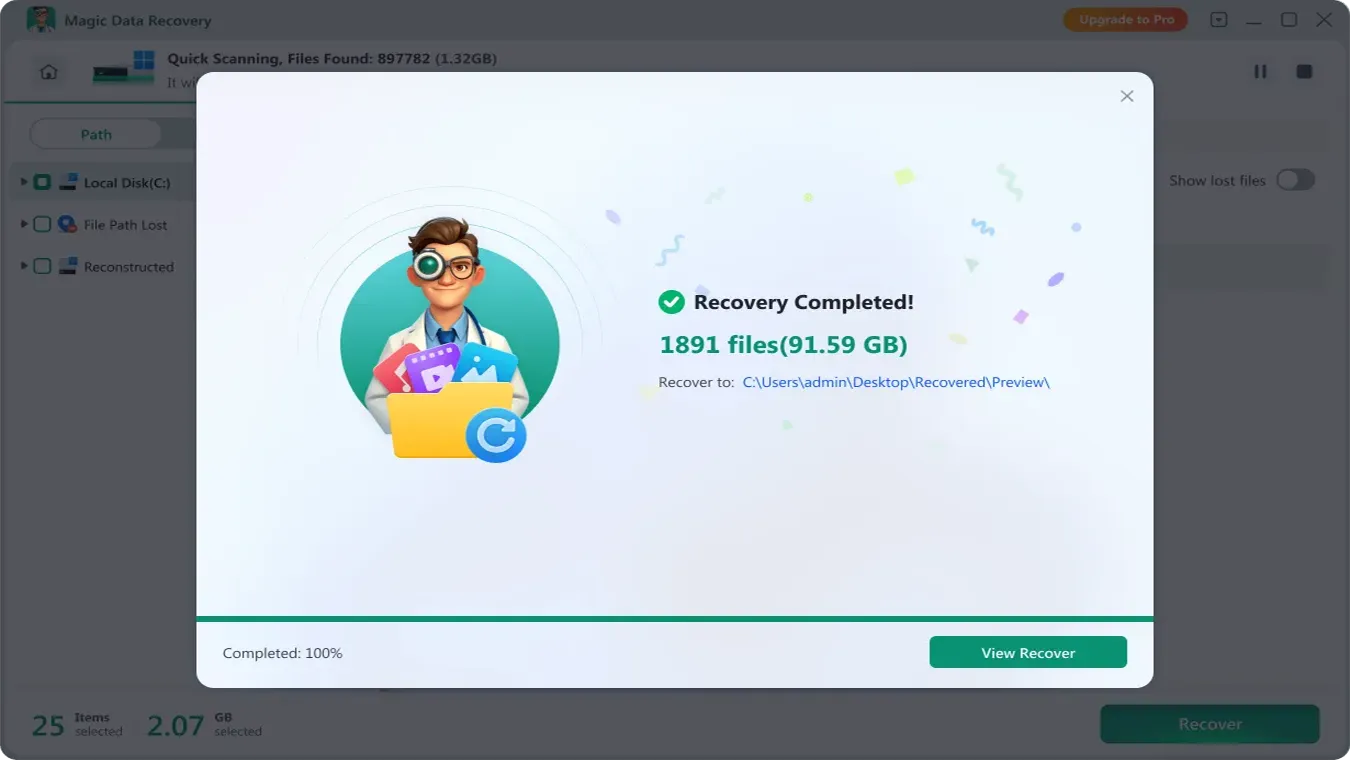
How to Recover Deleted Files from USB Using Magic Data Recovery
The recovery process is straightforward and suitable for non-technical users.
1. Download and Install: Get Magic Data Recovery from the official website and install it on your computer.
Supports Windows 7/8/10/11 and Windows Server

Best Practices to Improve USB Recovery Success
To increase your chances of successful recovery:
- Stop using the USB drive immediately
- Avoid saving recovered files back to the same USB
- Do not reformat the drive before scanning
- Act as early as possible
These practices apply regardless of the recovery method used.
Conclusion
Losing USB data does not always mean permanent loss. In many cases, it is possible to recover deleted files from USB, especially if the data has not been overwritten.
Free tools and command-line methods can help in simple scenarios, but they often fall short when dealing with formatting or file system errors. For these situations, Magic Data Recovery offers a more reliable, user-friendly, and safer solution.
If you need a dependable way to restore lost USB files without unnecessary risk, Magic Data Recovery is worth considering.
Supports Windows 7/8/10/11 and Windows Server
FAQ: Recover Deleted Files from USB
Can you recover deleted files from a USB stick?
Do deleted USB files go to the Recycle Bin in Windows?
Can I recover permanently deleted files from USB without software?
Can CMD recover deleted files from a USB drive?
How do I recover deleted files from USB with Windows File Recovery?
Can I recover files after formatting a USB drive?
Can data be recovered from a corrupted or RAW USB drive?
What should I do if the USB drive is not detected or physically damaged?

Erin Smith is recognized as one of the most professional writers at Amagicsoft. She has continually honed her writing skills over the past 10 years and helped millions of readers solve their tech problems.