
Microsoft Word Deleted File Recovery Guide: Best Solutions

Accidentally losing a Word document can disrupt your workflow, especially when it contains hours of work or critical information. Whether the file was deleted, lost due to formatting, or affected by system errors, Microsoft Word deleted file recovery guide is a common challenge many users face.
The good news is that deleted Word files are often recoverable if you act quickly and use the right approach. In this guide, you’ll learn practical, step-by-step document recovery solutions—from built-in recovery options to advanced tools like Magic Data Recovery—so you can restore your documents efficiently and safely.
Supports Windows 7/8/10/11 and Windows Server
Table of Contents
What Happens When a Word File Is Deleted
When a Word file is deleted, the operating system does not immediately remove the data. Instead, it marks the storage space as reusable. This means the file can still be recovered until new data overwrites it.
Typical situations where Microsoft Word deleted file recovery is needed include:
- Accidental deletion or Shift + Delete
- Emptying the Recycle Bin
- Formatting a disk or USB drive
- File system corruption or RAW drive issues
- Word crashes or unsaved documents
Understanding this principle helps you avoid actions that could reduce recovery success.
Microsoft Word Deleted File Recovery Guide
Before using advanced tools, it’s best to try built-in recovery options. These methods are simple and effective in many cases.
Check the Recycle Bin Carefully
This is the fastest way to restore recently deleted files.
Follow these detailed steps:
- Double-click the Recycle Bin icon on your desktop
- In the search bar (top-right), type part of your file name or *.docx
- Sort files by “Date Deleted” to locate recent items
- Once you find your file, right-click it
- Select “Restore” to return it to its original location
Tip: If you don’t see the file, check whether it was permanently deleted using Shift + Delete.
Recover Unsaved Word Files (AutoRecover Feature)
Microsoft Word automatically saves temporary versions of documents.
Here’s how to access them:
- Open Microsoft Word
- Click “File” → “Info”
- Select “Manage Document”
- Click “Recover Unsaved Documents”
- Browse the list and open the relevant file
- Click “Save As” immediately to store it safely
Additionally, you can manually search for temporary files:
- Press Windows + R
- Type:
%temp%
- Look for files with extensions like .asd, .tmp
- Open them in Word to check content
This method is especially useful after unexpected crashes.
Restore Previous Versions (Windows Backup Feature)
If File History or System Protection is enabled, you can restore earlier versions.
Steps:
- Navigate to the folder where the file was stored
- Right-click the folder and choose “Properties”
- Go to the “Previous Versions” tab
- Select a version based on date/time
- Click “Open” to preview or “Restore” to recover
Important note: This method only works if backups were configured before the file was lost.
When Basic Methods Are Not Enough
While the above solutions work for simple deletion cases, they often fail in more complex scenarios such as:
- Formatting a drive
- Corrupted or inaccessible partitions
- Lost files after system crashes
- Deleted files no longer in Recycle Bin
In these situations, relying on professional recovery software becomes necessary. Instead of manually searching scattered system files, a dedicated tool can scan storage at a deeper level and reconstruct lost data more effectively.
A More Reliable Solution for Microsoft Word Deleted File Recovery
For users facing advanced data loss, Magic Data Recovery provides a practical and dependable solution.
Unlike basic methods, it is designed to handle multiple recovery scenarios in one platform.
What Problems Can It Solve
Magic Data Recovery is built to recover Word files lost due to:
- Permanent deletion
- Drive formatting
- File system errors (RAW or corrupted drives)
- Virus attacks or system crashes
This makes it suitable for both everyday users and more complex recovery cases.
Key Advantages
- Deep Scan Capability: Finds hidden and fragmented Word files
- Supports Multiple Devices: HDD, SSD, USB, SD cards
- File Preview Function: Verify files before recovery
- Simple Workflow: No technical expertise required
- Non-destructive Recovery: Keeps original data intact
Real-World Scenario
Imagine you formatted a USB drive containing project documents. Traditional recovery methods won’t help because file references are erased. However, Magic Data Recovery can scan the device sector by sector and rebuild the lost Word files.
Why It Stands Out
Compared to manual recovery methods:
- It works even after severe data loss
- It reduces human error during recovery
- It saves time by automating the process
👉 If you are looking for a more efficient solution, you can consider trying Magic Data Recovery to simplify the recovery process.
How to Recover Deleted Word Files Step by Step
Once you decide to use a professional tool, the recovery process becomes much more structured and predictable. Instead of guessing where your file might be, the software guides you through each stage.
Here’s how to perform Microsoft Word deleted file recovery using Magic Data Recovery:
- Download and install the software on a different drive
Supports Windows 7/8/10/11 and Windows Server
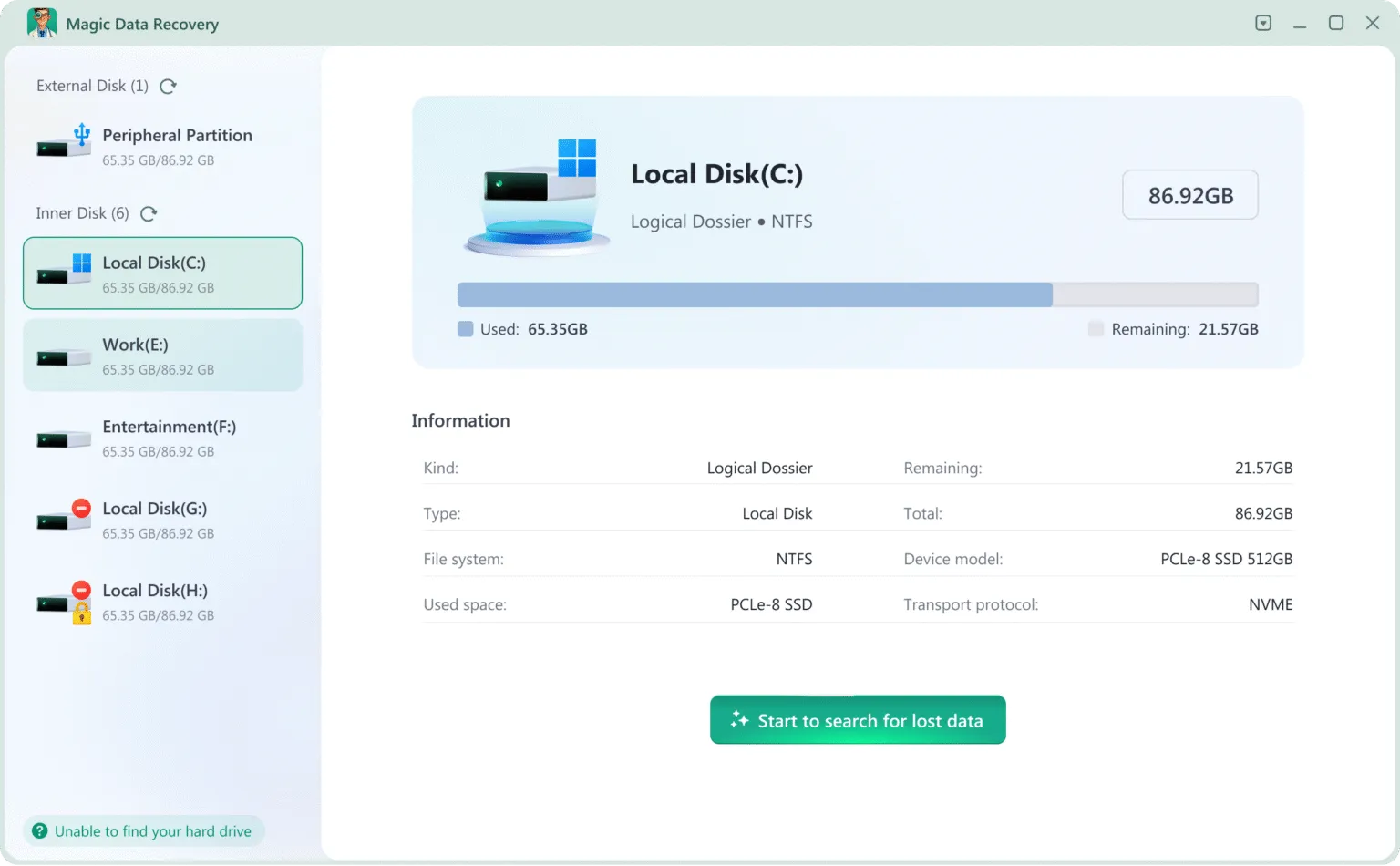
- Launch the program and select the location where the file was lost
- Start with a quick scan, then proceed to deep scan if needed
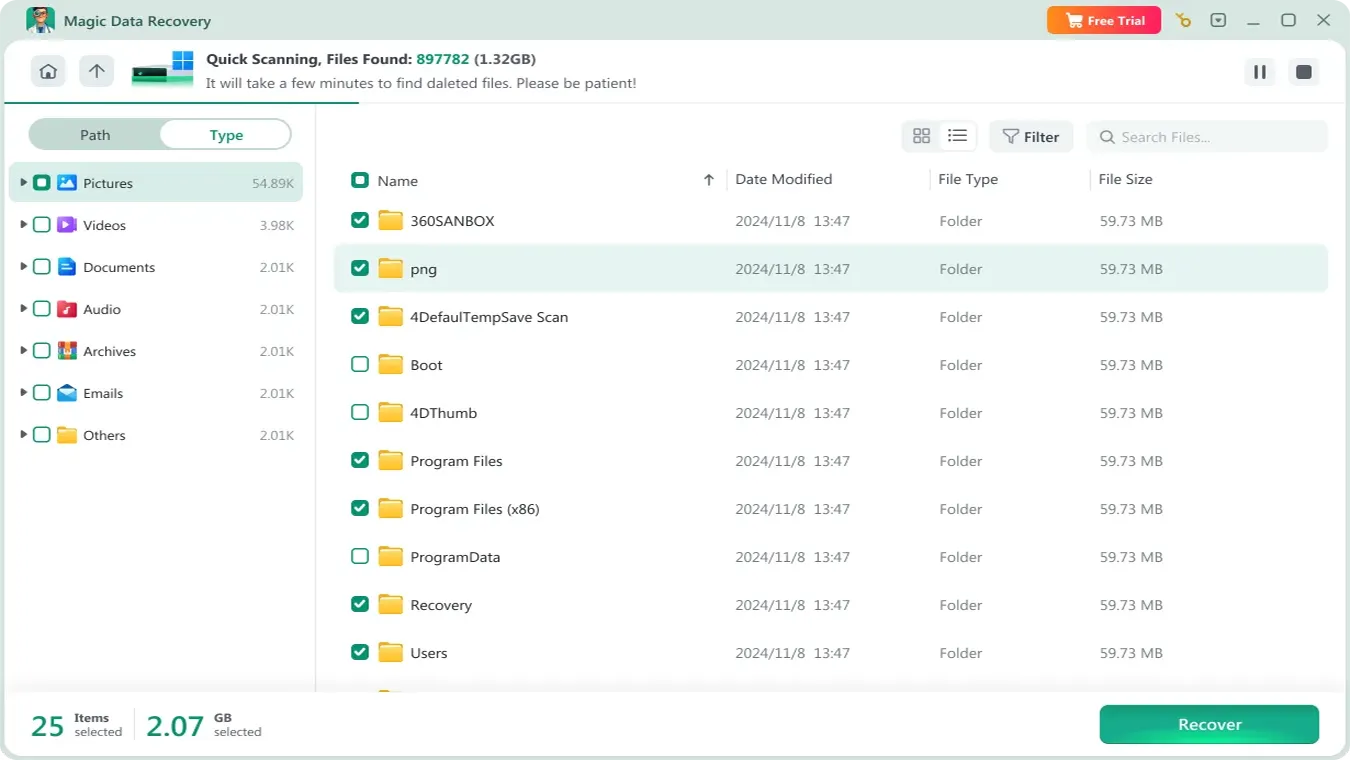
- Use filters to locate Word files (.doc, .docx) quickly
- Preview files to confirm they are intact
- Select the files and click “Recover”
- Save them to a safe location (different from original drive)
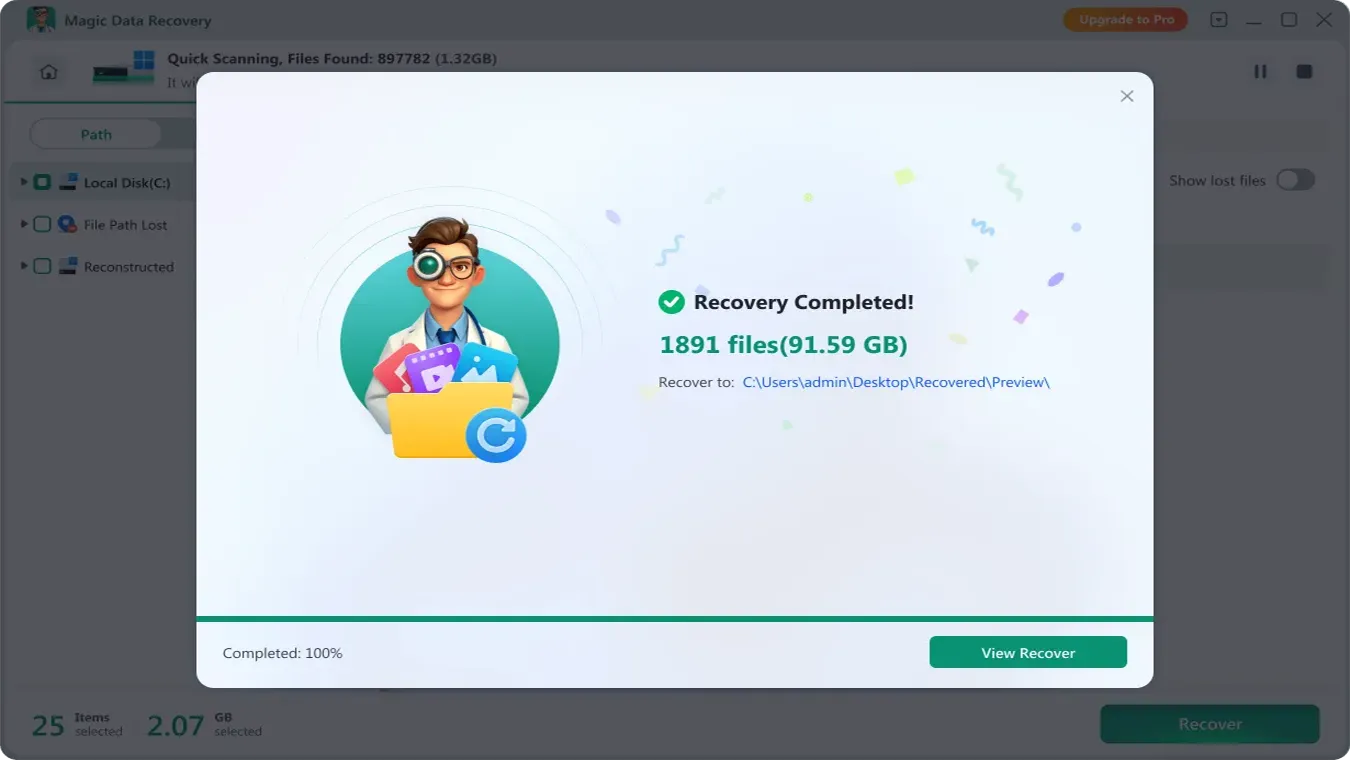
This step-by-step workflow minimizes risk and improves recovery accuracy.
Common Mistakes to Avoid
Many recovery attempts fail not because the file is unrecoverable, but because of incorrect actions taken after deletion.
To improve your chances of successful Microsoft Word deleted file recovery, avoid the following mistakes:
- Continuing to use the same drive
New data can overwrite deleted files, making recovery impossible
- Installing recovery software on the affected disk
This may overwrite the very files you want to recover
- Waiting too long before attempting recovery
The longer you wait, the higher the risk of data being overwritten
- Ignoring hidden or temporary files
Some recoverable files may exist in system folders
- Using unreliable or unknown tools
Poor-quality software can damage data or fail to recover files properly
- Recovering files to the same location
This increases the chance of overwriting other lost data
Taking the right steps early can significantly improve your recovery success rate.
Pro Tips to Prevent Word File Loss
While recovery solutions are helpful, preventing data loss should always be your priority.
Here are practical tips to reduce future risks:
- Enable AutoSave and AutoRecover in Word
Set shorter save intervals to reduce data loss
- Use cloud storage services
Tools like OneDrive automatically back up your files
- Maintain regular backups
Use external drives or backup software weekly
- Keep your system stable
Avoid forced shutdowns and keep software updated
- Scan for viruses regularly
Malware can corrupt or delete files
- Organize files properly
Avoid accidental deletion by maintaining clear folder structures
- Use version control for important documents
Save multiple versions during editing
By combining these strategies, you can greatly reduce the need for Microsoft Word deleted file recovery in the future.
Conclusion
Recovering deleted Word files can range from simple to complex depending on how the data was lost. Basic methods like Recycle Bin or AutoRecover are helpful for minor issues, but they often fall short in more serious scenarios.
Magic Data Recovery provides a more comprehensive solution by handling permanent deletion, formatting, and file system errors efficiently. If you need a reliable and structured approach to Microsoft Word deleted file recovery guide, this tool offers both flexibility and ease of use.
Supports Windows 7/8/10/11 and Windows Server
FAQs
Can I recover permanently deleted Word files?
Yes, permanently deleted Word files can often be recovered if they have not been overwritten. When files are deleted, the system only removes their references. Using reliable recovery software increases the chances of restoring them successfully.
Where are Word temporary files located?
Word temporary files are usually stored in the system’s temporary folder. You can access them by typing %temp% in the Run dialog. Look for files with extensions like .asd or .tmp, which may contain recoverable content.
How quickly should I attempt recovery after deletion?
You should attempt recovery as soon as possible. The longer you wait, the higher the risk that new data will overwrite the deleted file. Immediate action significantly improves recovery success rates.
Can I recover Word files after formatting a drive?
Yes, recovery is possible after formatting, but you need specialized software. Formatting removes file structure references, not the actual data. Advanced tools can scan the drive and rebuild lost Word documents.
Does Microsoft Word automatically save files?
Yes, Microsoft Word includes AutoSave and AutoRecover features. These functions periodically save temporary versions of your documents, allowing recovery in case of crashes or unexpected shutdowns.
Is it safe to use data recovery software?
Yes, trusted recovery tools are safe when used properly. They typically read data without modifying it. However, you should always install the software on a different drive to avoid overwriting lost files.
Why can’t I find my deleted Word document?
The file may have been permanently deleted, overwritten, or stored in a different location. In such cases, using a recovery tool to scan the storage device is the most effective way to locate it.
What is the best method for Microsoft Word deleted file recovery?
The best method depends on the situation. For simple cases, built-in tools work well. For complex data loss like formatting or corruption, professional recovery software provides more reliable results.

Jason is a data recovery and technical support specialist with over 15 years of hands-on experience. He has worked extensively with frontline users, troubleshooting difficult data loss cases and providing practical recovery solutions for accidental deletion, formatted drives, damaged file systems, lost partitions, system failures, and other recovery emergencies. His expertise also includes backup and restoration, file repair, and disaster recovery, with a strong emphasis on safe, reliable, and technically accurate guidance.