
Recover USB Drive Not Recognized
When a USB drive suddenly stops appearing in File Explorer, the first reaction is usually panic. You may have photos, work documents, videos, backups, or school files on it. The good news is that recover usb drive not recognized issues do not always mean the files are gone. In many cases, Windows can still detect the device in Disk Management, Device Manager, or recovery software even when the drive does not open normally.
This guide explains how to diagnose the problem, what safe fixes to try first, and when to use data recovery software before making risky changes. If your USB drive stores important files, follow this external storage recovery guide approach: protect the data first, then repair the drive.
Supports Windows 7/8/10/11 and Windows Server
Table of Contents
Why Is Your USB Drive Not Recognized?
Before you try to recover usb drive not recognized, you need to understand what “not recognized” actually means. Different symptoms point to different causes.
Common Signs
Your USB drive may show one of these problems:
- It does not appear in File Explorer.
- Windows shows “USB device not recognized.”
- The drive appears in Disk Management but has no drive letter.
- The USB drive shows as RAW, unallocated, or not initialized.
- Windows asks you to format the drive before using it.
- The USB drive connects and disconnects repeatedly.
- The drive appears, but files are missing or folders become shortcuts.
These symptoms may look similar, but the recovery strategy can be different.
Main Causes
A USB drive may fail to show up because of:
- A damaged USB port or loose connection.
- Outdated, corrupted, or missing USB drivers.
- Drive letter conflict.
- File system corruption.
- Partition table damage.
- Bad sectors or flash memory wear.
- Unsafe removal during file transfer.
- Malware or system errors.
- Physical damage to the USB connector or internal chip.
If the problem is only a drive letter or driver issue, a normal fix may solve it. However, if the file system or partition structure is damaged, you should recover the files before formatting or repairing the drive.
What to Do First Before Trying Any Fix
If you want to recover usb drive not recognized, the most important rule is simple: do not make the situation worse.
Stop Using the USB Drive
Do not copy new files to the USB drive. Do not format it. Do not run random repair tools repeatedly. Every write operation may reduce the chance of recovery, especially if the drive has file system errors.
Do Not Format the USB Drive Immediately
Windows may ask you to format the USB drive. Do not click Format if the drive contains important data. Formatting may rebuild the file system and overwrite old file records, making recovery more difficult.
Avoid Running CHKDSK Too Early
CHKDSK can repair some file system errors, but it can also modify directory records and file fragments. If your goal is to recover files, scan the USB drive with recovery software first. After you save the files to another location, you can repair or reformat the drive safely.
How to Recover USB Drive Not Recognized: Safe Troubleshooting Steps
Start with low-risk checks. These methods do not rewrite the USB drive, so they are safer than formatting or partition repair.
Method 1: Try Another USB Port or Computer
Plug the USB drive into another USB port. If you use a USB hub, connect the drive directly to the computer. Some hubs do not provide stable power, especially for larger external USB drives.
Next, test the USB drive on another computer. If another PC detects it normally, the issue may come from your original computer’s USB port, driver, or system settings.
Method 2: Check the USB Connector and Cable
For a small USB flash drive, inspect the connector. A bent or loose connector can stop the computer from reading the device. For an external USB drive, try another cable. Many “USB not recognized” problems come from a failing cable rather than the drive itself.
If the drive makes unusual clicking sounds, gets extremely hot, or disconnects constantly, stop testing it. Physical failure needs professional attention.
Method 3: Restart the Computer and Reconnect the Drive
A simple restart can clear temporary USB controller errors. Disconnect the USB drive, restart Windows, and reconnect the drive after the system loads fully.
This method sounds basic, but it often works when Windows has failed to load the USB controller correctly.
Method 4: Check Disk Management
Press Win + X and choose Disk Management. Then check whether the USB drive appears there.
You may see several situations:
- Healthy partition with no drive letter: assign a new drive letter.
- RAW partition: recover data first, then format later.
- Unallocated space: recover data before creating a new partition.
- Not initialized: do not initialize it before recovery.
- No media: the controller may be damaged or the flash chip may have failed.
Disk Management helps you decide whether Windows can still see the storage device. If Windows can see the disk, recovery software may also detect it.
Method 5: Assign a New Drive Letter
If the USB drive appears in Disk Management but not in File Explorer, it may have no drive letter.
Follow these steps:
- Right-click the USB partition in Disk Management.
- Choose Change Drive Letter and Paths.
- Click Add or Change.
- Select an unused drive letter.
- Click OK.
After that, open File Explorer again. If the files appear, copy them to another safe location immediately.
Method 6: Reinstall USB Drivers
Driver issues can cause Windows to display “USB device not recognized.”
Try this:
- Right-click Start and open Device Manager.
- Expand Universal Serial Bus controllers.
- Right-click the USB Root Hub or related USB device.
- Choose Uninstall device.
- Restart the computer.
- Reconnect the USB drive.
Windows will reinstall the USB drivers automatically. If the drive appears afterward, back up the files first.
Method 7: Update Disk Drivers
In Device Manager, expand Disk drives. If your USB drive appears there, right-click it and choose Update driver. You can also choose Scan for hardware changes from the Action menu.
This step helps when Windows recognizes the device at the hardware level but fails to mount it correctly.
When You Should Use Data Recovery Software First
You should use data recovery software before repair if:
- The USB drive asks to be formatted.
- The partition shows as RAW.
- The drive appears as unallocated.
- Files disappeared after a sudden disconnect.
- The USB drive opens but folders are empty.
- You deleted files before the recognition issue started.
- You need the files more than the drive itself.
This is where many users make a mistake. They try to “fix” the USB drive first, but some fixes change the file system. A safer workflow is: scan, preview, recover, then repair.
Recover USB Drive Not Recognized with Magic Data Recovery
If Windows can detect the USB drive in Disk Management or as a connected storage device, Magic Data Recovery can help you scan it for lost files. It is designed for deleted files, formatted drives, file system errors, lost partitions, and other common data loss scenarios.
Why Magic Data Recovery Fits This Situation
When you need to recover usb drive not recognized, the key problem is not only access. You need a tool that can read beyond normal File Explorer access and search for recoverable file records.
Magic Data Recovery helps because it:
- Supports USB drives, external drives, memory cards, HDDs, SSDs, and other storage devices.
- Works with common file systems such as FAT, exFAT, NTFS, ReFS, and EXT file systems.
- Supports recovery from deleted, formatted, corrupted, and inaccessible storage devices.
- Lets you scan and preview files before recovery.
- Helps users recover documents, photos, videos, audio, archives, and more.
- Provides a beginner-friendly workflow for non-technical users.
In uncertain cases, scanning is useful because it tells you whether recoverable files still exist. If the software can find and preview your files, recovery is usually possible. If no scan can detect the drive or find files, the USB drive may have physical damage or the data may have been overwritten.
How to Use Magic Data Recovery
Follow this workflow:
1. Download and install Magic Data Recovery on your computer, not on the problematic USB drive.
Supports Windows 7/8/10/11 and Windows Server
2. Connect the USB drive directly to the computer.
3. Launch the software and choose the USB drive or detected storage device.
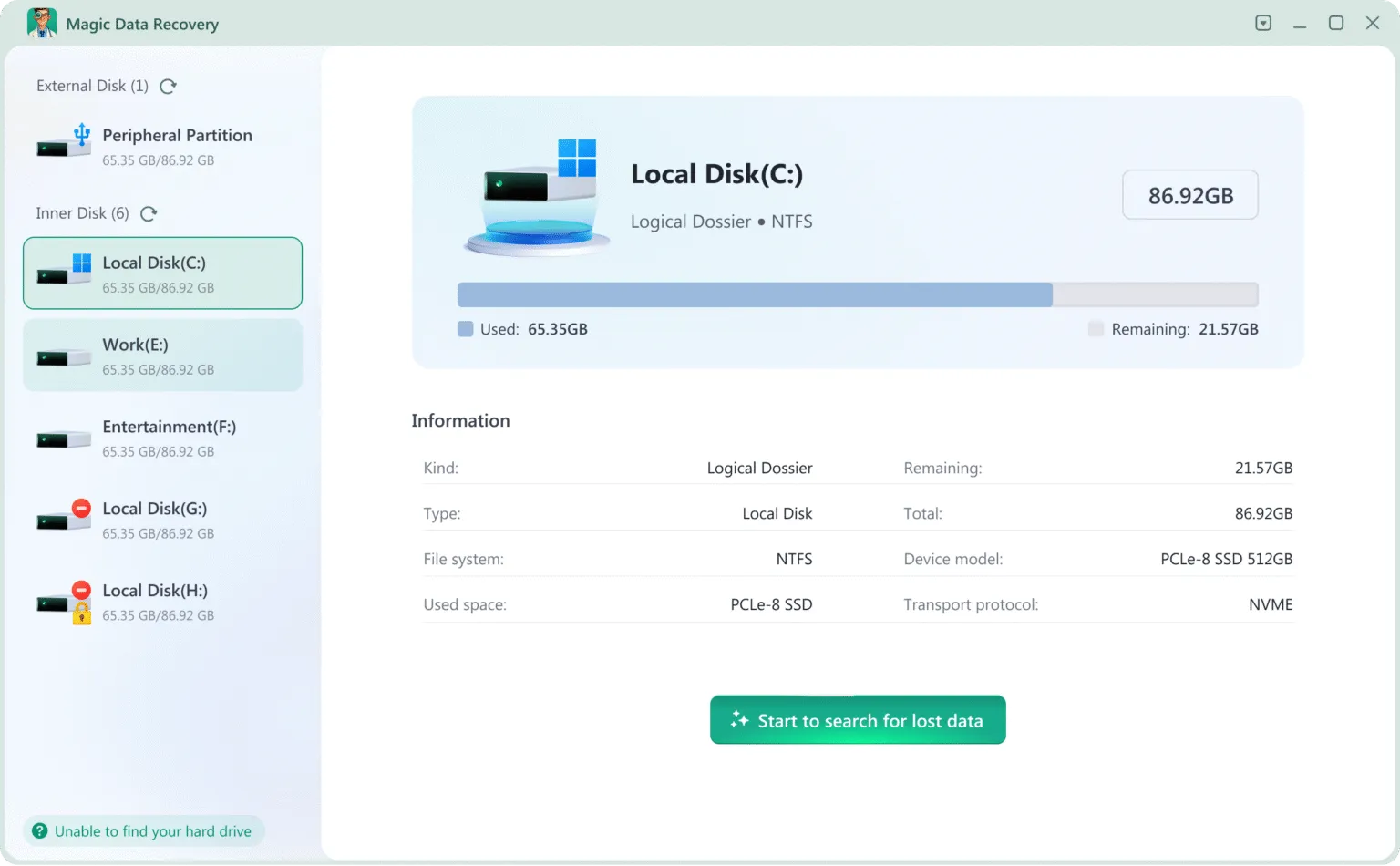
4. Start a scan.
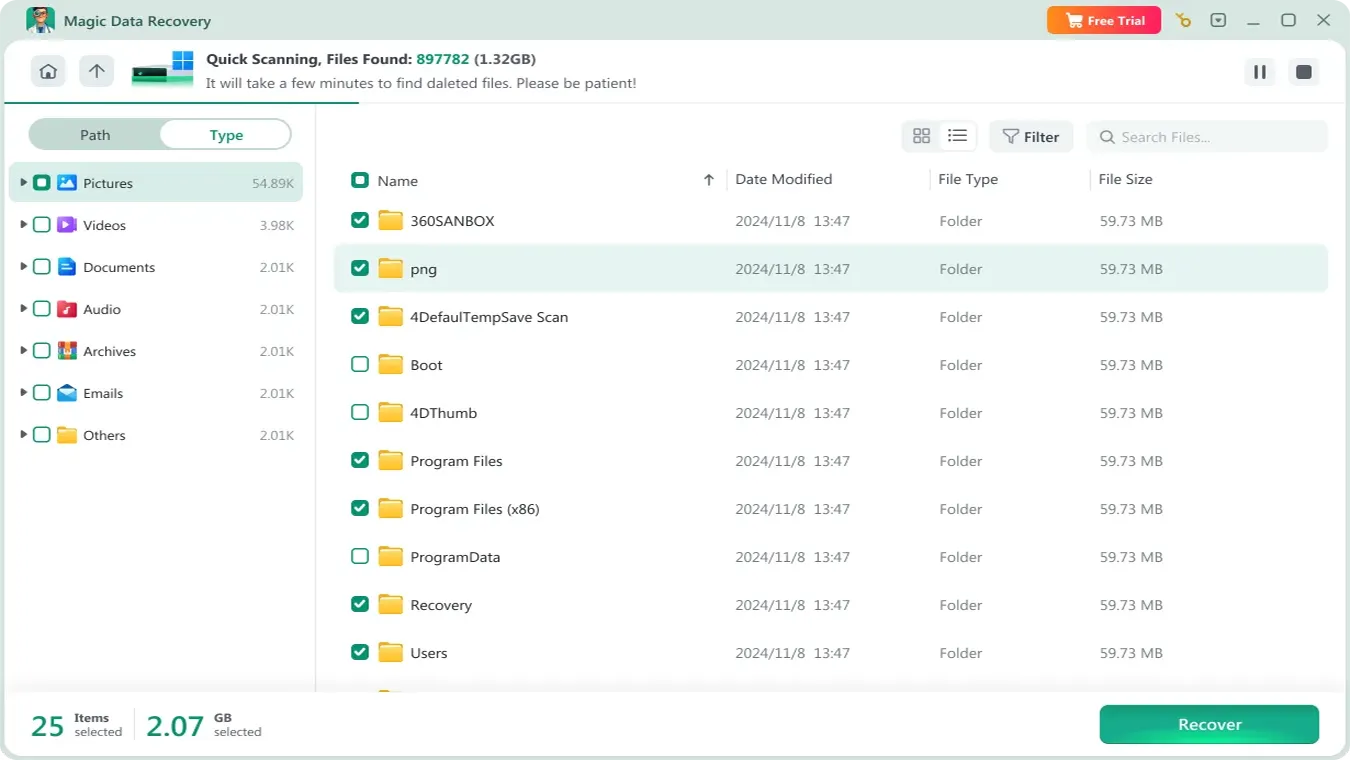
5. Preview the found files.

6. Select the files you need.
7. Recover them to another safe drive, not back to the same USB drive.
For more detailed steps, refer to the Magic Data Recovery user guide.
Example Scenario
Suppose your USB drive does not appear in File Explorer, but Disk Management shows it as RAW. In that case, formatting may make the drive usable again, but it can also reduce the chance of restoring the original files. A better option is to scan it with Magic Data Recovery first, recover the files to your computer or another external drive, and then format the USB drive after recovery.
Should You Run CHKDSK After Recovery?
Yes, but only after you recover important files. CHKDSK can repair file system problems, but it changes disk structures. If the USB drive contains valuable data, recover the files first.
After recovery, you can run:
chkdsk X: /f
Replace X with the USB drive letter. If the drive still fails, format it and test whether it works normally. If errors return, replace the USB drive.
What If the USB Drive Is Physically Damaged?
Software cannot fix hardware failure. If your USB drive does not appear in Disk Management, Device Manager, or recovery software, the problem may be physical.
Common signs include:
- The USB connector is broken.
- The drive gets hot quickly.
- The device disconnects every few seconds.
- Windows shows “No Media.”
- The drive has visible burn marks or water damage.
- No computer can detect it.
In this case, stop plugging it in repeatedly. A professional data recovery lab may need to repair the controller or read the flash memory chip directly.
Common Mistakes to Avoid
Many failed USB recovery cases happen because users try unsafe fixes too early.
Avoid these mistakes:
- Formatting before scanning.
- Creating a new partition on unallocated USB space.
- Initializing the disk before recovery.
- Saving recovered files back to the same USB drive.
- Running multiple repair tools without knowing what they change.
- Continuing to use a USB drive that disconnects repeatedly.
- Ignoring early signs of physical damage.
If the USB drive contains critical files, the safest approach is to recover first and repair later.
USB Drive Not Recognized vs USB Drive Not Showing Up
These two terms are often used together, but they are not always the same.
A USB drive not recognized issue usually means Windows detects a USB device but cannot identify or load it correctly. This can involve drivers, controllers, power, or hardware problems.
A USB drive not showing up issue usually means the drive does not appear in File Explorer. However, it may still appear in Disk Management. In that case, you may only need to assign a drive letter or recover data from an inaccessible file system.
Understanding this difference helps you choose the right fix.
Can You Recover Files After Formatting the USB Drive?
Yes, recovery may still be possible after formatting if new data has not overwritten the old files. A quick format usually rebuilds file system records but does not immediately erase every data block. However, the chance of recovery drops when you keep using the drive.
If you formatted the USB drive by mistake, stop using it and scan it with recovery software. Also, learn how file records such as directory entries affect file recovery.
Best Recovery Workflow for a USB Drive Not Recognized
Here is the recommended workflow:
- Stop using the USB drive.
- Try another port, cable, or computer.
- Check Device Manager and Disk Management.
- If the drive appears but cannot open, scan it with recovery software.
- Recover files to another drive.
- After recovery, repair, format, or replace the USB drive.
- Create a backup plan to avoid future data loss.
For related cases involving larger USB storage devices, you can also read these external hard drive recovery solutions.
Conclusion
To recover usb drive not recognized, do not rush to format or repair the device. First, check the connection, USB port, driver, and Disk Management status. If Windows can still detect the USB drive but cannot open it, use recovery software before making changes to the file system.
Magic Data Recovery is recommended because it focuses on the real problem: finding lost files from deleted, formatted, corrupted, RAW, or inaccessible storage devices. It supports common USB recovery scenarios, allows file preview before recovery, and gives ordinary users a clear recovery path without complex manual operations. If you need a safer starting point, follow this external storage recovery guide and recover the data before repairing the drive.
Supports Windows 7/8/10/11 and Windows Server
FAQs
Can I recover USB drive not recognized by Windows?
Yes, you may still recover a USB drive not recognized by File Explorer if Windows can detect it in Disk Management, Device Manager, or recovery software. Start with safe checks such as another USB port, cable, or computer. If the drive appears as RAW, unallocated, or inaccessible, scan it before formatting.
Why does my USB drive show in Disk Management but not File Explorer?
This usually happens because the USB drive has no drive letter, uses a corrupted file system, or has a damaged partition. If it shows as healthy, assigning a new drive letter may fix it. If it shows as RAW or unallocated, recover files first before formatting or creating a partition.
Should I format a USB drive that is not recognized?
No, do not format it first if you need the files. Formatting may make the USB drive usable again, but it can also overwrite file system information that helps recovery software locate lost files. Scan and recover important data first, then format the drive after your files are safe.
Can CHKDSK fix a USB drive not recognized issue?
CHKDSK can fix some file system errors, but it is not always the best first step for data recovery. It may change file records during repair. If the USB drive contains important files, use recovery software first. After recovering the files, you can run CHKDSK to repair the drive.
What if my USB drive is not detected on any computer?
If no computer detects the USB drive, the issue may be physical. The connector, controller, NAND flash chip, or internal circuit may have failed. Recovery software cannot scan a device that the system cannot detect at all. In this situation, stop testing it repeatedly and consider a professional lab.
Can Magic Data Recovery recover files from a RAW USB drive?
Yes, Magic Data Recovery can help in many RAW USB drive cases if Windows still detects the storage device. It scans the drive for recoverable files instead of relying only on File Explorer access. You should recover files to another drive and format the USB drive only after recovery.
Where should I save recovered files from a USB drive?
Always save recovered files to another safe location, such as your computer’s internal drive, an external hard drive, or a different USB drive. Do not save recovered files back to the same problematic USB drive. Writing new data to it may overwrite files that are still recoverable.
How can I prevent USB drive not recognized problems in the future?
Use safe eject before unplugging the drive, avoid removing it during file transfer, keep backups of important files, and replace aging USB drives. Also, avoid using low-quality hubs or unstable ports. If the USB drive starts disconnecting randomly, back up its files immediately and replace it soon.

Jason has over 15 years of hands-on experience in the computer data security industry. He specializes in data recovery, backup and restoration, and file repair technologies, and has helped millions of users worldwide resolve complex data loss and security issues.